Blog Content

29
Jul
2026

Looking for a fence in Dover, NH? Here's what you need to know right away:
Whether you want more privacy, better security, or simply a cleaner look for your yard, a professionally installed fence is one of the best investments you can make as a homeowner in southern New Hampshire.
The challenge? Between choosing the right material, navigating Dover's zoning rules, and finding a contractor you can actually trust — it's easy to feel overwhelmed before a single post goes in the ground.
This guide covers the top fencing options for Dover and Concord homeowners, what local regulations require, and how to get your project done right the first time. I'm Rob Thibeault from Brentwood Fence LLC, and I'll walk you through everything you need to know.
Important Fence Dover NH terms:
When it comes to keeping neighbors at bay and creating a personal sanctuary, not all fences are created equal. In the Seacoast and Merrimack Valley regions, we experience the full spectrum of New England weather—from humid July afternoons to freezing January blizzards. This means your choice of privacy fencing must be both highly functional and incredibly durable.
Two primary materials dominate the New Hampshire landscape for privacy solutions: classic wood and low-maintenance vinyl.
Wood fencing offers an organic, timeless beauty that blends seamlessly with our state's natural, wooded backdrops. If you are looking to match the historic charm of older neighborhoods, wood is often the go-to choice. On the other hand, vinyl fencing has surged in popularity because it requires virtually zero upkeep. You won’t have to spend your weekends sanding, staining, or painting; a quick spray with a garden hose is usually all it takes to keep it looking brand new.
If you live in the capital region, our guide on Concord NH Fence Installation offers deeper insights into localized soil conditions and styling. If you prefer the classic New England aesthetic, you may want to check out our resources on Portsmouth NH Wood Fencing to see how wood performs near the salty air of the coast.
While the DIY spirit is strong in New Hampshire, installing a privacy fence is a physical, high-stakes project. A single misplaced post can lead to a property dispute with your neighbor, and shallow post holes will cause your fence to lean after its first winter freeze.
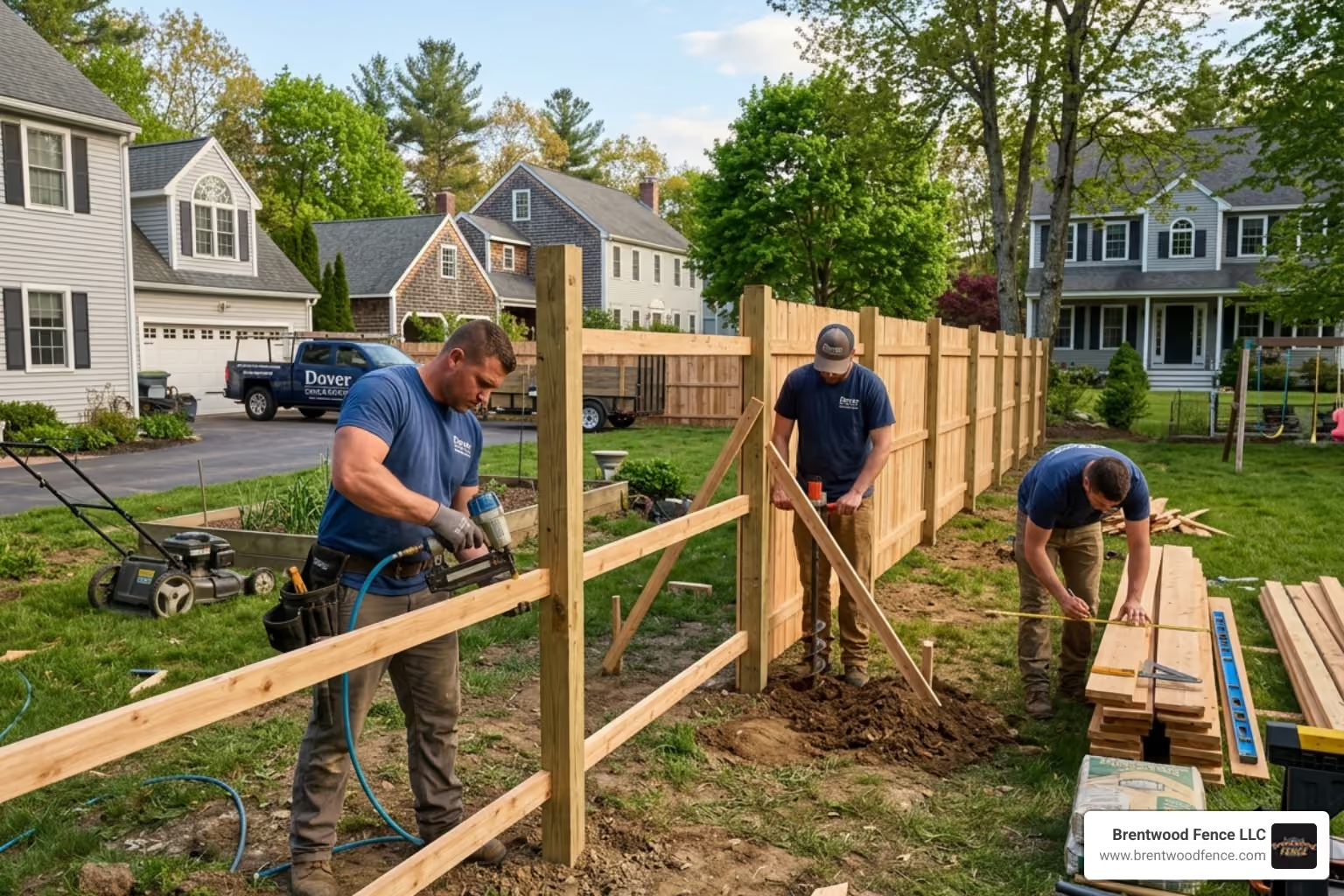
Working with an experienced Dover NH Fence Company ensures that your boundaries are respected, your materials are rated for local weather, and the installation complies with municipal codes. For a step-by-step breakdown of how a professional team handles the layout, digging, and alignment phases, consult our Professional Fence Installation Dover Guide.
If your primary goal is absolute seclusion, you will want to focus on high-quality, solid-slate materials.
For homeowners looking to add unique design flourishes—such as lattice tops, scalloped edges, or custom gates—our page on Custom Fence Installation Dover NH highlights what is possible. Additionally, if your project involves securing a backyard pool, you must follow strict safety guidelines. Our specialized Pool Fence Contractors Dover NH can help you design a secure, code-compliant barrier that keeps your family safe and satisfies local inspectors.
Before you buy materials or schedule an installation crew, you must understand the rules set by the City of Dover. Failing to follow local zoning ordinances and building codes can result in costly fines, stop-work orders, or the headache of having to tear down your brand-new investment.
To make things simple, we have broken down the primary rules that apply to residential properties in Dover. If you want to dive even deeper into the legal paperwork, you can read this external How to Get a Fence Permit in Dover, NH (2026 Guide).
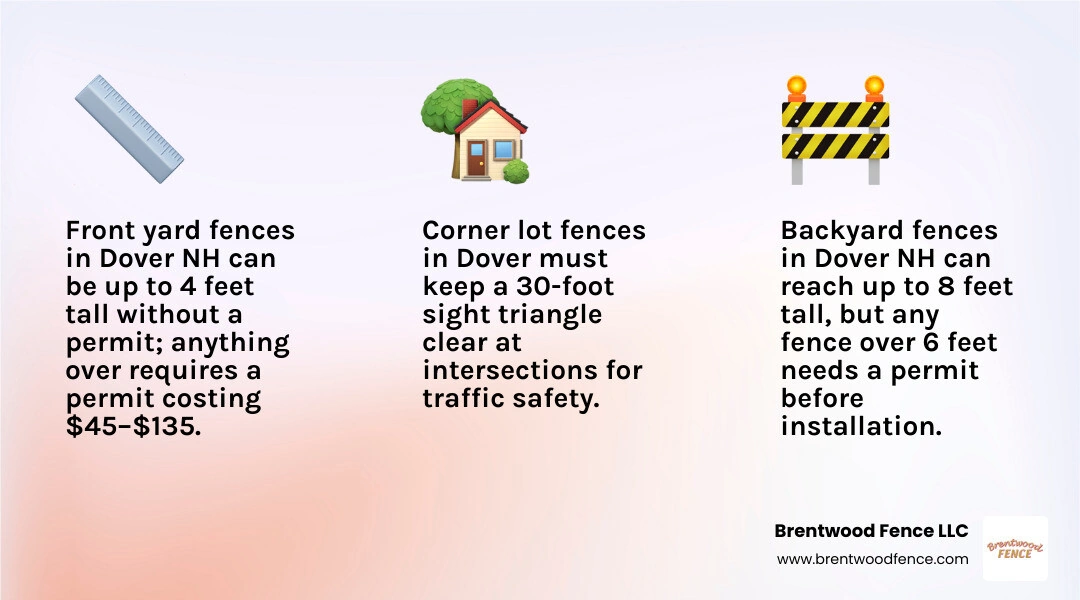
In Dover, the maximum height of your fence depends entirely on where it sits on your lot.
Dover also enforces the classic "Finished Side" rule (often called the "good neighbor" rule). This means the finished, smooth side of the fence must face outward toward neighboring properties or the street. The structural elements—such as posts, rails, and bracing—must face inward toward your own yard.
If your backyard fence is 6 feet or under, or your front yard fence is 4 feet or under, you are generally exempt from needing a permit. However, if you want a taller privacy barrier (such as a 7-foot or 8-foot backyard fence) or if you are installing a pool safety barrier, you must secure a building permit.
The permit process in Dover is straightforward:
If you are looking for a qualified partner to handle both the permitting paperwork and the physical installation, we recommend consulting an experienced Fencing Company New Hampshire to streamline the entire process.
If your home sits on a corner lot, you have to deal with a few extra safety rules. Because corner properties sit at the intersection of two streets, fences that are too tall or placed too close to the road can block the view of oncoming traffic.
To prevent accidents, Dover enforces a strict 30-foot sight triangle rule.
Within this triangular area—bounded by the intersecting street lines and a straight line connecting points 30 feet back from the intersection—no fence, wall, or vegetation may materially block a driver's vision. If you install a fence in this zone, it must be low to the ground and highly open (like a spaced picket fence), or you must set it back outside the 30-foot boundary.
It is worth noting that certain zoning districts in Dover (such as Commercial, Central Business, and Waterfront districts) are often exempt from standard residential fence height regulations.
However, if you live in a residential zone and have a unique property layout that makes it impossible to comply with standard rules, you must apply for a variance through the Dover Zoning Board of Adjustment.
You do not need a permit if you are building a backyard fence that is 6 feet or under, or a front yard fence that is 4 feet or under. However, you will need a permit if:
For more answers to common logistical questions, browse our comprehensive FAQ Fence Installation Service NH MA ME.
Yes, in Dover, you are technically allowed to install a fence directly on your property boundary line. There are no specific municipal setback requirements for standard boundary fences.
However, doing so requires absolute precision. If even an inch of your fence or its concrete footings crosses over the line, your neighbor has the legal right to demand its removal. We always recommend getting a professional property survey before digging, and discussing your plans with your neighbors to avoid future disputes. To explore different boundary line strategies, read our guide on Fence Solutions NH.
If your project requires a building permit, you must schedule two key inspections with the Dover Building Department:
To learn more about passing your inspections on the first try, read our Professional NH Fence Installers Guide.
Installing a high-quality privacy fence is the perfect way to turn your backyard into a quiet, secure retreat. However, navigating Dover’s 8-foot height limits, the "good neighbor" finished side rule, and the strict 30-foot sight triangle on corner lots requires careful planning and local expertise.
At Brentwood Fence LLC, we have spent years helping homeowners across southern New Hampshire design and install beautiful, code-compliant fences. From pulling permits to digging deep below the frost line, our team handles every detail so you can simply sit back and enjoy your yard.
Ready to secure your property? Contact us today to explore our premium Privacy Fencing Installation Services and get a free estimate for your home.


Copyright 2022 Brentwood Fence | All Rights Reserved | Sitemap | Website by Plumb Development a Digital Marketing Agency