Blog Content

24
Jul
2026
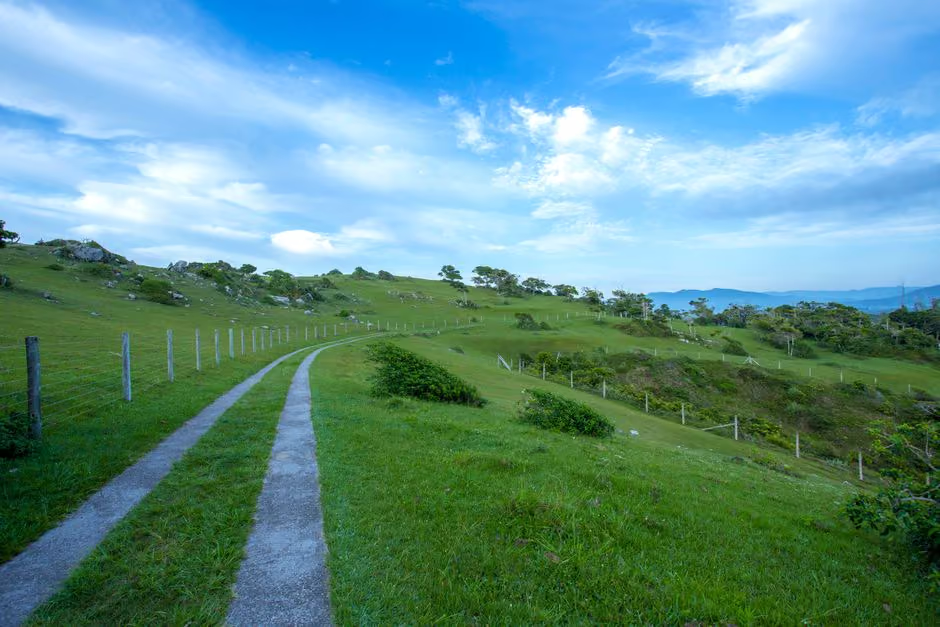
If you're looking for field fence installation near me, here's a quick overview of how to find the right installer and what to expect:
How to get field fence installation near you:
Field fencing is one of the most practical investments a property owner can make. It keeps livestock safe, defines boundaries, and protects land for the long run.
But finding the right installer? That's where things get complicated.
Over 900,000 farms across the United States rely on fencing for livestock management and property security. And with the U.S. fencing market valued at roughly $11.3 billion — and growing — there's no shortage of contractors claiming to do the job. The hard part is knowing who to trust.
A properly installed high-tensile field fence can last 20 to 30 years with minimal upkeep. A poorly installed one can fail in a single season — leaving you with escaped animals, boundary disputes, and a costly redo.
This guide walks you through everything: fence types, how to find a qualified local installer, what the installation process looks like, what it costs, and how to keep your fence working for decades.
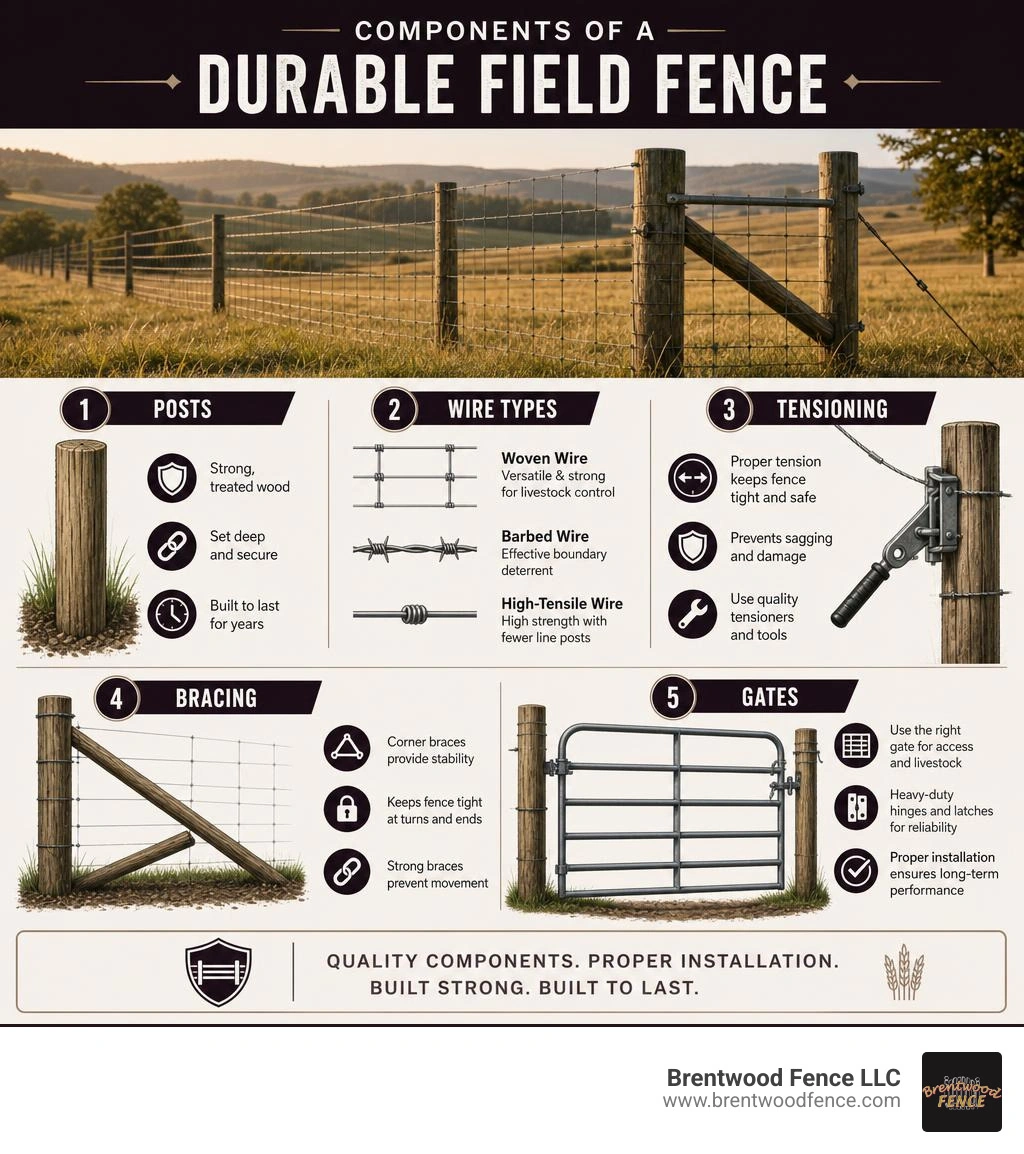

When selecting the perfect agricultural boundary, you cannot rely on a one-size-fits-all solution. The materials you select dictate how well your perimeter performs under physical pressure, weathering, and animal impact. Understanding your options is the first step toward a successful agricultural layout. To learn more about standard residential and commercial comparisons, read our Professional Fence Installation 101 guide.
Field fencing relies on three primary wire styles, paired with robust wooden or metal support posts:
These wire options are supported by a combination of heavy-duty wooden posts (ideal for corners and braces) and metal T-posts (perfect for cost-effective line support).
Every animal has its own unique personality and physical capabilities. A fence that holds back a massive, slow-moving cow will not stop a highly agile goat determined to taste the grass on the other side.
A field fence is only as strong as its foundation. If your posts fail, your entire perimeter will sag, lean, or collapse under pressure.
In our rugged New England climate—where winter temperatures plunge and ground frost shifts the earth—improperly set posts will quickly heave out of the ground. Proper post depth is critical; posts must be anchored deep below the local frost line (typically 36 to 48 inches deep in New Hampshire, Maine, and Massachusetts).
Additionally, the structural integrity of your fence depends on heavy-duty corner braces. Corner and gate posts bear the immense tension of the stretched wire, meaning they require robust wooden H-braces to prevent them from pulling inward over time. Line posts, whether wooden or metal T-posts, must be spaced correctly based on your terrain and livestock needs to maintain consistent vertical support. For more details on localized post-setting techniques, check out our guide on Fence Post Install Near Me NH MA ME.
Finding a qualified contractor in your area makes the difference between an agricultural asset that lasts 30 years and a headache that falls over in five. Because field fencing requires specialized equipment like hydraulic post drivers and heavy-duty wire stretchers, general home improvement contractors often lack the tools and experience required for large-scale rural perimeters.
When searching for the best local partner, start by looking for established professionals who understand the unique soils and weather conditions of New England. If you are ready to secure your property, we invite you to explore our comprehensive Fence and Gate Installation Near Me resource, or connect directly with our experts at Brentwood Fence LLC.
As you evaluate your options, keep these key indicators of professionalism in mind:
To broaden your search, read our detailed guide on evaluating Fence Installation Companies.
Before the first post is driven into the ground, you must ensure your project complies with municipal zoning laws, property boundaries, and regional building codes. Installing a boundary in the wrong spot can lead to expensive legal disputes or forced removal.
We proudly serve communities across New Hampshire, Massachusetts, and Maine. You can check our service coverage details at Where We Install Fences NH MA ME. Localized town compliance and zoning rules can vary significantly between cities like Portsmouth, Manchester, Concord, and Derry, so it is always best to consult with your local municipal office or a knowledgeable local installer to understand regional agricultural regulations.
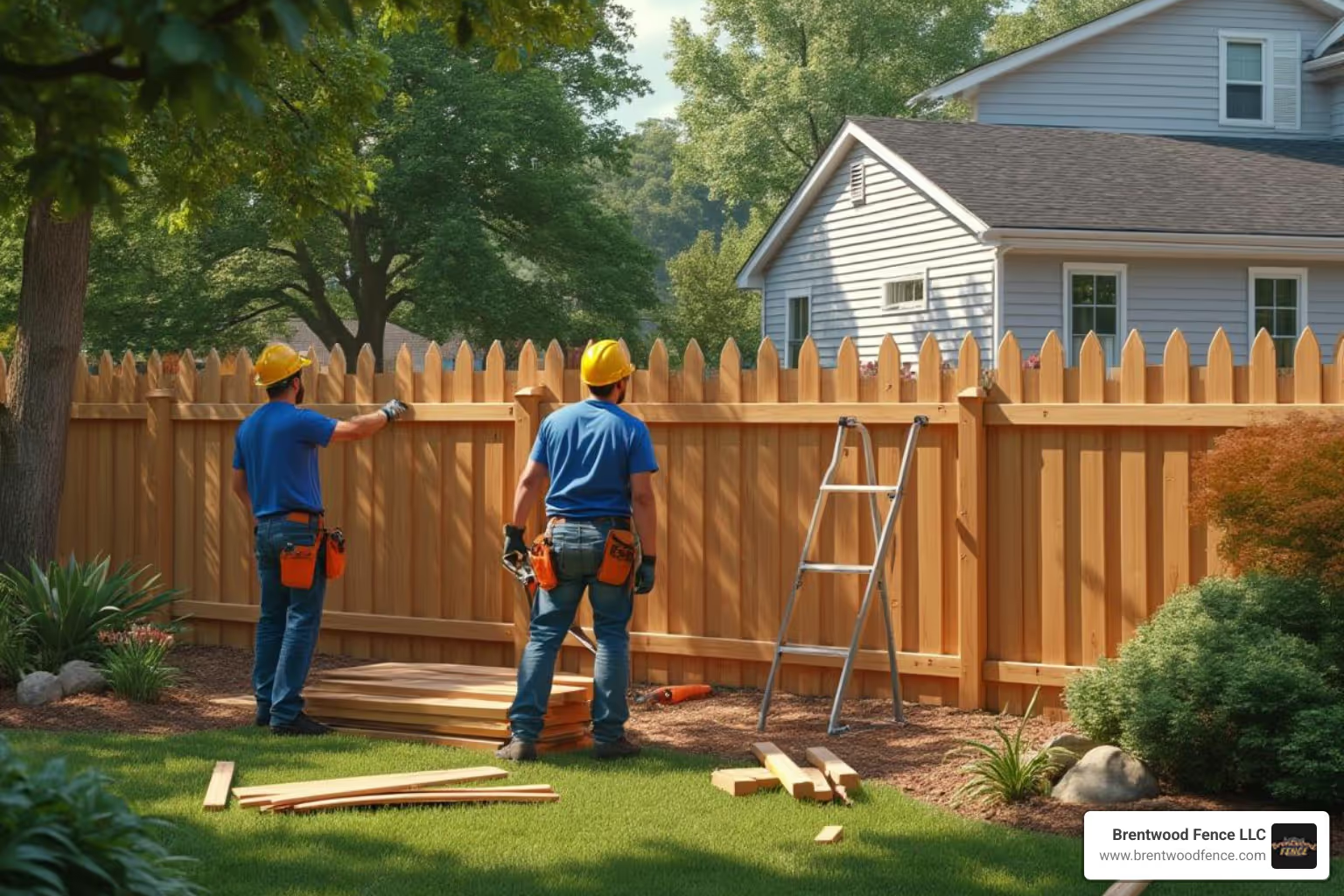
A professional field fence installation is a highly coordinated, multi-stage process that requires precision, physical labor, and heavy machinery. Knowing what to expect helps you prepare your land and schedule your daily farm operations. At our company, we prioritize clear communication and outstanding results through our Fence Installation Client Commitment.
The first phase is all about preparation and planning. Our professional crew will walk your property to analyze the terrain, identify potential obstacles (such as large rocks, roots, or marshy areas), and map out the exact fence line.
During this step, we coordinate utility markings through local Dig Safe services to ensure no underground lines are disturbed. We also finalize the placement of your gates, ensuring they are wide enough for tractors, mowers, or livestock trailers to pass through safely.
Once the layout is finalized, the physical installation begins:
Investing in a field fence is an investment in your property's long-term value. Understanding the factors that influence your initial estimate—as well as the steps required to maintain your perimeter—helps you plan your budget effectively. To learn more about regional pricing structures, read our Expert Fence Install Near You Guide.
The overall cost of your project depends on several key variables:
If you are tempted to cut corners or try a DIY installation, beware of these common pitfalls:
To ensure your agricultural boundary lasts for 20 to 30 years, follow these simple maintenance habits:
For most residential and small agricultural properties, a professional installation crew can complete the project in 1 to 3 days. The exact timeline depends on the total linear footage, terrain complexity, weather conditions, and the amount of land clearing required before the posts can be set.
When constructed with high-quality galvanized wire and pressure-treated, rot-resistant wooden posts, a professionally installed high-tensile field fence can easily last 20 to 30 years with very minimal maintenance.
Yes, we highly recommend obtaining a professional property survey before starting any boundary project. Installing a fence even a few inches onto a neighboring property can result in expensive legal disputes, tense neighbor relationships, and the costly requirement to tear down and rebuild the fence.
A high-quality field fence is more than just a physical barrier; it is a long-term investment in your land’s security, utility, and overall value. Whether you are containing cattle in Exeter, securing a horse pasture in Portsmouth, or establishing boundaries on a historic farmstead in Maine, professional craftsmanship makes all the difference.
At Brentwood Fence LLC, we combine decades of local experience, rugged materials, and specialized agricultural expertise to build perimeters that stand strong against New England's toughest weather.
Are you ready to secure your property with a beautiful, durable agricultural boundary? Visit our Where We Install Fences NH MA ME page to verify our service coverage in your area, and contact us today through our Fence Installation Services page to request your free, personalized project estimate!


Copyright 2022 Brentwood Fence | All Rights Reserved | Sitemap | Website by Plumb Development a Digital Marketing Agency