Blog Content

3
Jul
2026
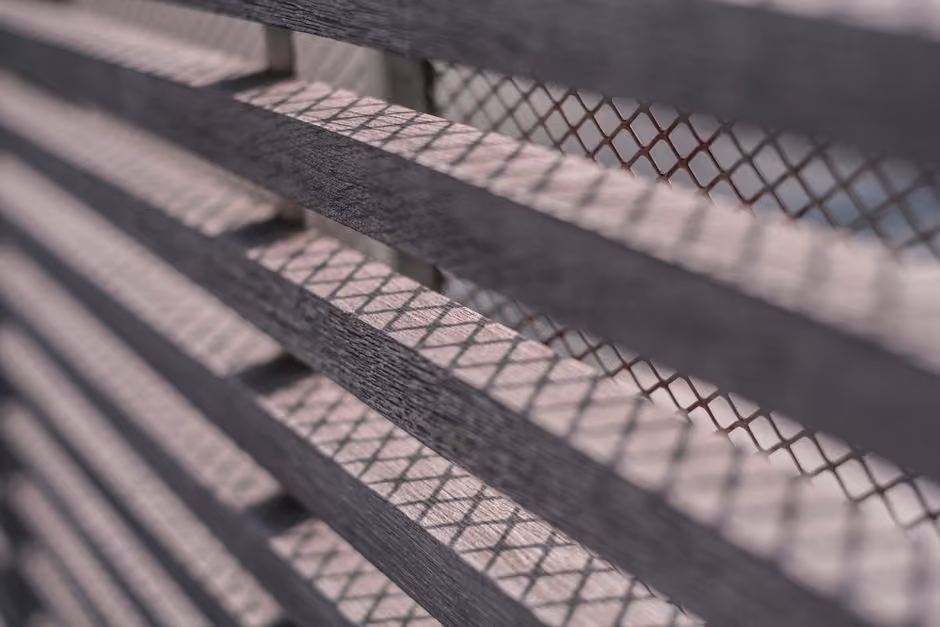
A horizontal fence with gaps is one of the fastest-growing choices for suburban homeowners who want modern style and practical performance — and the spacing between those boards matters more than most people realize.
Quick answer: What gap size should you use between horizontal fence boards?
Too little spacing and moisture builds up, causing rot and warping. Too much and you lose the privacy you were after in the first place.
The right gap depends on three things: your privacy needs, your local wind conditions, and the material you choose. Get that balance right and your fence works harder, lasts longer, and looks better doing it.
This guide breaks down exactly how to find that sweet spot — and what professional installation looks like when it's done correctly.

When you look at a traditional vertical fence, your eye tends to follow the boards upward toward the sky. However, when we install a horizontal fence with gaps, something magical happens to the perspective of your yard. Horizontal lines naturally expand spaces, making narrow backyards feel up to 20% wider visually. It is no wonder that searches for this specific style have increased by 21% on platforms like Pinterest recently; it transforms a simple boundary into a high-end architectural feature.
Beyond the "wow" factor, there is a lot of science behind the spacing. In the windy coastal areas of Portsmouth, NH, or the gusty hills of Derry, a solid privacy fence acts like a giant sail. A horizontal fence with gaps can reduce wind load by 30-40% compared to solid panels. This intentional spacing allows air to filter through rather than slamming into a solid surface, significantly increasing the durability of the structure during New England storms.
Furthermore, these gaps are a secret weapon against premature rot. By allowing air to circulate around all four sides of the fence boards, moisture buildup is drastically reduced. Homeowners often find that these semi-private designs require 25-50% less maintenance over time because the wood stays drier. For more inspiration on how this looks in practice, check out our Privacy Fence Ideas NH MA ME.
Choosing the right gap is a balancing act. If the gap is too tight, the wood has no room to expand when it rains in Manchester or Concord, which leads to buckling. If it is too wide, your neighbors might get a better view of your patio than you’d like.
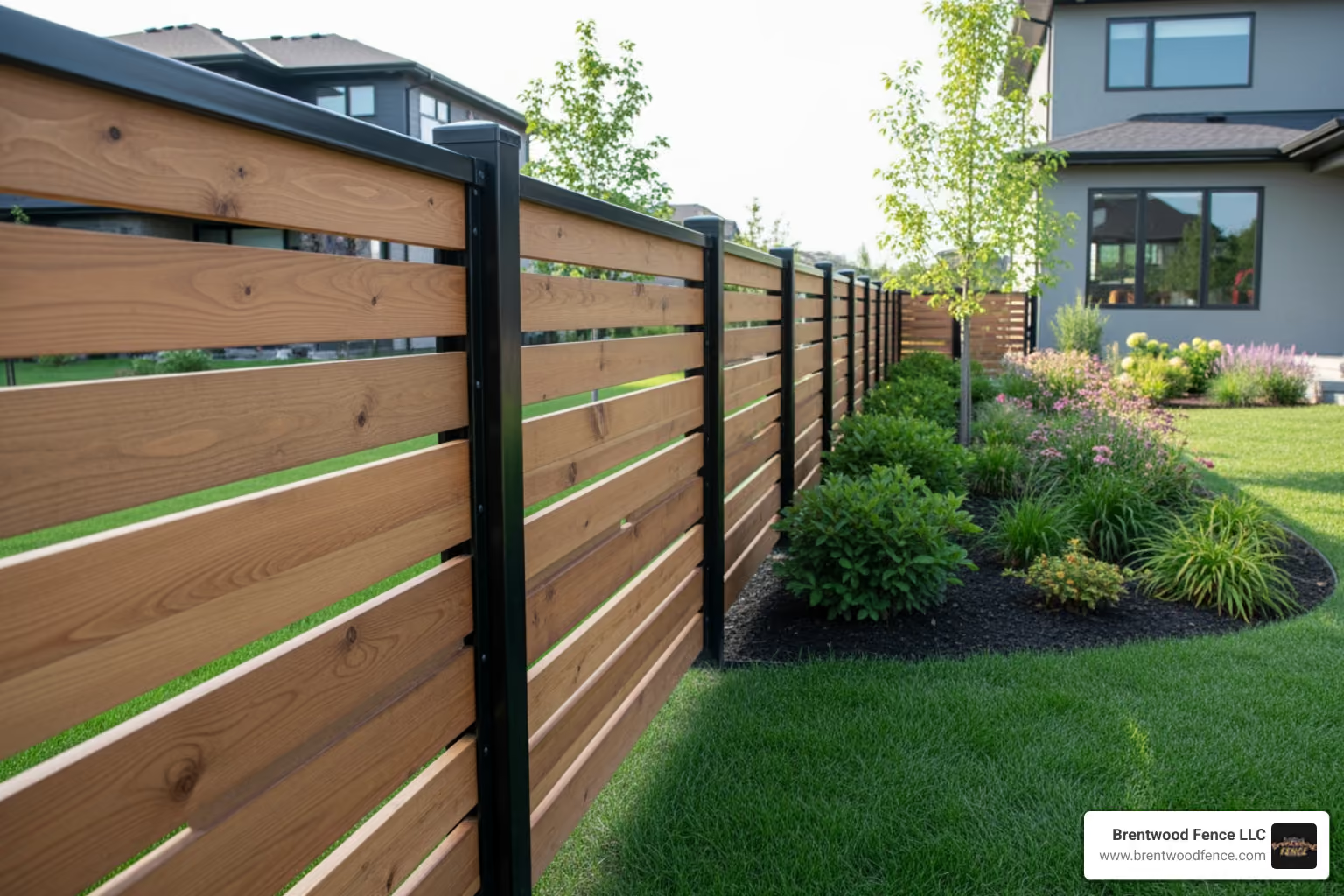
The "standard" gap for a modern look is often 10mm (about 3/8 of an inch). This creates a sharp, dark shadow line that looks incredible at sunset but still provides excellent screening. If you are looking for a more open, "Venetian" feel, moving up to a 1-inch gap allows more light to pass through, creating a dynamic play of shadows across your lawn.
For those who want total privacy without sacrificing airflow, we often recommend the shadowbox or "hit-and-miss" design. In this setup, boards are fastened to both the front and back of the posts in an alternating pattern. You get a fence that looks finished on both sides (no "bad" side for the neighbor!) and offers 100% visual privacy from a direct angle while still letting the breeze through.
Not all horizontal fences need to look like a window blind. We can play with patterns to create visual interest. Some homeowners prefer mixed-width patterns, where we alternate between 4-inch and 6-inch boards. This breaks up the monotony and adds a custom, artisanal feel to the property.
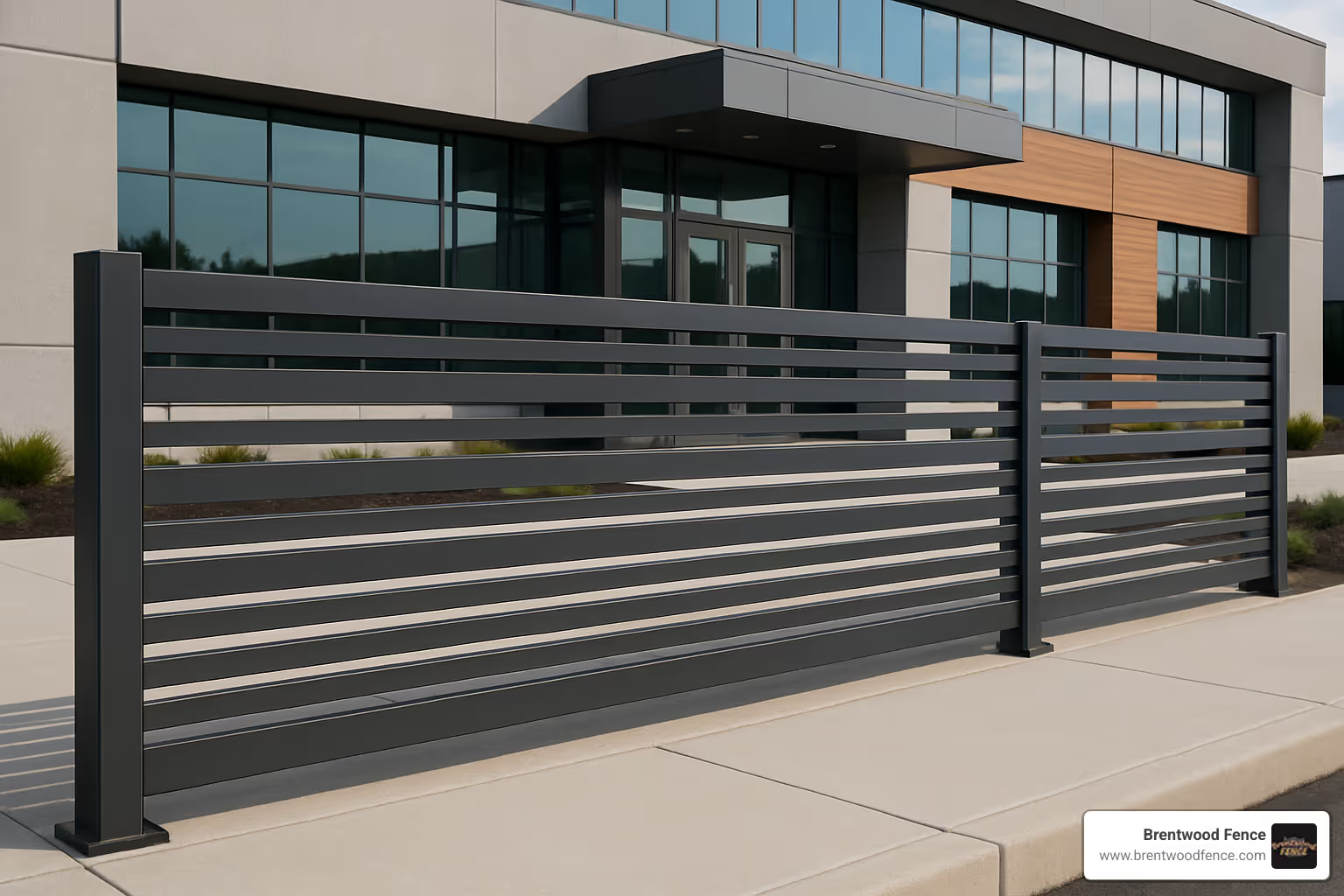
Another popular choice is the staggered join method. Instead of having every board end on the same post, we stagger the seams across different posts. This strengthens the overall run and creates a more seamless, "infinite" line. For a sleek, industrial edge, many of our clients are moving toward Modern Horizontal Metal Fencing, which uses precision-engineered aluminum slats that maintain perfectly uniform gaps year-round without the natural movement of wood.
The material you choose will dictate how those gaps behave over the next decade. In our region, from Haverhill, MA, up to Dover, NH, weather resistance is the top priority.
Gravity is the biggest enemy of a horizontal fence with gaps. While a vertical fence has boards that rest their weight on a bottom rail, horizontal boards are "fighting" to sag in the middle of the span.
To prevent this, we never space our posts more than 6 feet apart. While 8-foot centers are standard for vertical fences, that extra 2 feet of span is a recipe for bowing in a horizontal design. We also install a "center-stint" — a vertical support board hidden on the back of the slats — which ties the boards together and forces them to remain straight.
Our professional Horizontal Fencing Installation Services also include setting posts in 24 to 36 inches of concrete. This deep foundation is necessary to resist the "lever" effect of a horizontal fence. We also use stainless steel fasteners to prevent those ugly black streaks that occur when standard nails react with the natural acids in cedar.

New England isn't exactly flat. If your yard in Portsmouth or Exeter has a slope, a horizontal fence requires a specialized approach. Unlike vertical fences that can be "racked" to follow the ground, horizontal boards must remain perfectly level to look right.
We typically use the stepping method. This means the fence moves down the hill in "steps," with each section remaining perfectly horizontal. This creates a clean, geometric look, though it does leave a triangular gap at the bottom of some sections. If privacy is a concern, we can fill those bottom gaps with custom frameworks or decorative stone. Before we dig, we always handle the property line surveying and coordinate with Dig Safe to ensure your installation is legal and safe.
The key is post spacing and mid-span support. By keeping posts at 6-foot centers and using a vertical "stint" board in the middle of each bay, we eliminate the leverage gravity has on the boards. Choosing rigid materials like cedar or high-quality composites also helps maintain structural integrity.
Generally, yes. They require more precision in leveling, more posts (since they are spaced closer together), and higher-grade lumber to prevent warping. However, the increase in home valuation and curb appeal often outweighs the initial labor costs. You can see various pricing levels in our Residential Fencing Options section.
We recommend an annual inspection to check for loose fasteners and a gentle cleaning to remove pollen or dirt. For wood fences, staining every 2-3 years is vital to preserve the color and protect the wood from UV damage. Composite and metal options require significantly less work—usually just a quick wash with a hose.
A horizontal fence with gaps is more than just a property boundary; it is a design statement that turns your backyard into a modern sanctuary. Whether you are looking to expand the feel of a small Manchester yard or want a wind-resistant solution for a coastal Portsmouth home, the "hole truth" is that those small gaps make a huge difference in longevity and style.
At Brentwood Fence LLC, we specialize in the precision engineering required to make these fences last a lifetime in the New Hampshire and Massachusetts climate. Ready to upgrade your curb appeal? Explore our Horizontal Fencing Installation Services and let us help you design the perfect modern boundary for your home.
Copyright 2022 Brentwood Fence | All Rights Reserved | Sitemap | Website by Plumb Development a Digital Marketing Agency