Blog Content

4
May
2026
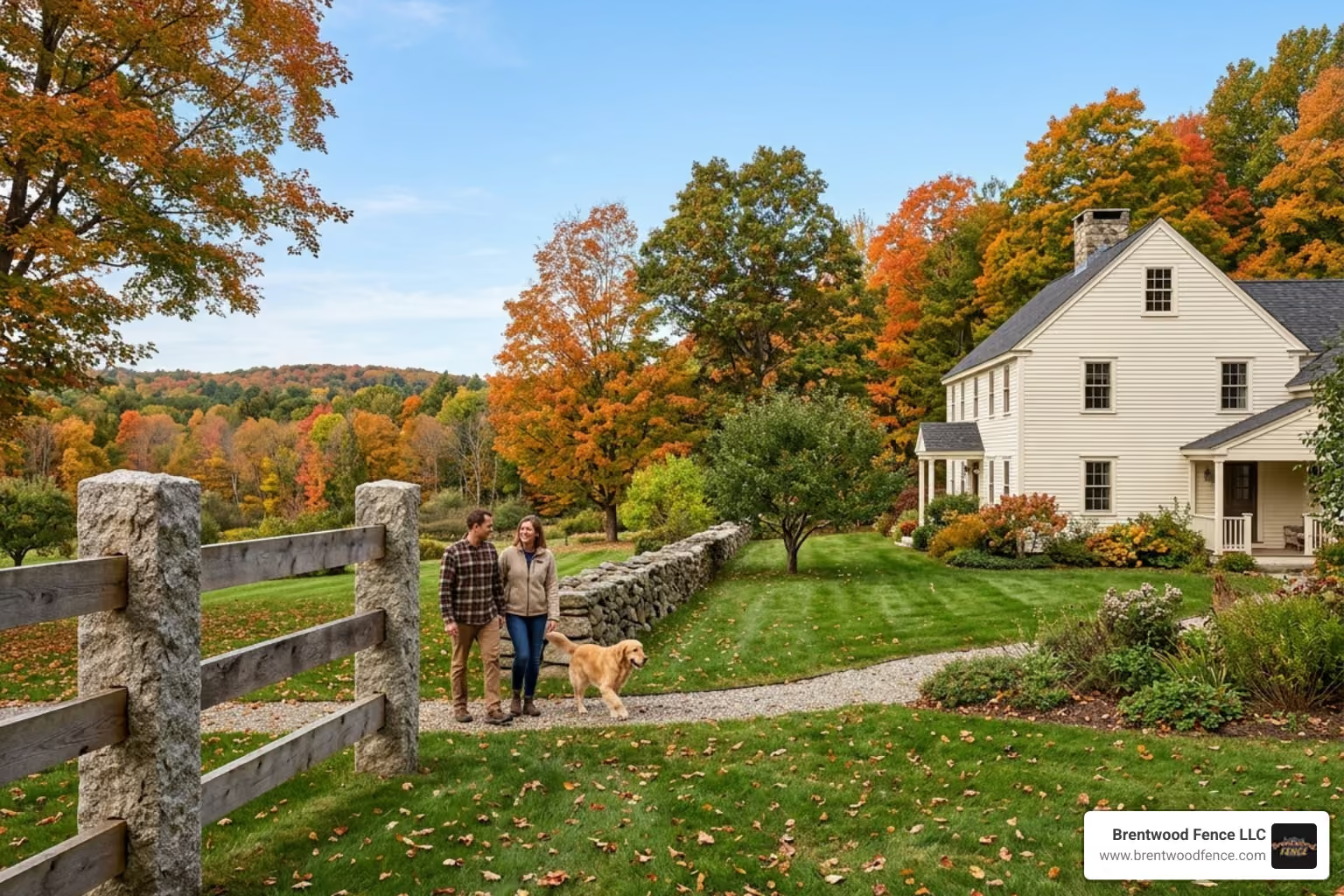
MA granite fencing installation pros offer homeowners a durable, low-maintenance, and visually stunning fencing solution that is uniquely suited to New England's harsh climate and historic landscapes.
Quick answer — here's what MA granite fencing installation pros provide:
If you're a Massachusetts homeowner tired of replacing rotted wood posts or rusted metal hardware every few years, granite fencing is worth a serious look. It costs more upfront — but it's often the last fence you'll ever need to install.
Wood posts splinter. Metal posts rust. Granite just... endures.
New England's rocky soil and brutal winters are actually a perfect match for granite's natural strength. Local fencing professionals who work with granite know how to navigate the region's unique challenges — from frost heave to rocky excavation — to deliver a fence that holds up for decades.
The sections below walk you through everything: the real pros of granite fencing, what installation looks like, how costs break down, and how to find the right fencing professionals in Massachusetts.
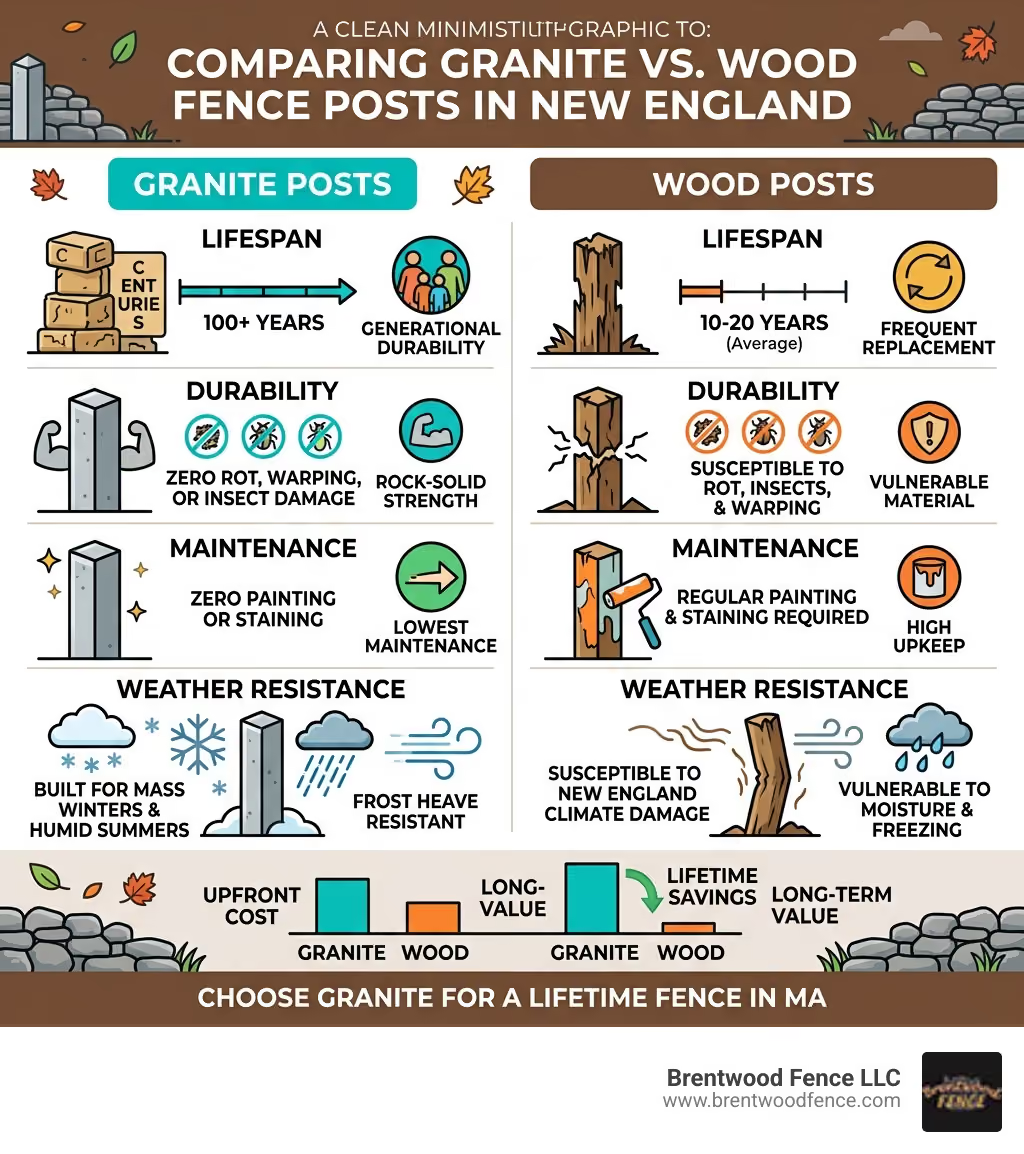
When you drive through historic towns like Concord, Salem, or Haverhill, you'll notice a common theme: stone. Specifically, granite. This isn't just a stylistic choice; it’s a survival strategy. Granite fence posts have been a staple in New England landscapes for centuries because they are essentially part of the earth itself.
In Massachusetts, our climate is a relentless cycle of expansion and contraction. We have humid summers, freezing winters, and "mud seasons" that can wreak havoc on traditional building materials. Wood posts, even the pressure-treated variety, eventually succumb to ground moisture and rot. Metal posts can oxidize and weaken over time. Granite, however, is indifferent to the rain, snow, and salt air.
Sourcing these materials from New England quarries ensures that the stone matches the natural geological hues of our region. This creates a seamless aesthetic that feels "right" in a Massachusetts yard. Beyond the looks, there is the functional benefit of weight. A granite post isn't easily moved by the heavy snow piles of a nor'easter or the shifting of the ground during a spring thaw. This stability protects the structural integrity of the entire fence line.
Furthermore, the investment in granite pays dividends in property value. High-quality fencing is known to return 50% or more of its cost through home value appreciation. When a potential buyer sees granite posts, they see "permanent" and "quality," which are two of the most attractive words in real estate. For more information on local options, you can explore Fencing Companies in Massachusetts.
While some homeowners might be tempted to try a DIY approach, the reality is that granite is incredibly heavy and unforgiving. Hiring MA granite fencing installation pros is the standard for a reason. These professionals bring the heavy machinery—like hydraulic augers and skid steers—necessary to handle posts that can weigh several hundred pounds each.
Professional installers ensure that each post is set at the proper depth to combat frost heave. In Massachusetts, if a post isn't deep enough, the freezing ground will literally "spit" it out over a few winters. Pros also guarantee precise leveling; because granite doesn't flex, your initial measurements must be perfect. It is a lifetime investment that requires a professional touch to ensure the "lifetime" part actually happens.
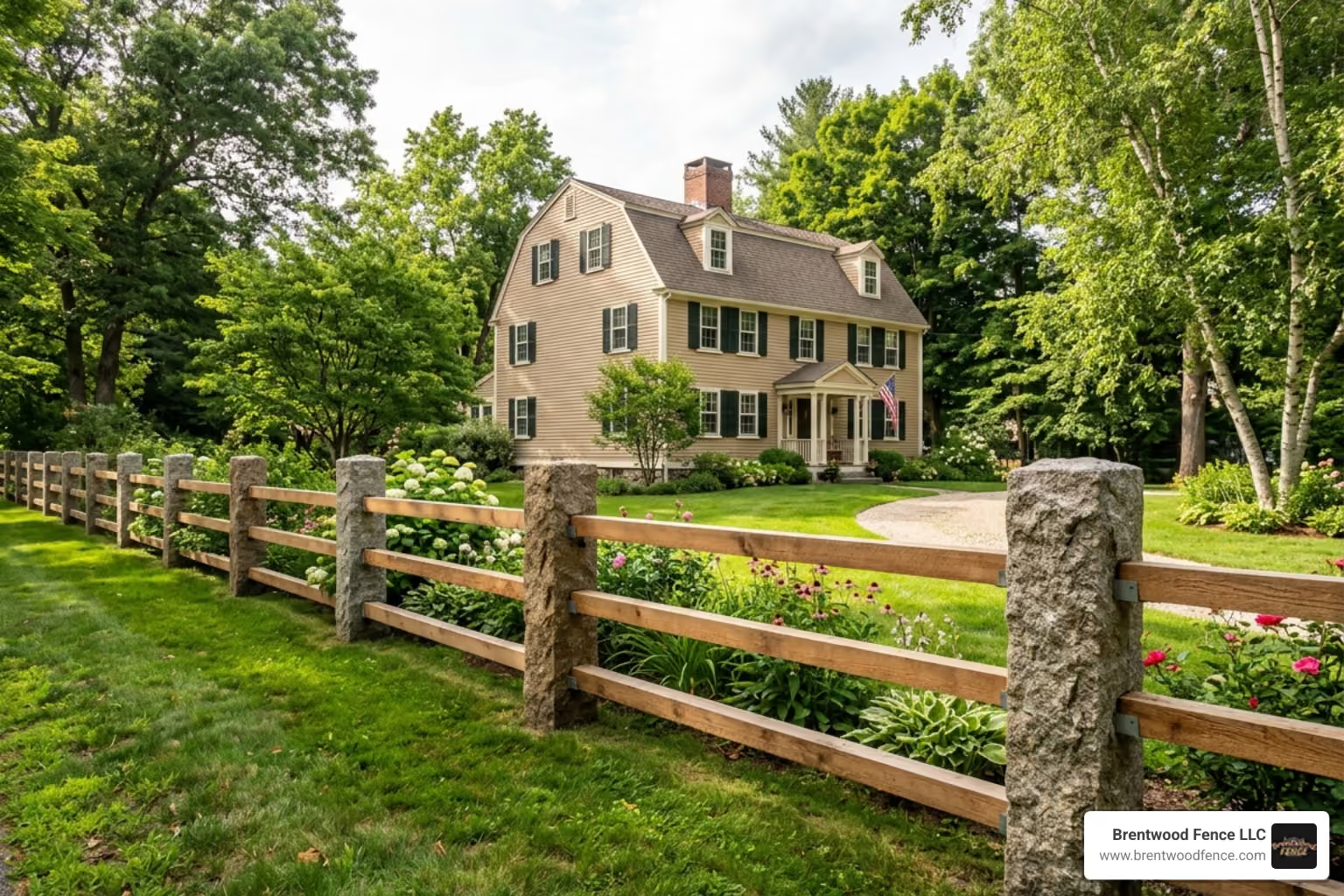
Granite doesn't have to look like a raw chunk of rock (unless that’s the rustic look you’re going for). Modern MA granite fencing installation pros offer a wide array of customization options to match your home’s specific architecture:
To truly understand why granite stands out, it helps to see how it stacks up against the "big four" of the fencing world: wood, vinyl, aluminum, and chain link. While each has its place, granite offers a unique set of advantages in the New England environment.
The primary "con" of granite is the initial price point. However, when you calculate the cost over 50 years, wood becomes significantly more expensive due to the need for replacement every 15 years and the cost of staining every 3 years. Granite is a "one and done" solution.
One of the biggest misconceptions is that granite posts can only be used with stone walls. In reality, they are incredibly versatile. You will often see them paired with:
For a deeper dive into how these styles come together, check out our Granite Posts Fencing Installation Services.
Installing a fence in Massachusetts isn't like installing one in the sandy soil of Florida. Our ground is famously "bony"—filled with granite chunks, glacial till, and stubborn roots.
The process begins long before the first hole is dug. We always coordinate with Dig Safe (811) to mark underground utilities. In many Massachusetts towns, hitting a gas or water line isn't just dangerous; it's an expensive legal nightmare.
Once the site is cleared, the real work begins. Because granite posts are heavy and rigid, the holes must be wider and deeper than standard post holes. We often encounter "refusal"—the point where a standard auger hits a rock it can't move. Professional MA granite fencing installation pros use specialized equipment to either remove these boulders or safely anchor the post to the bedrock.
Proper drainage is also key. We use a combination of crushed stone and concrete footings to ensure that water drains away from the base of the post, preventing the "ice jacking" that causes posts to tilt over time. For more on the legalities of where and how you can dig, see our guides on Fence Regulations Massachusetts and the Massachusetts Fence Laws Guide.
Let’s talk numbers. While every project is unique based on the terrain and the number of gates, there are some standard industry benchmarks for granite post projects in the Massachusetts and New Hampshire area:
Permits and Local Bylaws:In Massachusetts, many towns have specific rules regarding fence height (often capped at 6 feet for backyards and 4 feet for front yards) and "setbacks" from the property line. You can find more information on state-wide regulations through the Massachusetts Law About Neighbors and Fences resource. If you live in a historic district like Lexington or Newburyport, you may need approval from a historic commission to ensure the stone and style match the neighborhood's heritage.
Despite the higher entry price, the ROI (Return on Investment) is substantial. Because granite doesn't degrade, it adds permanent "hardscape" value to your home, much like a stone patio or a paved driveway.
Yes, for the average homeowner. A standard 7-foot granite post can weigh between 200 and 400 pounds. Moving, plumb-lining, and securing these requires heavy equipment and at least two to three experienced installers. Professional expertise ensures they are level and won't lean after the first big frost.
Technically, they last for centuries. Granite is one of the hardest stones on Earth. While the wood rails or metal brackets attached to them might eventually need replacing, the granite posts themselves will likely outlast the house they are protecting. They are immune to rot, wood-boring insects, and UV degradation.
Usually, yes. Most MA municipalities require a building permit for any permanent fence structure. Additionally, you must ensure the fence is entirely within your property boundaries. We always recommend a professional survey if there is any doubt about the property line to avoid "spite fence" litigation, which is surprisingly common in New England.
When it comes to securing your property and enhancing its beauty, granite is the ultimate "buy once, cry once" investment. It captures the rugged, timeless spirit of New England while providing a level of durability that no other material can match.
At Brentwood Fence LLC, we pride ourselves on our local expertise and our deep understanding of the Massachusetts landscape. Whether you are looking for a simple split-rail boundary or a grand ornamental entrance, our team has the tools and experience to handle the heavy lifting. Don't settle for a fence that will rot away in a decade—choose the strength of granite.
Ready to upgrade your property with a fence that stands the test of time? Explore our Granite Posts Fencing Installation Services and let us help you build a New England legacy right in your backyard.


Copyright 2022 Brentwood Fence | All Rights Reserved | Sitemap | Website by Plumb Development a Digital Marketing Agency