Blog Content

14
Feb
2026
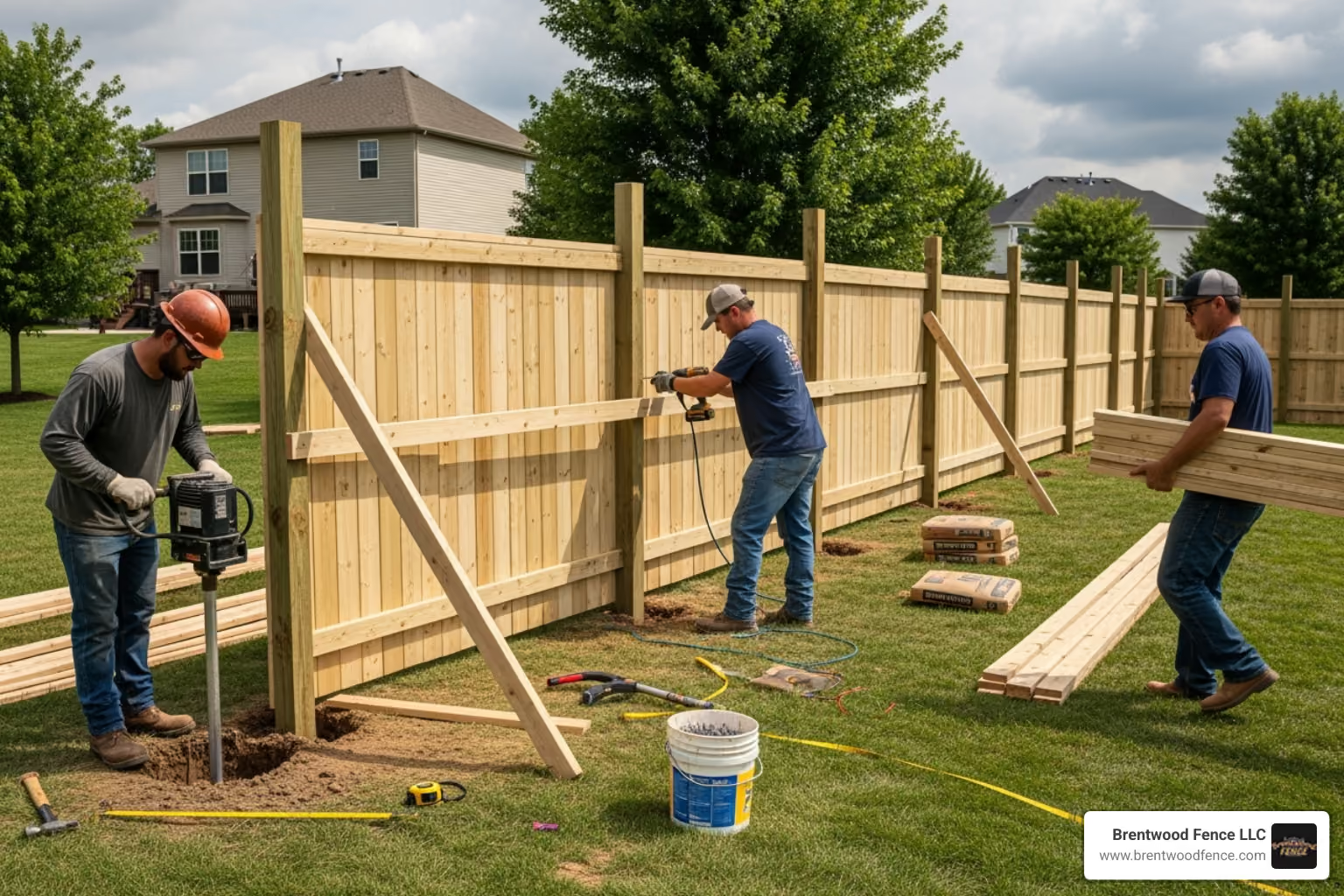
Privacy Fencing Installation involves setting up barriers around your property to create seclusion, improve security, and boost curb appeal. Here's what you need to know:
Key Installation Steps:
Professional vs. DIY:
Installing a privacy fence might seem straightforward, but the reality is far more complex. Property lines must be verified, utilities located, local codes followed, and posts set to precise depths - often one-third the fence height plus 6 inches for gravel drainage. A single mistake in post placement or concrete mixing can lead to sagging, leaning, or complete fence failure within months.
Professional installers bring expertise that saves time, prevents costly errors, and ensures your investment lasts decades rather than years. They handle permits, steer local regulations, and use specialized equipment like power augers and concrete mixers that most homeowners don't own.
The difference between a DIY weekend project and professional installation becomes clear when winter frost heaves hit or strong winds test your fence's structural integrity. Professional installers understand soil conditions, frost lines, and proper bracing techniques that keep fences standing strong through New England's harsh weather cycles.
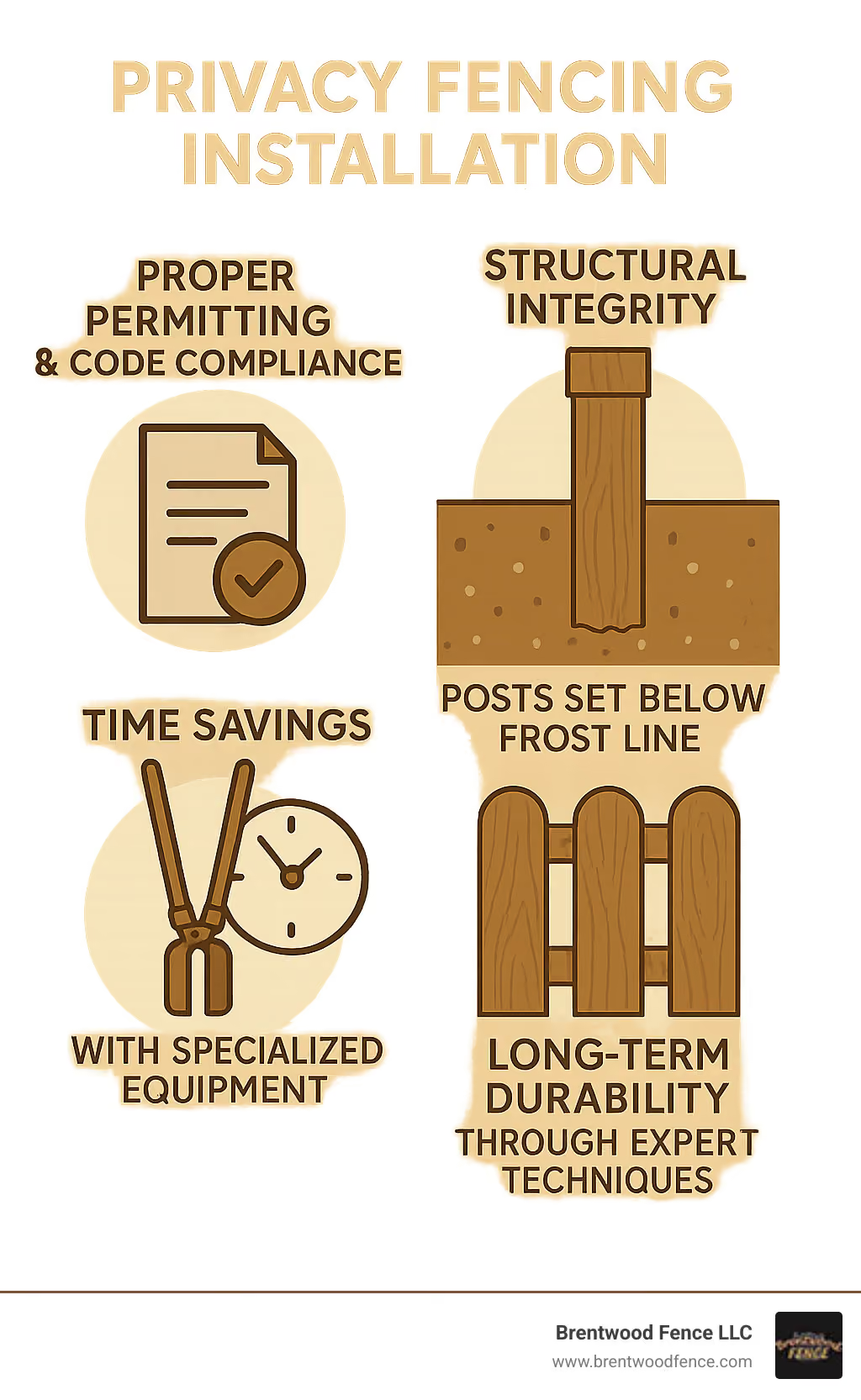
Picking the perfect privacy fence feels a bit like choosing a new car - there are so many options, and you want to make sure you get exactly what fits your needs and budget. The material and style you choose will shape how your property looks, how much maintenance you'll deal with down the road, and how well your investment holds up through New England's unpredictable weather.
At Brentwood Fence LLC, we've helped countless homeowners across New Hampshire, Massachusetts, and Maine steer these choices. Let's walk through your options together.
Wood fencing remains the classic choice for good reason. Cedar stands out as New England's favorite, naturally fighting off rot and pesky insects without any chemical help. It starts with that gorgeous warm tone, then gracefully ages to a distinguished silver-gray that looks right at home against our region's natural backdrop.
Pressure-treated pine offers similar durability at a friendlier price point. The treatment process infuses the wood with preservatives that keep decay and insects at bay. Here's a pro tip from our installation team: always use stainless steel or hot-dipped galvanized hardware with treated lumber to prevent corrosion issues later.
While wood gives you that authentic, customizable look you can stain or paint to match your vision, it does ask for regular attention. Plan on staining or sealing every few years to keep it looking its best and prevent warping or cracking.
Vinyl fencing has won over many homeowners who want the privacy without the upkeep. Yes, it costs more upfront, but many of our customers tell us it pays for itself over time. No staining, no rot, no insect damage - just an occasional rinse with the garden hose.
Modern vinyl comes in heights from 4 to 6 feet, with options for decorative lattice tops that add style without sacrificing privacy. You can even find wood-grain finishes that give you the look of timber with vinyl's durability. Most manufacturers back their vinyl with solid warranties too.
Composite fencing splits the difference beautifully. Made from recycled wood fibers and plastic, it delivers wood's natural appearance with much better weather resistance. It's heavier than other options and typically costs more than wood, but the eco-friendly angle appeals to environmentally conscious homeowners.

Note: Costs are approximate averages and can vary significantly based on style, regional pricing, and installation complexity.
Once you've settled on your material, the fun part begins - choosing a style that reflects your personality and meets your privacy needs.
Full privacy panels do exactly what they promise: create a solid barrier that completely blocks views into your yard. Think of them as your outdoor room walls, perfect for families who want maximum seclusion for pool areas, patios, or just peaceful backyard retreats.
Shadowbox style offers an interesting twist on traditional fencing. The pickets alternate on either side of the rails, creating partial privacy while still allowing airflow and filtered light. What we love about shadowbox is that it looks attractive from both sides - your neighbors will appreciate the thoughtful design.
Board-on-board construction takes privacy seriously. The overlapping boards ensure no gaps appear even as the wood naturally expands and contracts with our changing seasons. This creates a textured, substantial appearance that speaks to quality craftsmanship.
Decorative tops can transform a basic privacy fence into a landscape feature. Lattice accents remain popular because they add visual interest while supporting climbing roses or clematis. A 7-foot fence with solid lower panels and decorative lattice on top strikes the perfect balance between privacy and style. Scalloped edges or custom picket designs can also add that personal touch that makes your fence uniquely yours.

The beauty of professional Privacy Fencing Installation lies in the customization possibilities. Our team can blend materials and styles to create something perfectly suited to your property's character and your family's needs.
For more inspiration specific to our New England climate and regulations, check out our guides on Best Privacy Fence Options NH, MA, ME and Privacy Fence Ideas NH, MA, ME. These resources dive deeper into what works best in our unique corner of the country.
Think of Privacy Fencing Installation like building a house - you wouldn't skip the foundation, right? The same principle applies to fencing. What looks like a simple weekend project actually involves a complex dance of planning, permits, and precision that can make or break your investment.
We've seen too many DIY fence disasters over the years. Posts that lean like the Tower of Pisa after one winter. Gates that sag so badly you need a crowbar to open them. Fences built six inches onto the neighbor's property (talk about awkward conversations!). That's why our professional process exists - to save you from these headaches and ensure your fence stands strong for decades.
Before we even think about digging the first hole, there's serious detective work to be done. This planning phase might seem tedious, but it's what separates a professional installation from a costly mistake.
Property line verification comes first, and it's absolutely critical. You'd be amazed how many property disputes we've seen over fences built just a few inches in the wrong spot. We always recommend having your property lines professionally surveyed, and we typically set posts about 4 inches inside your property line. This small buffer prevents your concrete footings from accidentally encroaching on your neighbor's land.
Next up is the famous call to 811 - and we cannot stress this enough. Before any digging begins, you must CALL DIG SAFE before any digging begins. This isn't just a suggestion; it's the law in most areas. Underground utilities are everywhere, and hitting a gas line or electrical cable can turn your fence project into a very expensive (and dangerous) nightmare.
Local codes and HOA rules are another maze we help you steer. Every town from Exeter to Portsmouth has its own quirks about fence height, setbacks, and materials. Some neighborhoods allow 8-foot privacy fences, others cap you at 6 feet. We know these regulations like the back of our hand, so you don't have to worry about getting a violation notice after your beautiful new fence is installed.
Permitting might be required depending on your location and fence specifications. Rather than making you trudge down to city hall with paperwork, we handle the entire permit process. We know which forms to fill out and how to get approvals quickly.
Finally, we clear the fence line of vegetation, rocks, and debris. If your planned fence crosses a driveway or walkway, we have the specialized tools to cut through pavement cleanly. We then lay out the project with stakes and string, marking exactly where every post will go, including corners and gate locations.
Here's where the magic happens - and where most DIY projects go wrong. Posts are the backbone of your fence, and in New England's challenging climate, they need to be set perfectly to survive our harsh winters.
Post hole depth isn't negotiable. We dig holes to one-third the fence height plus 6 inches for gravel, or below the frost line - whichever is deeper. In much of New Hampshire, Massachusetts, and Maine, that means holes 30 inches deep or more. Frost heave is real, and shallow posts will pop out of the ground like corks from a bottle when the ground freezes and thaws.
Our power augers make quick work of even the rockiest New England soil. While DIYers struggle with manual post hole diggers, we can create precise 10-inch diameter holes in minutes. This speed isn't just about convenience - it means consistent hole sizes and depths across your entire fence line.
Gravel drainage goes in first - about 4 to 6 inches at the bottom of each hole. This prevents water from pooling around your posts, which is especially important for wood posts that can rot if they stay wet.
Concrete mixing requires the right proportions for maximum strength. We place each post dead center in its hole, then pour concrete around it, tamping out air pockets with steel bars. The top gets crowned to shed water away from the post - a small detail that makes a huge difference in longevity.
Keeping posts plumb and level separates the pros from the weekend warriors. We use specialized levels and bracing systems to ensure every post is perfectly vertical and aligned. Posts stay braced until the concrete fully cures - usually 24 hours or more depending on weather conditions.

With solid posts in place, your fence starts looking like, well, a fence! This assembly phase requires precision and attention to detail that shows in the finished product.
Rails get attached first - typically at the top, middle, and bottom of each section. We use galvanized fasteners that won't rust or corrode, ensuring your fence stays structurally sound for years. These horizontal rails create the framework that everything else builds upon.
Installing pickets or panels comes next, and this is where consistent spacing makes all the difference. For board-by-board construction, we use spacers to ensure uniform gaps between pickets. Pre-fabricated panels can speed up installation, but component-built fences follow your yard's natural contours better - especially important on sloped or uneven terrain.
Gate construction deserves special attention because gates take more abuse than any other part of your fence. We use larger, reinforced posts set deeper in concrete for extra strength. The gate opening gets sized precisely - typically 1-1/4 inches wider than the gate itself to allow for hardware clearance and smooth operation.
Professional hardware makes gates that actually work long-term. Heavy-duty hinges, anti-sag hardware, and quality latches aren't just nice-to-haves - they're essential for a gate that won't drive you crazy in two years. For vinyl gates, we often insert wooden reinforcement into the posts to provide solid anchor points for the hardware.
Final finishing touches separate a professional installation from an amateur attempt. Every fastener gets checked, every panel gets leveled, and every detail gets inspected. Your Privacy Fencing Installation isn't just functional - it's a beautiful addition to your property that you'll be proud of for years to come.
When you're considering a Privacy Fencing Installation, it's natural to wonder about the investment you're making. Will this fence last? What will it cost? How much upkeep will it need? These are the questions we hear most often, and honestly, they're exactly what you should be asking.
The truth is, a professionally installed privacy fence is more than just a purchase – it's an investment in your home's value, your family's privacy, and your peace of mind. Let's break down what you can expect in terms of costs, how long your fence will serve you, and what it takes to keep it looking great.
Every fence project is unique, just like every yard and every homeowner's needs. The cost of professional installation depends on several key factors that work together to determine your final investment.
Material choice plays the biggest role in your upfront costs. A board-and-stringer wood fence might run around $175 for an 8-foot section, while a pre-fabricated panel fence could cost about $230 for the same distance. Vinyl fences typically fall between $130 and $150 per section, though they often save you money in the long run through reduced maintenance needs.
Labor costs cover the skilled work that makes all the difference – the careful planning, precise digging, expert post setting, and meticulous assembly. When you hire professionals, you're paying for efficiency and expertise that simply can't be matched by a weekend DIY project. Most complete wood fence installations, including materials and labor, range between $2,000 and $4,000, though this varies significantly based on your specific project.
Your yard's characteristics also influence the final price. Taller fences need longer posts and more materials. Slopes, rocky New England soil, obstacles like trees or utilities, and tricky access all require additional time and specialized techniques. If you need gates – especially custom designs or multiple entry points – expect additional costs for the extra materials and heavy-duty hardware.
The best way to understand what your fence will cost is through a detailed quote from experienced installers. We believe in transparent estimates that account for every aspect of your project, so you know exactly what to expect with no surprises.
A well-installed fence is just the beginning. The right finishing touches and proper maintenance make the difference between a fence that looks good for a few years and one that improves your property for decades.
Wood fences need protection to reach their full potential. Applying a quality stain or sealant protects against moisture, UV damage, and pests – extending your fence's life significantly. For cedar, wait about 60 days after installation for the wood to properly dry before staining. Always prime bare wood first for the best results. Plan to reapply protective finishes every few years to keep your fence looking and performing its best. You can read more about pressure treated lumber preservatives to understand how they contribute to longevity.
Post caps might seem like small details, but they serve dual purposes. They give your fence a polished, finished appearance while protecting the tops of your posts from weather damage. Water intrusion through unprotected post tops is one of the leading causes of premature fence failure.
Vinyl fences are wonderfully low-maintenance, but they're not no-maintenance. An occasional cleaning with water and mild biodegradable dish soap using a soft brush will keep them looking pristine for years. Unlike wood, they won't rot, fade significantly, or attract pests.
Regular inspections are your fence's best friend, regardless of material. Check hardware periodically, especially on gates. Look for loose fasteners, worn hinges, or sticky latches, and address issues promptly to prevent bigger problems down the road.
Vegetation management is often overlooked but crucial. Trim back plants and shrubs that grow against your fence. This prevents moisture buildup, discourages insects, and protects your fence from physical damage.
For more insights into choosing the right privacy solution for your property, explore our comprehensive guide on Best Fencing for Privacy: Top Options.
When homeowners start thinking about Privacy Fencing Installation, they naturally have questions. After years of installing fences throughout New Hampshire, Massachusetts, and Maine, we've heard just about everything. Here are the answers to the most common questions that come up during our initial consultations.
Most homeowners are pleasantly surprised by how quickly a professional team can transform their property. For a typical residential privacy fence, you're looking at 1 to 3 days from start to finish. That includes everything - site preparation, post setting, panel assembly, and gate installation.
Several factors can affect this timeline, though. Fence length and complexity play the biggest role. A simple 100-foot straight run goes much faster than a fence that winds around landscaping or includes multiple gates. Material type matters less than you might think - while pre-fabricated panels can speed up assembly, the real time is spent in the careful groundwork that makes your fence last.
Terrain challenges are common in New England. Rocky soil or steep slopes require specialized techniques that take extra time but ensure a rock-solid result. Weather delays can also impact scheduling, especially during concrete curing. We need at least 24 hours for concrete to set properly, and we won't compromise on this crucial step just to meet a deadline.
The good news? Professional installers work efficiently because they do this every day. What might take a weekend warrior weeks to complete, we handle in days - and with far better results.
We've seen plenty of fence disasters over the years, and most stem from the same handful of mistakes. Understanding these pitfalls helps explain why professional installation is worth every penny.
Ignoring property lines tops our list. Building even a few inches onto your neighbor's property creates legal headaches that can drag on for years. We always verify boundaries before breaking ground, saving you from awkward conversations and potential lawsuits.
Incorrect post depth is another biggie, especially here in New England. Posts that aren't set below the frost line will shift, lean, or pop out of the ground during freeze-thaw cycles. We know exactly how deep to dig in every area we serve - it's not guesswork when you've done thousands of installations.
Forgetting permits might seem like a minor oversight, but building officials don't see it that way. Local codes vary significantly, and what's allowed in Portsmouth might not fly in Concord. We handle all the paperwork, so you don't have to worry about surprise violations.
Choosing wrong materials for your specific situation leads to disappointment down the road. A fence that looks great in the showroom might not hold up to your lifestyle or local weather patterns. We help you select materials that match your needs, budget, and maintenance preferences.
Poor gate installation frustrates homeowners more than almost anything else. A sagging gate that won't latch properly defeats the purpose of having a fence in the first place. Gates need special reinforcement and precise hardware installation - it's definitely not a place to cut corners.
Absolutely! Sloped yards are incredibly common in our service area, and we've developed reliable techniques for handling everything from gentle grades to steep hillsides.
We use two main approaches depending on your slope and preferences. Stepped fences work beautifully on steeper inclines. Each panel stays perfectly level, but the fence "steps" down the hill, following the general contour of the ground. It creates a clean, organized look that many homeowners prefer.
Racked fences angle with the slope, maintaining consistent spacing between the fence bottom and ground. This creates a smoother, more flowing appearance that works especially well on gentle to moderate slopes. The fence line follows your yard's natural curves rather than fighting against them.
Contouring to the ground is crucial regardless of which method we use. Nobody wants large gaps under their fence or an awkward appearance that draws attention for all the wrong reasons. Our installers ensure your fence looks like it belongs on your property, working with the landscape rather than against it.

The key is having experienced installers who understand how slopes affect post placement, drainage, and long-term stability. What looks simple on paper becomes complex in reality, but that's exactly why professional installation makes such a difference.
Your journey toward Privacy Fencing Installation represents more than just adding a barrier around your property—it's an investment in your family's comfort, security, and your home's long-term value. Throughout this guide, we've walked through the intricate process that transforms raw materials into a beautiful, functional fence that will serve you for decades.
The difference between a weekend DIY project and professional installation becomes crystal clear when you consider the meticulous pre-installation planning required. Property line verification prevents costly disputes with neighbors, while calling 811 protects your family from dangerous utility strikes. Local building codes and HOA regulations aren't just bureaucratic problems—they're safeguards that ensure your fence meets community standards and won't become a legal headache down the road.
Expert post setting forms the backbone of any successful fence project. In New England's challenging climate, with deep frost lines and rocky soil, setting posts to the correct depth with proper concrete footings isn't just recommended—it's essential. The specialized equipment professionals bring, from power augers to concrete mixers, ensures precision that hand tools simply can't match.
The structural integrity that comes with professional installation means your fence will stand strong through harsh New Hampshire winters, coastal Maine storms, and everything Mother Nature throws at it. While the upfront investment in professional installation might seem higher, the peace of mind that comes with knowing your fence is built to last makes it worthwhile.
We take pride in our craftsmanship and understand that every property in communities like Exeter NH, Portsmouth NH, Manchester NH, Concord NH, Derry NH, Dover NH, and Haverhill MA has unique characteristics. Our team brings years of experience working with New England's varied terrain and challenging weather conditions.
When you're ready to move forward with your privacy fence project, we're here to help. Contact us for your Privacy Fencing Installation Services in NH and let Brentwood Fence LLC transform your outdoor space into the private sanctuary you've been dreaming of. We proudly serve homeowners and businesses across New Hampshire, Massachusetts, and Maine, delivering quality workmanship that stands the test of time.

Copyright 2022 Brentwood Fence | All Rights Reserved | Sitemap | Website by Plumb Development a Digital Marketing Agency