Blog Content

13
Dec
2025
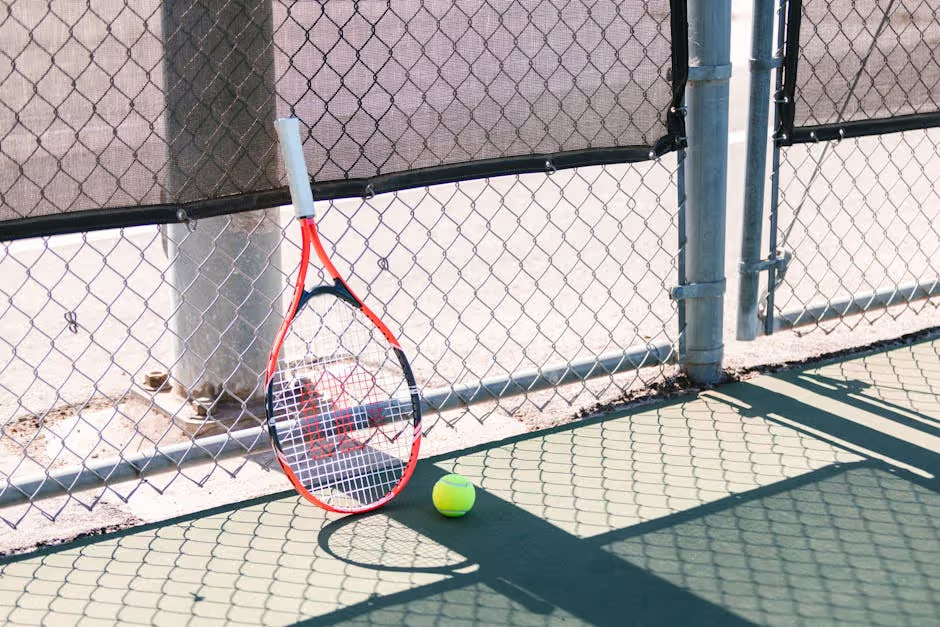
Sports court fencing installers near me are professionals who specialize in installing durable, sport-specific fencing for tennis, basketball, pickleball, and multi-use athletic courts. Here's what to look for when searching for the right installer:
Quick Finder: What to Look for in Local Sports Court Fencing Installers
A well-designed sports court fence isn't just about boundaries; it improves the game, defines the space, and keeps play focused and uninterrupted. Without it, you'll spend more time chasing balls than playing, leaving your court vulnerable to damage and unauthorized use. The right fence keeps balls in play, protects players and spectators, prevents vandalism, and can significantly boost your property value. For homeowners who've invested in a quality sports court, professional fencing is the final piece that makes it truly functional and secure.
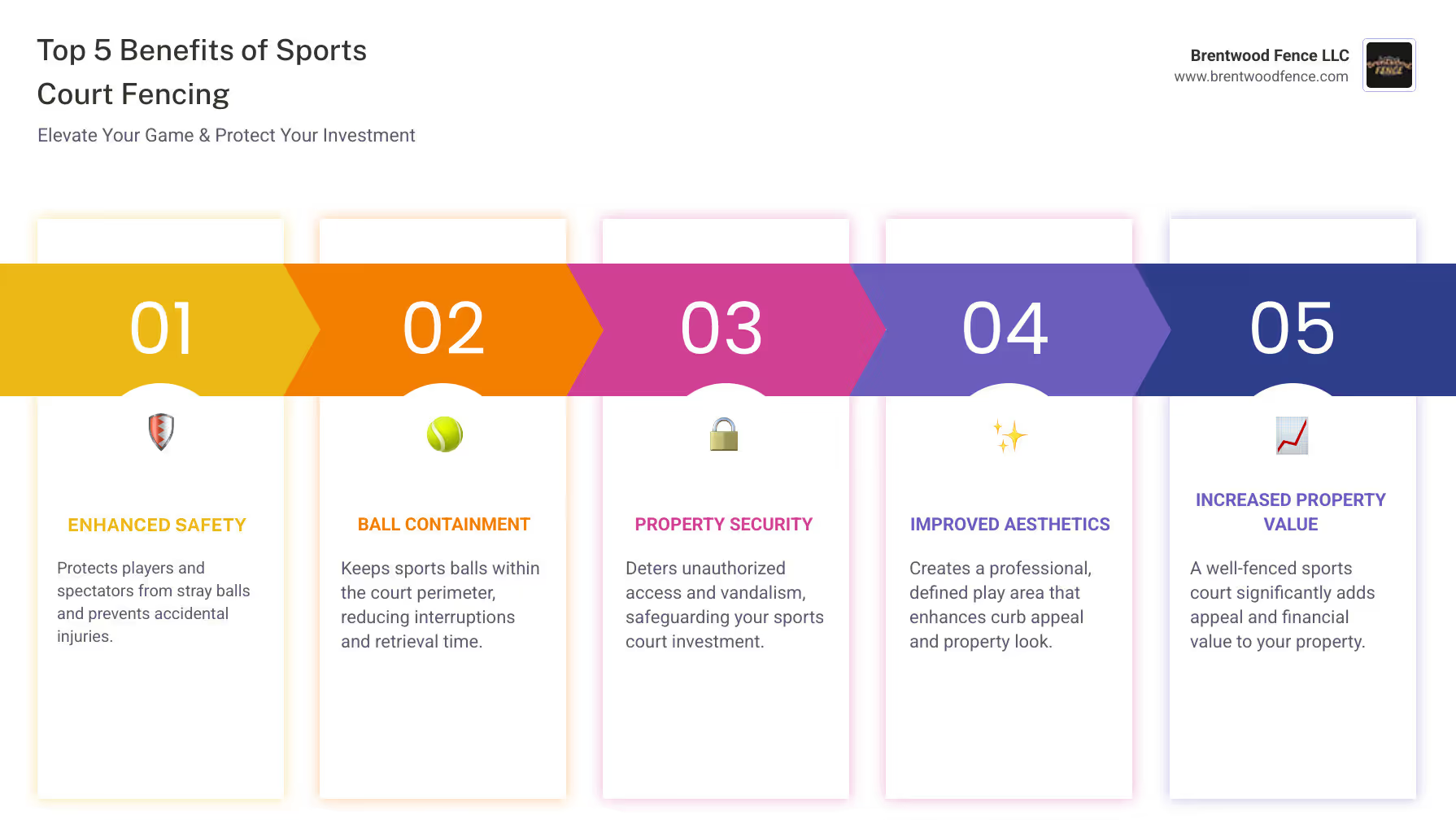
Installing sports court fencing transforms a simple paved area into a dedicated, safe, and enjoyable athletic space. The most obvious benefit is ball containment—no more chasing runaway tennis balls down the street. But the advantages extend far beyond that. A strong fence acts as a crucial safety barrier, protecting players from running into hazards and shielding spectators or passersby from stray balls. It also deters unauthorized use and reduces the risk of vandalism, securing your investment. To learn more about our commitment to quality, visit our page About Our Local Fencing Company.
One of the most critical roles of sports court fencing is to improve safety and functionality. A game of tennis or pickleball is constantly interrupted when balls fly out of bounds, posing a risk to people and property nearby. Fencing ensures continuous play by keeping balls contained.
Beyond ball containment, fencing creates a clear boundary that protects players from running into hazardous areas. For families, this means keeping children and pets safely within the playing zone. Spectator safety is also paramount, as a proper fence shields onlookers from accidental impacts. By creating an enclosed play zone, sports court fencing allows everyone to focus on the game without worrying about external distractions or safety hazards. For comprehensive solutions including gates, explore our Fence and Gate Installation Near Me services.
Beyond its practical benefits, sports court fencing improves the look and value of your property. A professionally installed fence contributes to curb appeal, giving your home a modern and purposeful appearance. It signals that your court is a high-quality, maintained amenity, which can be a major draw for potential buyers.
A professional fence transforms a simple court into a distinct, high-end feature. It can also offer privacy, making your court feel like a secluded oasis for play. This aesthetic improvement, combined with added functionality and security, directly contributes to an increased home value. It's an investment that pays dividends in both enjoyment and equity. We've heard many satisfied customers share their experiences; read their stories on our Fence Installation Testimonials NH MA ME page.

Choosing the right fence for your sports court is as important as picking the right equipment for your game. Your decisions on materials, height, and design will directly impact your court's performance, longevity, and appearance. When searching for sports court fencing installers near me, the conversation will start with materials like traditional galvanized chain-link, sleeker vinyl-coated fencing, or functional netting systems.
Beyond materials, you'll need to consider design factors like fence height, which varies by sport, and how your local climate might affect your fence. A tennis court in a mild climate has different needs than a basketball court in the harsh New England winters we experience in New Hampshire, Massachusetts, and Maine. For a solution customized to your specific needs, explore our Sports Court Fencing Installation Services.
Understanding the three main fencing materials helps you make an informed choice for your sports court.
Galvanized chain-link is the traditional, budget-friendly workhorse. Its zinc-coated steel is highly durable and rust-resistant, making it a popular choice for larger courts or community facilities. The main drawback for some homeowners is its industrial, silver-grey appearance.
Vinyl-coated chain-link improves upon the galvanized version by adding a protective vinyl layer. This provides superior protection against rust and weathering, which is especially valuable in our coastal and humid New England climate. It also offers a cleaner, more modern look in colors like black or green. Black vinyl is particularly popular for residential courts because it blends into the background, providing an open feel while containing play. While it costs more than plain galvanized chain-link, most homeowners find the aesthetic and durability benefits are well worth the investment.
Netting systems use flexible, high-strength nets for ball containment. These systems offer excellent functionality with minimal visual obstruction, maintaining sightlines and making the space feel less enclosed. They are often used in combination with lower fencing or as overhead barriers. The trade-off is that nets may not be as durable as steel chain-link over the long term and can tear from hard impacts.
Here's how these materials stack up against each other:
In our experience, vinyl-coated chain-link hits the sweet spot for most residential sports courts in New England. It stands up to our variable weather while offering a professional appearance. We can also add windscreen options to any chain-link fence for wind reduction and added privacy.
Have more questions about which material is right for your situation? Our FAQ Fence Installation Service NH MA ME page covers many common concerns.
After choosing a material, the next decision is fence height, which depends on your sport.
A popular design trick is to install higher fencing at the ends and lower fencing (3 to 4 feet) along the sides. This contains the ball where needed while allowing for comfortable spectator viewing and reducing costs.
Customization allows you to tailor the fence to your property. We can design fences with varying heights and colors, like black to blend in or green to complement landscaping.
Climate considerations are crucial in New England. To handle heavy snow and strong winds, we recommend commercial-grade SS-40 posts over standard residential SS-20 posts. These heavier-duty posts, combined with proper post diameters, ensure your fence remains structurally sound for years.
When looking at your new sports court, you might be tempted to install the fence yourself to save money. However, sports court fencing is a project where professional installation is almost always the winning strategy. It involves precise measurements, heavy equipment, and structural knowledge that can make or break your investment. Finding reliable sports court fencing installers near me is about ensuring your fence performs correctly for years to come. For guidance on finding the right experts, check out our Expert Fence Install Near You Guide.
Professional sports court fencing installers near me bring experience and equipment that DIY methods can't match. Some fencing companies have over 65 years of experience handling New England's rocky terrain and frost heaves, allowing them to anticipate and solve problems before they start. For more on professional standards, visit our Professional Fence Installation 101 page.
Not all fencing contractors specialize in sports courts. When searching for sports court fencing installers near me, do your homework to find a true expert.
When you work with experienced sports court fencing installers near me, the process follows carefully planned stages.
The entire timeline is typically 2-5 days for a standard residential court. To connect with experienced local installers, visit our NH MA ME Fence Installation Companies page.
Investing in sports court fencing is a significant decision. Understanding the financial commitment and potential maintenance helps you plan wisely. While professional installation ensures longevity, knowing what to expect financially and how to care for your fence sets you up for long-term success.

When you request a Free Fencing Installation Estimate, several factors shape the final number.
Even high-quality fences face challenges, especially with New England's demanding climate. Knowing what to look for helps you protect your investment.
For isolated issues, professional repair is often cost-effective. For extensive or recurring problems, replacement may be the better long-term solution. For any repair needs, our team at Fence Repair Company NH MA ME is ready to help.
When considering a sports court fence, it's normal to have questions. Understanding the details helps you make the best choice for your property. Here are some of the most common questions we hear from homeowners in New Hampshire, Massachusetts, and Maine about sports court fencing installers near me.
Fence height depends on the sport. Tennis courts require 10 to 12-foot high fences, especially behind the baselines, to contain high-bouncing serves and lobs. Basketball court fences can be shorter, typically 8 to 10 feet, as the game is more vertically contained. For residential courts, a popular design uses taller fences at the ends with lower 3-4 foot fences along the sides to allow for better spectator viewing.
A professional installation for a standard residential court typically takes 2 to 5 days. This timeline can vary based on the court's size, fence complexity, and site conditions like rocky soil. The schedule includes crucial time for the concrete post footings to cure properly, ensuring a stable and long-lasting fence.
For most homeowners, the answer is a resounding yes. While it costs more than standard galvanized chain-link, vinyl-coated fencing offers significant long-term value. Its extra coating provides superior rust resistance, which is critical in New England's humid and snowy climate. Aesthetically, the clean look of black or green vinyl is a major upgrade over industrial-looking galvanized steel. The added durability and visual appeal easily justify the modest price increase for a fence you'll enjoy for decades.
Choosing the right fence and installer is about creating a space where your family can truly enjoy the game. A professionally installed sports court fence transforms a simple paved area into a dedicated athletic haven for everything from perfecting a tennis serve to hosting weekend pickleball tournaments.
We've covered why professional installation is key, how to choose the right materials and height for your sport, and what to expect during the process. The bottom line is that quality materials, expert installation, and sport-specific design are necessities for a fence that will serve you well for decades. A well-designed fence improves property value, provides security, and creates a safe environment for players and spectators.
For homeowners in New Hampshire, Massachusetts, and Maine searching for sports court fencing installers near me, the team at Brentwood Fence has the experience to build fences that stand strong against New England weather.
Ready to stop chasing balls and start enjoying your court? We're here to help. Contact us today to discuss your sports court fencing installation services and let's build something that will bring your family joy for years to come.

Copyright 2022 Brentwood Fence | All Rights Reserved | Sitemap | Website by Plumb Development a Digital Marketing Agency