Blog Content

25
Jun
2026
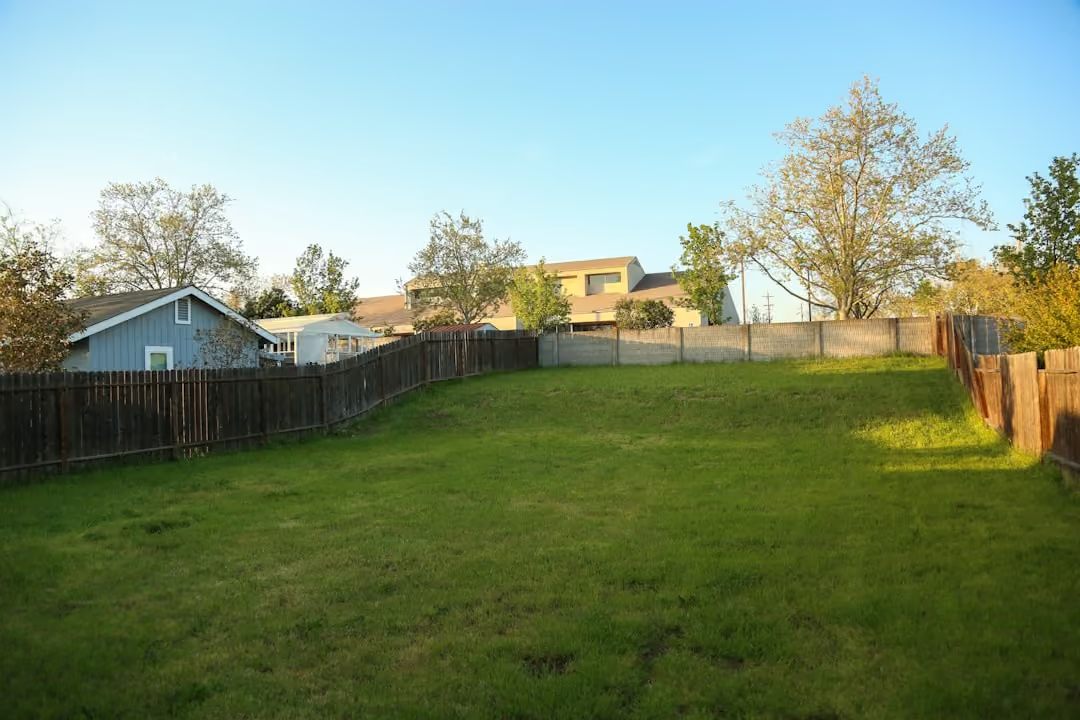
A backyard privacy fence does more than block the view from neighbors — it transforms how you use and feel about your outdoor space.
Quick answer: the most popular backyard privacy fence options in 2026 are:
About 65% of U.S. homeowners say privacy is the main reason they install a backyard fence. And it pays off — real estate professionals estimate a well-installed fence can boost your home's resale value by 5–10%.
The U.S. fencing market hit $11.4 billion in 2023 and keeps growing. More homeowners are investing in fences that look great, last longer, and add real value to their property.
But with so many materials, styles, heights, and local regulations to navigate, planning a privacy fence can feel overwhelming — especially if you've dealt with a contractor who didn't show up, gave vague pricing, or left the job half-finished.
This guide cuts through the noise. Whether you're replacing an old rotting fence or starting from scratch, we'll walk you through everything: materials, design ideas, costs, permits, and what to expect from professional installation.

Backyard privacy fence terms to know:

Choosing the right material for your backyard privacy fence is the most critical decision you will make. The material dictates not only the upfront cost but also how much time you will spend scrubbing, painting, or staining over the next ten to twenty years.
In our service areas across New Hampshire, Maine, and Massachusetts, we experience the full gamut of New England weather—from humid, scorching summers to freezing, snow-heavy winters. This means your choice of material needs to withstand extreme temperature swings and moisture.
When evaluating your options, consider durability, maintenance requirements, and how the material fits your home’s aesthetic. To help you weigh your options, check out our comprehensive guide on the types of privacy fences NH MA ME to see how different styles fit into local landscapes.
Wood remains a timeless favorite for homeowners seeking a warm, organic look that blends seamlessly with nature. If you are leaning toward wood, you will primarily choose between cedar and pressure-treated pine.
Cedar is widely regarded as the gold standard for wood privacy fences. It contains natural oils that make it highly resistant to rot, decay, and insect damage. When left unstained, cedar gracefully ages into a beautiful silver-gray patina that looks right at home in coastal Maine or historic Portsmouth, NH. However, if you prefer to retain its warm, original amber tones, you will need to apply a high-quality sealant or stain every couple of years.
Pressure-treated wood is treated with chemical preservatives to resist rot and insects, making it a highly durable and budget-friendly alternative. It often has a slight green tint when freshly installed, but this fades over time to a warm brown or gray.
Because wood is highly customizable, you can build it in various configurations. To explore your options further, read our article on the types of wood privacy fences NH MA ME. For those interested in understanding the construction process behind a classic wood fence, you can review the technical layout steps in the guide on How to Build a Wood Fence | Lowe’s .
If the thought of spending your weekends with a paintbrush and a bucket of stain makes you break out in a cold sweat, modern synthetic materials are your best friend.
Vinyl fencing has exploded in popularity across New England. High-quality vinyl fences are constructed with advanced engineering features like GlideLock technology, which snaps the tongue-and-groove pickets tightly together to eliminate gaps entirely. They also utilize StayStraight rails to prevent sagging over time. Vinyl requires virtually zero maintenance—just a quick spray with a garden hose twice a year to wash away dirt and grass clippings.
Composite fencing is another premium option that has seen massive growth. Made from a blend of recycled wood fibers and plastics, composite gives you the rich, textured look of natural wood without any of the splinters, warping, or insect worries. Some modern composite options are even manufactured using sustainable agricultural materials like wheat straw.
To see which of these modern materials suits your property best, check out our breakdown of the best privacy fence options NH MA ME.
While ornamental aluminum fences are gorgeous, their open-spindle design does not offer much in the way of privacy. However, you can achieve a sleek, modern look by combining aluminum posts with horizontal wood or composite slats. This mixed-material approach offers the strength of metal with the complete visual barrier of wood or vinyl.
For a highly durable, cost-effective alternative, chain link fences can be upgraded for privacy. By inserting heavy-duty HDPE (High-Density Polyethylene) privacy slats directly into the chain link mesh, you can block up to 75% to 90% of the view. This is an excellent option for large backyards, commercial boundaries, or secure pet enclosures. Learn more about these budget-friendly setups in our privacy options chain link guide.

A backyard privacy fence doesn't have to look like a boring, solid wall of wood or plastic. Your fence is an extension of your home’s architecture and can be customized to boost your curb appeal while keeping prying eyes out. If you are looking for creative inspiration, our curated list of privacy fence ideas is packed with gorgeous visual layouts.
In narrow or smaller yards, a massive, solid 6-foot fence can sometimes make the space feel cramped—almost like you're sitting at the bottom of a wooden box. To prevent this, we recommend utilizing vertical design elements that draw the eye upward, giving the illusion of a loftier, more open space.
Using semi-private screens or modular privacy walls is a fantastic way to carve out secluded zones without suffocating your yard. For instance, you can use specialized framing systems like the Up to 24' Stand-Alone Backyard Privacy Wall Kit w/ 6x6 Frame to create elegant, freestanding screens. These are perfect for blocking out a specific neighbor's window or hiding ugly trash cans. For more small-yard inspiration, explore our guide on backyard fences screens NH MA ME.
We have all heard the old saying, "good fences make good neighbors." But that is only true if your neighbor isn't stuck staring at the "ugly" side of your fence—the side with all the exposed posts and horizontal rails.
To keep the peace (and keep your property looking stunning from every angle), consider a dual-sided design.
Designing a fence that harmonizes with both your yard and your neighbor's property is a delicate balance. Discover how to pull this off seamlessly in our guide to backyard privacy design.
Once the structural foundation of your fence is built, you can customize it to match your personal style and landscaping.
Adding solar-powered post caps is an incredibly easy way to introduce warm ambient lighting to your backyard, making your outdoor spaces usable long after the sun goes down. You can also mount custom planter boxes directly to horizontal slats to create a lush, vertical garden. Climbing plants like clematis, ivy, or climbing hydrangeas can be trained to grow along a lattice-top fence, softening the hard lines of the wood or vinyl and integrating the structure beautifully into your garden.
For a complete look at how to customize your perimeter, check out our resource on yard privacy fencing options NH MA ME.
Before a single post hole is dug, proper planning is essential. Failing to prepare can lead to awkward property line disputes, expensive fines from your Homeowners Association (HOA), or worse—accidentally slicing through an underground utility line.
If you want to understand the entire timeline of a professional installation, dive into our comprehensive privacy fencing installation guide.
Every town across New Hampshire, Maine, and Massachusetts has its own unique zoning laws regarding residential fences. Most municipalities restrict backyard fences to a maximum height of 6 feet, while front yard fences are often capped at 4 feet.
If you live in an HOA-governed community in Manchester, NH, or Haverhill, MA, you will need to submit your design plans to the HOA board for approval. They often have strict rules regarding acceptable materials, colors, and even which way the "good" side of the fence must face.
Before any excavation begins, it is legally required to call 811 (the national "Call Before You Dig" hotline). They will coordinate with local utility companies to mark any buried gas, electric, water, or fiber-optic lines on your property for free.
For a complete checklist on how to prepare your property and keep your neighbors happy, read through our backyard fence solutions NH MA ME.
While building a fence yourself might sound like a fun weekend warrior project, the reality is often physically exhausting and technically unforgiving.
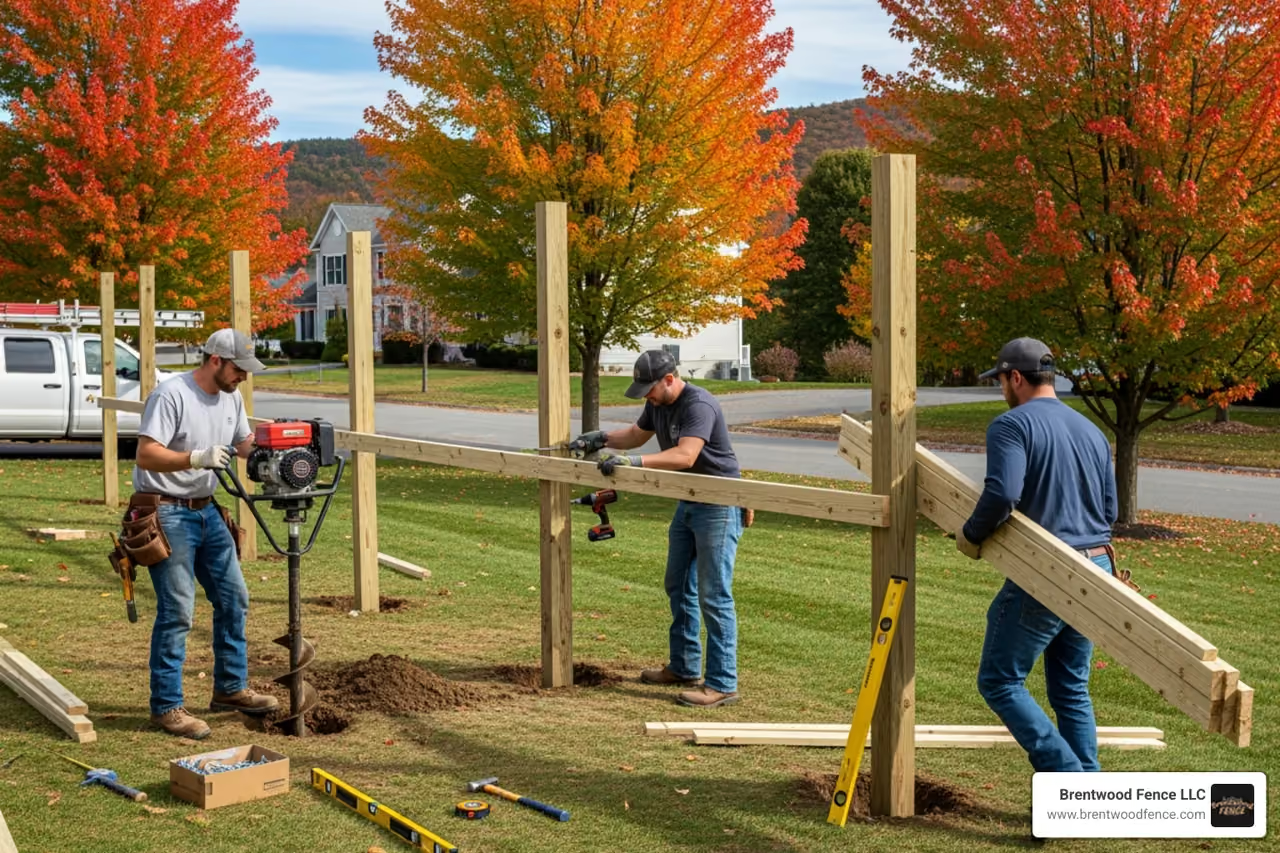
Setting fence posts perfectly straight, plumb, and aligned is incredibly difficult, especially in New England's rocky, clay-heavy soil. To prevent your fence from shifting or leaning during the winter freeze-and-thaw cycles, posts must be set deep below the local frost line (typically 36 to 48 inches deep in our region) and secured with concrete.
Furthermore, very few yards are perfectly flat. If your property has slopes or rolling hills, you cannot simply run the panels straight. Professional installers use advanced techniques like the stepping method or the racking method to ensure the fence gracefully follows the contours of your land without leaving large, awkward gaps at the bottom where pets can escape.
When you work with a dedicated privacy fence installation company, you get the peace of mind that your investment is built to last for decades.
A backyard privacy fence is a significant financial investment, and understanding the upfront costs and long-term maintenance requirements will help you make the smartest decision for your budget.
The total cost of your fence depends on the linear footage of your yard, the material you choose, the height of the fence, and the complexity of the terrain. On average, homeowners in New England spend between $1,500 and $4,000 for a professionally installed 6-foot-tall privacy fence around a standard backyard.
To get a detailed, step-by-step breakdown of what goes into pricing, check out our 6 ft privacy fence install cost guide. If you have your heart set on the classic warmth of natural timber, you can explore specific pricing metrics in our guide on the cost of wooden privacy fence NH MA ME.
When you are ready to move forward, it is always best to work with reputable, licensed local privacy fence installers who understand local soil conditions, wind loads, and municipal building codes.
For most residential properties, a 6-foot-tall fence is the ideal height. It is tall enough to block the line of sight for most people standing in an adjacent yard, yet short enough to comply with standard municipal zoning laws without requiring a special building permit. If your property surrounds a swimming pool, local safety regulations typically require a fence of at least 4 to 6 feet with self-closing, self-latching gates to prevent accidental drowning.
High-quality vinyl and composite fences are engineered to last for decades—often between 20 to 30+ years. Because they do not rot, warp, or suffer from insect damage, they easily outlast traditional wood fences. Many premium vinyl manufacturers even offer limited lifetime warranties on their products, making them an incredibly secure, long-term investment.
Yes! However, it requires professional expertise to look right. Installers typically use one of two methods:
Planning and building a backyard privacy fence is one of the most rewarding home improvement projects you can undertake. It creates a safe, secluded sanctuary for your children and pets, adds beautiful definition to your landscaping, and significantly boosts your home's curb appeal and resale value.
From choosing between the natural beauty of cedar and the effortless durability of vinyl, to navigating local HOA rules and setting posts below the harsh New England frost line, every step of the process requires careful thought and precision.
At Brentwood Fence LLC, we have spent years helping homeowners across Exeter, Portsmouth, Manchester, Concord, Derry, Dover, and Haverhill design and install fences that stand the test of time. We take pride in our transparent pricing, exceptional craftsmanship, and reliable communication.
Ready to transform your backyard into the private retreat you deserve? Contact us today to explore our privacy fencing installation services in NH and request your free, no-obligation project estimate!

Copyright 2022 Brentwood Fence | All Rights Reserved | Sitemap | Website by Plumb Development a Digital Marketing Agency