Blog Content

17
Jun
2026

The best deck privacy ideas turn an exposed outdoor space into a place you actually want to spend time. Here's a quick look at the most popular options:
Over 70% of homeowners say privacy is a top priority when upgrading their outdoor living spaces. And it makes sense — when your neighbors can see everything you do on your deck, you stop using it.
Whether your deck overlooks a busy street, sits close to a neighbor's yard, or is elevated enough that passing eyes can look right in, the problem is the same: you don't feel comfortable out there.
The good news? There are more solutions than ever — from professionally installed privacy walls and engineered railing systems to fast-growing plants and retractable shades. Some block up to 90% of unwanted sightlines. Others add shade, reduce wind, or even cut down on noise.
This guide covers the most effective privacy fencing options available today, what they cost in terms of maintenance and materials, and why getting the installation right from the start saves you money down the road.
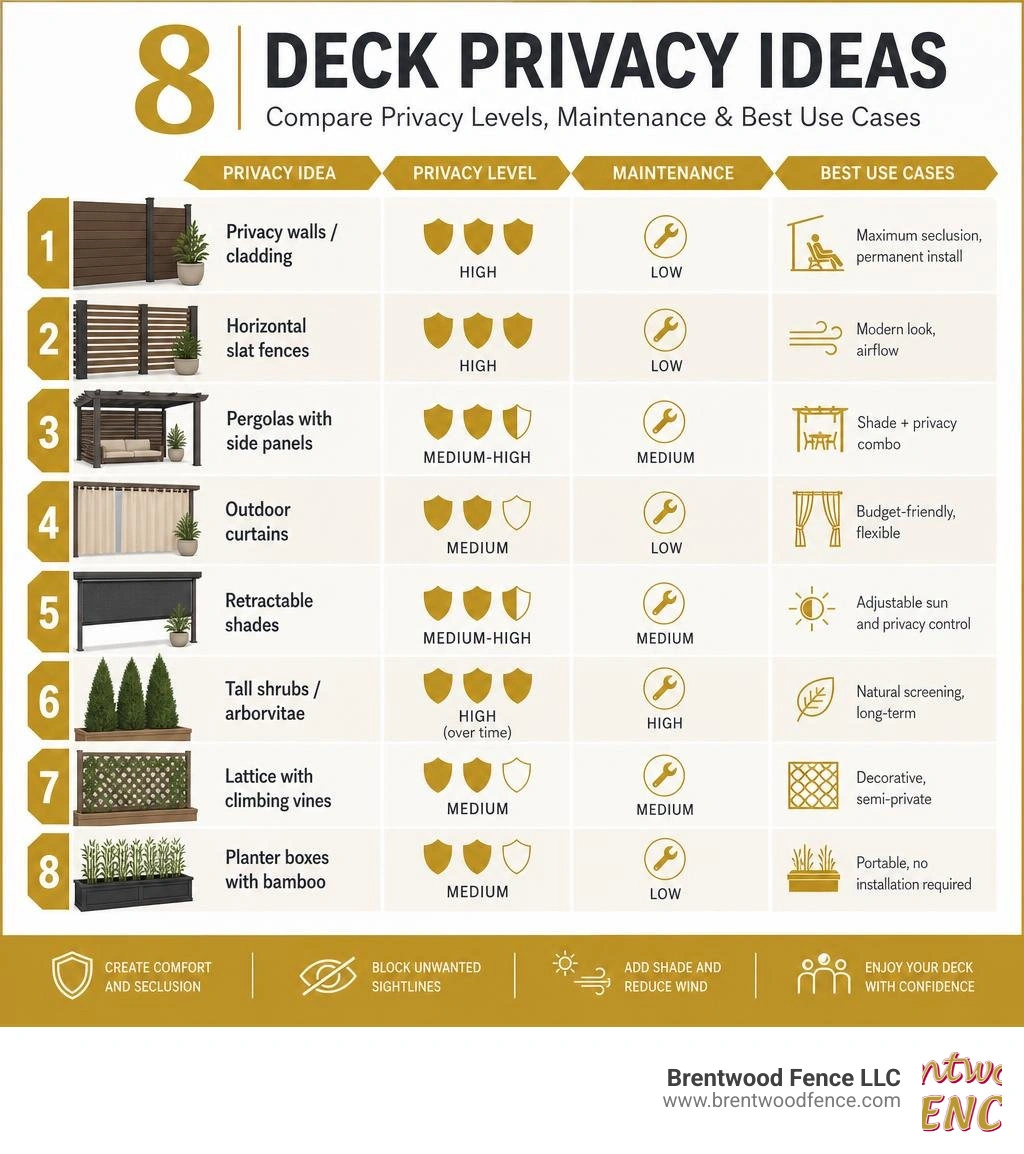
Key terms for deck privacy ideas:
When you want to completely block out nosy neighbors or cover up an unsightly view, temporary solutions like umbrellas or thin fabric screens won't cut it. To truly reclaim your outdoor space in 2026, permanent structural additions are the gold standard. They act as physical extensions of your home, adding architectural interest while creating a reliable barrier against wind, noise, and unwanted eyes.

Building a permanent structure on your deck requires careful planning. Unlike a standard yard fence, a deck-mounted privacy barrier is subject to elevation, structural load limits, and local wind patterns. For homeowners in New Hampshire, Massachusetts, and Maine, these structures must also withstand harsh winter snow loads and freezing temperatures.
If you are looking to create a true backyard oasis, exploring professional backyard privacy design principles can help you integrate these structures seamlessly into your existing layout.
For those who want a clean, modern aesthetic that looks built-in rather than tacked on as an afterthought, engineered deck privacy wall systems are an exceptional choice. Unlike traditional wood framing, which can look bulky and weathered over time, these systems use factory-engineered slim aluminum posts. These slim-profile frames hold heavy-duty infill boards made of wood, composite, or vinyl, creating a perfectly straight, uniform barrier.
Engineered systems offer several key advantages:
Projects like The Privacy Project | Project Of The Month demonstrate how modern horizontal slat systems can instantly elevate the visual appeal of an outdoor living area. By using a metal framework with composite infills, you get the warmth of wood with the maintenance-free durability of aluminum.
These modular systems can be configured to block a single exposed side of your deck—such as a side facing a neighbor's driveway—while leaving the other sides open to preserve your backyard view.
If you aren't ready to install a full-height wall, you can still achieve excellent privacy by upgrading your existing deck railings. Standard deck railings feature thin, vertical pickets spaced several inches apart, which do almost nothing to block views. By replacing or modifying these railings, you can significantly increase your seclusion without making your deck feel closed in.
Here are a few popular custom railing upgrades:
When deciding which style fits your home, it helps to understand the different types of privacy fences in NH, MA, and ME to see how those same design principles can be adapted for a deck railing. For instance, using composite materials that match your existing deck boards creates a unified, high-end look that boosts your property value.
Not every homeowner wants a solid wooden or metal wall on their deck. If you prefer a softer, more organic look, or if you want the flexibility to open up your space when the neighbors aren't home, softscape and textile solutions are fantastic alternatives.

By combining living plants with flexible, adjustable fabrics, you can create a dynamic screen that changes with the seasons. For more creative ways to blend natural and structural elements, check out these privacy fence ideas NH MA ME.
Using plants as a "green screen" is one of the most beautiful deck privacy ideas you can implement. Plants soften the hard edges of a wooden deck, improve local air quality, reduce ambient noise, and provide natural shade.
To see how top designers lay out their spaces to maximize these natural elements, you can read about 5 Privacy-First Deck Layouts to Block Nosy 2026 Neighbors. Layering tall potted plants with structural screens creates a multi-dimensional barrier that feels like a lush, private garden rather than a barricade.
If you want privacy on demand, fabric-based solutions are highly effective, budget-friendly, and easy to adjust.
Before you run to the store or hire a team to install your new privacy features, it is crucial to understand the practical side of the project. Choosing the wrong materials for our New England climate, ignoring local building codes, or failing to properly anchor a high-wind structure can turn your dream deck upgrade into a costly nightmare.
When planning your project, make sure you understand the steps involved in a professional build by reviewing this privacy fencing installation guide.
One of the most common mistakes homeowners make is installing a beautiful privacy wall, only to receive a violation notice from their town or Homeowners Association (HOA).
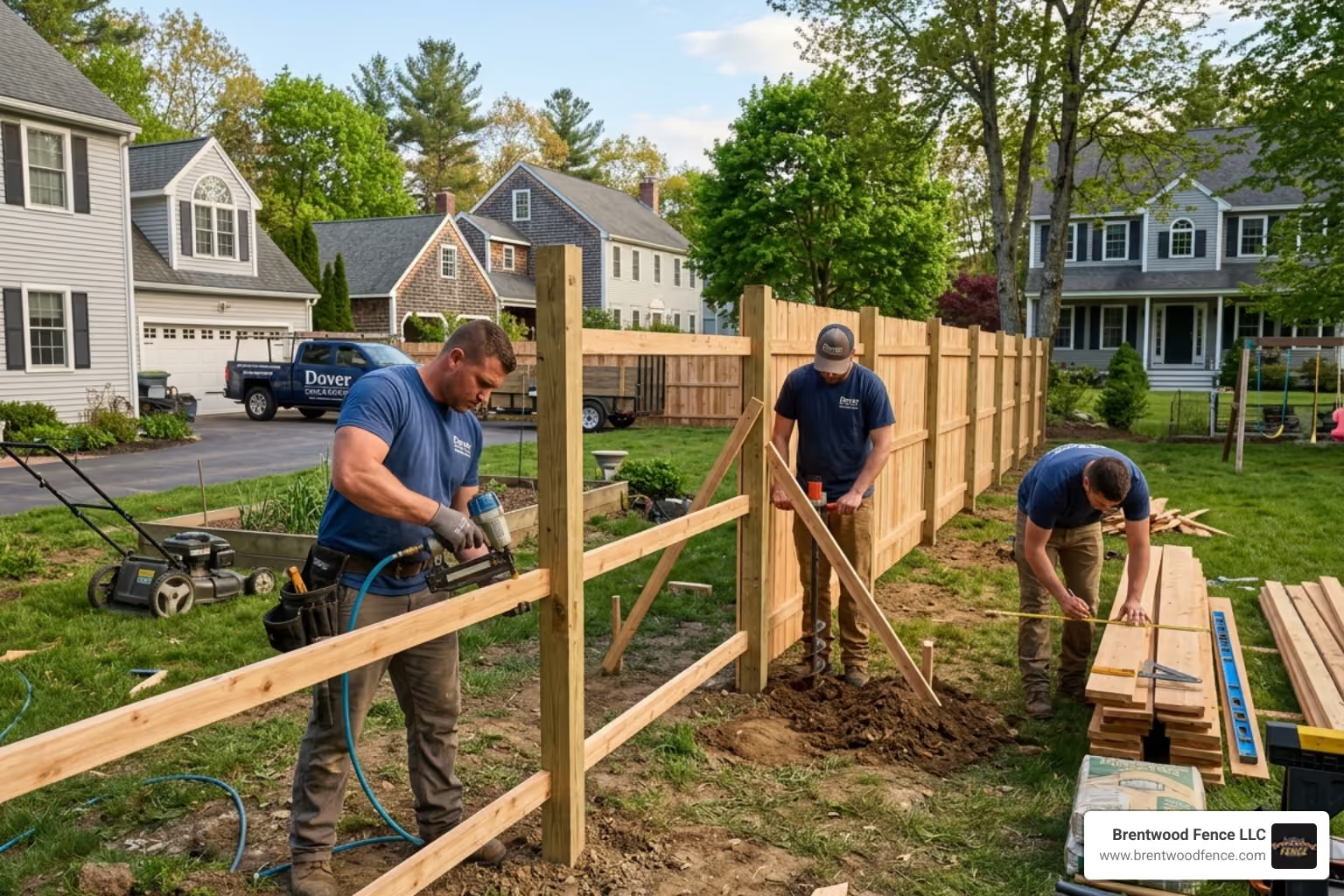
While building a small planter box or hanging curtains is a fun weekend project, installing a structural privacy wall or upgrading your deck railings is best left to the professionals.
A privacy wall acts like a giant sail in the wind. In our coastal and elevated regions in New England, high-wind loads can easily rip a poorly anchored wall right off a deck, damaging your deck's joists and framing in the process.
Professional local privacy fence installers have the tools and experience to:
The most budget-friendly way to add privacy is by hanging outdoor curtains or installing basic wood lattice panels. Lattice panels are inexpensive, easy to work with, and can be softened with climbing vines to create a beautiful, semi-private screen without a massive financial investment.
In most cases, yes. If you are adding a permanent structural wall that is over 6 feet tall, or if your deck is elevated more than 30 inches off the ground, local building codes in NH, MA, and ME typically require a permit. Always check with your local town hall before starting work.
To secure a privacy screen against strong winds, the posts must be bolted directly into the heavy structural joists underneath your deck boards using heavy-duty lag screws and structural blocking. Never surface-mount a tall privacy wall to the deck boards alone, as the wind can easily tear the boards loose.
Your deck should be your personal sanctuary—a place to drink your morning coffee, host family barbecues, and unwind after a long day without feeling like you are on display for the entire neighborhood. Whether you prefer the clean lines of an engineered aluminum and composite wall, the natural beauty of a living evergreen screen, or the flexibility of retractable shades, there are plenty of incredible deck privacy ideas to choose from.
Don't let another summer pass by feeling exposed in your own backyard. If you are ready to transform your outdoor space into a secure, beautiful, and completely private retreat, let our team of experts handle the hard work.
Get professional wood fencing installation services from Brentwood Fence LLC today and start enjoying the peace and quiet you deserve!
Copyright 2022 Brentwood Fence | All Rights Reserved | Sitemap | Website by Plumb Development a Digital Marketing Agency