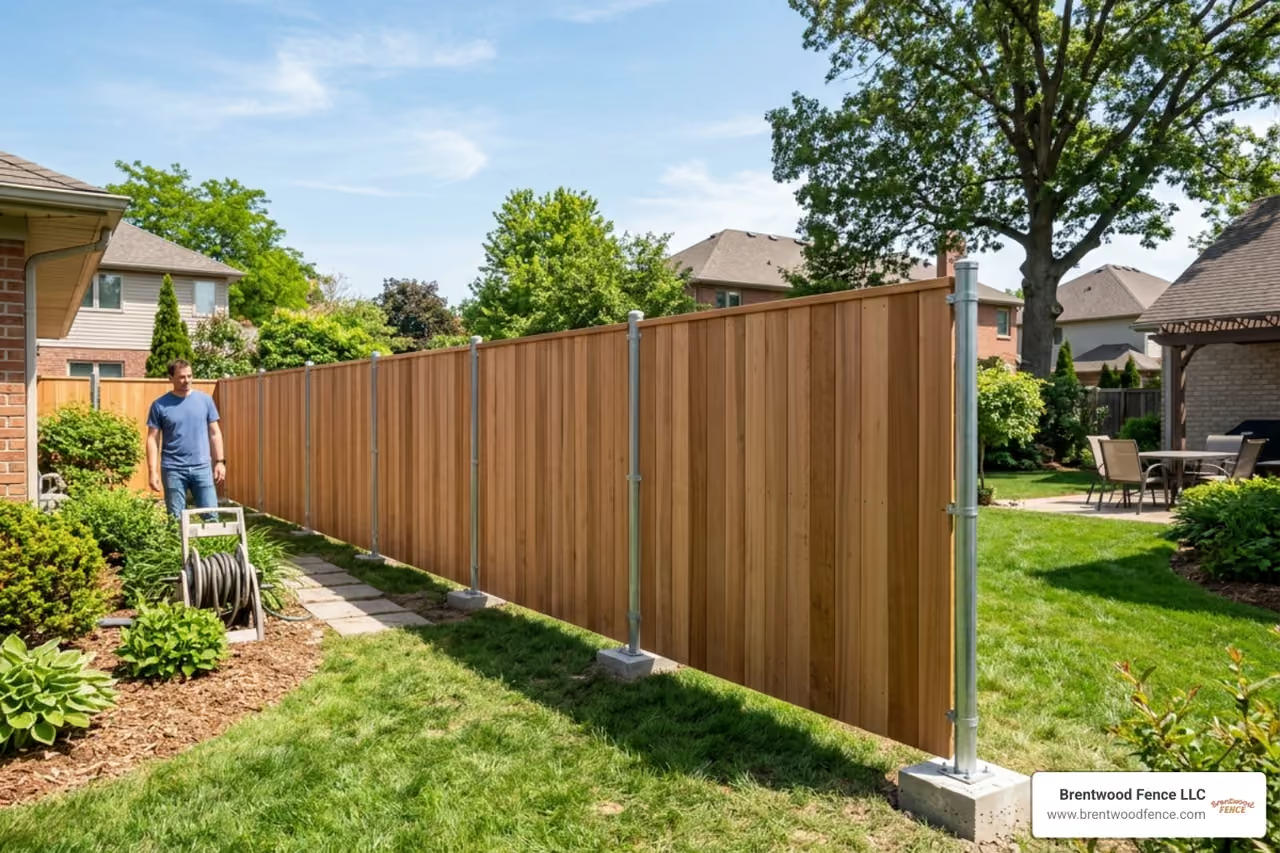
How to Build a Long-Lasting Cedar Fence with Steel Posts

18

Aug

2026

Author:

Rob Thibeault

A Cedar Fence Looks Better When Steel Posts Keep It Straight

Cedar fence steel posts combine the warm, natural look homeowners want with a foundation that resists the common causes of fence failure: ground-level rot, leaning, and weather movement.

  • Best for longevity: Galvanized steel posts can last roughly 25 to 40 years in the ground, while untreated wood posts may fail in 5 to 15 years.
  • Best for a cedar look: Steel posts can be hidden behind cedar boards, wrapped in cedar, or used inside a cedar post-on-pipe system.
  • Best for stability: Properly sized and installed steel posts provide strong support for privacy fencing, gates, horizontal designs, and wind-prone yards.
  • What to expect: Steel costs more upfront than wood, but it can reduce the expense and disruption of replacing failed posts later.

The key is not simply choosing steel. Post type, spacing, footing depth, local frost conditions, hardware, and fence design all affect the finished fence's strength and appearance.

I'm Rob Thibeault, and this guide will help you evaluate the cedar-and-steel options that make sense for a durable, attractive fence.
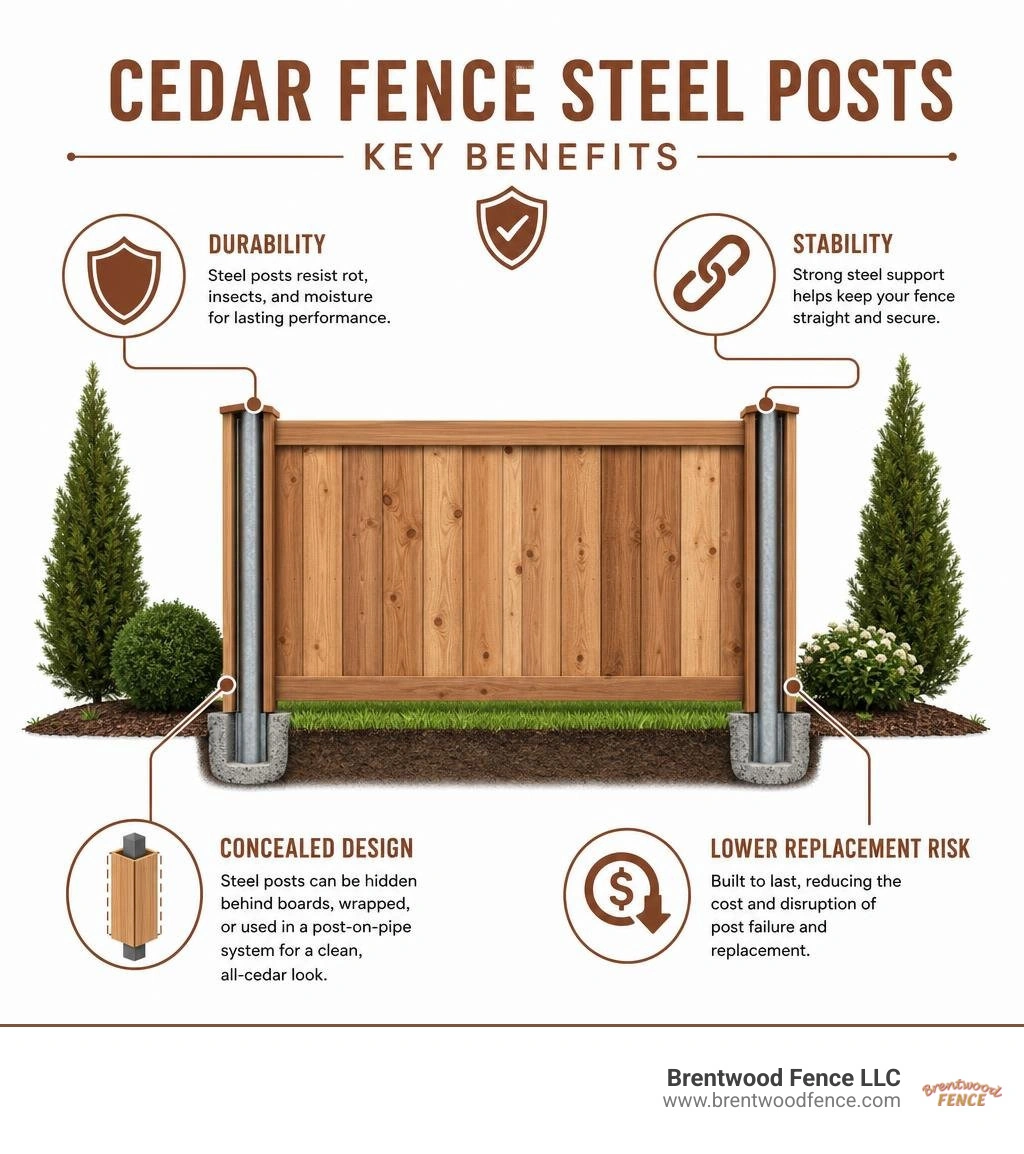
Cedar fence steel posts benefits: durability, stability, concealed design, lower replacement risk infographic

Cedar fence steel posts helpful reading:

Why Choose Cedar Fence Steel Posts Over Traditional Wood Posts

When we design a premium wooden perimeter for a home, Western Red Cedar is usually the top choice for pickets and rails because of its naturally beautiful grain, dimensional stability, and natural resistance to insects. However, when cedar or pressure-treated wood posts are set directly into northern soil, they face constant exposure to ground moisture, fungal organisms, and severe seasonal freeze-thaw cycles.

By pairing rich cedar lumber with cedar fence steel posts, homeowners get the absolute best of both worlds: timeless natural beauty on the surface and an indestructible backbone beneath the soil.

Feature / Metric Galvanized / Coated Steel Posts Pressure-Treated Wood Posts
In-Ground Lifespan 25 to 40+ Years 5 to 15 Years
Ground Rot & Termite Resistance 100% Impervious Susceptible Over Time
Frost Heave & Seasonal Shift High resistance (smooth profile) Moderate to High displacement risk
Post Maintenance Required Zero maintenance Sealing/staining needed at base
Wind Load Resistance Exceptional mechanical strength Risk of snapping at ground line
Long-Term Structural ROI High (eliminates post replacement) Lower (requires early rebuilds)

When building wood fences with metal posts, the primary goal is ensuring that the foundation outlasts the wood framing itself. Traditional wooden posts eventually degrade where soil, air, and moisture meet—a vulnerability that high-tensile steel completely avoids.

Eliminating Ground Rot and Moisture Decay

Soil moisture is the single greatest hazard to outdoor wooden structures across New Hampshire, Massachusetts, and Maine. Even pressure-treated lumber eventually absorbs subsurface moisture, causing wood fibers to expand, soften, and decay. As water sits against ground-level wood, rot quietly destroys the core of the post until a sudden storm causes the structure to tilt or collapse.

Galvanized steel posts eliminate ground-line failure entirely. Because non-porous steel does not absorb water, soil microbes cannot break it down. By securing Western Red Cedar rails to engineered steel uprights, we keep the organic wood elevated safely above damp earth. High-end steel posts often carry manufacturer structural warranties up to 40 years, giving property owners total peace of mind.
Resisting Frost Heave and Severe Weather

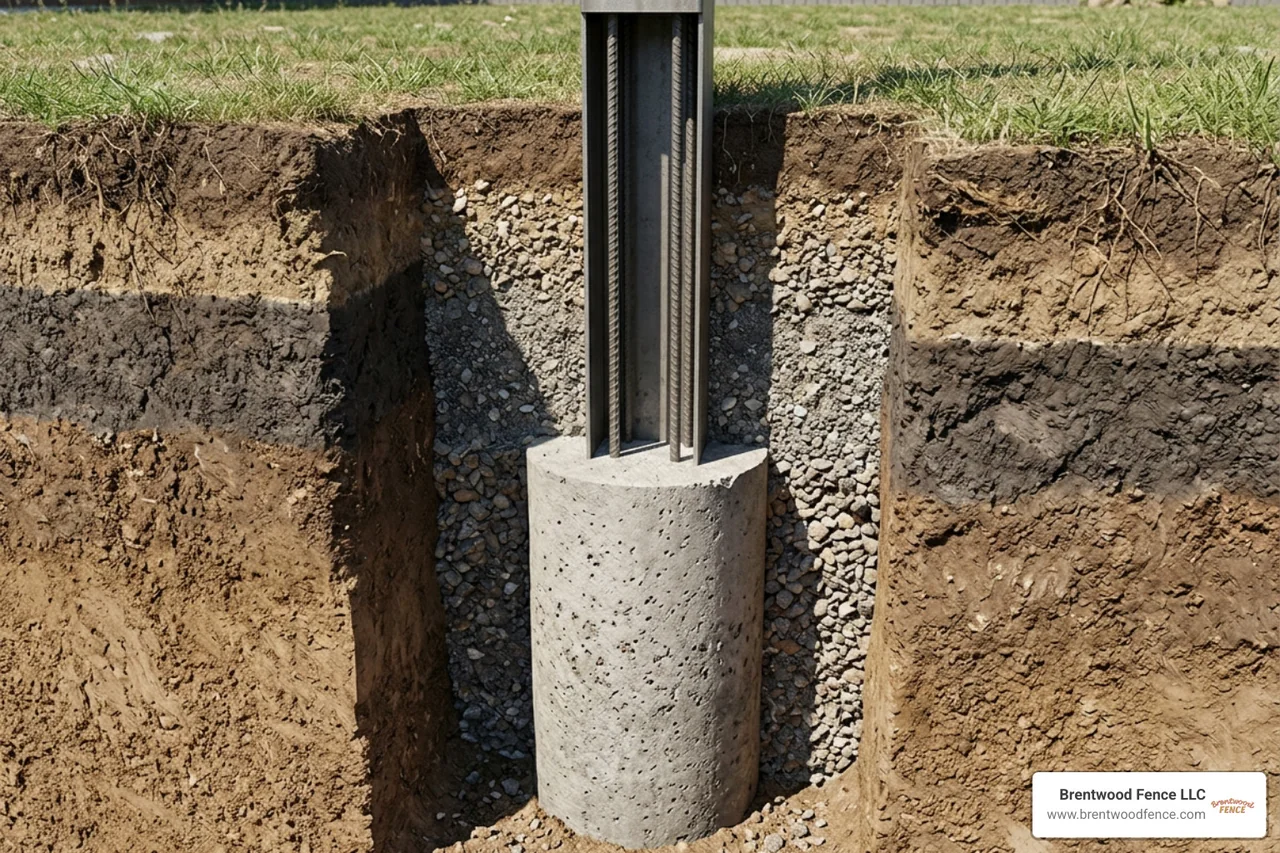
reinforced fence post set below frost line

Northern winters present severe underground challenges. As water in wet clay or loam freezes, it expands upwards, gripping large, porous concrete collars around traditional wood posts and popping them out of the ground like a cork. This destructive movement—known as frost heave—is a leading reason fence lines warp and gates bind over time.

Driven or deeply set steel posts feature a sleeker, smoother surface area. When winter freezing occurs, expanded soil slides right past the smooth steel casing rather than gripping onto it. When resisting frost heave with driven steel posts, the structural steel penetrates deep into subsoil layers well below the local frost depth line. Furthermore, high-tensile steel provides exceptional wind shear distribution, allowing 6-foot cedar privacy panels to stand firm during intense coastal squalls and severe thunderstorms.

Types of Steel Posts Available for Cedar Fencing

Not all steel fence supports look or perform the same. Depending on your home's architectural style, budget, and preference for exposed or hidden structural elements, several distinct post styles are available.

Round vs. Square Cedar Fence Steel Posts

Selecting the correct post profile comes down to whether you want completely hidden posts, industrial styling, or simple structural framing:

  • Round Galvanized Steel Posts: Utilizing standard 2-3/8 inch outer diameter (OD) schedule-20 or schedule-40 steel pipe, round posts offer tremendous strength at a lower material cost. They are easily integrated into wood framing using clamp-style bracket systems. Explore our detailed guide on round metal fence posts wood fence solutions.
  • Square Powder-Coated Steel Posts: Typically measuring 2x2 inches or 2.5x2.5 inches (or heavy-duty 4x4-inch steel), square steel posts deliver a sharp, modern appearance. They feature flat faces that simplify rail alignment and look incredible when powder-coated matte black. Learn more about choosing a square metal fence post for wood fence.
  • In-Line Hidden Steel Posts: Posts shaped like a structural "H" channel or "C" channel allow cedar pickets to overlap the metal completely. From the primary view of the yard, the steel backbone disappears entirely, creating an uninterrupted timber wall.

Cedar Post-on-Pipe and Wrapped Steel Post Options

For homeowners who demand a 100% traditional wood appearance without compromising on ground-level durability, hybrid wood-and-steel systems offer an ideal answer:

  1. Cedar Post-on-Pipe Systems: In this design, a heavy-duty galvanized steel pipe is set securely into deep underground footings. A hollowed Western Red Cedar post slides directly over the steel core and is locked in place using a horizontal stainless steel through-bolt. This post-on-pipe technology combines full wood warmth with permanent steel footings.
  2. Custom Cedar Post Wrapping: Another option is cladding exposed square metal posts in cedar trim boards. By wrapping metal posts with wood, we conceal structural steel components while maintaining visual unity across all cedar fence rails, caps, and pickets.

How Professional Installers Set and Secure Cedar Fence Steel Posts

Installing cedar fence steel posts requires precision, specialized equipment, and careful site preparation to ensure decades of alignment.
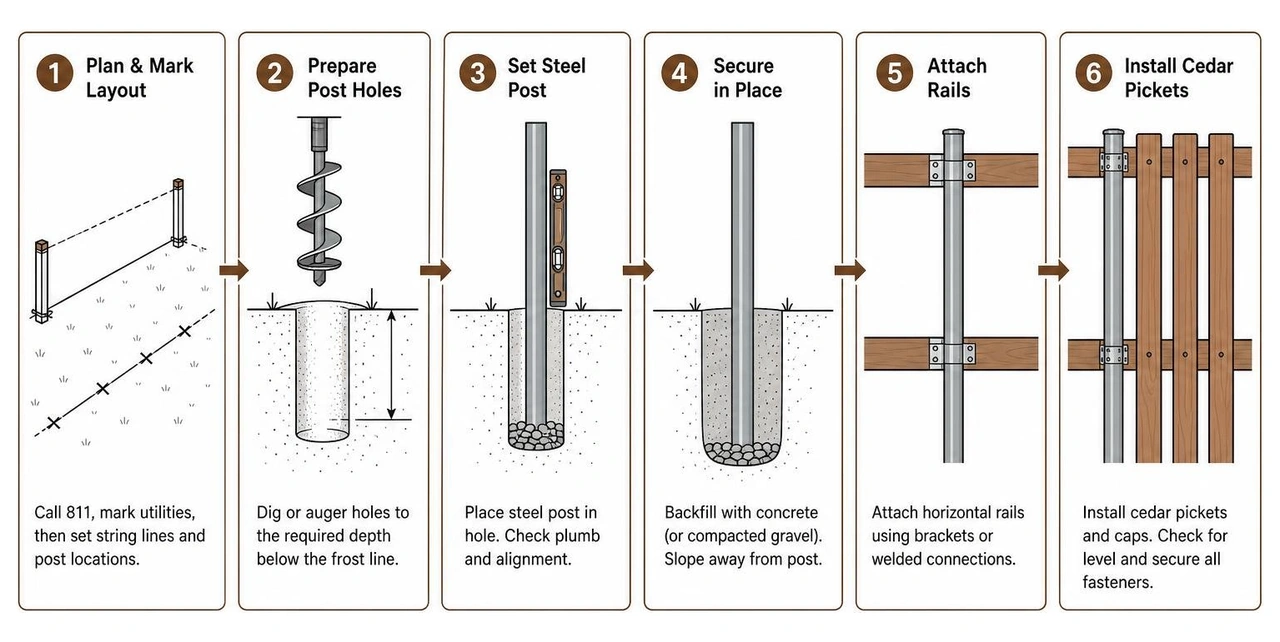
process of installing steel posts for a cedar fence

Before driving or digging, professional crews contact local utility locators via 811 to mark all underground electric, gas, water, and telecom lines. Once clear, installers map out post hole locations with high-tension string lines and laser levels.

Proper Spacing and Depth for Cedar Fence Steel Posts

Getting post spacing and depth right is critical for long-term structural integrity:

  • Post Spacing: Standard spacing for 6-foot privacy fences is 8 feet on center. In open areas prone to severe wind loads, reducing post spacing to 6 feet on center provides extra structural support.
  • The One-Third Depth Rule: To maintain strict upright stability, at least one-third of the total post length must reside below grade. For example, a 6-foot fence above ground requires a 9-foot steel post set 3 feet deep into the ground.
  • Frost Line Requirements: In northern climates across Manchester NH, Concord NH, and southern Maine, post holes must reach 36 to 48 inches deep to extend cleanly below local frost lines.
  • Footing and Concrete: Each post hole (typically 10 inches wide by 36+ inches deep) requires roughly 1 to 1.5 bags of 50-lb fast-setting concrete mix. Mounding the top of the cured concrete slightly above ground level creates a smooth slope that sheds rainwater away from the post base.

If you are researching installation steps, review our complete breakdown on how to install metal posts wood fence.

Fastening Cedar Framing to Steel Posts

Wood and metal expand and contract at different rates, requiring engineered attachment systems:
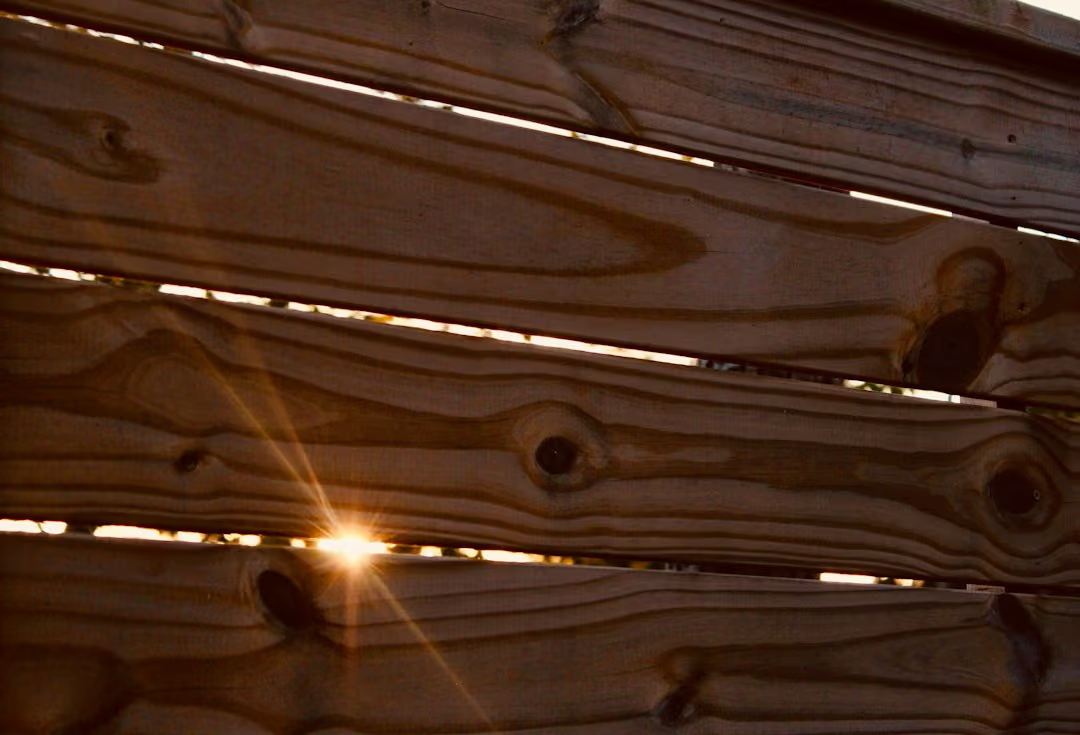
  • Bracket Selection: Commercial wood-to-metal brackets (such as WAP brackets or heavy-duty U-bolt adapters) mount directly to steel posts, providing sturdy mounting tabs for 2x4 horizontal cedar rails. Read our overview of wood fence brackets for metal posts.
  • Corrosion Resistance: Western Red Cedar contains natural tannic acids, and pressure-treated runner rails contain ACQ copper preservatives. Standard zinc fasteners can react with these chemicals, leading to unsightly black rust trails. We utilize hot-dipped galvanized or marine-grade stainless steel fasteners to guarantee leak-free corrosion protection.

Style Versatility and Cost Considerations for Cedar Steel Post Systems

horizontal cedar slat fence mounted on steel posts

Whether your home favors classic rural charm or modern architectural lines, cedar fence steel posts adapt seamlessly to any style.

Adapting Steel Posts to Any Cedar Fence Style

Because steel supports carry significant weight without bowing, they work across many custom designs:

  • Horizontal Cedar Slat Fencing: Modern horizontal designs demand perfectly straight posts. Steel posts prevent horizontal cedar boards from sagging or pulling apart over time. Explore metal fence posts for wood slats for inspiration.
  • Picture Frame & Lattice Topper Styles: Heavy picture-framed privacy fences and structures with decorative top lattices benefit from the rigid support of steel uprights.
  • Sloped & Hilly Terrain: On rolling landscapes across coastal Maine or southern New Hampshire, steel posts handle stepped or grade-following fence panels without risking post-base leverage failure.
  • Cedar & Corrugated Steel Hybrids: For an industrial aesthetic, homeowners can pair steel posts with cedar frame borders and 26-gauge corrugated steel panels.

Upfront Costs vs. Long-Term Maintenance Savings

Investing in steel posts increases initial project expenses compared to standard pressure-treated wood posts, but delivers substantial long-term value.

  • Initial Material Investment: Standard pressure-treated wood posts cost approximately $25 each, while standard post-on-pipe steel footings run ~$55 each, and premium cedar post-on-pipe components sit near ~$85 per post. Overall custom hybrid cedar and steel fencing systems typically begin around $80+ per linear foot installed.
  • Long-Term ROI: Traditional cedar fencing requires regular cleaning, staining, or sealing every 2 to 3 years—costing $1,500 to $3,000+ per treatment ($15,000 to $45,000 over 30 years). More importantly, replacing rotten wooden posts every 10 to 12 years requires tearing up yard space and resetting concrete. Steel posts eliminate post-replacement expenses entirely.

For local labor and regional material breakdowns, check our guide on the cost 6 ft cedar fence install nh ma me.

Frequently Asked Questions About Cedar Fence Steel Posts

How deep should steel posts be set for a 6-foot cedar fence?

For a standard 6-foot cedar privacy fence, steel posts should be set a minimum of 36 inches (3 feet) deep into the ground. In cold regions across New Hampshire and Maine, holes are dug 42 to 48 inches deep to ensure the concrete footing sits well below the regional frost line, keeping the fence straight and plumb through severe freeze-thaw cycles.

Do steel posts rust when attached to cedar or pressure-treated wood?

Galvanized or powder-coated steel posts resist rust even when in direct contact with natural cedar or pressure-treated rails. However, you must use hot-dipped galvanized or stainless steel brackets and screws. Standard untreated steel hardware can react chemically with copper compounds in treated wood or tannic acids in cedar, causing dark rust streaks.

Can steel posts be completely hidden on a cedar privacy fence?

Yes! Steel posts can be completely concealed using in-line C-channel steel posts (where cedar pickets overlap the metal continuously), cedar post-on-pipe designs, or custom 1x6 cedar post wraps. This gives your property an authentic, solid wood appearance while relying on permanent steel support beneath.

Build a Fence That Stands the Test of Time

Building a fence is a significant upgrade to your property's privacy, safety, and curb appeal. By anchoring beautiful Western Red Cedar framing to permanent steel posts, you eliminate ground rot, frost heave, and structural leaning for decades to come.

At Brentwood Fence LLC, our experienced installation crews deliver expert craft across Exeter NH, Portsmouth NH, Manchester NH, Concord NH, Derry NH, Dover NH, Haverhill MA, as well as surrounding communities throughout New Hampshire, Massachusetts, and Maine.

Ready to install a fence that stays straight, strong, and stunning year after year? Explore our full range of professional wood fencing installation services and request your custom quote today!

Blog Content