Blog Content

20
Apr
2026

Metal fence posts for wood fence installations are replacing traditional wood posts because they eliminate rot, termite damage, and warping while providing superior strength and longevity. Here's what you need to know:
Key Benefits of Metal Posts:
Common Metal Post Types:
If you're tired of replacing rotted fence posts or watching your wood fence lean after every storm, you're not alone. Since 2003, when arsenic was banned from pressure-treated lumber, wood posts have become significantly less rot-resistant. Many homeowners now experience wood post failure within 5-7 years.
Metal posts solve this problem permanently. They're 100% termite-proof, won't split or warp, and can be completely hidden behind wood fence boards for a traditional appearance.
Professional installation ensures posts are set below your local frost line (typically 3-4 feet in New England) to prevent heaving, and proper attachment methods keep wood rails and panels secure without compromising the wood's natural beauty.
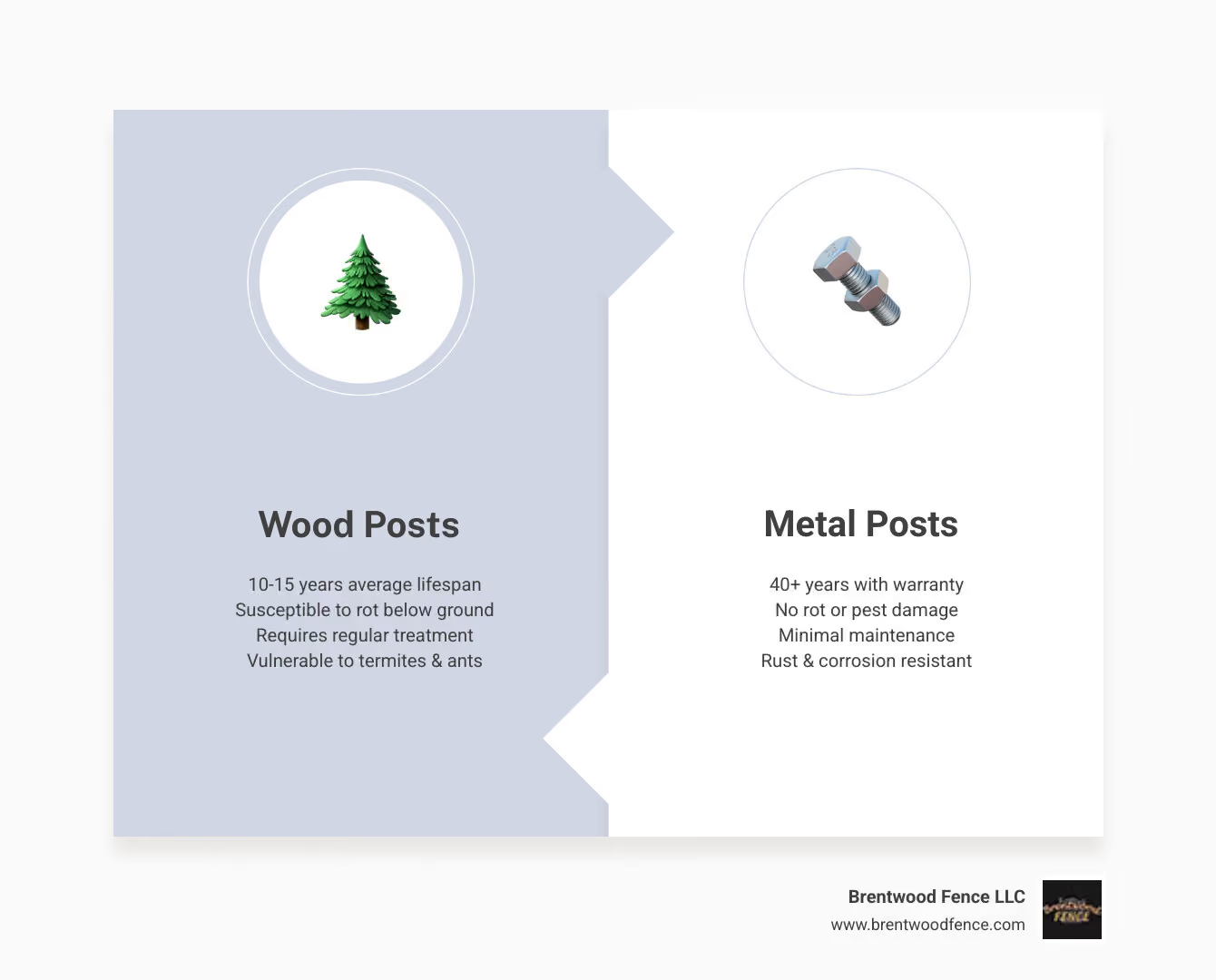
When we talk about the "Chuck Norris" of the fencing world, we are talking about metal posts. They don't back down from rain, they scoff at high winds, and they shrug off the relentless humidity of a New England summer. In regions like New Hampshire, Maine, and Massachusetts, where the ground is often saturated or frozen, the choice of post material makes the difference between a fence that lasts 40 years and one that leans in five.
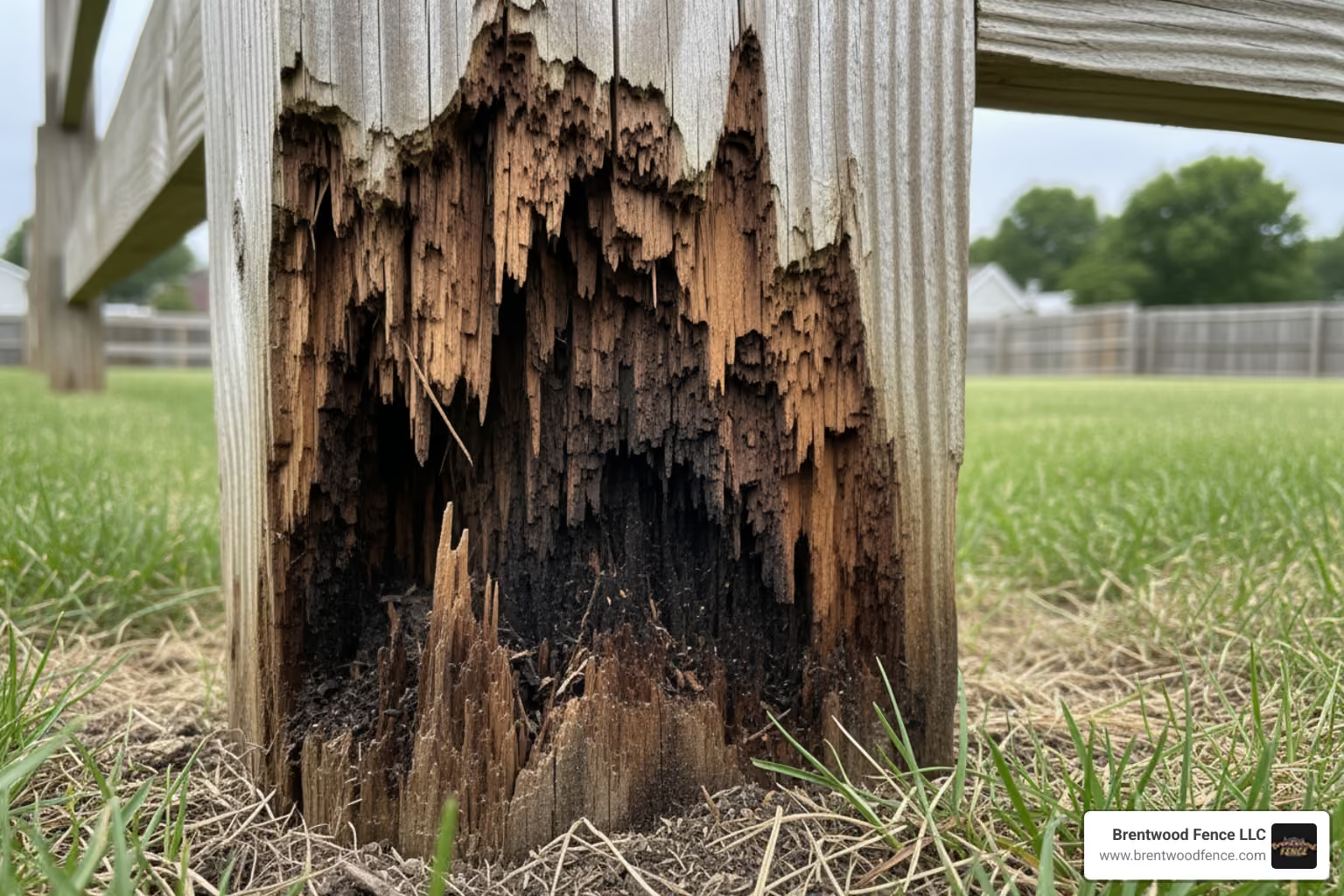
One of the most significant reasons to consider metal fence posts for wood fence projects is the change in wood treatment standards. In 2003, arsenic (CCA) was banned in residential pressure-treated wood. While this was great for the environment, it significantly reduced the rot resistance of wood posts. Modern treated wood often fails at the ground line, where moisture and bacteria are most active. Metal posts, particularly heavy-duty galvanized steel, are completely immune to this biological decay.
Termites and carpenter ants see a traditional wood post as an all-you-can-eat buffet. Metal posts, however, are 100% termite, woodworm, and pest-proof. By using steel supports, you remove the primary food source from the ground, ensuring your Cost of Wooden Privacy Fence NH MA ME is a one-time investment rather than a recurring expense.
Many premium metal posts come with a 40-year warranty on the metal itself. Compare that to the "fingers crossed" approach of wood posts, which rarely carry a performance guarantee against rot or warping. When we install a hybrid system—using wood panels with steel supports—we are providing our clients with the best of both worlds: the warmth of natural cedar and the structural integrity of industrial steel.
Not all metal posts are created equal. Choosing the right shape and gauge is essential for the specific wind loads and soil conditions found in places like Dover, NH or Haverhill, MA.
C-channel posts (or C-Posts) are specifically engineered for wood fencing. They feature an open-channel design that prevents condensation buildup—a common cause of rust in closed systems. These posts offer incredible bending strength perpendicular to the fence line, which is exactly where wind pressure hits hardest. They are often designed with a heavy zinc coating, providing the highest level of corrosion protection available on the market.
For a modern, high-end look, many homeowners opt for 2-3/8 in. x 2-3/8 in. x 12 ft. 15-Gauge Galvanized Metal Fence Post FG3100 - The Home Depot. These are often 15-gauge or 16-gauge steel, offering a clean aesthetic that pairs well with black hardware. Square posts are incredibly versatile and can be powder-coated to match your home’s trim.
While common in agricultural settings, U-channel posts are lighter-weight options. For a 6-foot privacy fence, however, we generally recommend heavier-duty square or C-channel options. A privacy fence acts like a giant sail in a storm; light-duty posts may bend under the lateral force of a Nor'easter.
In the Northeast, the biggest enemy of a straight fence line isn't the wind—it's the frost. "Frost heave" occurs when moisture in the soil freezes and expands, literally pushing fence posts out of the ground.
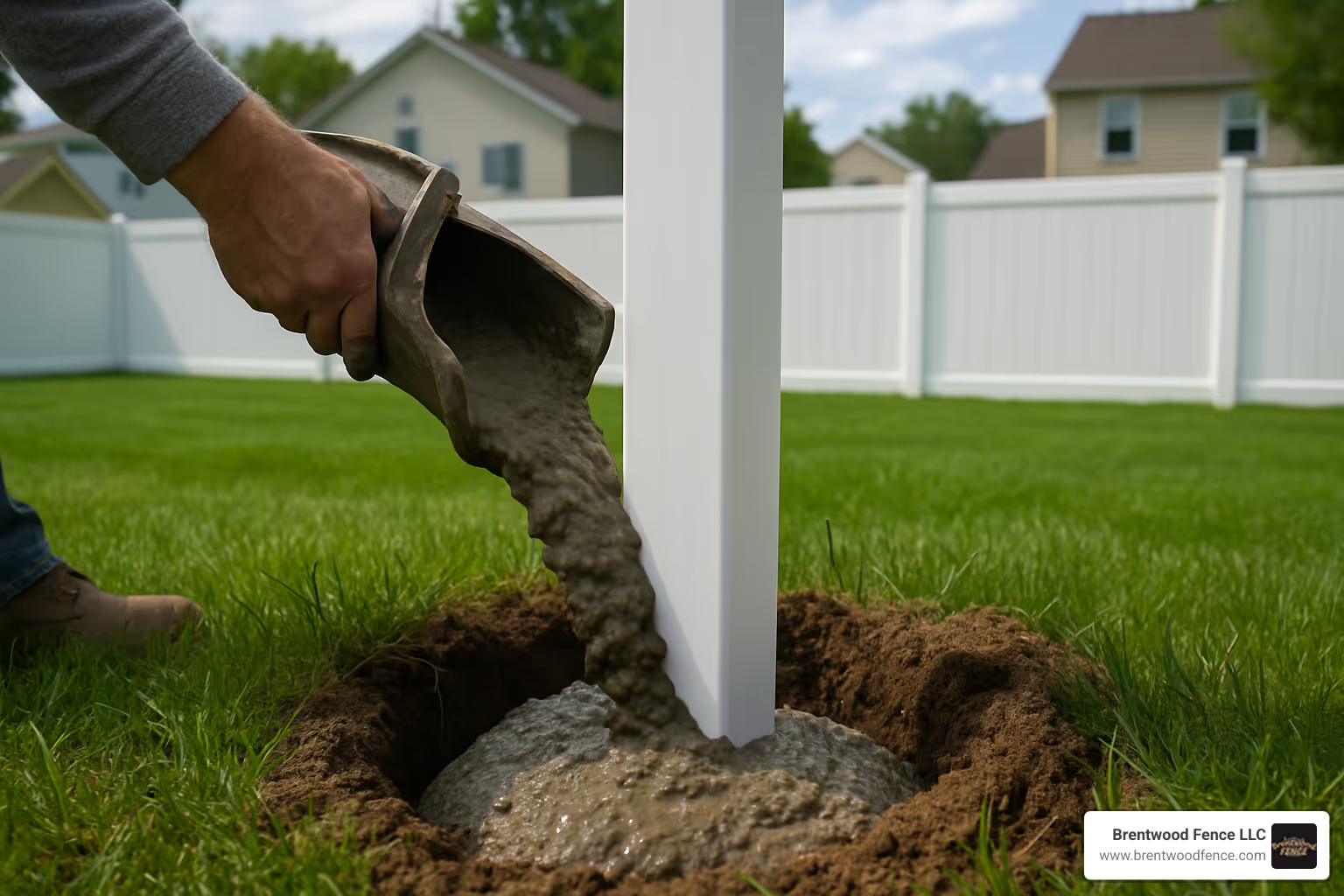
For a 6-foot privacy fence in Manchester or Concord, NH, the frost line can reach depths of 38 to 42 inches. To ensure stability, we recommend driving metal posts at least 3 to 4 feet into the ground. When metal fence posts for wood fence systems are driven deep into compacted soil, they often outperform concrete-set posts. Why? Because a smooth metal post allows the frozen earth to slide up and down its surface without "grabbing" it, whereas a concrete "bell" at the bottom of a post can act like an anchor that the frost pulls upward.
A leaning fence is an eyesore. During Installing Wood Fence Panel Metal Posts, we use specialized post levels and string lines to ensure every support is perfectly vertical. Unlike wood, which can warp or "corkscrew" as it dries, steel stays perfectly straight from the day it’s installed until the day you decide to move.
One of the most common questions we hear is: "Will my fence look like a parking lot?" The answer is no. Modern metal fence posts for wood fence systems are designed to be invisible or to serve as a stylish accent.
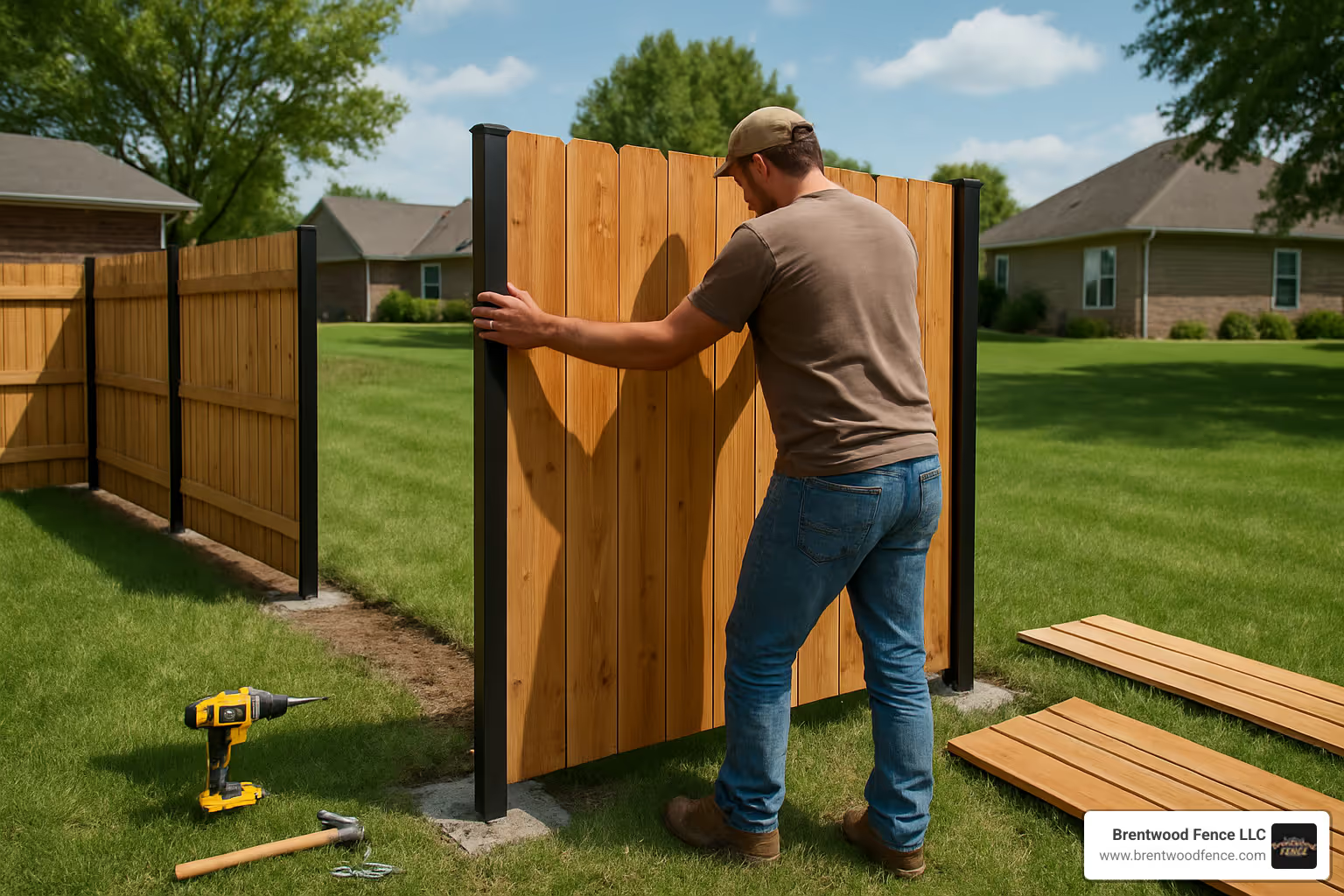
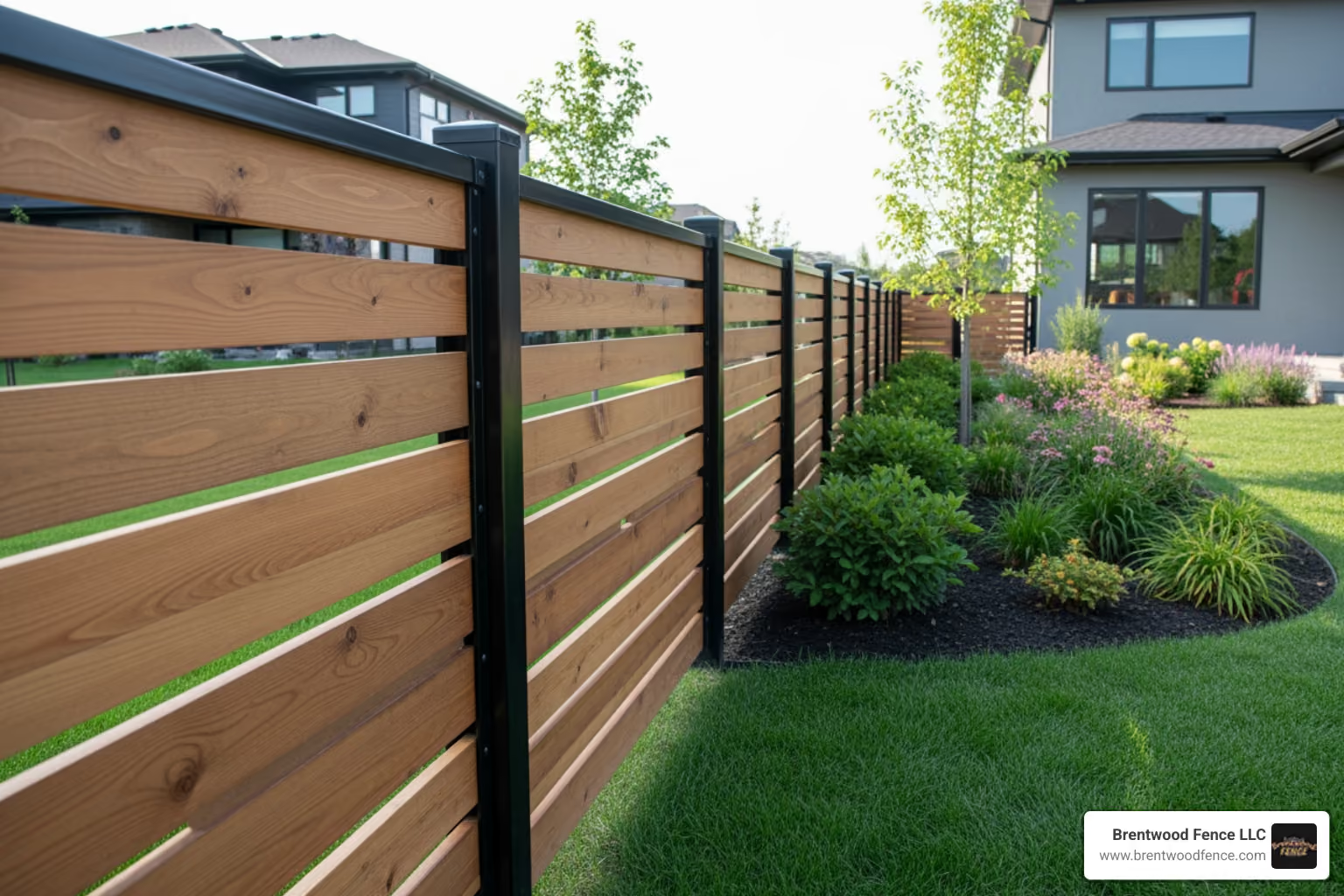
Using specialized bracket systems, we can mount your wood rails so that the pickets completely cover the metal posts on the "pretty" side of the fence. From the outside, your neighbors will see nothing but beautiful, high-quality wood. On the inside, the metal posts can also be "wrapped" with wood trim to create a consistent, all-wood aesthetic.
Metal posts require virtually zero maintenance. While you may want to restain your cedar pickets every few years to keep them looking fresh, you’ll never have to worry about the structural supports. Furthermore, steel is 100% recyclable. When the wood eventually reaches the end of its lifespan, you can simply unscrew the old panels and attach new ones to the existing metal posts—a process that is much faster and cheaper than a full replacement.
For more information on the wooden components of your fence, check out our Complete Wood Fence Rails Guide.
Yes, they are significantly more wind-resistant than wood. A 6-foot privacy fence creates a "sail effect," catching massive amounts of wind during storms. High-quality galvanized steel posts have been observed to withstand winds of up to 78 mph without bending or snapping. While a wood post might snap at the ground line during a heavy gust, a steel post has the tensile strength to flex slightly and then return to its original position.
Visual of fence stability during high winds
While the upfront cost of metal posts is higher than wood, the lifetime value is significantly better.
To get a better idea of overall project pricing, see our guide on the Cost Per Ft Wood Fence.
Absolutely. In fact, they are often easier to use on slopes than wood. Modern bracket systems allow for vertical and horizontal adjustment. This means we can "step" the fence panels or "rack" them to follow the contour of the land while keeping the posts perfectly plumb. If you are dealing with a hilly backyard in Derry or Dover, check out our tips on Installing Wood Fence On A Slope.
Choosing metal fence posts for wood fence projects is the smartest way to ensure your investment stands the test of time. By eliminating the "weakest link"—the rotting wood post—you create a structure that is termite-proof, wind-resistant, and virtually maintenance-free.
At Brentwood Fence LLC, we specialize in professional installation across New Hampshire, Maine, and Massachusetts. Whether you are looking for a modern aesthetic or a traditional privacy fence that won't lean after the first winter, our team has the expertise to get the job done right. Don't settle for a fence that starts decaying the moment it touches the dirt. Invest in the strength of steel and the beauty of wood.
Ready to start your project? Explore our Wood Fencing Installation Services and request a consultation today.
Copyright 2022 Brentwood Fence | All Rights Reserved | Sitemap | Website by Plumb Development a Digital Marketing Agency