Commercial Wood Fence Installation: Building Privacy and Perimeter Security
10
Sep
2026
Author:
Rob Thibeault
Plan a Commercial Wood Fence Installation That Lasts
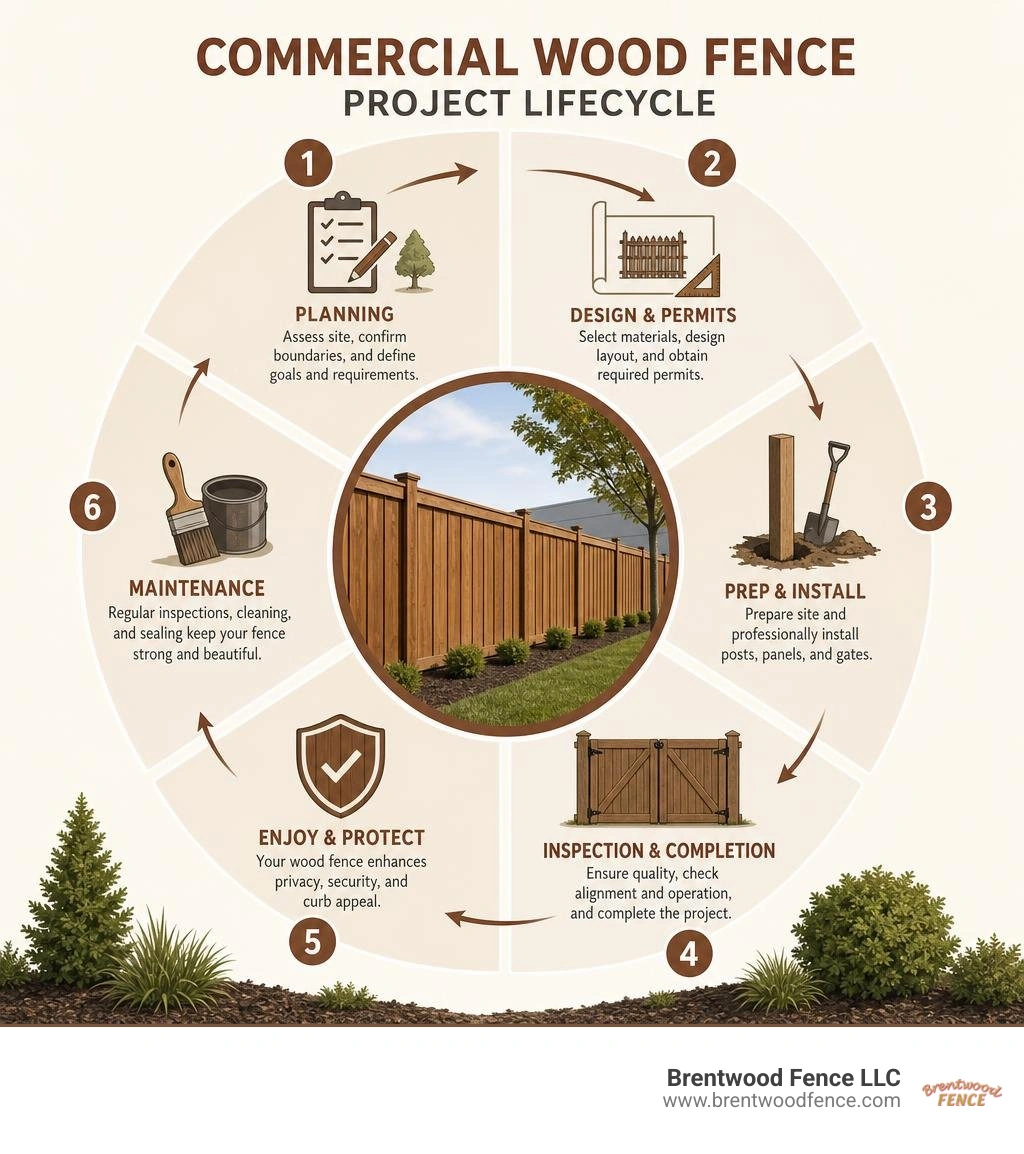
A successful commercial wood fence installation starts with a site assessment, confirmed property lines, and a design that fits your privacy, security, access, and curb-appeal goals. Choose a durable species such as cedar or pressure-treated pine, verify local permit and height rules, and hire a qualified contractor to set structural posts for local soil, drainage, weather, and frost conditions.
Wood fencing is a strong fit for business perimeters, multi-family communities, retail buffer areas, and outdoor storage screening. It can provide full visual privacy, define boundaries, and create a warmer, more welcoming look than many industrial fencing materials.
The details matter. Fence height, gate locations, terrain, post depth, wood type, and future maintenance all affect the price, schedule, and long-term performance of the project. A professional plan helps prevent common problems such as leaning posts, moisture damage, unclear boundaries, and gates that do not operate smoothly.
I'm Rob Thibeault, and this guide will help you make informed choices before your commercial fencing project begins.
When managing a commercial facility, balance is everything. You need robust physical security and clear boundary containment, but you rarely want your corporate headquarters, retail boutique, or residential complex to resemble a high-security lockup. This is where wood fencing excels. It combines natural aesthetic warmth with dependable perimeter containment, giving your business a distinguished edge over cold, utilitarian chain-link or corrugated metal enclosures.
Acoustic Buffering: Thick, solid-board wood panels act as effective sound dampeners, absorbing and deflecting ambient sound from adjacent highways, delivery docks, and bustling parking lots.
Complete Visual Privacy: Whether you are screening mechanical equipment, hiding unsightly recycling hubs, or safeguarding high-value outdoor inventory from prying eyes, solid wood panels provide 100% sightline interruption.
Dumpster and Utility Screening: Municipal codes often require businesses to screen commercial waste bins and utility substations. Wood fencing delivers a clean, architectural solution that satisfies municipal inspectors and elevates overall site presentation.
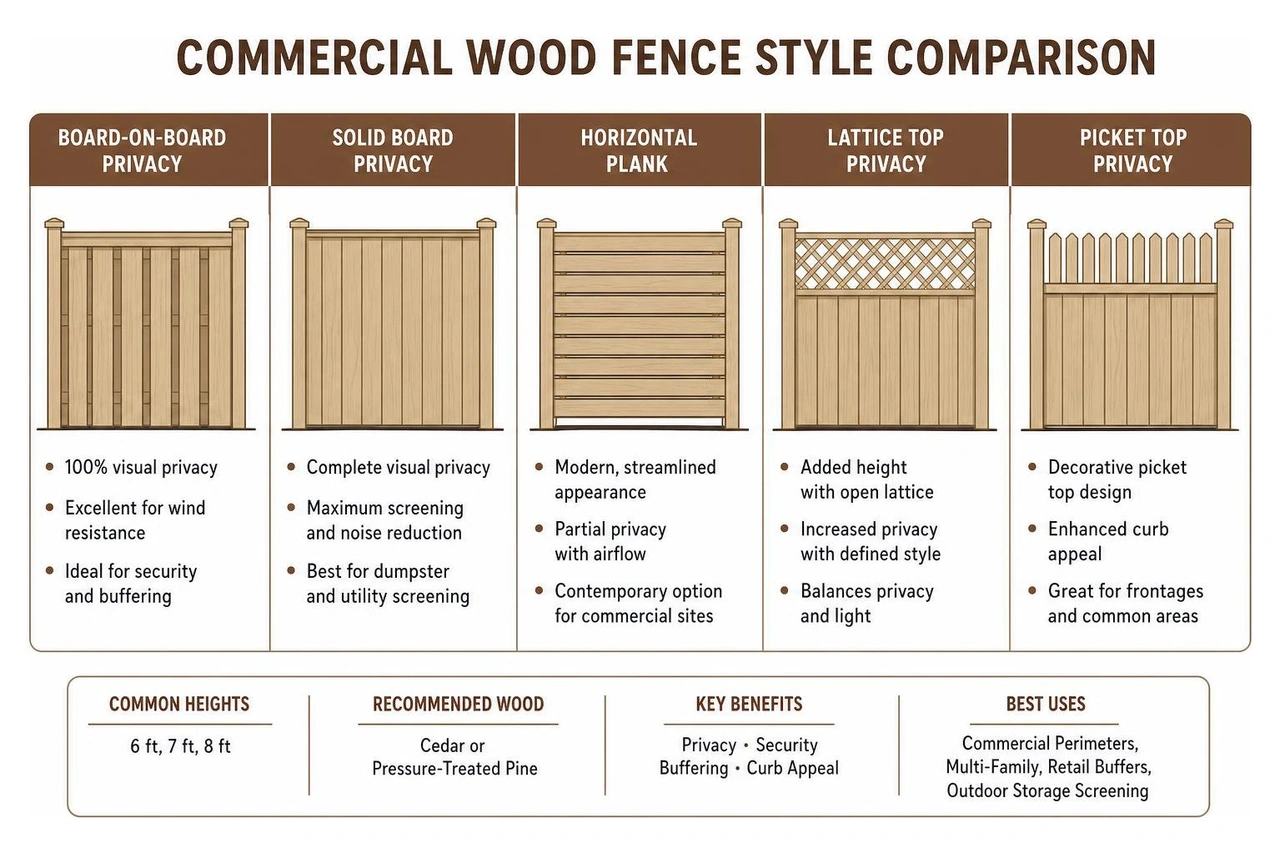
Customizable Profiles: Commercial timber fencing is adaptable. Whether you need an extended eight-foot perimeter, custom lattice accents, or modern horizontal profiles, exploring various wood fencing styles and types of wood privacy fences allows you to match your property's precise architectural motif.
Commercial Applications and Property Types
Different business sectors utilize wood fences to solve unique operational challenges across New England:
Multi-Family Housing & HOA Perimeters: Apartment complexes, condominiums, and residential subdivisions use tall wood privacy barriers to separate individual tenant patios, outline property lines, and buffer residential zones from busy thoroughfares.
Retail & Hospitality Buffer Zones: Restaurants, boutique hotels, and retail plazas deploy wood fences to craft intimate outdoor dining patios, hide loading zones, and direct pedestrian traffic safely toward main entrances.
Logistics & Warehouse Facilities: Distribution hubs frequently use heavy-duty wood barriers along frontage roads to conceal vehicle staging yards and outdoor inventory without sacrificing the visual appeal of the business park.
For projects demanding maximum visual separation and boundary security, choosing a dedicated wooden privacy fence installation ensures the structure is engineered to withstand daily commercial wear and tear.
Comparing Commercial Wood Species and Durability
Selecting the right lumber grade and species is the single most critical decision impacting your fence’s lifespan and structural integrity. Commercial fences face intense environmental stressors, making rot resistance, natural wood tannins, dimensional stability, and insect defense paramount.
Wood Species
Natural Rot & Moisture Resistance
Dimensional Stability (Warp Resistance)
Commercial Lifespan (Maintained)
Best Commercial Application
Western Red Cedar
Very High: Dense natural tannins and organic oils naturally repel moisture, decay, and boring insects.
Superior: Minimal shrinking, cupping, or twisting across seasonal temperature swings.
20–30+ Years
High-visibility corporate frontages, upscale multi-family perimeters, and boutique hospitality patios.
Pressure-Treated Pine (SYP)
High (Chemical Infusion): Pressure-injected with preservatives to stop fungal rot and subterranean termites.
Moderate: Prone to slight checking or warping as internal moisture evaporates during initial seasoning.
15–25 Years
High-durability utility perimeters, ground-contact framing, dumpster enclosures, and large-acreage boundaries.
Redwood
Very High: Rich natural chemical composition provides inherent immunity to insects and organic rot.
Excellent: Outstanding dimensional strength with minimal grain distortion over time.
25–30+ Years
Architectural highlight screening, executive campus boundaries, and luxury customer-facing zones.
Estimating Commercial Wood Fence Costs and Timelines
Budgeting for a commercial build requires a clear view of regional material grades, site complexity, and labor requirements. As of August 2026, typical regional costs for professionally installed commercial wood fencing range from $30 to $60 per linear foot for new builds. If your project involves dismantling and hauling away a failing structure, commercial wood fence replacement typically ranges from $40 to $70 per linear foot.
No two commercial sites share identical line items. Several structural and logistical factors drive overall project estimates:
Fence Height & Framework: Standard commercial barriers range from six to eight feet. Taller structures demand heavier structural posts, deeper footings, and additional horizontal backing rails to resist wind shear.
Post Foundation Engineering: While traditional wooden 4x4 or 6x6 posts remain common, many commercial properties upgrade to metal fence posts for wood slats to prevent ground-line rot and maximize wind-load resistance.
Gate Automation & Hardware: Commercial entryways require heavy-duty hinges, reinforced frames, and integrated access hardware. Factoring in professional wooden gate installation ensures seamless vehicle and pedestrian flow.
Site Demolition & Preparation: Clearing dense brush, cutting through old asphalt, or removing degraded structures increases labor hours. Reviewing our replacing wooden fence guide can help your facility team prepare for site tear-outs efficiently.
Commercial Project Timelines and Scheduling Benchmarks
Time is money in the commercial sector. A delayed perimeter can stall building occupancy permits, compromise inventory security, or disrupt tenant operations.
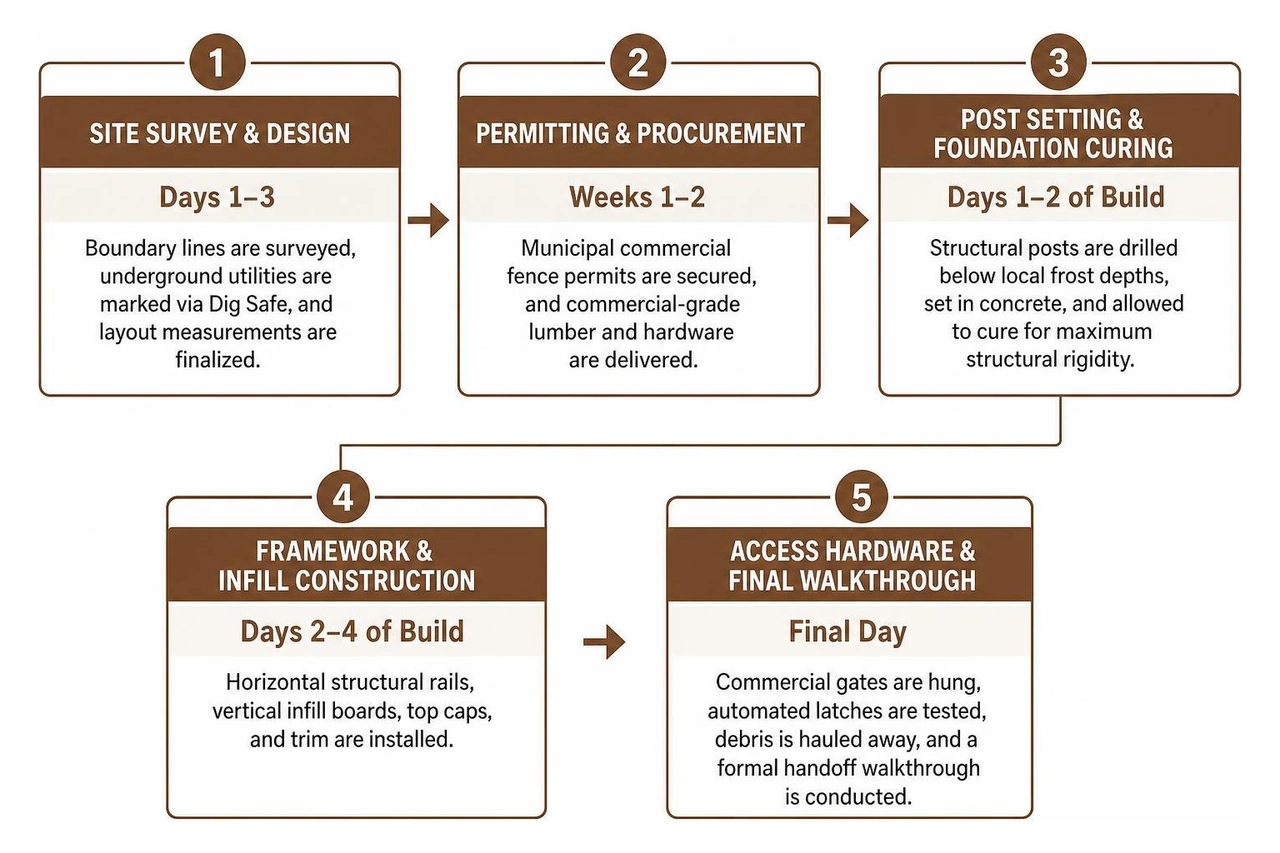
Site Survey & Design (Days 1–3): Boundary lines are surveyed, underground utilities are marked via Dig Safe, and layout measurements are finalized.
Permitting & Procurement (Weeks 1–2): Municipal commercial fence permits are secured, and commercial-grade lumber and hardware are delivered.
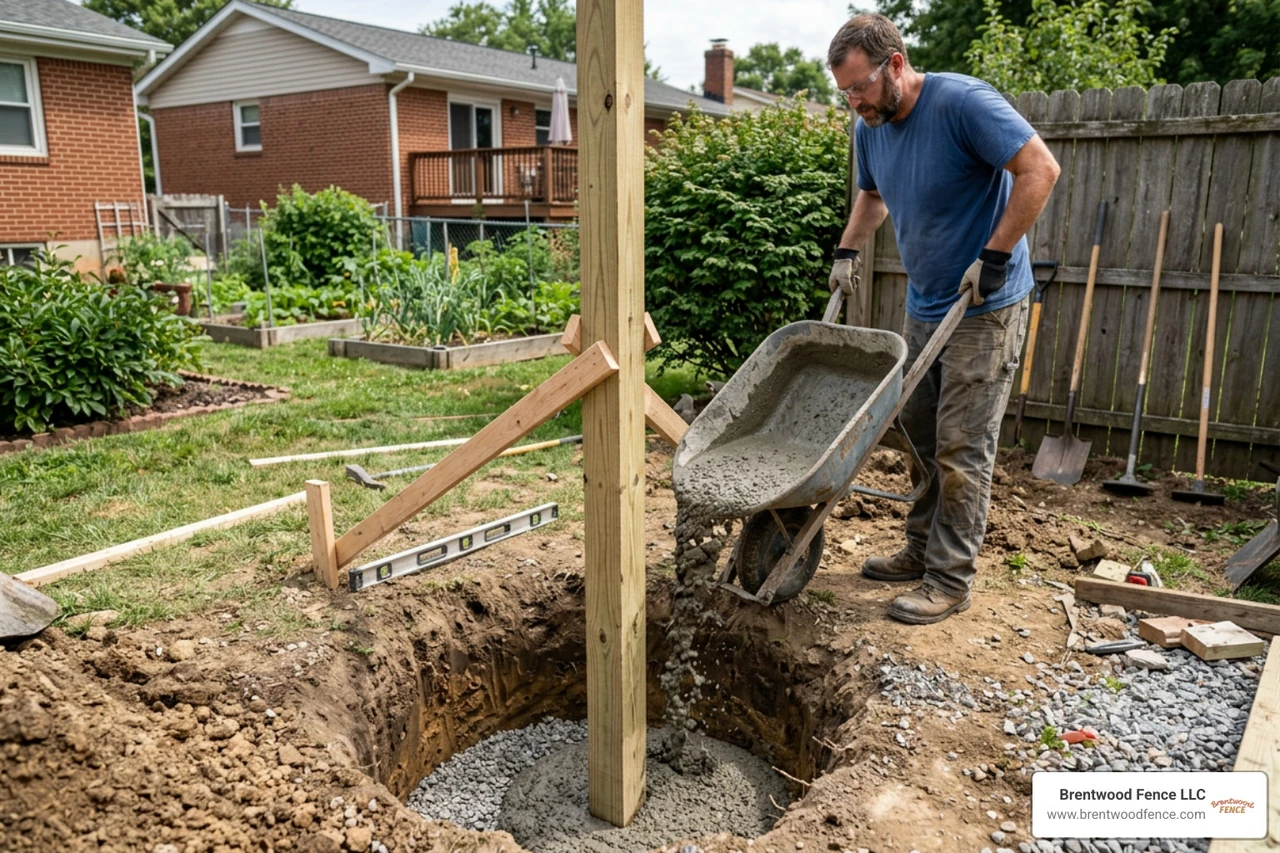
Post Setting & Foundation Curing (Days 1–2 of Build): Structural posts are drilled below local frost depths, set in concrete, and allowed to cure for maximum structural rigidity.
Framework & Infill Construction (Days 2–4 of Build): Horizontal structural rails, vertical infill boards, top caps, and trim are installed.
Access Hardware & Final Walkthrough (Final Day): Commercial gates are hung, automated latches are tested, debris is hauled away, and a formal handoff walkthrough is conducted.
For smaller commercial footprints (under 200 linear feet), on-site installation is typically completed in 1 to 3 days, whereas large multi-phase industrial enclosures can span several weeks.
Professional installation requires strict adherence to structural engineering best practices, particularly in Northern climates where freeze-thaw cycles challenge post stability.
Boundary & Utility Verification: We cross-reference municipal property surveys to confirm legal boundaries and contact utility notification services before breaking ground.
Digging Below the Frost Line: In regions like New Hampshire, Maine, and Massachusetts, fence post holes must be excavated between 36 and 48 inches deep—well below the local winter frost line. Setting posts too shallow leads to frost heaving, which causes structural tilting after just one winter.
Concrete Footing & Drainage: Posts are centered in wide-diameter excavations supported by a crushed-gravel base for bottom drainage, followed by a high-strength commercial concrete pour sloped at the surface to shed standing water away from the timber.
Structural Rail Installation: Depending on height, three or four commercial-grade 2x4 rails are fastened across the structural posts using structural stainless steel or hot-dipped galvanized fasteners. For comprehensive hardware guidelines, review our guide on metal fence posts for wood fence alongside our complete wood fence rails guide.
Picket & Board Attachment: Wood pickets are attached using ring-shank stainless steel nails to prevent rusting, staining, or board pullout during high winds.
Preparing Slopes and Grades for Commercial Wood Fence Installation
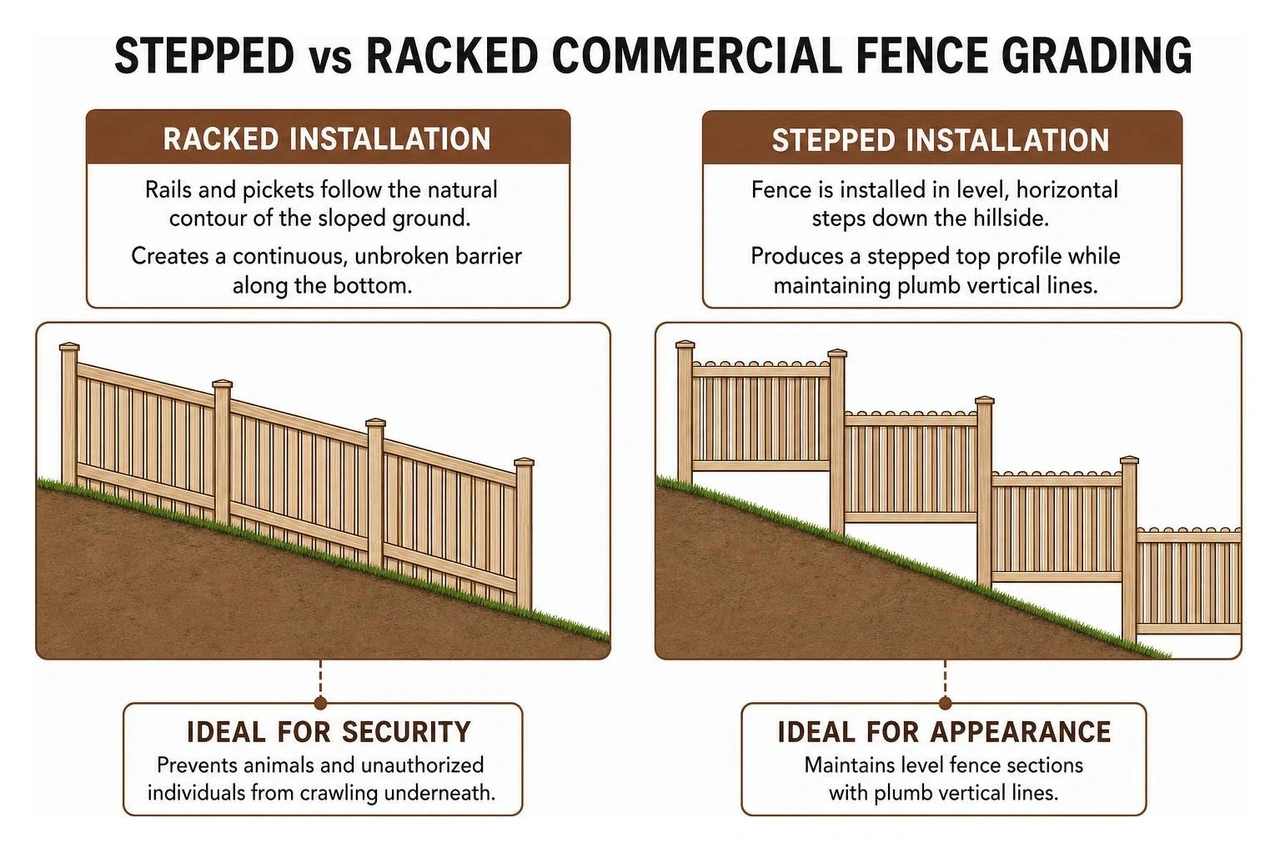
Uneven commercial parcels require customized installation techniques to prevent security gaps beneath the fence line while maintaining clean architectural sightlines.
Racked Installation: The horizontal rails and pickets follow the natural contour of the sloped ground. This creates a continuous, unbroken barrier along the bottom, which is ideal for properties that must prevent animals or unauthorized individuals from crawling underneath.
Stepped Installation: The fence is installed in level, horizontal steps down the hillside. While this method produces a stepped top profile, it maintains plumb vertical lines. For detailed technical grade adjustments, read our field guide on installing wood fence on a slope.
Integrating Commercial Access Gates and Hardware
A commercial fence is only as reliable as its entry points. Dumpster enclosures, delivery alleys, and security perimeters require heavy-duty gate construction that resists sagging under heavy cycle use:
Internal Steel Framework: Commercial wood gates should feature an internal galvanized steel frame to prevent the wood from racking and sagging over time.
Heavy-Duty Hinges & Latches: Ball-bearing commercial hinges, lockable drop rods, and self-closing panic hardware protect access points.
Access Automation: Wood gates can be integrated with automated keypads, magnetic card readers, and vehicle loop detectors for seamless commercial facility access.
When gates show signs of fatigue, consulting professional wooden gate installers or planning a targeted wooden gate replacement restores security before gate hardware fails entirely.
Commercial Wood Fence Maintenance, Repairs, and Longevity
Commercial properties experience higher wear and tear than residential yards. Establishing a structured preventative maintenance schedule maximizes the lifespan of your perimeter.
Protective Staining & Sealing: Apply a commercial UV-inhibiting, penetrating oil-based stain every 3 to 5 years. This seals wood pores against moisture intrusion, prevents surface checking, and stops cedar from weathering prematurely.
Ground Moisture Mitigation: Maintain at least a 2-inch clearance between the bottom of the wood pickets and landscaping mulch or soil. Direct ground contact accelerates bottom-board rot.
Irrigation Realignment: Ensure commercial lawn sprinkler heads are angled away from the fence. Continuous, daily hard-water overspray can rot wood pickets and leave mineral deposits within two seasons.
Prompt Repairs: If a delivery truck clips a panel or high winds damage a section, partner with experienced wooden fence repair companies to handle replacing wood fence panels immediately to prevent adjacent framework failures.
Commercial fencing projects carry legal, liability, and structural requirements that amateur installers cannot meet. When vetting regional contractors, demand verification of the following criteria:
Commercial Licensing & Insurance: Ensure the contractor carries comprehensive general liability insurance, commercial auto coverage, and active workers' compensation.
Deep Frost Line Expertise: Verify that the crew uses hydraulic augers capable of drilling past municipal frost lines (36–48 inches) rather than cutting corners with shallow hand-dug holes.
Structural & Workmanship Warranties: Reputable commercial fence contractors back their builds with robust structural and craftsmanship warranties covering both materials and labor.
Dedicated Commercial Crews: Commercial projects demand tight timelines. Choose a company with dedicated in-house commercial installation crews rather than untracked third-party subcontractors.
For additional vetting strategies, consult our comprehensive wood fence install company guide before signing a project contract.
Frequently Asked Questions About Commercial Wood Fencing
Do I need a municipal permit for a commercial wood fence?
Yes. Almost all municipalities throughout New Hampshire, Massachusetts, and Maine require commercial building or zoning permits before fence installation begins. Commercial zoning codes strictly regulate maximum allowable heights (typically 6 feet in frontage zones and up to 8 feet in rear or industrial zones), setback distances from roads and easements, and intersection visibility sight triangles. A qualified commercial contractor will navigate local building departments and pull all required permits on your behalf.
What are the most common causes of wood fence damage in commercial settings?
The five most frequent causes of commercial wood fence failure are:
Vehicular Impacts: Snowplows, delivery vans, and garbage trucks backing into posts and panels.
Wind Shear & Structural Overload: High winds catching solid privacy panels attached to undersized or shallow posts.
Irrigation Overspray: Constant moisture penetration from misplaced commercial lawn sprinklers.
Ground-Level Moisture Rot: Pickets buried directly in landscape mulch or moist soil.
Frost Heaving: Posts set above the local winter frost line shifting out of plumb during spring thaws.
How long does a commercial wood fence typically last?
A well-constructed commercial wood fence built with Western Red Cedar or pressure-treated pine posts typically lasts 20 to 30 years when set in deep concrete footings and maintained on a regular 3- to 5-year cleaning and staining schedule. Upgrading structural posts to heavy-gauge steel pipe can extend the foundational lifespan of the perimeter past 35 years.
Conclusion
A well-planned commercial wood fence delivers an unbeatable combination of robust perimeter security, full visual privacy, and refined architectural warmth. By choosing rot-resistant lumber grades, engineering post footings deep below the regional frost line, and partnering with an experienced commercial installation team, you protect your physical assets, elevate tenant satisfaction, and secure your property investment for decades to come.
Ready to engineer a lasting perimeter for your business, facility, or multi-family community? Explore our professional Wood Fencing Installation Services and schedule your comprehensive on-site commercial consultation with Brentwood Fence LLC today.