Blog Content

4
Jun
2026

The cost to install a wood fence in 2026 typically falls between $20 and $67 per linear foot, fully installed. Here's a quick snapshot to help you budget before reading further:
Key numbers at a glance:
Budgeting for a new wood fence can feel overwhelming. You get one quote for $3,500 and another for $6,800 — for the same fence. What's going on?
The truth is, wood fence pricing depends on a lot of moving parts: the type of wood, fence height, your yard's terrain, local labor rates, and a handful of costs most homeowners don't think about until the bill arrives.
This guide breaks it all down clearly — so you know exactly what to expect, what questions to ask, and how to avoid overpaying.
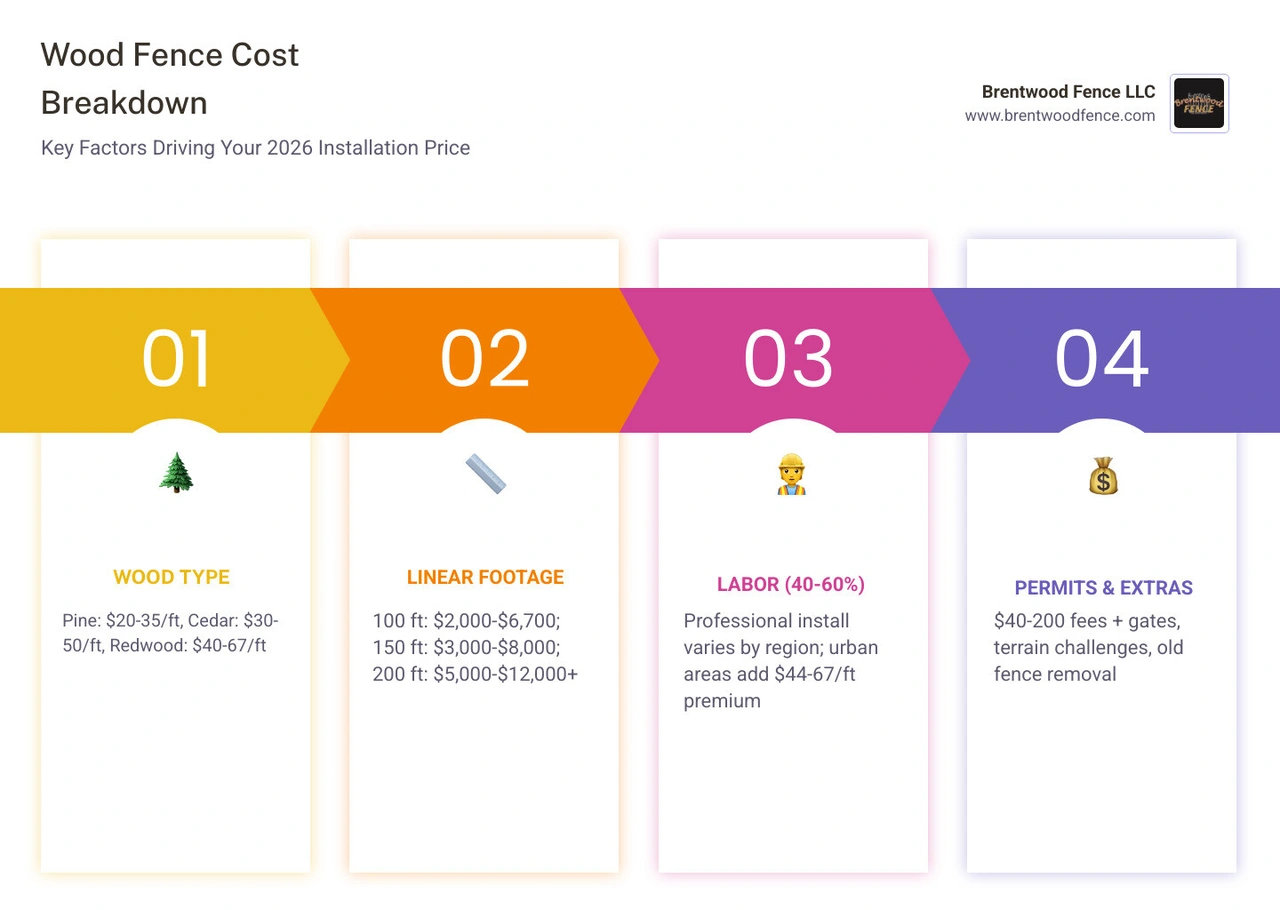
For most homeowners in 2026, the cost install wood fence project starts with one basic unit: the linear foot. That number rolls up your lumber, posts, concrete, hardware, labor, and often cleanup into a single price that is easier to compare across quotes.
For a standard 6-foot wood privacy fence, national data points cluster into a few realistic ranges:
If you are planning in New Hampshire, Massachusetts, or Maine, expect pricing to often land toward the middle or upper-middle part of those ranges because labor, freight, frost-depth digging, and seasonal demand can all push costs up.
For a professionally installed 6-foot wood privacy fence in 2026, we think the most practical benchmark is:
That spread sounds wide because it is. A straight run on flat ground with pressure-treated pine is not priced the same as cedar privacy fencing on a sloped backyard with one gate and tough access. Shocking, we know: dirt and gravity charge extra.
A good quote should clearly state:
Here is a simple planning range for common backyard sizes:
A 150-foot backyard is often used as the “typical” example, and many 6-foot wood privacy fence projects for that size land around $3,000 to $6,500, depending on wood type and conditions.
For more project-specific budgeting, see More info about 100 ft privacy fence cost and More info about 6 ft privacy fence cost.
Two quotes can look wildly different even when the fence length is the same. Usually, the difference comes from scope, quality, or site conditions, not magic.
Common reasons include:
Low bids are not always bargains. Sometimes they simply leave out the expensive parts until later.
The biggest price drivers are usually wood type, fence height, style, terrain, labor, gates, permits, and whether an old fence needs to come out first.
Pressure-treated pine is usually the most affordable option. Cedar costs more upfront but offers better natural resistance to rot and insects. Redwood is the premium end of the spectrum and is generally far more expensive.
For many New England homeowners, cedar hits the sweet spot between appearance and longevity. Pressure-treated posts with cedar pickets can also be a smart middle-ground approach.
For deeper pricing detail, see More info about wood fence cost per linear foot and More info about cedar fence pricing.
Height and style matter a lot.

A plain, straight 6-foot privacy fence is usually the most predictable to price. Once we add custom top details, picture-frame trim, extra reinforcement, or decorative post caps, the quote moves up.
Site conditions can turn a “simple fence” into a “why is this taking all day?” project.
Major cost boosters include:
In NH, MA, and ME, frost depth matters too. Posts generally need to be installed deep enough for local conditions, and tougher digging can increase labor. That is one reason New England wood fence pricing often runs above softer-climate markets.
Labor is a major share of the total project. Research consistently places labor at about 40% to 60% of the job cost, with many estimates landing around $5 to $20 per linear foot just for labor.
What labor covers:
Professional labor becomes especially valuable on privacy fences, sloped sites, and cold-climate installs where post depth and alignment really matter. For help choosing a contractor, read More info about wood fence installation company guide.
A wood fence quote is not just “boards and labor.” It is a system of parts that all add up.
Most 6-foot privacy fences use:
Typical component costs from research include:
Optional add-ons that raise cost:
Professional fence installation also includes equipment, scheduling, insurance, and overhead. Some estimating systems note that general contractor overhead and profit can add roughly 13% to 22%.
That does not mean someone is sneaking gold-plated screws into your fence. It means the company is covering:
A standard wood privacy fence job often follows this labor sequence:
This is where budgets often drift off course.
Hidden or commonly missed costs include:
Research-based ranges to keep in mind:
If you are replacing an existing fence, this guide may help: More info about replacing an old wood fence.
Not all fence pricing is created equal. A quote in New England is not going to mirror a quote in a lower-cost region.
Nationally, research shows the Northeast often runs about 15% to 25% above average for fencing. Higher labor rates, freight costs, weather-related installation demands, and local permitting all contribute.
Broadly speaking:
For national background, see Wood fence installation costs in 2026 and Wood privacy fence installation cost in 2026.
Sometimes yes, sometimes no, and “it depends” is doing a lot of work here.
Permits are commonly required when:
Typical permit costs:
You may also need:
A 6-foot fence is often allowed, but local rules vary, so it is always worth checking before installation starts.
For homeowners in Exeter, Portsmouth, Manchester, Concord, Derry, Dover, Haverhill, and across NH, MA, and ME, local conditions matter.
Important regional factors include:
For regional reading, see More info about wood fence costs in NH MA ME and More info about wooden privacy fence in NH MA.
DIY can save money, but it is not always the cheapest move in the long run.
DIY can save roughly 40% to 60% by eliminating paid labor. But that only works if the installation is done correctly and the yard is straightforward.
DIY may make sense for:
DIY gets risky when you have:
Common DIY mistakes include shallow posts, poor alignment, and underbuilt gates. Saving on labor is great until the fence starts leaning like it had a long week.
Typical lifespan depends on wood type, installation quality, and maintenance:
Professional installation helps because post depth, drainage, spacing, and gate framing have a huge effect on longevity.
Wood fences are not “install and forget” products. They need periodic care.
Typical maintenance includes:
Research suggests finishing costs can range from about $2 to $14 per linear foot depending on materials and whether the work is DIY or professional.
In New England, moisture protection matters. Keeping the fence sealed and addressing small issues early can make a big difference in total lifespan.
The goal is not the cheapest fence. It is the best value.
Smart ways to save:
For more budgeting ideas, see More info about wooden privacy fence cost.
The best quote is not always the lowest. It is the one that clearly explains what you are paying for.
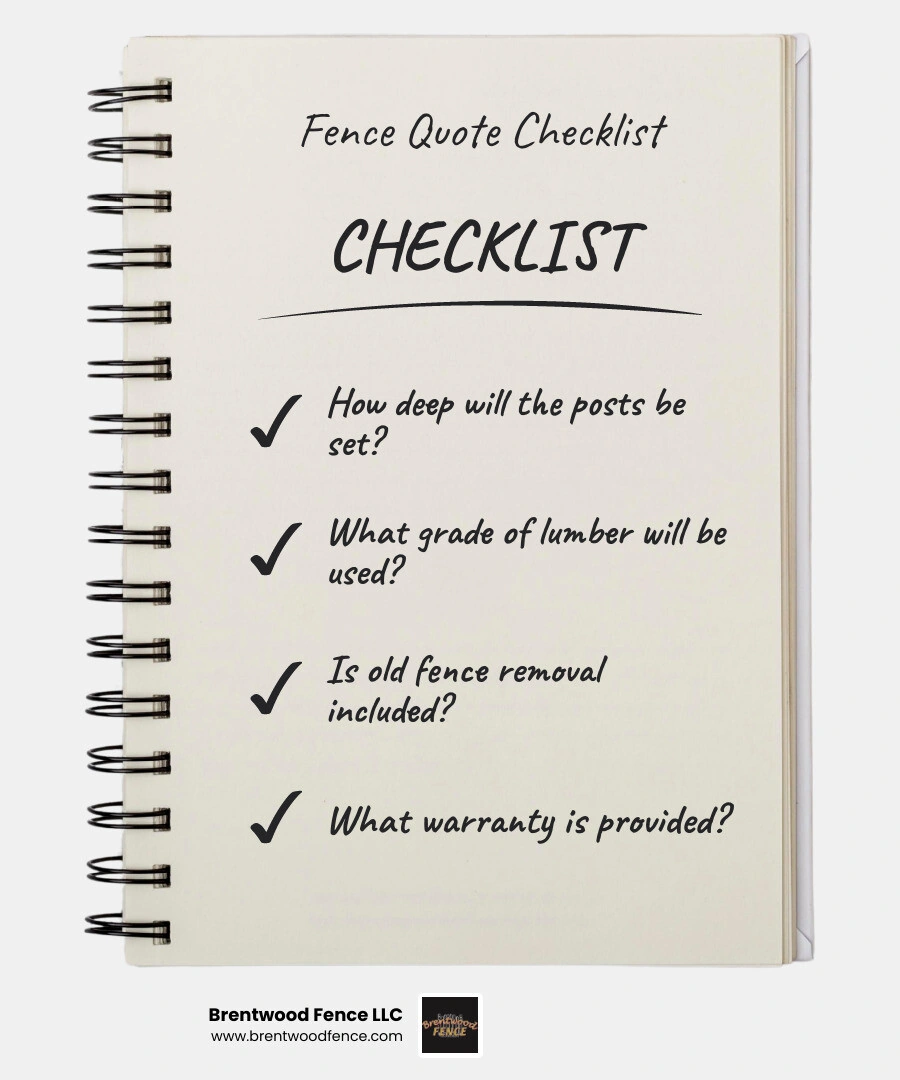
Ask these before agreeing to anything:
These questions help you compare workmanship, not just price.
Make sure every quote is based on the same assumptions:
If one quote is dramatically lower, check the exclusions section carefully. Missing details are often where “cheap” gets expensive.
In 2026, a realistic budget for a professionally installed wood fence is usually:
For standard backyards, that often means:
The best way to budget well is to think beyond the initial quote. Consider the total cost of ownership: wood type, installation quality, maintenance, gates, permits, and lifespan.
If you are planning a wood fence in New Hampshire, Massachusetts, or Maine, we recommend starting with a detailed, itemized estimate and comparing scope carefully. You can explore More info about wood fencing installation services to take the next step.
For more local cost resources, you may also find these helpful:
A well-built wood fence should give you privacy, curb appeal, and fewer headaches later. And when it comes to fencing, fewer headaches is a very good return on investment.
Copyright 2022 Brentwood Fence | All Rights Reserved | Sitemap | Website by Plumb Development a Digital Marketing Agency