Blog Content

29
May
2026
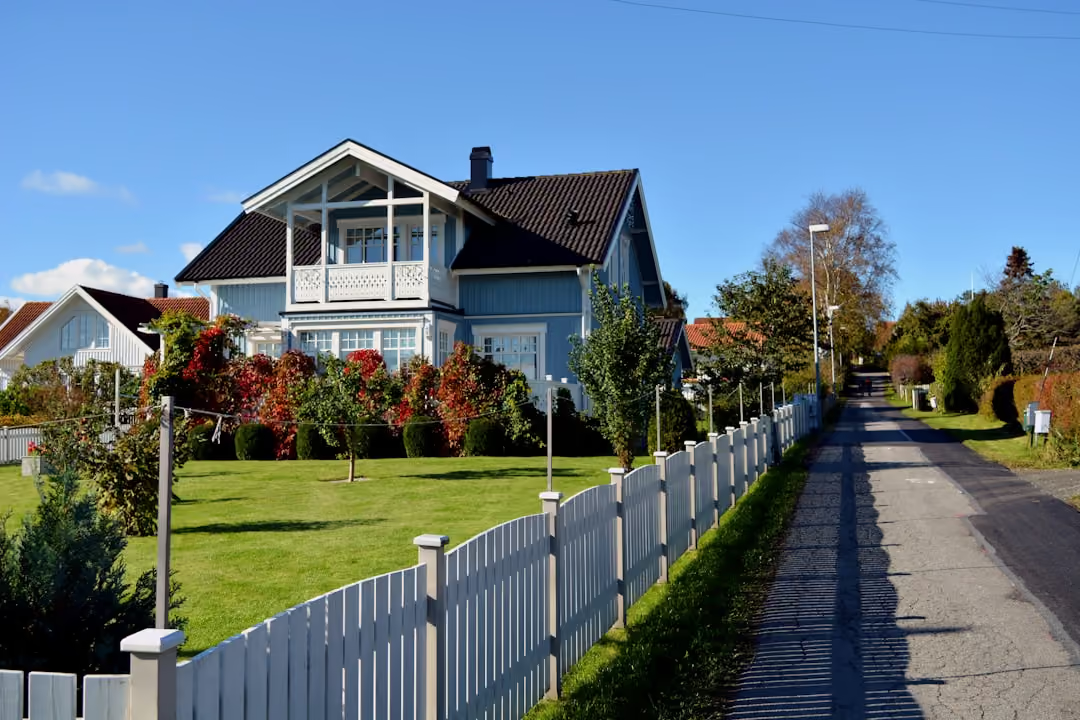
The cost of installed fence work in the U.S. typically falls between $20 and $60 per linear foot, with most homeowners spending $3,000 to $12,000 for a complete residential project.
Here's a quick snapshot to answer your question fast:
National average total cost: ~$3,200 – $4,000 for a standard residential fence install.
Labor alone accounts for roughly 50% of that total. Material choice, fence height, lot terrain, and local permit fees drive the rest.
If you've been getting quotes that feel all over the map — or you just want to know what a fair price actually looks like before calling anyone — you're in the right place.
This guide breaks down every cost factor clearly, so you can budget with confidence and spot a bad quote before you sign anything.

As we move through May 2026, the fencing industry has settled into a new "normal" regarding pricing. While the supply chain shocks of previous years have largely dissipated, labor rates and specialized material costs reflect the current economic climate in New England. When you look at the cost of installed fence projects today, you aren't just paying for the boards or the wire; you are paying for the expertise of a crew that understands how to navigate the rocky soils of New Hampshire and the strict zoning laws of Massachusetts.
Across the United States, the average homeowner pays roughly $4,000 for a professional fence installation. However, "average" can be a tricky word. Depending on whether you are enclosing a small dog run or a multi-acre estate, your investment could range from a low of $1,000 to a high of $15,000 or more. In early 2026, the estimated national range for the cost of installed fence sits between $33.48 and $53.87 per linear foot for mid-range materials.
Size is the most obvious driver of price. Most residential backyards in suburban areas like Derry, NH, or Haverhill, MA, require about 150 linear feet of fencing.

If you aren't sure of your linear footage, you can estimate based on your acreage, though property shape (like a long, narrow lot versus a square one) will change the final number.
The material you choose is the biggest variable you can control. It dictates not just the upfront cost of installed fence work, but also how much time and money you'll spend on maintenance over the next twenty years.
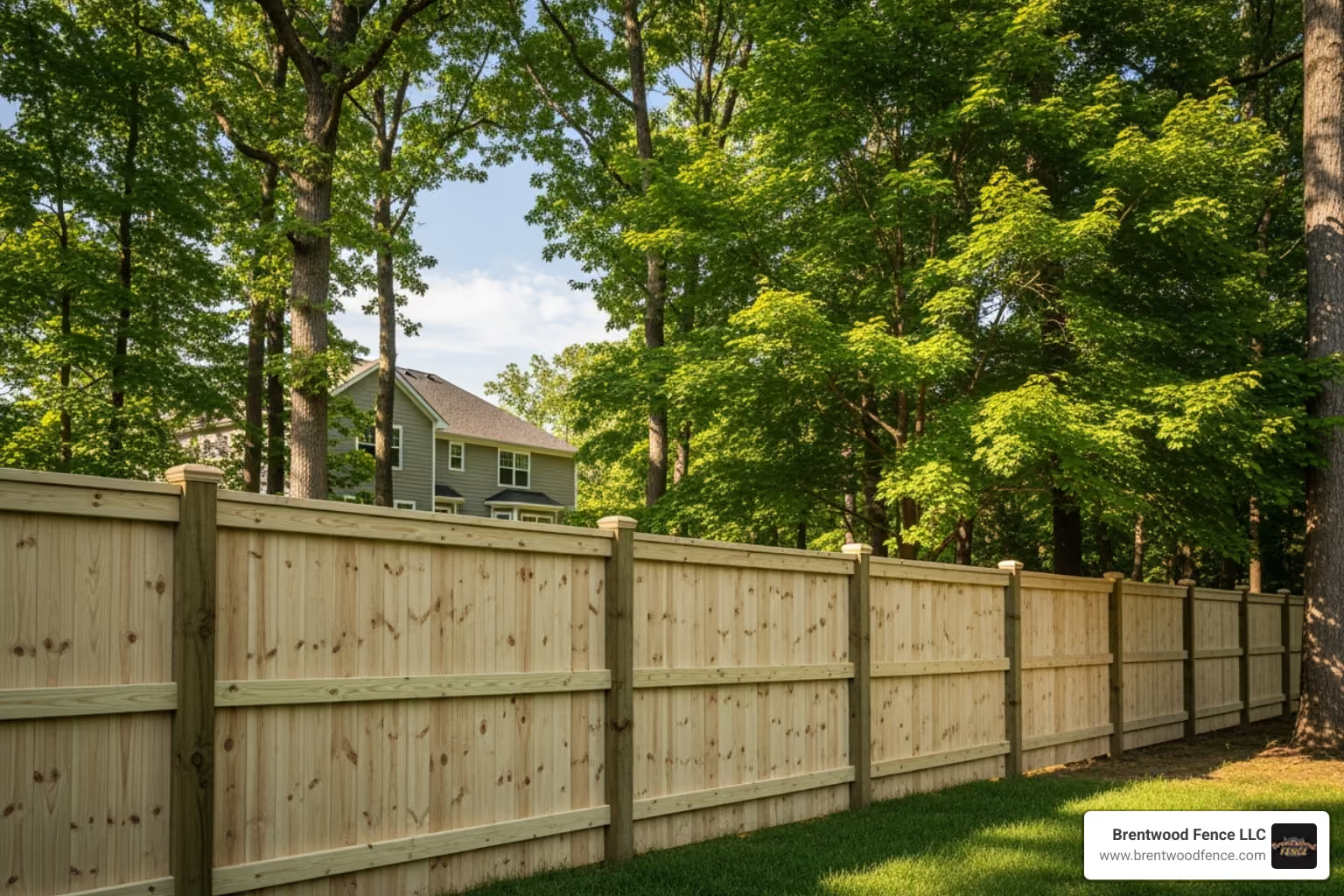
Wood remains a top choice in New England because of its classic aesthetic. However, the cost of installed fence using wood depends heavily on the species. Pressure-treated pine is the budget-friendly option, while Northern White Cedar is the gold standard for its natural resistance to rot and insects—a must-have for our damp Maine and New Hampshire climates. You can find more details in our cost per ft wood fence guide.
Vinyl has surged in popularity because it doesn't rot, warp, or require staining. While the upfront cost is higher—often $25 to $60 per linear foot—the lifetime cost is lower. If you’re curious about specific pricing, our vinyl fence price estimator can help you crunch the numbers for your specific yard size.
For those prioritizing security or visibility, metal is the way to go.
If you plan to stay in your home for more than 10 years, vinyl or aluminum usually wins the value battle. While a wood fence might cost $4,000 to install today, you’ll spend another $2,000–$3,000 over its life on staining and repairs. A vinyl fence is "one and done"—a quick spray with a garden hose once a year is all it needs to stay white and bright.
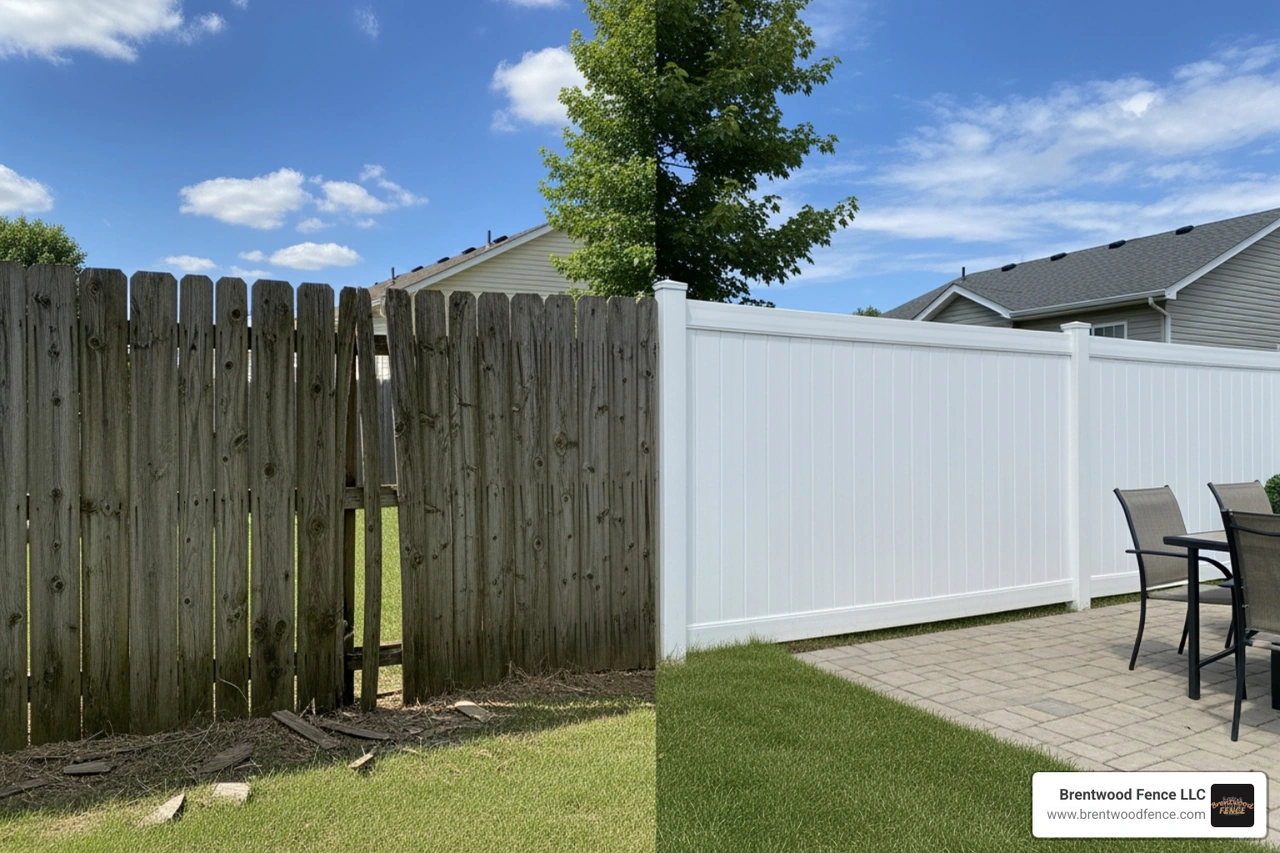
We often see two neighbors with similar yards get two very different quotes. Why? Because the ground beneath the fence matters just as much as the fence itself.
In 2026, labor accounts for roughly 50% of your total bill. This covers the layout, the back-breaking work of digging post holes (which must be deep enough to get below the frost line in New England), mixing concrete, and perfectly leveling every section. For a standard 150-foot project, labor usually averages around $1,600 to $2,500. You can read more about the specific labor cost installing chain link fence to see how these hours are billed.
When budgeting for the cost of installed fence projects, don't forget these "hidden" line items:
Going from a 6-foot to an 8-foot fence usually adds 25% to 35% to your total because it requires longer posts, more concrete, and more material. Site conditions also play a huge role. If our crew hits solid granite in your Dover backyard or has to "step" panels down a steep slope in Manchester, the labor time increases. Rocky or clay-heavy soil can add 20% to 40% to the labor portion of your quote.
Geography is a massive factor. If you are looking for the cost of installed fence work in the Northeast, you should expect to pay a premium compared to the Midwest or the South.
On average, the Northeast (including our service areas in NH, MA, and ME) sees prices that are 15% to 25% higher than the national average. This is driven by higher local labor rates and the logistical costs of transporting materials like cedar and high-grade vinyl into the region. Urban areas like Boston or even the busier parts of Manchester, NH, can be 40% more expensive than rural areas due to limited site access and higher contractor overhead. You can find more broad data in this How Much Does It Cost to Install a Fence? [2025 Data] report.
In our neck of the woods, the "frost line" is the big boss. In New Hampshire and Massachusetts, posts must be set at least 36 to 48 inches deep to prevent "frost heave," where the freezing ground literally pushes your fence out of the soil. This requires more labor and concrete than a fence in Georgia or Texas. For local specifics, check out our guides on fence cost per linear foot nh ma me and cost wood fence installation nh ma me.
To get a ballpark figure, follow this simple formula:
For a more automated approach, check out the How Much Does Fence Installation Cost in 2026? calculator for current market trends.
Sometimes you don't need a whole new fence; you just need a "face-lift." But how do you know when it's time to stop patching and start over?
If less than 20% of your fence is damaged—say, a couple of broken pickets or one leaning post—repair is the way to go. Replacing a single post usually costs $150 to $350. However, if your wood is graying, brittle, and rotting at the base, or your vinyl has become brittle from UV exposure, replacement is more cost-effective. We have a specific guide on pvc vinyl fence repair price for those looking to fix specific sections.
It’s tempting to try and save that 50% labor cost by doing it yourself. You can certainly save 35% to 50% on the total project price by providing your own sweat equity. However, consider the "hidden" DIY costs:
You don't have to choose the lowest-quality materials to save money. Try these strategies instead:
For more tips, see our average fence cost per linear foot guide.
The absolute cheapest option is usually standard galvanized chain link, starting as low as $8–$15 per foot for materials. If you want a privacy fence, pressure-treated pine is the most budget-friendly wood option, though it requires the most maintenance.
Absolutely. A well-installed fence can recover 50% to 70% of its cost upon resale. It increases "curb appeal" and is often a non-negotiable requirement for buyers with pets or young children.
In most of New Hampshire and Massachusetts, yes, you need a permit for fences over 6 feet. As for lifespan:
Determining the cost of installed fence projects doesn't have to be a guessing game. By understanding the relationship between material, labor, and your specific New England terrain, you can plan a project that fits your budget and lasts for decades. Whether you are looking for the privacy of a white vinyl perimeter or the classic look of a cedar picket fence, getting an accurate, itemized quote is the first step toward transforming your yard.
At Brentwood Fence LLC, we’ve spent years helping homeowners from Exeter to Haverhill navigate these choices. We know the frost lines, the local codes, and the materials that actually stand up to our winters.
Ready to see exactly what your project will cost? Get your free fencing installation estimate here.


Copyright 2022 Brentwood Fence | All Rights Reserved | Sitemap | Website by Plumb Development a Digital Marketing Agency