Get the Scoop on Cyclone Fencing Prices: A Meter-by-Meter Breakdown
23
Feb
2026
Author:
Rob Thibeault
Why Understanding Cyclone Fence Cost Matters Before You Buy
Cyclone fence cost is one of the most affordable fencing options available, but knowing what you'll actually pay requires understanding several key factors. If you're a homeowner looking to secure your property without breaking the bank, you're in the right place.
Quick Answer: What Does a Cyclone Fence Cost?
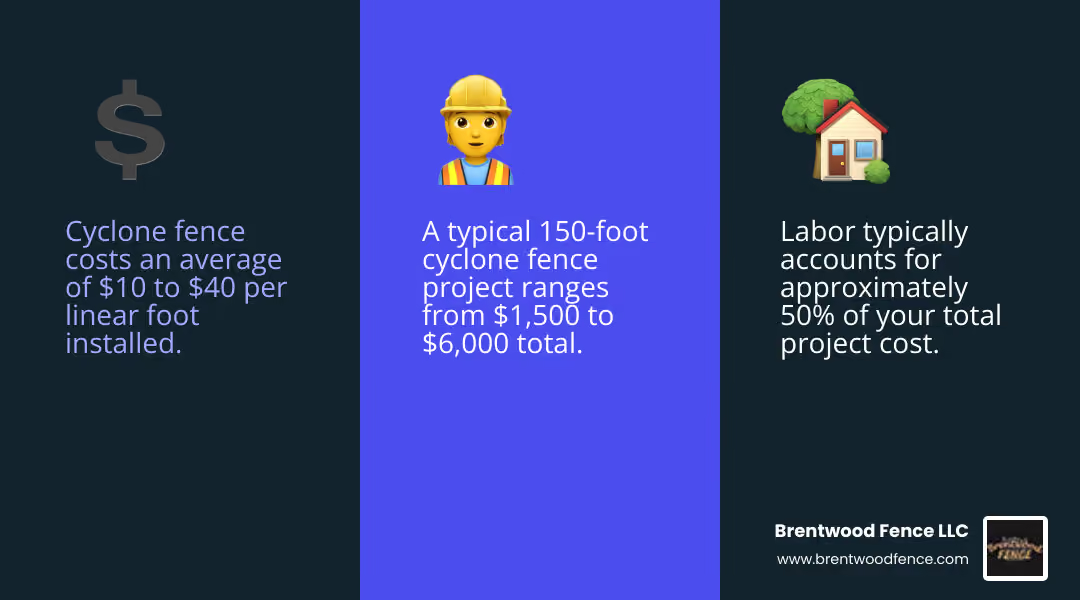
Average cost per linear foot: $10 to $40 installed
Typical 150-foot project: $1,500 to $6,000 total
4-foot fence: $10 to $20 per linear foot
6-foot fence: $13 to $30+ per linear foot
8-foot fence: $20 to $40+ per linear foot
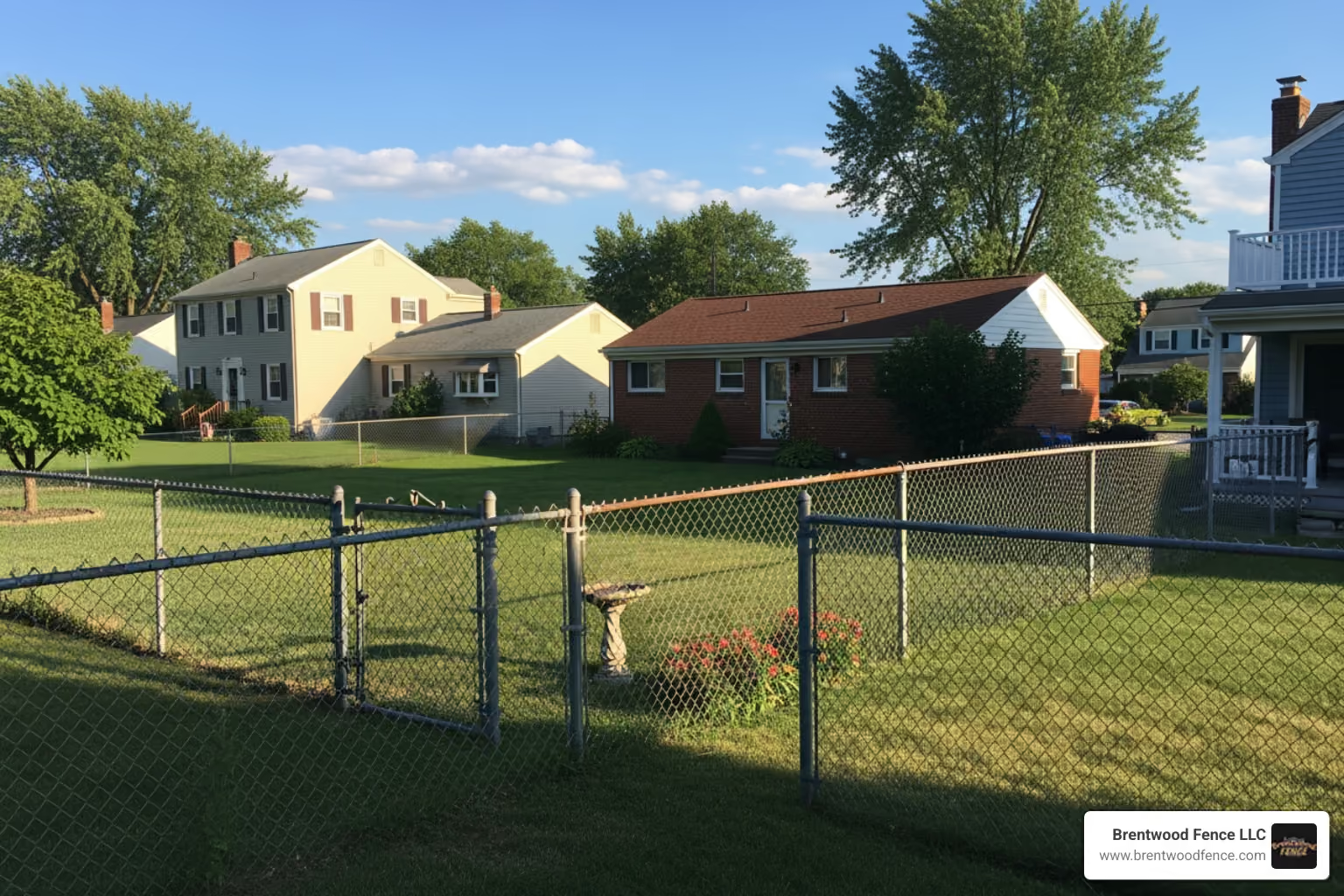
Chain-link fencing (also called cyclone fencing) has been a go-to choice for residential and commercial properties for decades. It's durable, low-maintenance, and allows air and light to pass through—perfect for keeping pets and children safe while maintaining visibility.
The total price you'll pay depends on several factors: fence height, material type (galvanized steel vs. vinyl-coated), the length of your project, gates, add-ons like privacy slats, and whether you need site preparation work. Labor typically accounts for about 50% of your total cost.
Professional installation ensures your fence meets local codes, stands straight, and lasts for years. While some homeowners consider DIY installation, working with experienced installers like Brentwood Fence LLC means you get the job done right the first time—with proper permits, quality materials, and expert craftsmanship.
In this guide, we'll break down every cost factor meter by meter, so you can budget accurately and make informed decisions about your fencing project. For a deeper dive into specific components, check out our guides on:
When we talk about the cyclone fence cost, we're looking at a range that can vary significantly based on your specific needs and property characteristics. Generally, you can expect to pay between $10 and $40 per linear foot for professional installation. This average includes both materials and labor, which, as we noted, usually split the cost about evenly.
For a typical project, say installing a 150-foot chain-link fence, the total cost could range from $1,500 to $6,000. These figures provide a good starting point for budgeting, but let's dive deeper into what influences these numbers.
Cost Per Linear Foot Breakdown
The height of your fence is one of the most significant factors affecting the per-linear-foot cost. Taller fences require more material and often more labor due to the increased complexity and weight.
Standard 4-foot fence: Ideal for defining property lines, containing small pets, or purely aesthetic purposes, a 4-foot fence typically costs between $10 and $20 per linear foot installed.
Taller 6-foot fence: Often chosen for increased privacy, security, or containing larger dogs, 6-foot fences usually fall in the $13 to $30+ per linear foot range. This height is common for backyards and provides a good balance of security and visibility.
High-security 8-foot fence: For commercial properties, athletic courts, or areas requiring maximum security, an 8-foot fence can cost $20 to $40+ per linear foot. These fences often use heavier gauge wire and require more robust posts and installation techniques.
Typical Project Total Costs
To give you a clearer picture, let's look at some common project lengths and their estimated total costs:
100-foot project estimate: For a smaller yard or a specific enclosure, a 100-foot chain-link fence could cost between $1,000 and $4,000.
150-foot project estimate: As mentioned in our intro, a 150-foot fence is a common residential length, with costs typically ranging from $1,500 to $6,000.
200-foot project estimate: For larger properties, a 200-foot fence might cost between $2,000 and $8,000.
300-foot project estimate: For extensive property lines, you could expect to pay between $3,000 and $12,000 for a 300-foot chain-link fence.
These are average ranges. Regional price variations exist, and while we operate in New Hampshire, Massachusetts, and Maine, costs can fluctuate even within these states due to local demand, material availability, and specific project requirements.
Key Factors That Influence Your Final Price
Beyond the basic length and height, several critical factors play a role in determining your final cyclone fence cost. These include the materials we choose, specific fence specifications like wire gauge, and any custom additions you might desire. Understanding these elements will help us tailor a solution that fits both your needs and your budget. You can find More info about chain link materials on our blog.
How Height Affects Your Cyclone Fence Cost
We've touched on this already, but let's reiterate: fence height is a primary cost driver.
4-foot residential use: A common sight in front yards, a 4-foot fence is primarily for demarcation and light containment. It's the most economical option.
6-foot for privacy and security: This height is popular for backyards, offering a good balance of privacy and security without completely obstructing views. The extra height means more material and a slightly more involved installation process, leading to higher costs.
8-foot for commercial needs: Taller fences, especially 8-foot and above, are typically used for commercial, industrial, or high-security applications. These often require heavier gauge materials, stronger posts, and more intensive labor, significantly increasing the overall cyclone fence cost.
The increase in material usage and labor time for taller fences directly translates to a higher per-linear-foot price.
Breaking Down the Cyclone Fence Cost by Material
The type of chain-link material you select also has a substantial impact on the price and the fence's longevity and appearance.
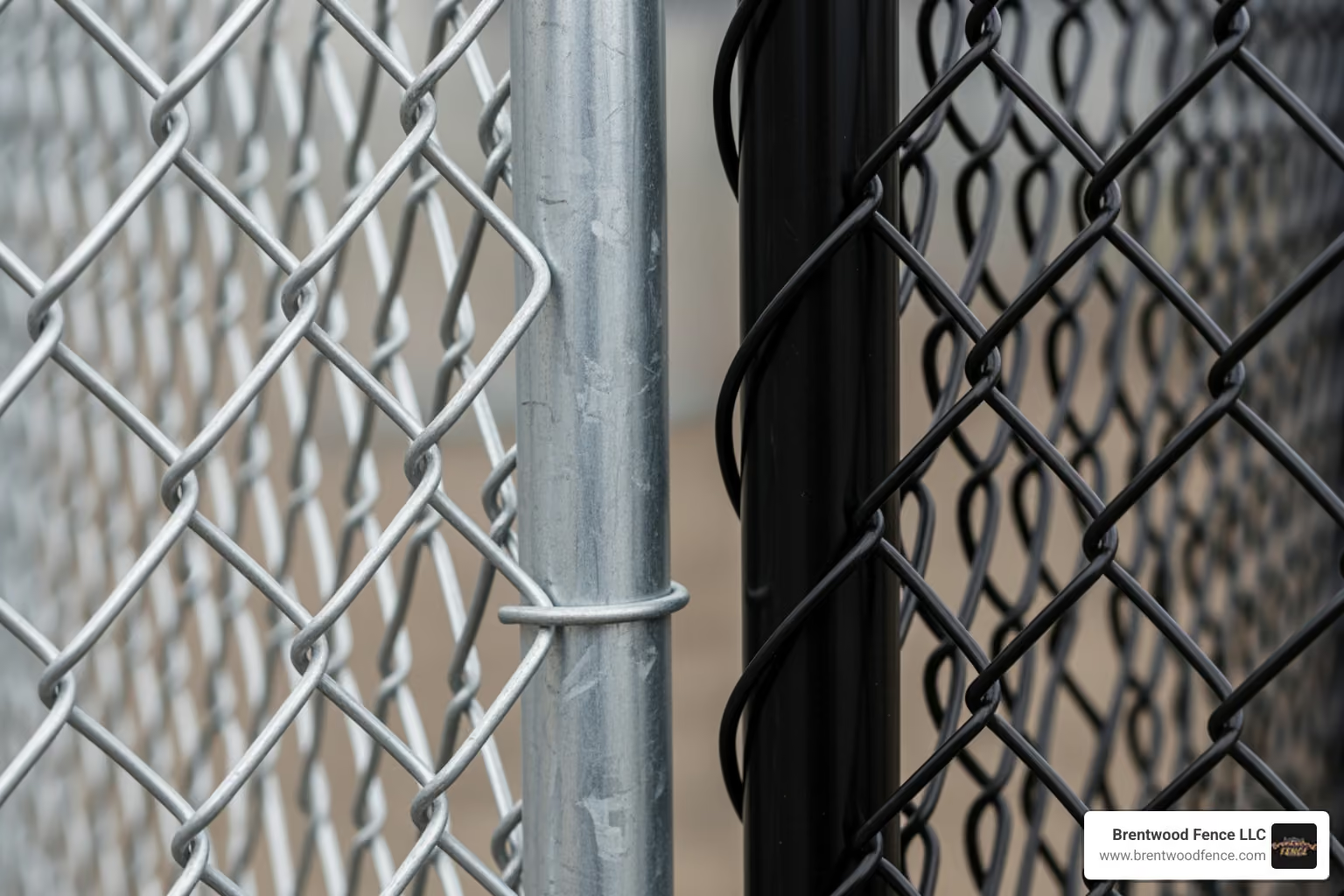
Galvanized steel: This is the most common and economical type of chain-link fencing. It's made from steel wire coated with zinc to protect against rust. Galvanized fences are durable and functional, offering good protection at a lower price point, typically $10 to $40 per linear foot installed.
Vinyl-coated (black, green): For those seeking improved aesthetics and improved durability, vinyl-coated chain-link fences are an excellent choice. These fences have a vinyl layer over the galvanized steel, offering superior rust protection, especially in humid or coastal environments. They come in various colors, with black and green being popular, and can cost between $30 and $60 per linear foot installed. The vinyl coating also contributes to a longer lifespan.
Aluminum: While pure aluminum chain-link fencing is available, it's generally a more expensive option, ranging from $25 to $75 per linear foot installed. It's lightweight, naturally rust-proof, and has a unique look, but it's not as commonly used for residential applications as galvanized or vinyl-coated steel due to its higher cost.
The choice between these materials often comes down to balancing your budget with your desired aesthetic and the level of protection you need against the elements.
The Price of Essential Components and Add-ons
A fence is more than just mesh and posts. Gates and other additions can significantly add to your overall cyclone fence cost.
Fence posts: Each post is a crucial structural element, and their cost can vary from $15 to $30+ each. Posts are typically placed every 4 to 10 feet along the fence line, so the number needed adds up quickly.
Walkway gates: For pedestrian access, a standard walkway gate can cost anywhere from $80 to $200 each, before installation.
Driveway gates: Larger and more complex, driveway gates range from $175 to $500 for double swing gates, or even $350 to $1,000+ for rolling slide gates. If you need automated commercial rolling gates, costs can soar to $700 to $2,500 or more.
Privacy slats: If you desire more privacy for your chain-link fence, we can weave privacy slats through the mesh. These cost an additional $5 to $18 per linear foot. While they don't offer the complete opacity of a solid fence, they significantly improve privacy at a fraction of the cost. For more details, check out our guide on Best Privacy Slats for Chain Link Fence.
Don't Forget These Additional Installation Costs
Beyond the fence itself, several "hidden" costs can impact your final cyclone fence cost. These often relate to preparing your property for installation and administrative requirements. We always aim to be transparent about these potential additional expenses.
Site Preparation and Pre-Installation Tasks
Before we even begin digging post holes, some important groundwork might be necessary:
Land survey requirements: If there's any doubt about property lines, a land survey might be required to ensure your fence is installed correctly and doesn't encroach on a neighbor's property. This can cost between $300 and $900.
Ground grading and leveling: If your property has significant slopes, uneven ground, or challenging terrain, we might need to grade or level the area where the fence will be installed. This ensures a straight, stable fence line and can cost between $0.55 and $2.75 per square foot for basic grading.
Clearing obstacles: Existing vegetation, rocks, or debris along the fence line need to be cleared.
Tree or stump removal: If trees or stumps are in the way, their removal can add $150 to $500+ per tree and $100 to $400 per stump. These tasks are crucial for a smooth and efficient installation process and a long-lasting fence.
Administrative and Post-Installation Expenses
Once the physical work is complete, a few other costs might arise:
Building permits: Most municipalities in New Hampshire, Massachusetts, and Maine require a building permit for fence installation. These permits ensure your fence complies with local zoning laws and safety regulations and typically cost between $40 and $150+. We handle securing these permits as part of our professional service.
Old fence disposal fees: If we're replacing an existing fence, its removal and disposal will incur additional costs, typically $3 to $5 per linear foot.
Debris cleanup: While we always ensure a clean worksite, sometimes extensive debris from site prep might require additional cleanup, costing $50 to $150 per hour.
Material price fluctuations: The cost of steel, the primary material for chain-link fences, can fluctuate. While we strive to provide accurate quotes, significant market changes could impact material costs, though we always communicate these transparently.
Cyclone Fence: Cost & Benefit Analysis
Investing in a cyclone fence is a smart decision for many homeowners in New England, offering a compelling blend of affordability, functionality, and minimal upkeep. When we consider the overall cyclone fence cost, it's important to weigh it against the numerous benefits this type of fencing provides.
Benefits of Chain-Link Fencing:
Low maintenance: One of the biggest advantages of chain-link is its minimal maintenance requirements. Unlike wood fences that need regular staining or painting, galvanized chain-link fences only require occasional cleaning and checking for loose connections. Vinyl-coated options are even more maintenance-free, as the coating protects the metal from rust and corrosion.
Better Airflow: The open weave design of a chain-link fence allows air to flow freely through your property. This is a significant benefit in areas prone to strong winds, as it reduces wind resistance and the likelihood of fence damage. It also prevents your yard from feeling closed-off and maintains natural light.
Security for pets and children: Chain-link fences are excellent for creating a safe and secure perimeter for children and pets. They prevent kids from wandering off and keep pets contained within your yard, protecting them from outside dangers. For pool owners, chain-link fences are often required by municipalities for safety, and their open design doesn't block views or sunlight.
To put the cyclone fence cost into perspective, let's compare it with other common fencing materials:
Fence Type
Average Cost (per linear foot installed)
Maintenance Needs
Typical Lifespan
Chain-Link
$10 – $40
Very Low (occasional cleaning)
15 – 20 years
Wood (Picket)
$10 – $40+
Moderate (painting/staining every 2-3 years)
15 – 20 years
Wood (Privacy)
$25 – $60
Moderate (painting/staining every 2-3 years)
15 – 20+ years
Split Rail
$15 – $35
Low to Moderate (occasional repair, weather treatment)
10 – 30 years
Vinyl
$30 – $60
Very Low (occasional cleaning)
20 – 30 years
Aluminum
$25 – $75
Low (occasional cleaning)
30 – 50 years
Wrought Iron
$50 – $85
Moderate (rust treatment, repainting every 2-3 years)
50 – 100 years
As you can see, chain-link fencing stands out as a highly cost-effective option, particularly when considering its low maintenance and respectable lifespan.
Frequently Asked Questions about Cyclone Fence Costs
We hear a lot of questions about chain-link fences, and we're happy to clear things up. Here are some of the most common inquiries about cyclone fence cost and related topics.
Is a cyclone fence the cheapest option?
Generally, yes, a cyclone fence is one of the most affordable fencing options available on the market.
Lower material cost: The raw materials for chain-link fencing, especially galvanized steel, are typically less expensive per linear foot than wood, vinyl, aluminum, or wrought iron.
Lower installation cost: While labor is a significant component of any fence installation, the process for chain-link can often be less labor-intensive than building a solid wood or ornamental fence from scratch, contributing to a lower overall installation cost.
Long-term value: Given its durability and minimal maintenance requirements, the long-term cyclone fence cost is often lower compared to fences that require regular upkeep like painting or staining.
Durability: A well-installed chain-link fence can last 15 to 20 years, providing excellent value for its initial investment.
How much does labor cost for a chain-link fence?
Labor is a significant portion of the total cyclone fence cost, typically accounting for about 50% of the project.
Hourly rates: Fence installers generally charge between $25 and $50 per hour.
Factors affecting labor: The complexity of your property's terrain (hilly, rocky, or with obstacles), the number of gates, and the overall length and height of the fence can all increase labor time and, consequently, the cost. For instance, installing a fence on uneven or rocky ground in New Hampshire or Massachusetts will naturally take more time and effort than on flat, clear terrain.
Professional installation value: While DIY might seem cheaper upfront, professional installation ensures the fence is correctly tensioned, posts are properly set in concrete for stability, and local codes are met. This prevents costly repairs down the line and ensures your fence stands strong for decades.
Can I paint a chain-link fence to improve its look?
Yes, you absolutely can paint a chain-link fence to improve its appearance and add an extra layer of protection.
For aesthetics: Painting allows you to customize the fence color to better blend with your landscaping or match your home's exterior, significantly improving its curb appeal.
Rust protection: For non-vinyl coated galvanized fences, applying a rust-resistant paint can provide additional protection against corrosion and extend the life of your fence. Make sure to use a rust-resistant paint specifically designed for metal.
Proper preparation: Before painting, the fence must be thoroughly cleaned to remove dirt, rust, and loose paint. A rust-inhibiting primer should be applied first, followed by a suitable exterior metal paint.
Maintenance tips: Expect to repaint your chain-link fence every 3 to 5 years for the best results and continued protection. This regular maintenance helps preserve its look and integrity.
Ready for Your New Fence? Get a Professional Quote
Understanding the various factors that contribute to the cyclone fence cost empowers you to make informed decisions for your property. From the height and material type to gates, privacy slats, and site preparation, each element plays a role in the final investment.
At Brentwood Fence LLC, we pride ourselves on providing transparent, accurate estimates and professional installation services across New Hampshire, Massachusetts, and Maine. We believe in delivering quality materials and secure, long-lasting fence solutions custom to your unique needs. Don't let the complexities of fence pricing deter you from securing your property.
Let us help you steer your options and provide an exact quote for your project. Our team is ready to offer a professional assessment, ensuring you get the right fence at a fair price.