Beyond the Name: Understanding Cyclone Chain Link Fences
8
Feb
2026
Author:
Rob Thibeault
What is a Cyclone Fence and Why is it Called That?
A cyclone chain link fence is simply another name for the standard chain-link fence you've seen around countless homes, schools, and businesses. The terms are completely interchangeable, and both refer to the same woven steel wire fencing with its characteristic diamond pattern.
Quick Answer: What is a Cyclone Fence?
Definition: A cyclone fence is a woven steel wire fence made from galvanized or coated wire bent into a zigzag pattern, creating diamond-shaped openings.
Alternative Names: Chain-link fence, wire-mesh fence, hurricane fence, diamond-mesh fence, or chain-wire fence.
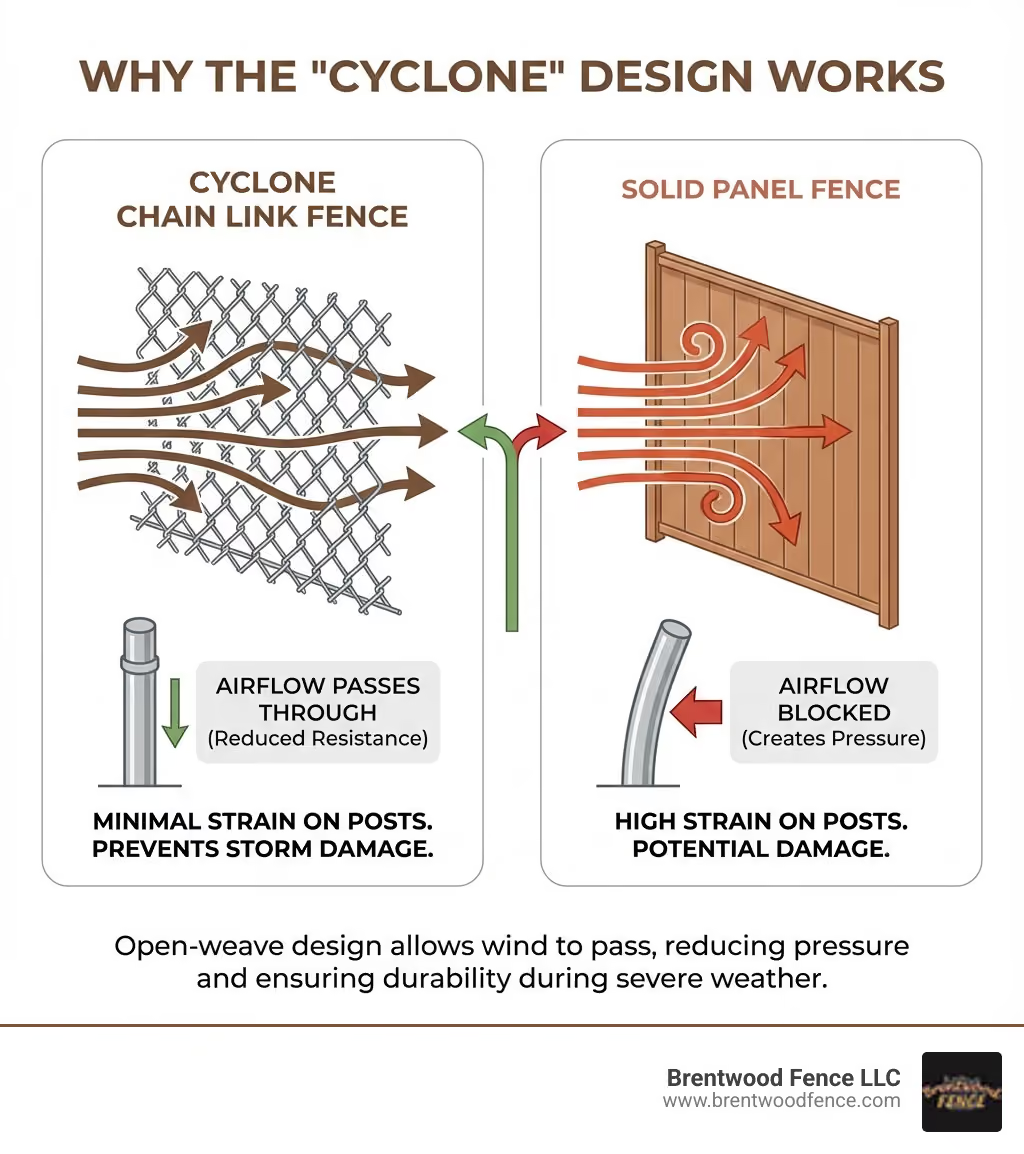
Why "Cyclone"?: The name comes from the fence's ability to withstand severe weather and hurricane-force winds because the open weave allows wind to pass through rather than pushing against it.
Key Feature: The mesh design lets air flow through, which reduces wind pressure and prevents damage during storms.
If you've been confused by different names for what seems like the same product, you're not alone. The term "cyclone fence" originated from this fencing style's remarkable durability during tropical storms and high winds. While the prototypical white-picket fence might come to mind when you think of residential fencing, cyclone chain link fence offers distinct advantages that have made it a reliable choice for over a century.
The woven steel wire construction creates a flexible barrier that moves with the wind instead of fighting against it. This simple but effective design has kept properties secure through countless New England winters and coastal storms.
Whether you're looking to contain pets, secure a pool area, or define your property boundaries, understanding what makes this fencing so enduring will help you make the right choice for your home.
The story of the cyclone chain link fence is a fascinating journey from textile innovation to a ubiquitous boundary solution. Its origins trace back to 19th-century England, specifically Norwich, where the initial concept for weaving wire into a mesh pattern was born. Charles Barnard, a forward-thinking inventor, is credited with developing machines that could produce this unique wire fabric. Interestingly, these early chain-link weaving machines were inspired by the intricate workings of cloth weaving machines. You can explore more about these Victorian Norwich weaving machines if you're a history buff!
Fast forward to the early 20th century, and the cyclone chain link fence began its rise to prominence in the United States. The American Chain Link Company, based in Massachusetts, played a pivotal role in popularizing this fencing style. They even published an article in the 1940s, boldly declaring this type of fence an "indestructible guardian" – a testament to its perceived strength and durability. You can learn more about the American Chain Link Company and its impact.
The manufacturing process itself, often referred to simply as "weaving," involves a clever technique. Steel wire is pulled along a rotating blade, which flattens and spirals it. These spirals are then interlocked with previous ones, creating the characteristic diamond mesh pattern. Over the years, inventors like Frank J. Mafera (who held several patents from 1930 to 1952) made significant improvements, such as eliminating ragged edges at the top of residential fences for improved safety. This continuous evolution has made the cyclone chain link fence the versatile and reliable product we know today.
Cyclone Fence vs. Chain-Link Fence: Is There a Difference?
This is a question we hear often, and the answer is refreshingly simple: no, there is no functional difference between a cyclone chain link fence and a standard chain-link fence. The terms are, for all intents and purposes, interchangeable.
Think of it like calling a soda a "pop" or a "cola" – it's the same fizzy drink, just with different regional naming conventions. In the fencing industry, "chain-link fence" is the more universally accepted and technical term. However, "cyclone fence" gained popularity due to its strong association with resilience against severe weather, particularly in areas prone to tropical storms and high winds. As we've discussed, the open-weave design of this fence allows wind to pass through, significantly reducing the pressure and strain on the structure, which helps it stand firm when other fence types might buckle.
So, whether you call it a cyclone chain link fence, a wire-mesh fence, a hurricane fence, or simply a chain-link fence, you're referring to the same durable, woven steel wire product. The focus should always be on the materials, specifications, and proper installation rather than getting caught up in the nomenclature.
To truly appreciate the strength and simplicity of a cyclone chain link fence, it helps to understand its individual components. Each part plays a crucial role in creating a secure and long-lasting barrier.
This section breaks down the essential parts that create a complete and sturdy fence.
Core Structural Components
At the heart of any robust cyclone chain link fence system are its structural elements, designed to withstand the elements and provide a strong framework for the mesh.
Terminal Posts: These are the unsung heroes of the fence line. Terminal posts include gate posts, corner posts, and end posts. They are typically wider in diameter and set deeper into the ground, often with concrete footings, because they bear the brunt of the fence's tension. Our professional installers ensure these posts are anchored securely to prevent leaning, especially important in the varied soils of New Hampshire, Massachusetts, and Maine.
Line Posts: These posts are positioned between the terminal posts, supporting the fence fabric along its run. While not under as much tension as terminal posts, proper spacing (typically not exceeding 10 feet) is crucial for maintaining the fence's integrity and preventing sagging.
Top Rail: This is a horizontal tube that runs along the very top of the fence, connecting the line posts and terminal posts. It provides structural rigidity, helps prevent the mesh from sagging, and gives the fence a finished look. Sections of top rail are connected using sleeves, ensuring a continuous and smooth top edge.
Tension Wire: Often used along the bottom of the fence, a bottom tension wire helps stabilize the fence fabric and prevents animals from pushing underneath. It runs the entire length of the fence and is secured to line posts and the mesh using tension wire clips (also known as hog rings or ties). In some cases, a top tension wire can be used as an alternative to a top rail, particularly for taller fences or specific applications.
Beyond these core components, a variety of hardware bits and pieces tie everything together. Tension bands hold the tension bar in place, while rail end bands attach the top rail to terminal posts. Fence ties are used to secure the mesh to the posts, top rail, and tension wires. Understanding these components is key to a successful installation. For a deeper dive into these essential bits and bobs, explore our more info about chain link fence hardware.
The Fabric: Mesh, Gauge, and Edges
The woven wire fabric is, of course, the most recognizable part of a cyclone chain link fence. But there's more to it than just a simple mesh.
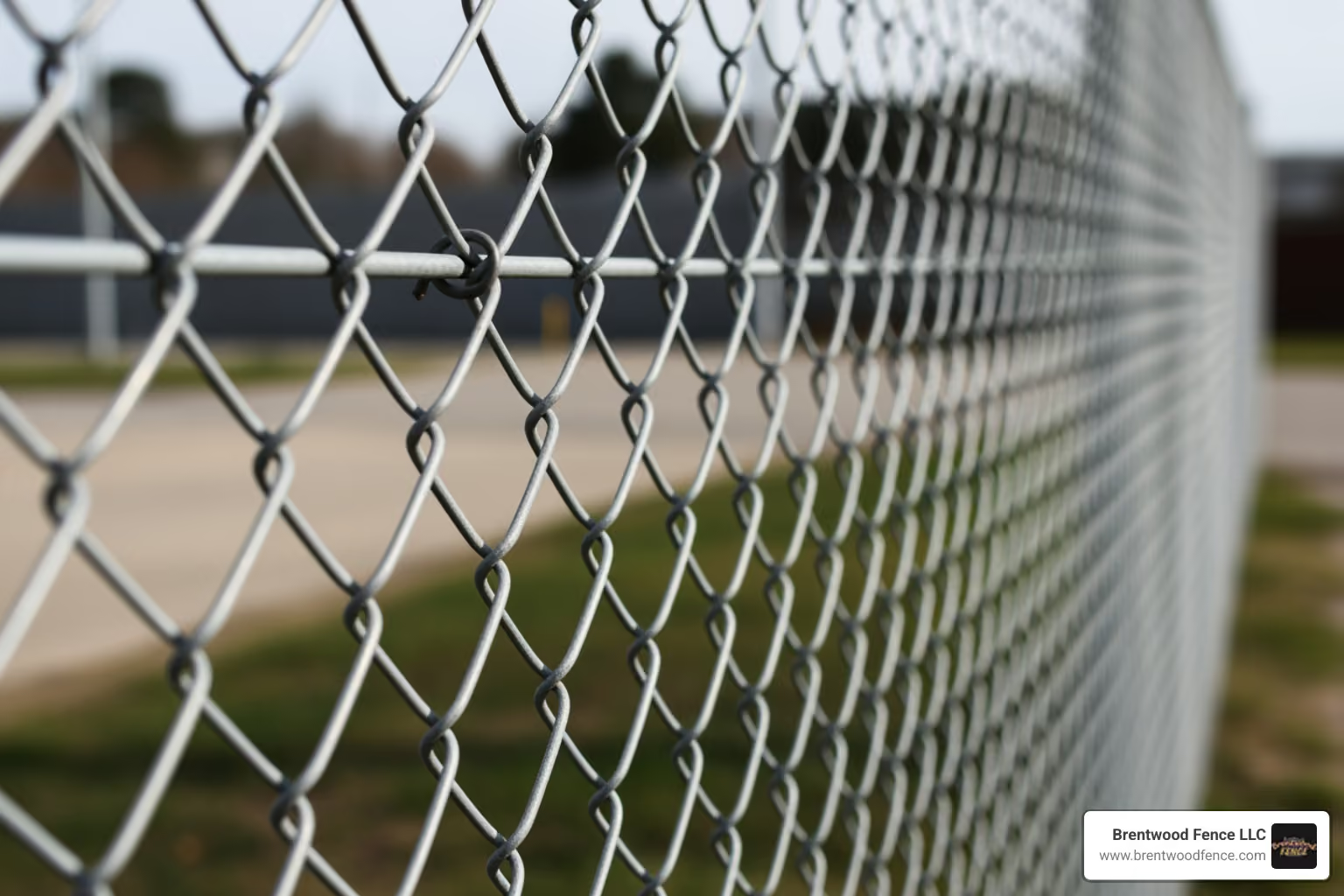
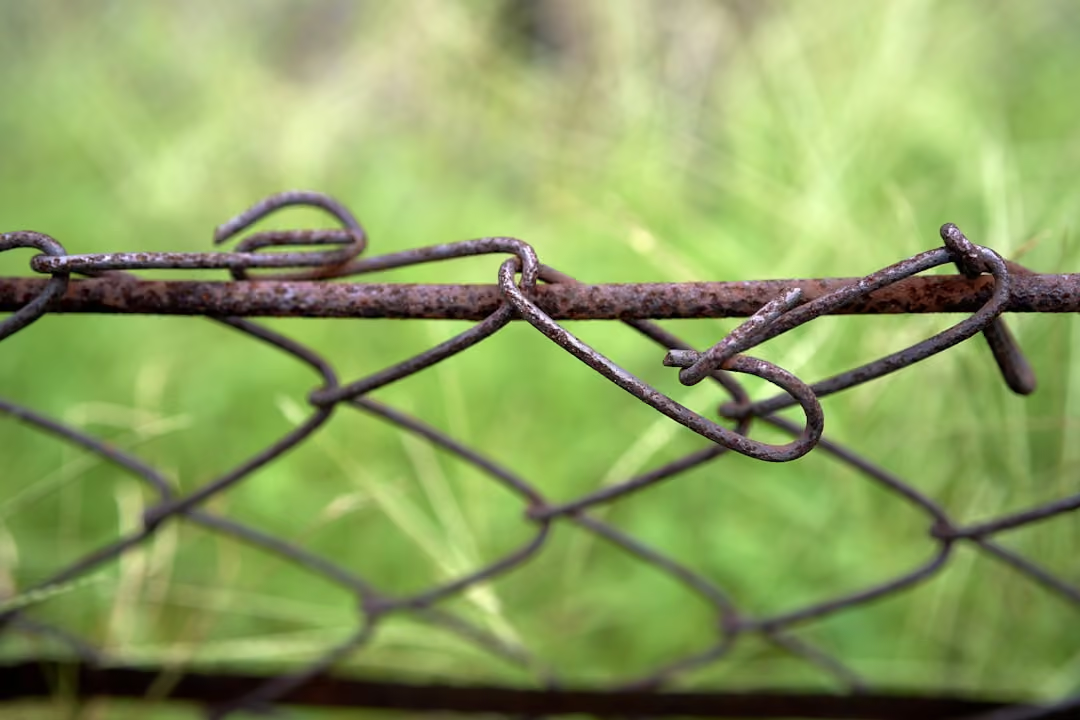
Chain Link Fabric: This is the actual woven steel wire that forms the barrier. It's typically made from galvanized or PVC-coated steel wire, bent into that distinctive zigzag pattern to create diamond-shaped openings.
Mesh Size: This refers to the size of the diamond-shaped opening in the fabric. The standard diamond size is 2 inches, which is ideal for most general applications, offering a good balance of security and visibility. However, specialized applications might require different sizes. For instance, tennis courts often use a tighter 1.75-inch mesh, while pool enclosures in many cities and towns across New Hampshire, Massachusetts, and Maine may even specify a 1 1/4-inch mesh to meet safety regulations and prevent small children from climbing.
Wire Gauge: This term describes the thickness of the individual wires used to weave the fabric. It's a bit counter-intuitive: the lower the gauge number, the thicker the wire. So, a 9-gauge wire is significantly thicker and stronger than an 11.5-gauge wire. Thicker wire means a heavier, more durable fence, which is often preferred for commercial or high-security applications, or simply for homeowners seeking maximum longevity. For those needing extra strength, we offer more info about heavy chain link fencing.
Edge Types: The way the wire ends are finished at the top and bottom of the fence fabric impacts both safety and security.
Knuckled Edge: In this finish, the wire ends are bent back and "knuckled" or folded over, creating a smooth, rounded edge. This is the most common choice for residential and recreational fences, as it minimizes the risk of scratches or snags.
Twist (or Barbed) Edge: Here, the wire ends are twisted into sharp points, creating a barbed finish. This edge type offers higher security, making it more difficult for intruders to climb over. It's typically used for commercial, industrial, or high-security installations where deterring trespassers is a primary concern.
Finishes and Materials
The longevity and appearance of your cyclone chain link fence largely depend on the materials and finishes chosen.
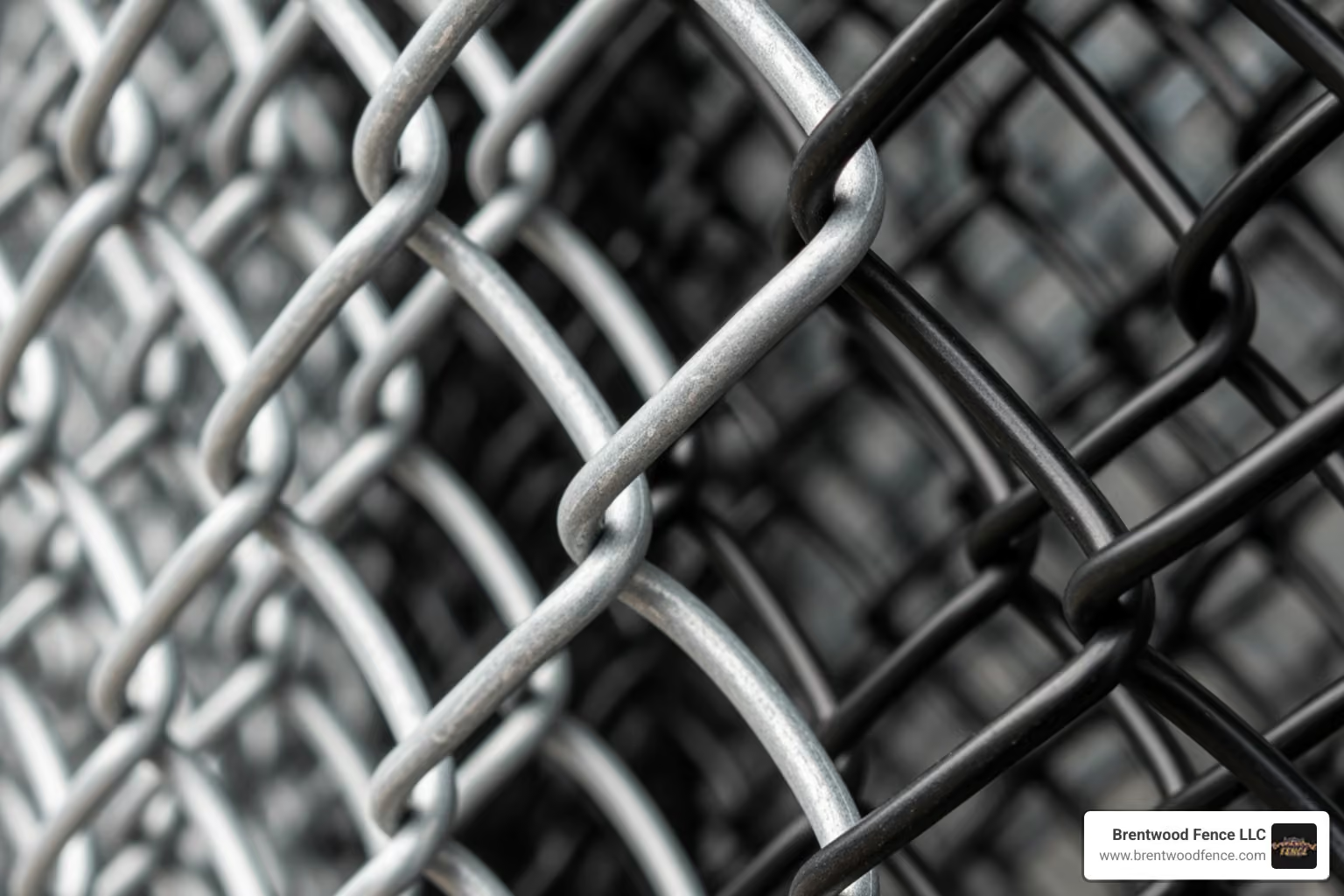
Galvanized Steel: This is the workhorse of chain link fencing. The steel wire is coated with a layer of zinc through a process called galvanization. This zinc coating acts as a sacrificial barrier, protecting the steel from rust and corrosion, especially vital in the humid and varied weather conditions of New England. Galvanized steel is renowned for its durability; a well-maintained galvanized fence can hold up for years, providing reliable security and enclosure.
PVC-Coated / Vinyl-Coated: For improved protection and aesthetic appeal, galvanized steel wire can be further coated with a layer of polyvinyl chloride (PVC) or vinyl. This double-layered finish provides superior protection against rust, corrosion, UV exposure, and harsh weather. The coating not only extends the fence's lifespan but also offers color options beyond the standard silver. Common colors include black, green, and brown, allowing the fence to blend more harmoniously with its surroundings. For example, a black vinyl-coated fence can offer a sleek, modern look that works well with gardens and property lines without blocking views. This extra layer of protection is particularly beneficial in coastal areas where salt air can accelerate corrosion. To learn more about the different material options, check out our more info about metal chain link fences.
Key Advantages and Common Applications
The enduring popularity of cyclone chain link fence isn't just a coincidence. It's a testament to its practical benefits and wide-ranging utility. This section explores why this fencing is a popular choice and where it is most commonly used.
Why Choose a Cyclone Chain Link Fence for Your Property?
When considering fencing options for your property in New Hampshire, Massachusetts, or Maine, a cyclone chain link fence offers a compelling list of advantages:
Durability: As its "cyclone" moniker suggests, this fence is built to last. Its woven design allows it to endure severe weather and hurricane-like winds by letting air pass through. Galvanized steel, often further improved with PVC or vinyl coatings, provides excellent resistance to corrosion and the harsh temperature fluctuations we experience.
Affordability: Compared to many other fencing materials like wood, vinyl, or ornamental metal, cyclone chain link fence is significantly more cost-effective. This makes it an excellent option for securing large areas on a budget without compromising on security.
Low Maintenance: This fence type is remarkably low-maintenance. Galvanized steel will hold up for years with minimal intervention. For coated fences, an occasional cleaning with soap and water is usually all that's needed. There's no painting, staining, or extensive repair work typically associated with other fence types.
Security: A properly installed cyclone chain link fence provides a reliable and effective barrier. Its robust construction deters trespassers, keeps pets contained, and defines property lines clearly. For added security, options like taller heights and barbed edges are available.
Versatility: From residential backyards to industrial complexes, this fencing adapts to a myriad of needs. It can be customized in height, wire gauge, mesh size, and finish to suit specific requirements, making it a truly versatile solution.
Ease of Repair: Should a section of the fence become damaged due to wear and tear, an accident, or mischief, it can be easily cut out and replaced with a new section. This seamless replacement capability helps maintain the fence's integrity without requiring extensive overhauls.
Sunlight Transparency: The open weave design of cyclone chain link fence is a significant benefit. It allows sunlight to pass through unobstructed, preventing shading of gardens or properties. It also maintains visibility, which can be a security advantage in some settings.
Common Residential and Commercial Uses
The adaptability of cyclone chain link fence means you'll find it in an impressive array of settings across our region:
Residential Properties: It's a popular choice for defining property boundaries, securing backyards, and creating safe play areas for children.
Pet Containment: For dog owners, it's an ideal solution for creating secure enclosures, keeping furry friends safely within the yard.
Pool Enclosures: Meeting local safety codes for pools is critical, and cyclone chain link fence with appropriate mesh sizes (like 1 1/4-inch) is frequently specified for this purpose in New Hampshire, Massachusetts, and Maine.
Sports Fields: You'll see it everywhere from school playgrounds to municipal sports complexes, serving as backstops for baseball and softball fields, and enclosing tennis courts. Its durability and transparency make it perfect for these active environments.
Industrial Sites & Commercial Properties: For businesses and industrial facilities, cyclone chain link fence provides a cost-effective and robust security perimeter. It's used to secure equipment, define operational zones, and deter unauthorized access. This includes everything from utility substations to construction sites. For specific needs like these, more info about commercial chain link gates can be invaluable.
Temporary Fencing: Due to its relative ease of installation and removal, it's also a common choice for temporary barriers at events, construction sites, or during landscaping projects.
Defining Boundaries: Whether it's a schoolyard, a public park, or a large commercial lot, cyclone chain link fence effectively delineates spaces without completely blocking views.
Professional Installation and Customization
While the components of a cyclone chain link fence might seem straightforward, professional installation is paramount to ensuring its longevity, security, and proper function.
While some components are available, professional installation ensures longevity and proper security.
The Professional Installation Process
Installing a cyclone chain link fence is more than just digging holes and unrolling mesh. It's a craft that requires precision, specialized tools, and an understanding of local terrain and regulations. Here's a glimpse into the professional process we follow:
Site Preparation: This crucial first step involves a thorough assessment of the property. We contact local utility companies to ensure no underground lines (water, gas, power) are disturbed during digging. We also account for property lines, grade changes, and any specific requirements for gates or access points.
Post Setting: Terminal posts (for corners, ends, and gates) are set first. These are typically wider and are always anchored in concrete footings to provide maximum stability and tension support. Line posts are then set at precise intervals (not exceeding 10 feet) along the fence line, also typically in concrete for solid anchoring, especially important in our region's freeze-thaw cycles.
Attaching Hardware: Once posts are set, the various bands, caps, and rail ends are attached to the posts, preparing the framework for the fabric.
Stretching the Fabric: This is arguably the most critical step. The cyclone chain link fence fabric is attached at one end and then carefully stretched taut along the entire fence line using specialized tools. Achieving proper tension is essential to prevent sagging and ensure the fence acts as a robust barrier. Too loose, and it sags; too tight, and it can put undue stress on the posts.
Attaching the Fabric: Once stretched, the fabric is securely fastened to the top rail, line posts, and bottom tension wire using fence ties and hog rings.
Gate Installation: Gates are installed last, ensuring they swing freely, latch securely, and are properly aligned with the fence line. This includes installing appropriate hinges and latches for smooth operation.
Choosing professional installation from a trusted company like Brentwood Fence LLC ensures that your fence is installed correctly, adheres to local building codes in New Hampshire, Massachusetts, and Maine, and provides maximum durability and security for years to come. For comprehensive services, explore our more info about chain link fencing installation services.
Customizing Your Cyclone Chain Link Fence
One of the great strengths of a cyclone chain link fence is its versatility and the array of customization options available to tailor it to your specific needs and aesthetic preferences.
Here are some popular ways to customize your fence:
Privacy Slats: While inherently transparent, cyclone chain link fence can be easily transformed for added privacy. We can install privacy slats directly into the mesh. These come in various colors and materials, offering a more solid visual barrier and reducing visibility into your property.
Windscreen: Similar to privacy slats, a windscreen fabric can be attached to the fence for increased privacy, wind reduction, and even a touch of color. This is popular for multi-game courts or commercial properties.
Bottom Rails: For properties with pets, particularly dogs that might try to dig under, adding a bottom rail provides extra reinforcement along the base of the fence, making it more difficult for animals to escape or enter.
Truss Rods: For wider gates or sections requiring extra stability, truss rods are diagonal bracing elements that add rigidity and prevent sagging or warping over time. You can find more info about truss rods and their benefits.
Gate Types: The type of gate can be customized to suit your access needs. Options include:
Swing Gates: The most common, available in single or double leaf configurations, ideal for pedestrian or vehicle access.
Slide Gates: Perfect for properties with limited swing space, these gates slide along the fence line.
We also offer specialized gates like cantilever gates for larger openings. For a complete overview of options, dive into our more info about chain link fencing gates.
Color Options: Beyond the standard galvanized silver, PVC and vinyl coatings open up a palette of colors, most commonly black, green, and brown, allowing your fence to complement your landscape or architectural style.
How Cyclone Fencing Compares to Alternatives
Understanding where cyclone chain link fence fits among other popular fencing materials helps in making an informed decision for your property in New Hampshire, Massachusetts, or Maine. While each fence type has its merits, chain link offers a unique balance of features.
Here's a comparison on key factors:
Feature
Cyclone/Chain-Link Fence
Wood Fence
Vinyl Fence
Cost
Highly Affordable: Generally the lowest upfront cost.
Moderate to High: Varies greatly by wood type and design.
High: Typically the most expensive upfront cost.
Durability
High: Excellent wind resistance, galvanized steel resists rust for years, coated options improve longevity. Easy to repair sections.
Moderate: Prone to rot, warping, insect damage. Requires regular maintenance.
High: Resistant to rot, insects, and weather. Can crack or become brittle in extreme cold.
Maintenance
Very Low: Occasional cleaning, easy section replacement. No painting or staining needed.
High: Requires regular staining, painting, or sealing to prevent decay. Repairs can be complex.
Very Low: Occasional cleaning. No painting or staining.
Privacy
Low: Open weave offers high visibility. Can be improved with slats or windscreens.
Natural, classic look. Wide range of styles and finishes.
Modern, clean look. Limited color options, but consistent.
Wind Resistance
Excellent: Open design allows wind to pass through, reducing pressure on the structure.
Poor: Solid panels catch wind, making them prone to blow or damage in high winds.
Moderate: Solid panels can catch wind, but materials are flexible. Can be damaged in extreme winds..
As you can see, the cyclone chain link fence stands out for its best affordability, low maintenance, and exceptional wind resistance, making it a reliable and practical choice, especially in our often-blustery New England climate.
Conclusion: The Enduring Value of Cyclone Fencing
The cyclone chain link fence, by any name, has proven its worth for over a century. It's a solution that brilliantly balances practicality, durability, and cost-effectiveness. Its unique woven design, allowing wind to pass through rather than creating resistance, is a testament to clever engineering that makes it particularly resilient in the face of harsh weather – a feature we deeply appreciate in New Hampshire, Massachusetts, and Maine.
From securing residential properties and containing beloved pets to protecting commercial sites and defining sports fields, its versatility is best. With options for different gauges, mesh sizes, and finishes like galvanized or vinyl coating, it can be custom to meet a wide array of functional and aesthetic requirements.
We believe a professionally installed cyclone chain link fence represents a smart, long-term investment. It offers peace of mind through reliable security, requires minimal upkeep, and provides a clear boundary without obstructing views. When you choose a cyclone chain link fence, you're selecting a time-tested, practical solution that delivers enduring value.
For a professional consultation and installation of your new fence, explore our chain link fencing installation services. Our team at Brentwood Fence LLC is ready to help you find the perfect fencing solution for your property.