The Real Deal: What to Expect for Wood Fence Costs Per Linear Foot

14

Mar

2026

Author:

Rob Thibeault

Why Understanding Wood Fence Costs Matters for Homeowners

The cost of wood fence per linear foot typically ranges from $20 to $50 installed, with most homeowners paying around $25 to $35 per linear foot for a standard residential wood fence. This price includes both materials and professional labor.

Quick Cost Breakdown:

  • Pressure-treated pine: $20-$30 per linear foot installed
  • Cedar: $25-$45 per linear foot installed
  • Redwood: $35-$50 per linear foot installed
  • Materials alone: $10-$30 per linear foot
  • Labor costs: $8-$23 per linear foot

When you're planning a fence project, understanding the true cost per linear foot is essential for accurate budgeting. A fence isn't just a property line marker—it's a permanent addition that improves security, creates privacy, and boosts your home's curb appeal.

The challenge? Fence pricing can feel confusing. You might get wildly different quotes from contractors, or find online estimates that don't match what you're hearing locally. That's because the cost of wood fence per linear foot depends on several key factors: the type of wood you choose, your fence's height and style, labor rates in your area, and your property's specific conditions.

For homeowners in New England, costs often run 10-30% higher than national averages due to regional labor rates and material transport. A 150-foot fence project could easily range from $3,750 to $6,750—that's a significant investment worth understanding thoroughly.

This guide breaks down every cost component so you can budget confidently, compare quotes accurately, and make informed decisions about materials and installation. Whether you're replacing a damaged fence or installing one for the first time, knowing what drives the cost per linear foot helps you avoid surprises and get the quality fence your property deserves.\
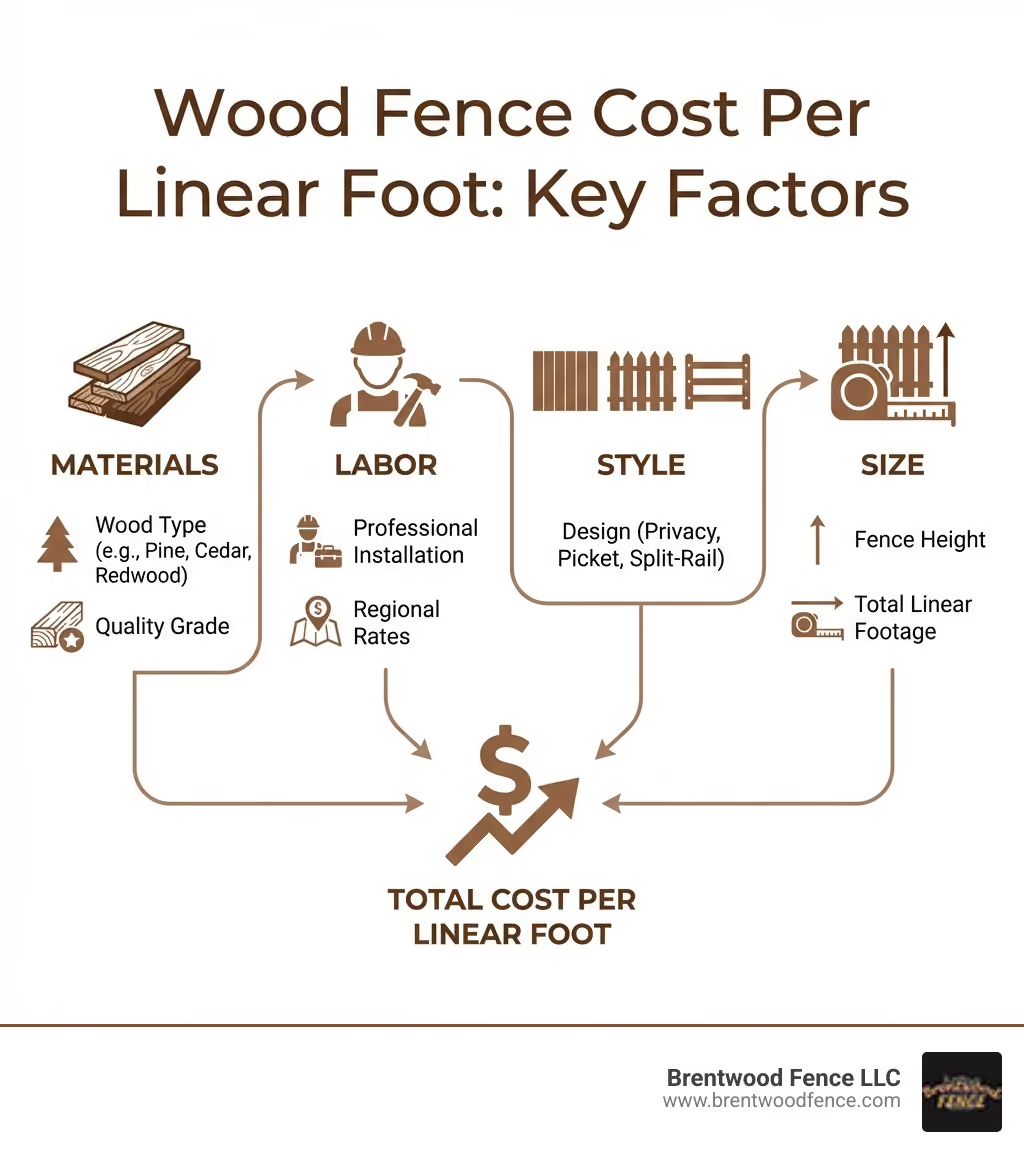
Infographic showing the four main factors affecting wood fence cost per linear foot: Materials (wood type and quality), Labor (professional installation and regional rates), Style (privacy, picket, or split-rail design), and Size (fence height and total linear footage) - cost of wood fence per linear foot infographic

Breakdown of the Average Cost of Wood Fence Per Linear Foot

When we talk about the cost of wood fence per linear foot, we're referring to the all-inclusive price covering materials and labor. This figure provides a useful benchmark for comparing options and understanding your project's scope.
tape measure along a fence panel - cost of wood fence per linear foot

Nationally, the average price for a wood fence ranges from $20 to $50 per linear foot, with most homeowners paying around $25 to $35. This fluctuates based on wood type, design complexity, and location. In New England areas like New Hampshire, Massachusetts, and Maine, costs are often on the higher end of this range due to regional economic factors.

A good rule of thumb is the "50% labor rule," where roughly half of your total project cost goes towards labor and the other half covers materials. While not a hard rule, it offers a solid starting point for budgeting.

Understanding this breakdown highlights the value of professional installation. Hiring experienced contractors means investing in their expertise, efficiency, and adherence to local codes, ensuring a durable fence. According to the Bureau of Labor Statistics, fence contractors charge a mean of $22.43 per hour nationally, which contributes to the per-linear-foot labor cost.

For even more detailed insights into how these costs break down, you can explore our in-depth information about fence cost per linear foot.

Material Costs vs. Labor Costs

Let's dive deeper into the split between materials and labor.

Material costs for a wood fence usually fall between $10 and $30 per linear foot. This covers the wood pickets, posts, rails, concrete for securing posts, and hardware like nails and screws. The specific type of wood you choose is the biggest driver of material cost. Pressure-treated pine will be on the lower end, while premium cedar or redwood will be significantly higher.

Labor costs for wood fence installation typically add another $8 to $23 per linear foot. As mentioned, labor can account for about 50% of the total budget. This includes site preparation, digging post holes, setting posts in concrete, attaching rails and pickets, and ensuring everything is level. It also covers material transport and the expertise required for any challenges your property might present.

Professional installation adds value by ensuring proper post depth, concrete curing, and durability against New England's diverse weather. This expertise minimizes costly mistakes, ensures your fence meets local building codes in places like Exeter NH, Portsmouth NH, and Haverhill MA, and ultimately extends the lifespan of your investment.

Example Project Costs

To give you a clearer picture, let's look at some common project sizes and their estimated total costs based on the average cost of wood fence per linear foot of $25-$35:

  • 100 linear feet: For a standard 100-foot fence, you can expect to pay between $2,500 and $3,500. This is a common length for smaller backyard enclosures.
  • 150 linear feet: A 150-foot fence project typically ranges from $3,750 to $5,250. This is a popular choice for average-sized residential properties.
  • 200 linear feet: For a larger perimeter of 200 linear feet, the cost could be anywhere from $5,000 to $7,000.

If you're thinking about enclosing a larger area, like a quarter-acre lot, you're looking at approximately 420 linear feet of fencing. This project could cost between $10,500 and $14,700, including professional installation.

For a more specific breakdown, especially if you're considering a privacy fence, our guide to 100 ft privacy fence cost offers additional details and considerations.

Key Factors That Influence Your Final Price

The final cost of wood fence per linear foot is a dynamic figure. Understanding the key factors that influence it allows you to make informed choices that balance aesthetics, functionality, and budget.
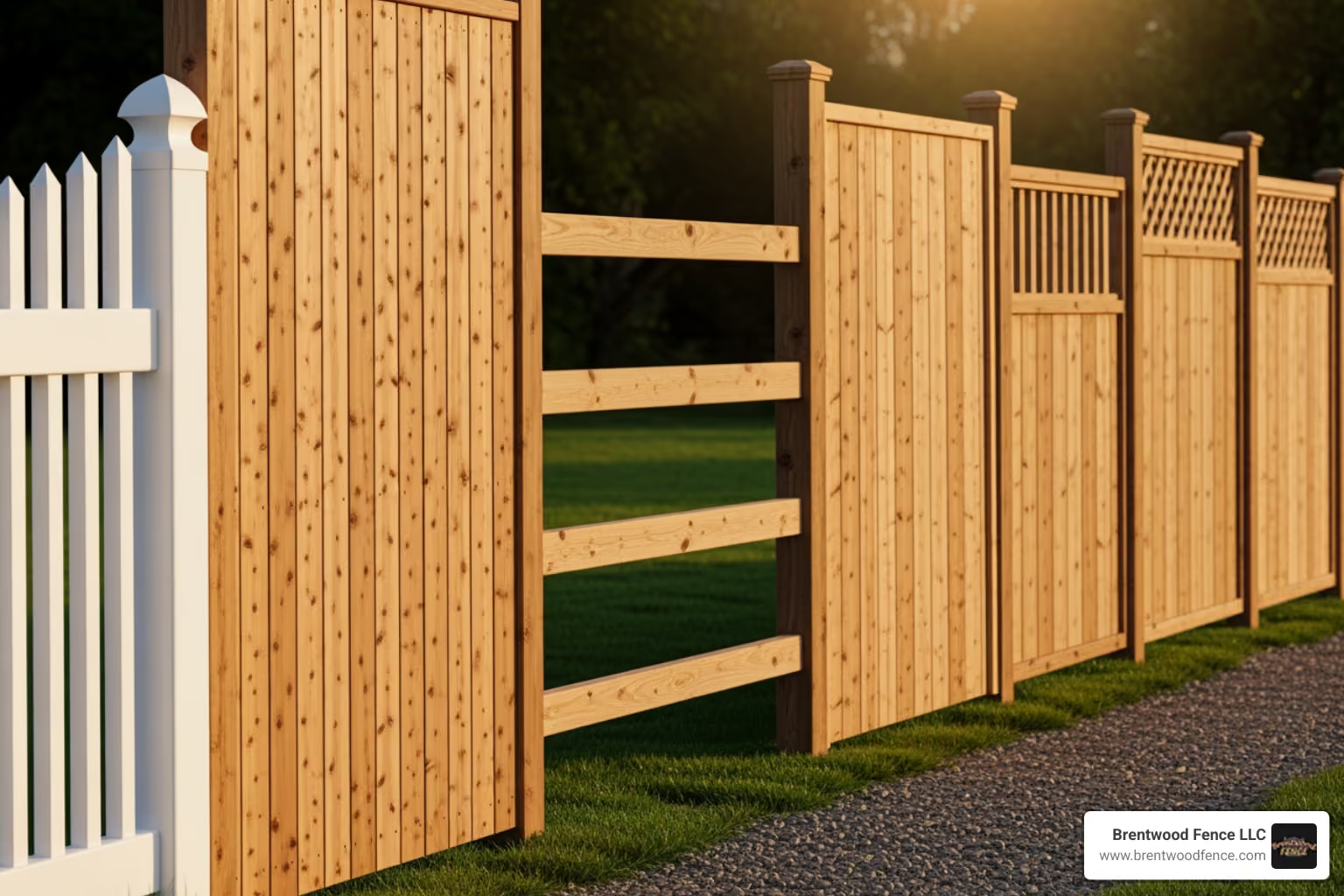
various wood fence styles side-by-side - cost of wood fence per linear foot

The primary factors include:

  • Wood species: The type of wood you select dramatically impacts both the upfront cost and the long-term maintenance.
  • Fence height: Taller fences require more material and labor, increasing costs.
  • Design complexity: Simple picket fences are less expensive than intricate privacy fences with decorative tops.
  • Geographic location: Labor rates and material availability vary significantly by region, especially here in New England.
  • Property conditions: Uneven terrain, rocky soil, or obstacles like large tree roots can add to installation time and cost.

Let's explore each of these in more detail.

Understanding the cost of wood fence per linear foot by Wood Type

Choosing the right wood is one of the most significant decisions when budgeting for your fence. Different woods vary in durability, aesthetic appeal, and price. We primarily work with high-quality woods suited for the New England climate, such as pressure-treated pine, cedar, and redwood.

Here’s a comparison of these popular options:

Wood Type Cost per Linear Foot (Materials) Lifespan (with maintenance) Maintenance Needs Rot/Pest Resistance
Pressure-Treated Pine $5 - $10 15 - 20 years Regular staining/sealing every 2-3 years Good (chemical treatment)
Cedar (Western Red/Northern White) $8 - $15 15 - 25 years Regular staining/sealing every 3-5 years Excellent (natural)
Redwood $12 - $25 20 - 30 years Regular staining/sealing every 3-5 years Superior (natural)

Note: These costs are for materials only. Installed costs will be higher.

  • Pressure-Treated Pine: This is often the most budget-friendly option. Pine is treated with chemicals to resist rot, decay, and insects, making it a practical choice for our humid New England summers and harsh winters. It's durable but may be prone to warping if not properly maintained.
  • Cedar: A favorite in New England, cedar is naturally resistant to rot and insects. Known for its beautiful grain, it weathers gracefully to a silver-gray if left unstained and offers a fantastic balance of cost, durability, and aesthetic appeal.
  • Redwood: As a premium choice, redwood offers exceptional natural resistance to insects and rot, along with stunning rich colors. Its durability and stability make it an excellent long-term investment, though its higher material cost reflects its superior quality.

For more information on the various wood options and what might be best for your property in New Hampshire, Massachusetts, or Maine, take a look at our guide on types of wood privacy fences.

How Style and Height Affect the cost of wood fence per linear foot

The visual design and physical dimensions of your fence also play a significant role in its overall cost.

  • Privacy Fences: These are typically 6 to 8 feet tall and designed with boards placed close together to block views. A 6-foot wood privacy fence generally costs between $25 and $50 per linear foot installed. Taller privacy fences (8 feet) can increase costs by 10% to 20%.
  • Picket Fences: Often 3 to 4 feet tall, picket fences are more decorative and cost between $10 to $75 per linear foot installed. The price depends on wood type and design complexity, with simpler styles being more affordable.
  • Split-Rail Fences: These rustic fences are used more for defining property lines. They are among the most affordable wood fence styles, costing between $12 and $30 per linear foot with installation.

Height: The standard height for most residential fences is 6 feet. Increasing the height to 8 feet requires longer posts and more material, leading to a noticeable jump in the cost of wood fence per linear foot.

Decorative Elements: Adding custom features like lattice tops, post caps, or intricate board patterns can significantly increase costs. For instance, decorative picket styles can cost 20% to 100% more than standard styles.

If you're considering a classic picket fence for your property, our wood picket fence installation guide provides valuable insights into the process and potential costs.

Geographic Location and Site Conditions

Your location in New England and your property's condition can have a large impact on your final fence cost.

New England Cost Variations: As mentioned, prices in New Hampshire, Massachusetts, and Maine often run 10-30% above national averages. This is due to higher labor costs, material transport expenses, and sometimes stricter local building codes. A project in a busy area like Portsmouth NH might have different costs than one in a more rural setting.

Urban vs. Rural Pricing: Urban areas typically have higher labor rates, while rural areas might have higher material transport fees.

Site Conditions: This is where unexpected costs can arise:

  • Sloped Terrain: Installing a fence on a slope is more challenging and time-consuming, requiring techniques like stepping or racking the panels. Expect to pay an additional $5-$10 per linear foot for such adjustments.
  • Rocky Soil: New England is famous for its rocky terrain. Digging post holes in rocky soil is much tougher, often requiring specialized equipment and more labor, which increases the cost of wood fence per linear foot.
  • Tree Roots: Large tree roots in the fence line can impede digging and require careful removal, adding to labor costs.

A professional assessment of your property is crucial to account for these site-specific challenges. Our team understands the New England landscape and can provide an accurate estimate. For more on how we handle challenging landscapes, check out our insights on installing a wood fence on a slope.

Beyond the Linear Foot: Additional Costs to Budget For

While the cost of wood fence per linear foot provides a great baseline, a complete budget must account for additional costs. Factoring in these potential expenses ensures your project runs smoothly and avoids financial surprises.

Considering these extras during the planning phase ensures total budget accuracy and helps you understand the full investment. For those considering replacing an existing fence, our guide on replacing a wooden fence offers further details on these additional considerations.

Permits, Gates, and Site Preparation

These are some of the most common additional costs that can impact your total project price:

  • Building Permit Fees: Many towns in New Hampshire, Massachusetts, and Maine require a permit for fence installation, especially for taller fences. Permit costs typically range from $20 to $60 but can be higher. Always check with your local building department in places like Concord NH or Derry NH. Homeowners are usually responsible for obtaining permits.
  • Old Fence Removal: If you're replacing a fence, the old one must be removed. This involves demolition and disposal fees, costing between $3 to $7 per linear foot. Removing posts set in concrete may be an additional charge.
  • Land Grading: Significant slopes or uneven terrain may require land grading before installation. This can cost anywhere from $1,000 to over $3,000 for larger areas, ensuring a stable foundation for your fence.
  • Tree Clearing: Obstacles like trees, large bushes, or their root systems within the fence line may need to be removed. Tree removal can cost an average of $750 per tree.
  • Walk-Through Gates: A basic walk-through gate typically adds $150 to $400 to your project. Standard gates are often 4 feet wide.
  • Driveway Gates: For vehicle access, a driveway gate is a significant investment, ranging from $800 to $1,200 for a basic double gate, and upwards of $1,500 for an automatic opener.

Choosing the right gate is crucial for both functionality and aesthetics. Our team can help you select and install the perfect entry points for your property. Learn more about your options by visiting our page on wooden gate installers.

Long-Term Ownership and Maintenance Costs

The initial cost is just one part of the financial picture. Wood fences require ongoing care to maintain their appearance and longevity.

  • Staining and Sealing: To protect your wood fence from New England's weather, regular staining or sealing is essential. This typically costs $2 to $5 per square foot (or $4 to $8 per linear foot for a 6-foot fence) and should be done every 2-3 years for pine and 3-5 years for cedar or redwood. This maintenance prevents rot and warping.
  • Frequency of Maintenance: This regular upkeep is an ongoing cost, but it's a small price to pay for extending your fence's life. Neglecting it can lead to premature deterioration and more expensive repairs.
  • Repair Costs: Over time, individual boards might crack or posts might loosen. Minor repairs can average a few hundred dollars, but catching issues early through regular inspection is key.
  • Lifespan vs. Initial Investment: While a wood fence may have a lower upfront cost, its total cost of ownership over 20-30 years can be comparable to other materials due to maintenance. However, many homeowners find the natural beauty of wood worth the investment. With proper care, a wood fence should last 15 to 25 years.

For guidance on keeping your wood fence in top condition or addressing any issues, you can always consult our network of wooden fence repair companies.

Professional Fence Installation vs. DIY: A Cost-Benefit Analysis

To save on the cost of wood fence per linear foot, some homeowners consider DIY. This can save 30% to 50% on labor—potentially $1,500 to $3,000 on a typical residential fence—but it's crucial to weigh these savings against the challenges.

DIY Savings & Challenges:

  • DIY Savings: The primary benefit of DIY is saving on labor costs, which can be about half of the total project. You'd only pay for materials and tool rentals.
  • Tool Rental Costs: For DIY, you'll need specialized tools like a post-hole digger (auger), a level, and power tools. Renting an auger can cost around $100 per day.
  • Time Commitment: A professional crew can often install a wood fence in 1 to 4 days. A DIY project, especially for someone inexperienced, could take weeks of weekends.
  • Common DIY Mistakes: Incorrect post depth, improper alignment, or poor concrete mixing can lead to a sagging, unstable fence. Fixing these mistakes often costs more than professional installation would have initially.

The Value of Professional Installation:For most homeowners in our service areas of New Hampshire, Massachusetts, and Maine, hiring a professional team offers superior long-term value and peace of mind.

  • Expertise and Efficiency: Our experienced crews have the right tools and know-how to handle complex installations, rocky soil, and sloped terrain correctly. We dig post holes to the correct depth (e.g., 22 inches for 6-foot fences) and set them in concrete for maximum stability.
  • Warranty: Professional installation typically comes with a warranty on both materials and workmanship, offering protection you won't get with a DIY project.
  • Code Compliance: We are familiar with local building codes in towns like Dover NH and Haverhill MA, ensuring your fence is installed legally and safely.
  • Time Savings: Your time is valuable. Let us handle the heavy lifting so you can enjoy your new fence sooner without the stress and physical strain.
  • Peace of Mind: Knowing your fence is installed correctly and will last for years is often well worth the investment in professional services.

While DIY seems cheaper upfront, the risk of errors, time commitment, and lack of warranty make professional installation the more cost-effective and stress-free choice in the long run. To learn more about what to expect when hiring professionals, see our guide to hiring a wood fence install company.

Frequently Asked Questions about Wood Fence Costs

We understand that planning a fence project can bring up a lot of questions. Here are some of the most common inquiries we receive regarding the cost of wood fence per linear foot and related topics.

How much does a 6-foot wood privacy fence cost per linear foot?

For a 6-foot wood privacy fence, you can generally expect to pay between $25 and $50 per linear foot installed. This range covers most popular wood types and standard installation conditions in New England.

  • Pressure-treated pine privacy fences typically fall into the lower end of this range, from $20 to $30 per linear foot installed.
  • Cedar privacy fences usually range from $25 to $45 per linear foot installed, offering a great balance of durability and aesthetic appeal.

Factors that can affect the price of a privacy fence include the specific wood grade, the complexity of the design (e.g., board-on-board vs. stockade), site conditions (rocky soil, slopes), and the labor rates in your specific New England town. A quality 6-foot privacy fence provides excellent security and seclusion, making it a popular choice for many homeowners in Massachusetts and New Hampshire.

For a detailed breakdown of what goes into the pricing of these fences, check out our insights on the cost of a wooden privacy fence.

Will a new wood fence increase my home's value?

Yes, absolutely! A well-installed wood fence can certainly increase your home's value. It contributes to several key aspects that potential buyers look for:

  • Curb Appeal: A beautiful, well-maintained wood fence significantly improves the aesthetic appeal of your property, creating a welcoming first impression.
  • Security and Privacy Benefits: Fences provide a sense of security for families and pets, and privacy fences offer a secluded outdoor living space, both highly desirable features for homeowners.
  • Return on Investment (ROI): Installing a fence is considered a home improvement that offers a good return. In fact, a well-made fence can recover 50% to 70% of its installation cost when you resell your home. This means a $5,000 fence project could add $2,500 to $3,500 to your home's value.
  • Resale Value Increase: Beyond the tangible ROI, a fence can make your home more attractive to a wider range of buyers, potentially leading to a quicker sale or a higher offer.

The value added depends on the quality of materials, the professionalism of the installation, and how well the fence complements your home and neighborhood.

What is typically included in a per-foot quote from a contractor?

When we provide a per-foot quote for your wood fence project, we aim for transparency and clarity. Typically, our comprehensive quotes include:

  • Materials: This covers all the necessary wood components (posts, rails, pickets/boards), concrete for setting posts, and standard hardware (nails, screws).
  • Labor: The quote includes the professional labor for the entire installation process, from initial site preparation and digging post holes to setting the fence and final cleanup.
  • Concrete: We include the cost of concrete needed to properly secure the fence posts, ensuring stability and longevity.
  • Basic Site Cleanup: After installation, we'll perform a basic cleanup of the work area, removing debris and leaving your property tidy.

However, it's important to understand what is generally excluded from a standard per-foot quote, as these items can represent additional costs:

  • Permits: Obtaining necessary building permits is typically the homeowner's responsibility, and the associated fees are not included.
  • Old Fence Removal: If you have an existing fence that needs to be torn down and hauled away, this service is usually quoted separately.
  • Extensive Grading or Tree Clearing: Significant land leveling, tree removal, or extensive site preparation due to challenging terrain or obstacles will be an additional charge.
  • Gates: Gates, especially custom or automatic ones, are typically priced separately from the linear footage of the fence itself.
  • Staining or Sealing: While crucial for wood fence longevity, initial staining or sealing is often an add-on service, allowing homeowners to choose their preferred finish or to perform this maintenance themselves.

We believe in providing clear, itemized assessments to ensure you have a complete understanding of your project's total cost.

Get an Accurate Quote for Your New England Fence

Navigating the cost of wood fence per linear foot can seem daunting, but with the right information, you can make confident decisions for your property. We've explored the various factors that influence pricing, from the type of wood and fence style to geographic location and site-specific challenges.

Key Takeaways for Budgeting:

  • Materials and labor are the biggest cost drivers, with labor often accounting for about 50% of the total.
  • Wood type (pine, cedar, redwood) significantly impacts both upfront cost and long-term maintenance.
  • Fence style and height dictate material quantity and installation complexity.
  • New England's unique conditions (rocky soil, slopes, higher labor rates) mean local costs often exceed national averages.
  • Don't forget additional costs like permits, old fence removal, gates, and long-term maintenance.

Investing in a quality wood fence is an investment in your home's beauty, privacy, and value. Choosing durable materials and professional installation ensures your fence stands strong against New England's weather for years to come.

For a detailed and reliable estimate on your fencing project in New Hampshire or Massachusetts, trust the experts at Brentwood Fence LLC. We understand the local landscape and regulations, and we're committed to providing you with a high-quality, long-lasting fence that meets your needs and budget.

Contact us for a free quote today and let us help you bring your fencing vision to life!

Blog Content