The Real Cost of Aluminum Fence Installed in Your Yard

11

Jun

2026

Author:

Rob Thibeault

What Does an Aluminum Fence Installed Actually Cost in 2026?

The cost of aluminum fence installed professionally ranges from $22 to $72 per linear foot in 2026, covering both materials and labor. Most homeowners pay between $3,000 and $8,500 for a complete residential project.

Here's a quick-reference breakdown by project size:

Project Size Estimated Total Cost
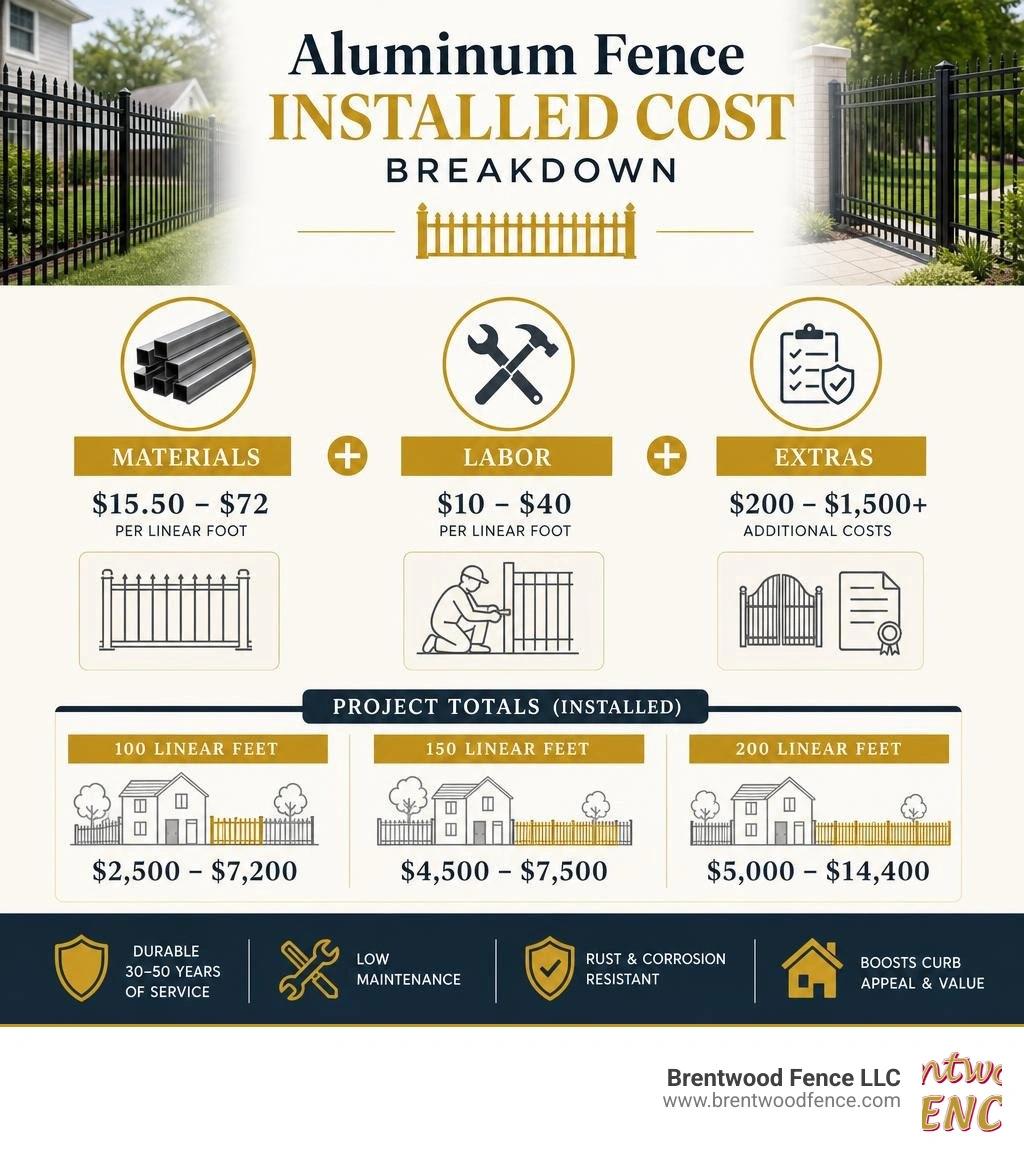
100 linear feet $2,500 – $7,200
150 linear feet $4,500 – $7,500
200 linear feet $5,000 – $14,400

What drives that wide range?

  • Materials: $15.50 – $72 per linear foot depending on grade and style
  • Labor: $10 – $40 per linear foot (typically 40–50% of total cost)
  • Gates, permits, and site prep: $200 – $1,500+ in additional costs

If you're a homeowner tired of dealing with damaged fencing and confusing contractor quotes, you're not alone. Aluminum fencing has become one of the most popular residential choices because it looks sharp, lasts 30–50 years, and costs almost nothing to maintain — but the installed price still surprises many people when they start getting bids.

The gap between the lowest and highest quotes often comes down to a few key factors: your yard's terrain, the fence style you choose, your local labor market, and whether your project needs permits or pool-code hardware.

This guide breaks it all down so you know exactly what to expect before a single post hole gets dug.
aluminum fence installed cost breakdown infographic with materials labor and project totals infographic

Understanding the Total Cost of Aluminum Fence Installed

When budgeting for a new property border, it helps to understand exactly where your hard-earned dollars are going. Nationally, the average price for a fully installed aluminum fence sits right around $35 to $55 per linear foot, but local variables in New England can shift these numbers.

To help put these figures in perspective, Angi's 2026 Fence Installation Cost Guide notes that the typical overall fence installation across all materials ranges from $1,858 to $4,827, making aluminum a premium, yet highly durable investment. For a detailed overview of general per-foot pricing across different materials, you can also check out our comprehensive Average Fence Cost Per Linear Foot Guide.

To understand the cost of aluminum fence installed in your yard, we have to look at the two primary cost pillars: materials and labor.

  • Material Costs ($15.50 – $72 per linear foot): This is the physical cost of the aluminum panels, posts, brackets, screws, and concrete for setting the posts. Standard residential-grade pickets are on the lower end of this range, while heavy-duty commercial grades or full-privacy aluminum panels sit at the top.
  • Labor Costs ($10 – $40 per linear foot): Professional installation makes up roughly 40% to 50% of your total invoice. This fee covers the physical labor of measuring, aligning, digging post holes, mixing and pouring concrete, assembling the panels, and cleaning up the site. In high-cost-of-living areas or regions with notoriously difficult ground conditions (like our rocky New England soil), labor rates will naturally trend toward the higher end.

To give you an idea of how the basic material grades compare, here is a breakdown of average material and installation costs:

Fence Grade Material Cost (Per Foot) Installed Cost (Per Foot) Best Used For
Residential Grade $15.50 – $25.00 $25.00 – $45.00 Standard backyards, boundary definition, pet containment
Commercial Grade $30.00 – $50.00 $45.00 – $75.00 High-security properties, heavy-use areas, large estates
Privacy / Slat Grade $63.00 – $113.00 $80.00 – $140.00+ Hot tub areas, patios, maximum backyard seclusion

Average Cost of Aluminum Fence Installed by Yard Size

Because aluminum fencing is priced and sold by the foot, your yard's perimeter is the single biggest factor in your final quote. Let's look at how typical residential property sizes translate to real-world project costs.

  • 100 Linear Feet (Small Yard or Boundary Line): Ideal for enclosing a small patio, a side yard, or a short property boundary. A professional installation for 100 feet of standard ornamental residential aluminum fencing typically ranges from $2,500 to $7,200.
  • 150 Linear Feet (Medium Suburban Yard): This is the most common size for suburban homes in New Hampshire and Massachusetts. A 150-foot project using standard residential styles averages $4,500 to $7,500 fully installed.
  • 200 Linear Feet (Large Yard or Corner Lot): Enclosing a larger backyard or a corner lot requires more materials and labor. For a 200-foot perimeter, expect a price tag ranging from $5,000 to $14,400+, depending heavily on the chosen height and the number of gates required.

For a deeper dive into how local New England pricing behaves for different yard sizes, take a look at our guide on Fence Cost Per Linear Foot NH MA ME as well as the Brentwood Fence Cost of Installed Fence Guide.

How Material Grade Affects the Cost of Aluminum Fence Installed

Not all aluminum is created equal. The thickness of the metal (the gauge) and the overall engineering of the panels play a massive role in both the structural integrity of your fence and its final price. To browse our selection of premium options, visit our main page on Aluminum Fencing.

  1. Residential Grade: This is the go-to choice for the vast majority of homeowners. Pickets typically feature a wall thickness of about 0.062 inches. It is lightweight, highly adaptable, and perfect for keeping kids and pets safely in the yard.
  2. Commercial Grade: With a wall thickness of 0.080 inches or more, commercial-grade aluminum is designed for high-traffic areas, public spaces, or premier residential estates. It offers significantly higher impact resistance against stray lawnmowers or falling branches but comes with a 30% to 50% price premium.
  3. Industrial Grade: This is the heaviest, thickest aluminum fencing available. It is reserved for high-security commercial facilities, municipal properties, and industrial complexes.

Choosing the right grade ensures you don't overpay for strength you don't need, or conversely, install a fence that is too flimsy for your property's daily wear and tear. You can explore our professional installation options on our Brentwood Fence Aluminum Fencing Installation Services page.

Key Factors Influencing Aluminum Fence Pricing

While linear footage and material grade lay the groundwork for your estimate, several real-world property conditions can quickly shift your final invoice. If you want to see a comprehensive breakdown of what to expect during the planning phase, check out our Aluminum Fence Installation 2025 Guide and our Brentwood Fence Cost Factors Breakdown.

Here are the primary variables that we analyze when creating a custom quote:

  • Terrain Complexity and Sloped Yards: If your yard looks more like a rolling New England hillside than a flat soccer field, your installation will require extra care. Aluminum panels can be "racked" (sloped gently to follow the ground) or "stair-stepped" (installed in level steps down a hill). Highly sloped yards require specialized adjustable panels and extra labor, which can add $5 to $15 per linear foot to the installation fee.
  • Gate Installation: Gates are the only moving parts of your fence, requiring heavy-duty posts, specialized hardware, and precise alignment. A single standard walk gate typically adds $150 to $500 to your project. Double driveway gates can range from $400 to $1,200+, while automated, custom driveway gates can easily run from $2,000 to $7,000+.
  • Permit Fees: Most municipalities in New Hampshire, Massachusetts, and Maine require a building permit for new fence installations, especially those over 6 feet tall or near public roadways. Permits generally cost between $25 and $200, depending on your local town hall.
  • HOA Rules: If you live in a neighborhood governed by a Homeowners Association, you must comply with their specific rules regarding fence height, color, and style. Failing to get HOA approval beforehand can result in costly fines or, worse, being forced to tear down a brand-new fence.

Style and Customization Upgrades

The visual design of your fence is where you can truly customize the look of your property. However, more intricate designs require more raw materials and manufacturing steps. You can view these styles in action on our Aluminum Fencing Installation Services page.

  • Spear Top vs. Flat Top: Standard flat-top panels (where the horizontal top rail covers the pickets) are generally the most cost-effective. Spear-top designs (where the vertical pickets extend past the top rail with decorative finials) add a touch of classic elegance but can increase material costs by 10% to 20%.
  • Puppy Panels (Pet-Safe Designs): Standard aluminum fences have picket spacing of about 3.75 inches. For families with small dogs or puppies, this gap is wide enough for a great escape. "Puppy panels" add closely spaced pickets (1.75-inch gaps) along the bottom 18 inches of the fence. This customization typically adds $5 to $15 per linear foot.
  • Custom Colors and Finishes: While classic black and bronze are standard, in-stock colors, opting for custom colors (like white, hunter green, or sand) or premium textured powder coatings can add 15% to 30% to your material costs.

Regional Labor Rates and Site Preparation

Where you live dictates what you will pay for skilled labor. In our service areas across New Hampshire, Massachusetts, and Maine, labor rates reflect regional construction demand and the unique physical challenges of the local landscape.

  • New England Soil Conditions: If you've ever tried to plant a garden in New Hampshire or Maine, you know our soil is packed with granite, roots, and heavy clay. Digging 3-foot-deep post holes (which is required to get below our local frost line and prevent winter shifting) often requires heavy-duty power augers or manual jackhammering through rock. This makes professional labor indispensable in our region.
  • Site Prep and Clearing: If your property line is currently overgrown with brush, trees, or has an old, rotting wood fence standing in the way, this must be cleared before installation begins. Old fence removal typically costs $3 to $10 per linear foot, while clearing heavy brush or medium-sized trees can add anywhere from $500 to $2,000 to your total project budget.

To find out more about local rates near you, take a look at our regional guide on Aluminum Fencing Near Me NH MA ME. If you are looking for localized services, you can also explore how we serve specific communities through our pages for Get Aluminum Fence Installation in Exeter, NH and our Concord New Hampshire Fence Company resource.

Comparing Aluminum to Other Fencing Materials

When deciding on a fencing material, it is easy to focus solely on the initial installation quote. However, looking at the long-term picture paints a very different story. To see how these materials stack up in terms of local pricing, read our Cost of Installed Fence NH MA ME overview.
aluminum vs wood fence durability comparison

Here is how aluminum compares upfront and over time to other common materials:

  • Wood Fencing: Wood is highly popular for its traditional look and low upfront material cost ($25 to $50 per foot installed). However, wood rot, warping, and insect damage are major issues in our damp New England climate. Wood requires staining or painting every 2 to 3 years, which costs thousands of dollars over its 10-to-15-year lifespan.
  • Vinyl Fencing: Vinyl is a great low-maintenance option ($30 to $60 per foot installed) that provides excellent privacy. However, high-quality vinyl can be expensive, and cheaper vinyl can become brittle and crack during our freezing New England winters.
  • Wrought Iron and Steel: Wrought iron is incredibly beautiful and strong, but it is also the most expensive option ($50 to $100+ per foot installed). Because iron is highly prone to rust, it requires continuous scraping, priming, and painting to prevent corrosion. Steel is slightly cheaper than wrought iron but still costs 20% to 40% more than aluminum upfront.
  • Aluminum: Aluminum provides the elegant, upscale look of wrought iron at a fraction of the cost ($22 to $72 per foot installed). Because aluminum naturally forms a protective oxide layer, it is 100% rust-proof and corrosion-resistant. It stands up beautifully to winter road salt, coastal air, and heavy snow without ever needing to be painted or sealed.

Long-Term Cost of Ownership and ROI

To truly understand the value of an aluminum fence, let's look at a 20-year financial comparison.

Imagine you install 150 feet of fencing. If you choose wood, you might save $1,500 upfront. However, over the next 20 years, you will spend roughly $2,000 to $4,000 on stain, sealant, and replaced posts. If you choose wrought iron, you will spend countless weekends or thousands of dollars painting it to keep rust at bay.

With aluminum, your maintenance cost over 20 years is exactly $0. An occasional wash with a garden hose is all it takes to keep it looking brand new. Additionally, a professionally installed, high-quality aluminum fence can recoup 50% to 70% of its cost in added home resale value, making it a highly attractive feature for future buyers who value safety and low maintenance.

You can learn more about how a local team can maximize your investment by reading about our Local NH MA ME Fence Company values or visiting our Brentwood Fence Aluminum Installation Services page.

Frequently Asked Questions About Aluminum Fencing

Is aluminum fencing cheaper than wood or vinyl?

Upfront, standard wood fencing is usually cheaper to install than aluminum. High-quality vinyl is often comparable in price to residential aluminum. However, when you factor in the long-term maintenance costs of wood (staining, sealing, replacing rotted posts) and the fact that aluminum easily lasts 30 to 50+ years, aluminum is almost always the more economical choice over the lifetime of the fence.

Does an aluminum fence meet local pool codes?

Yes! Aluminum is the gold standard for pool safety enclosures. Most standard 48-inch-tall aluminum fences are specifically engineered to meet BOCA (Building Officials and Code Administrators) pool codes, which require pickets to be spaced under 4 inches apart so children cannot squeeze through. To fully comply, you must also install self-closing, self-latching gate hardware, which typically adds $100 to $400 per gate.

How long does a professional aluminum fence installation take?

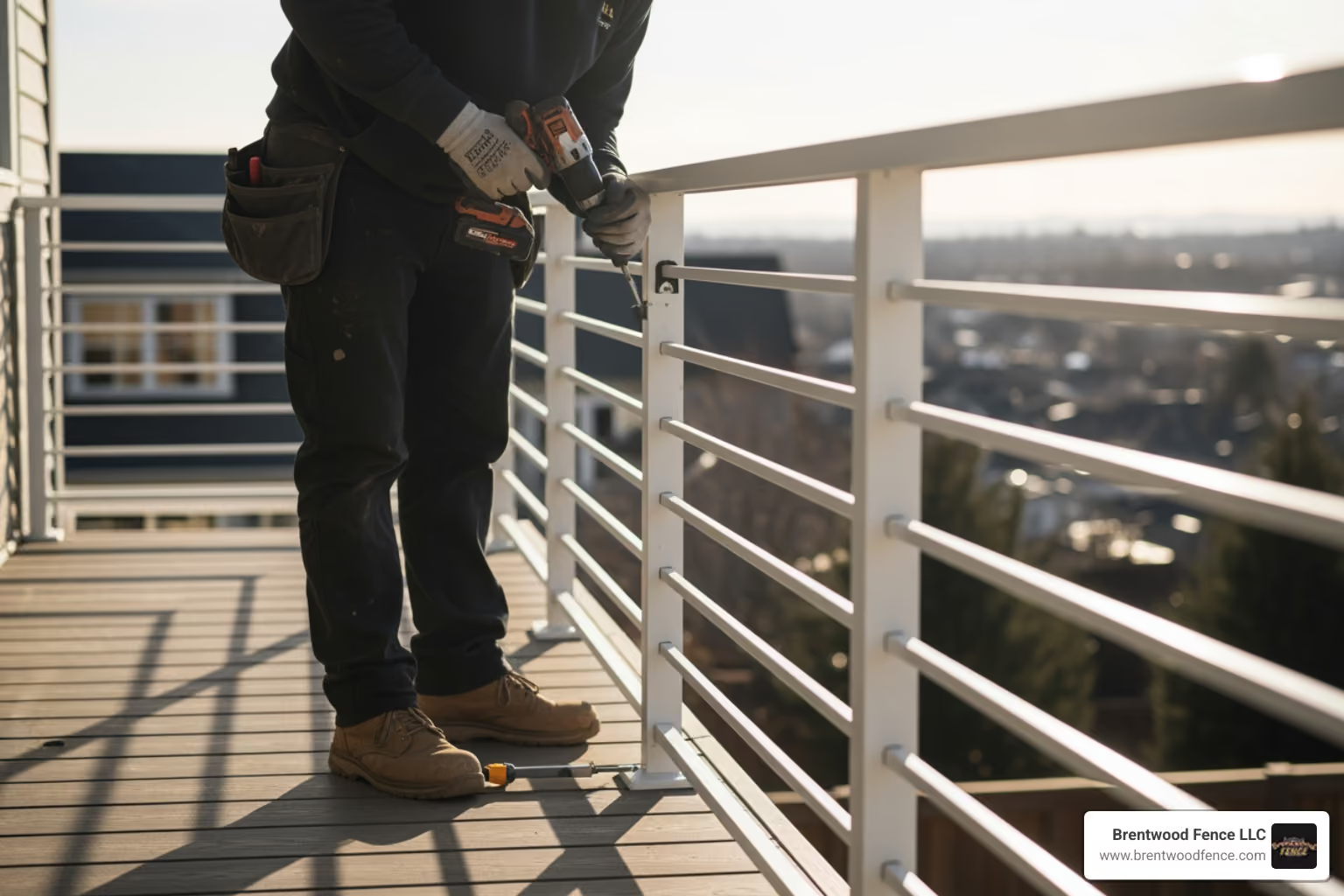
For a standard residential yard (150 linear feet), a professional crew can typically complete the entire installation in 1 to 3 days. The first day is spent measuring, laying out the line, digging post holes, and setting the posts in concrete. After the concrete has fully cured, the panels and gates are hung, aligned, and secured.

Conclusion

Investing in a new fence is a major decision, but choosing an aluminum fence means choosing lifetime durability, elegant curb appeal, and zero maintenance headaches. While the cost of aluminum fence installed in 2026 requires a realistic upfront budget, the long-term savings on repairs and upkeep make it one of the smartest property upgrades you can make.
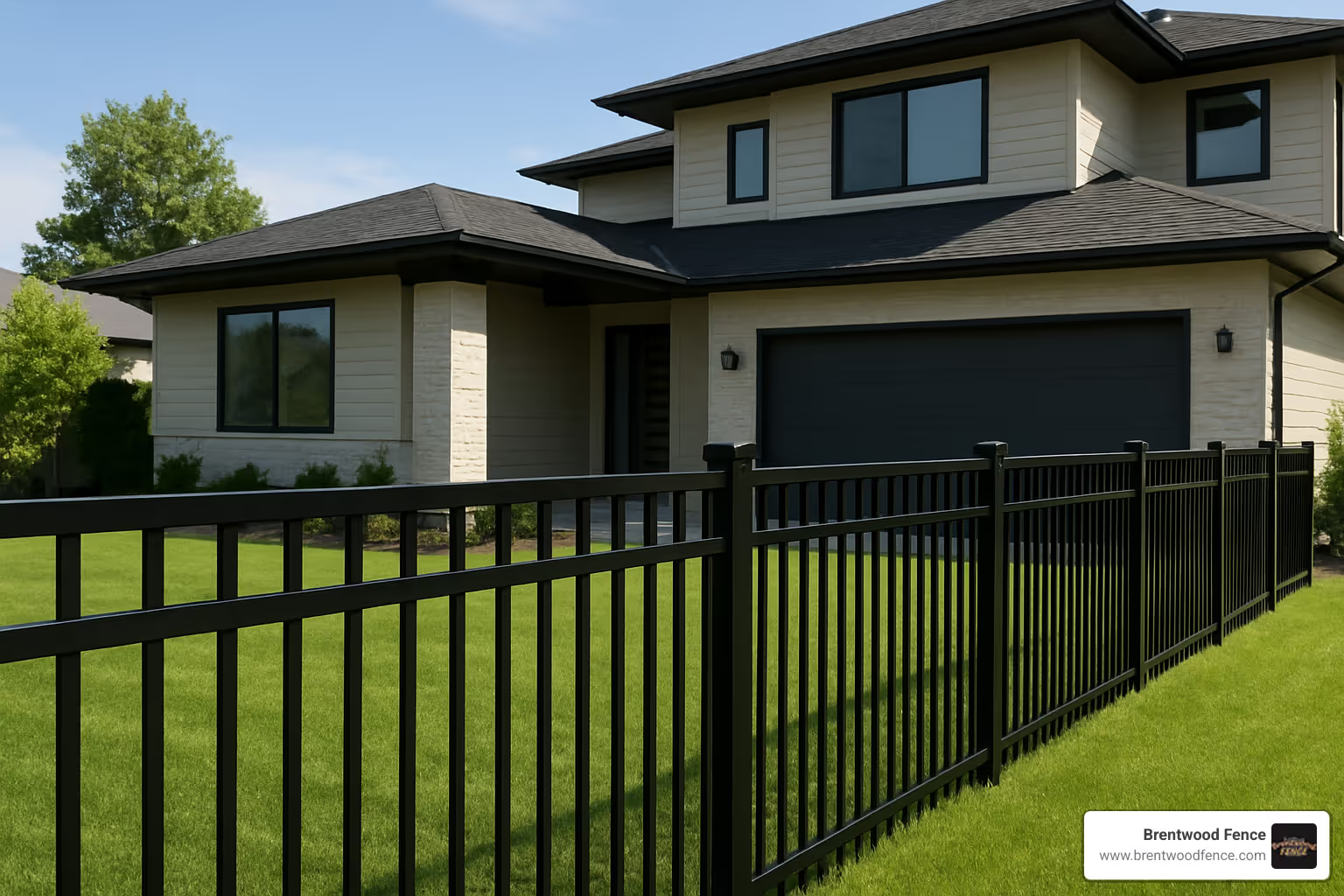
completed black ornamental aluminum fence in backyard

At Brentwood Fence LLC, we pride ourselves on being the Best Rated Fence Company serving homeowners across New Hampshire, Massachusetts, and Maine. Our experienced local crews understand how to navigate rocky New England soil, rolling terrain, and local building codes to deliver a flawless, long-lasting installation.

Ready to see exactly what an aluminum fence will cost for your unique yard? Get in touch with us today to request your Free Fencing Installation Estimate and let us help you secure your home with style!
Blog Content