Blog Content

19
Aug
2026
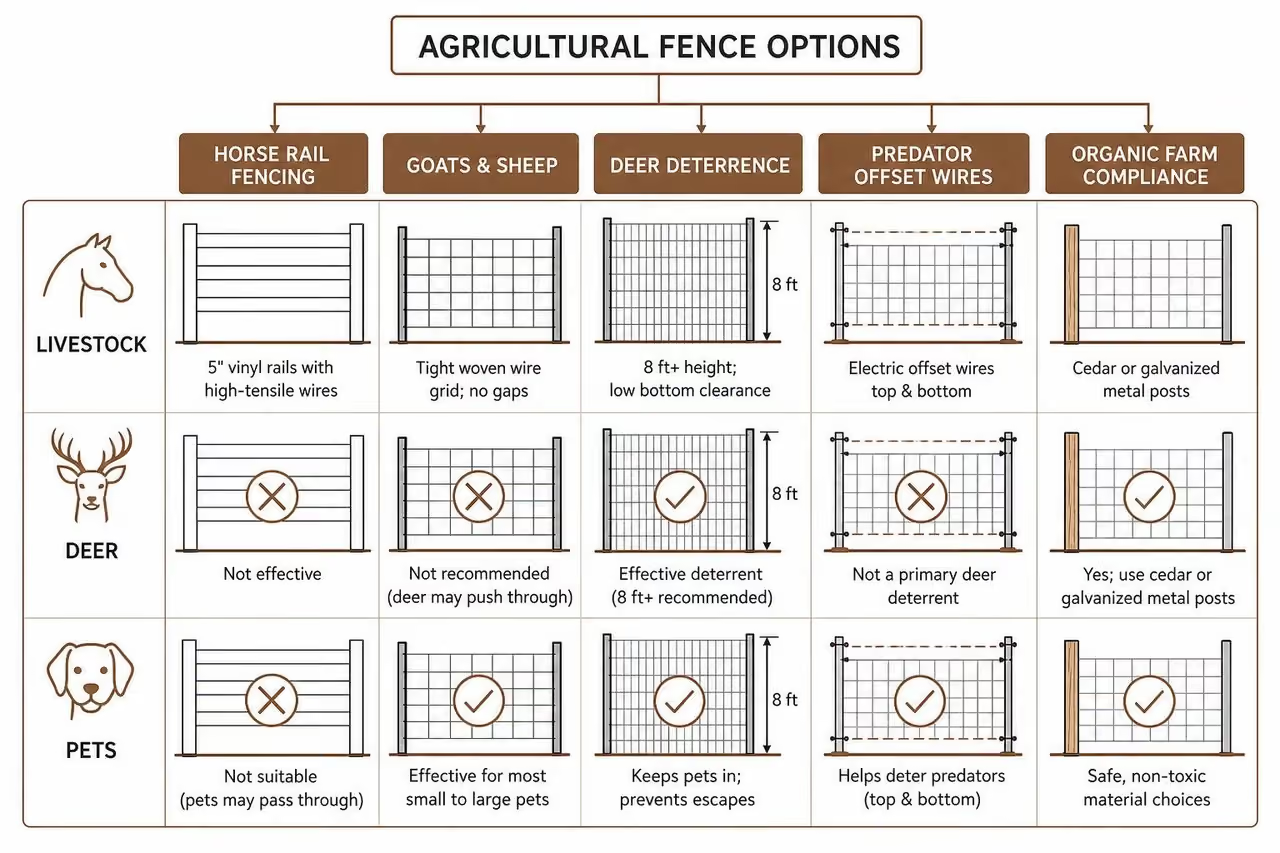
Selecting the proper material is the foundational step of any successful fencing project. Each material serves distinct purposes, balancing physical aesthetics, ongoing maintenance requirements, structural longevity, and financial investment.
Wood remains a timeless favorite for home privacy. Natural woods like cedar and redwood feature inherent organic compounds and tannins that resist insect infestation, rot, and decay without chemical treatments. Cedar and redwood handle moisture fluctuations exceptionally well, whereas pressure-treated pine is cost-effective but prone to twisting, warping, or shrinking if exposed to wet ground or intense summer sun without proper care.
PVC vinyl fencing offers an excellent solution for property owners seeking long-term performance without recurring paint or stain schedules. Quality vinyl holds its color and structural stability for 20 years or more with minimal upkeep.
For high-end decorative perimeters, aluminum provides the historic elegance of wrought iron without rust liability. To dive deeper into material characteristics, review our professional fence installation guide.
Selecting a fence to contain animals requires matching structural physical barriers—or psychological deterrents—to specific behavioral traits.
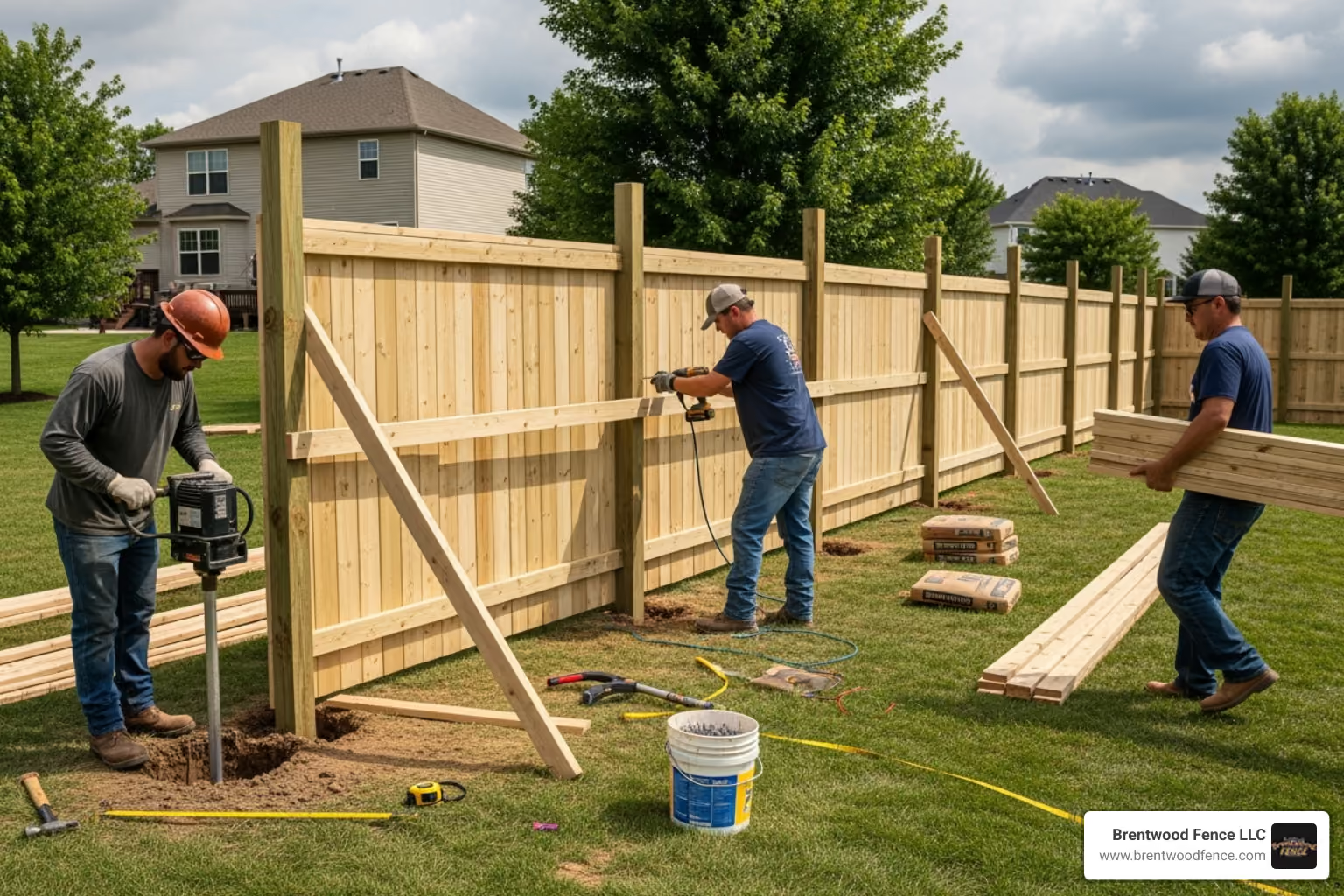
Even high-end materials fail prematurely if installed incorrectly. Partnering with a skilled fence installation professional prevents structural breakdowns caused by climate, soil dynamics, and wind forces.
Post setting depth is critical in regions subject to deep winter freezes. If post footings sit above the frost line, moisture under the concrete freezes, expands, and heaves the post upward, throwing the fence line out of level. Soil composition presents another challenge; expansive clay soils swell significantly when wet and contract during dry summer spells. Posts set shallowly in clay without proper concrete footings quickly lean or pull out of alignment.
Professional installation teams utilize specialized techniques to guarantee stability:
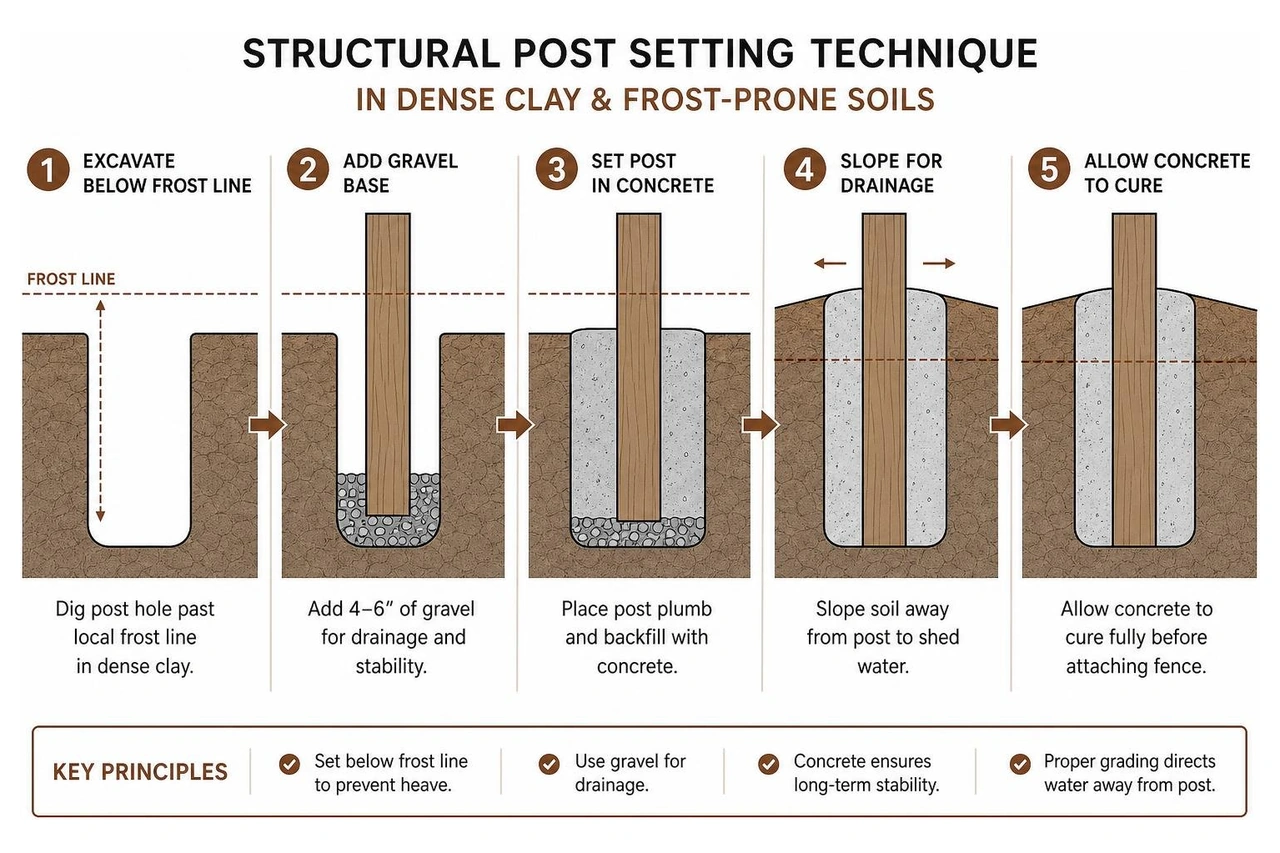
Furthermore, professionals install UV-stabilized vinyl that will not turn brittle under seasonal sunlight and use heavy-duty engineered metal systems in locations exposed to severe coastal winds and seasonal storms.
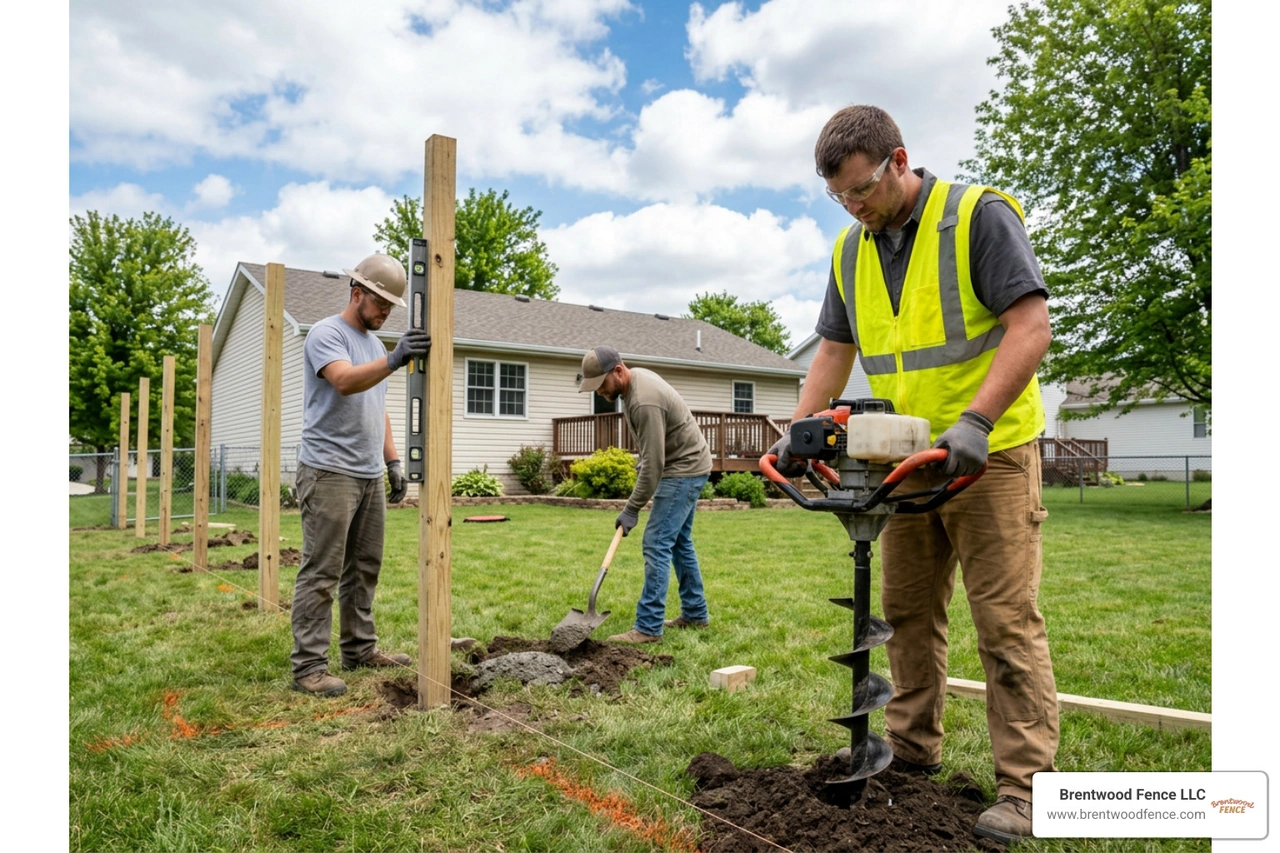
A seamless installation relies on a structured execution plan. When working with an experienced team, you can expect a clear step-by-step progression from initial site planning through final inspection.
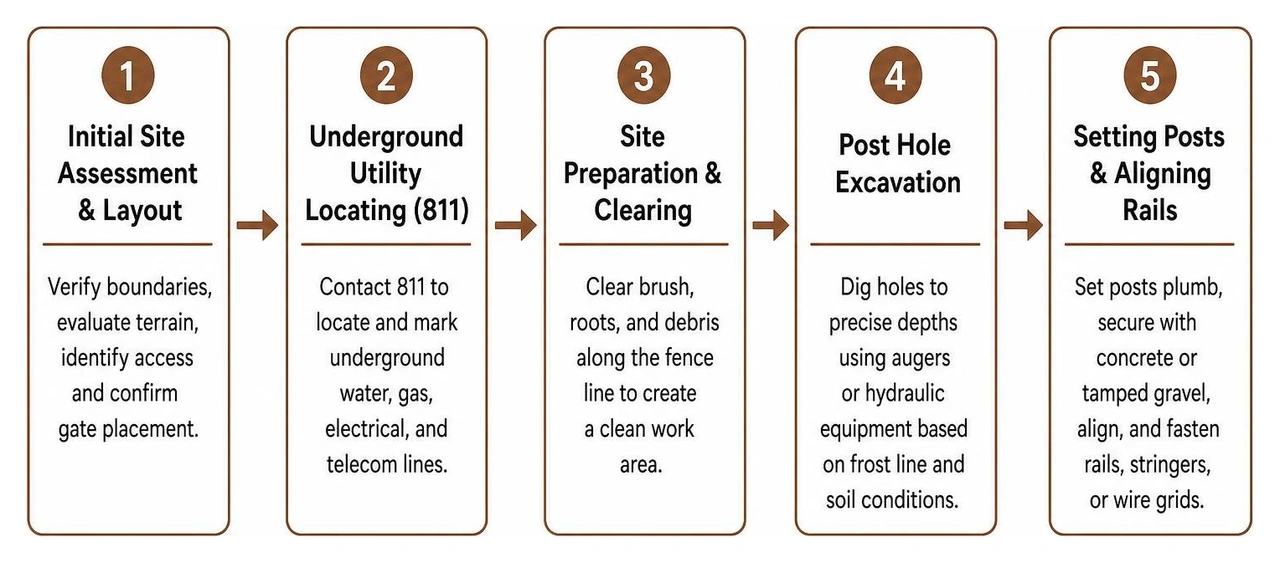
For more details on preparing your property, read our ultimate fence contractor guide.
A standard residential installation typically takes 1 to 3 active workday steps once materials arrive on site. However, overall schedules vary depending on specific property conditions:
While straightforward replacement jobs on small suburban lots might be completed in a single efficient day, larger perimeter installations with custom gates take longer to build with precision.
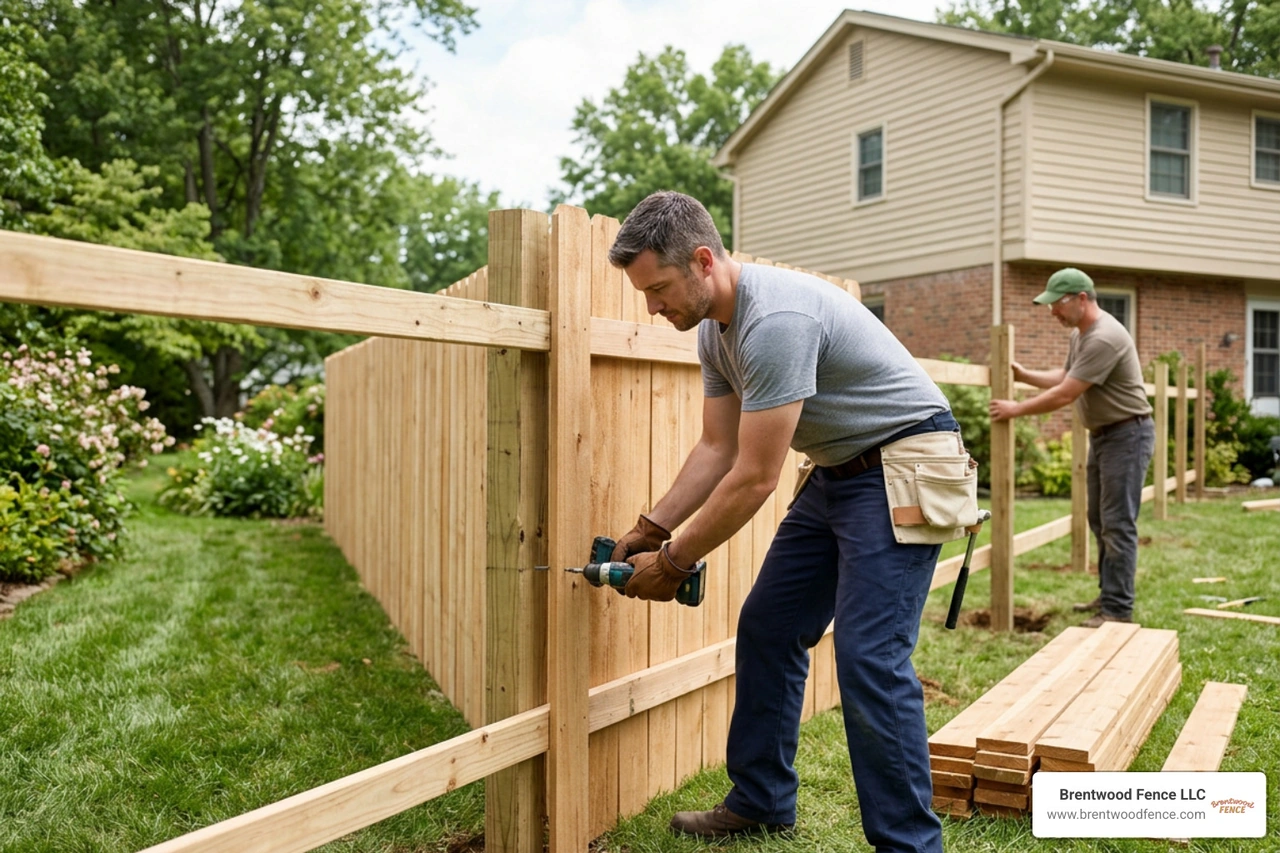
Before breaking ground, every project must satisfy local municipal codes, neighborhood rules, and regional environmental standards.
Municipal building codes govern overall fence height limits. Most residential ordinances limit front-yard fences to 3 or 4 feet, whereas backyard privacy structures are capped at 6 feet. High-density residential developments governed by Homeowners Associations (HOAs) frequently dictate approved material styles, colors, and finished panel directions facing the street.
Navigating municipal building permits and local zoning laws can be complex. Choosing established nh me ma fence installation companies ensures local municipal codes, permit filings, and setback requirements are properly addressed before construction begins.
When building along shared boundary lines, clear communication with neighbors prevents disputes. In many areas, property line fences are legally recognized as shared responsibilities, meaning both owners benefit from discussing plans, line placement, and shared maintenance expenses upfront.
Local soil conditions directly influence structural footing designs:
For insights on selecting trusted local contractors, refer to our local fence company guide nh ma me.
The complete investment in a new fence reflects several key project elements:
Understanding product warranties is equally important. Material warranties provided by manufacturers cover panel defects, fading, rotting, or rust over specified periods. Workmanship guarantees provided by your fence installation professional cover labor, post stability, structural alignment, and gate installation.
For additional regional cost details, consult our fence contractor near me nh ma me resource.
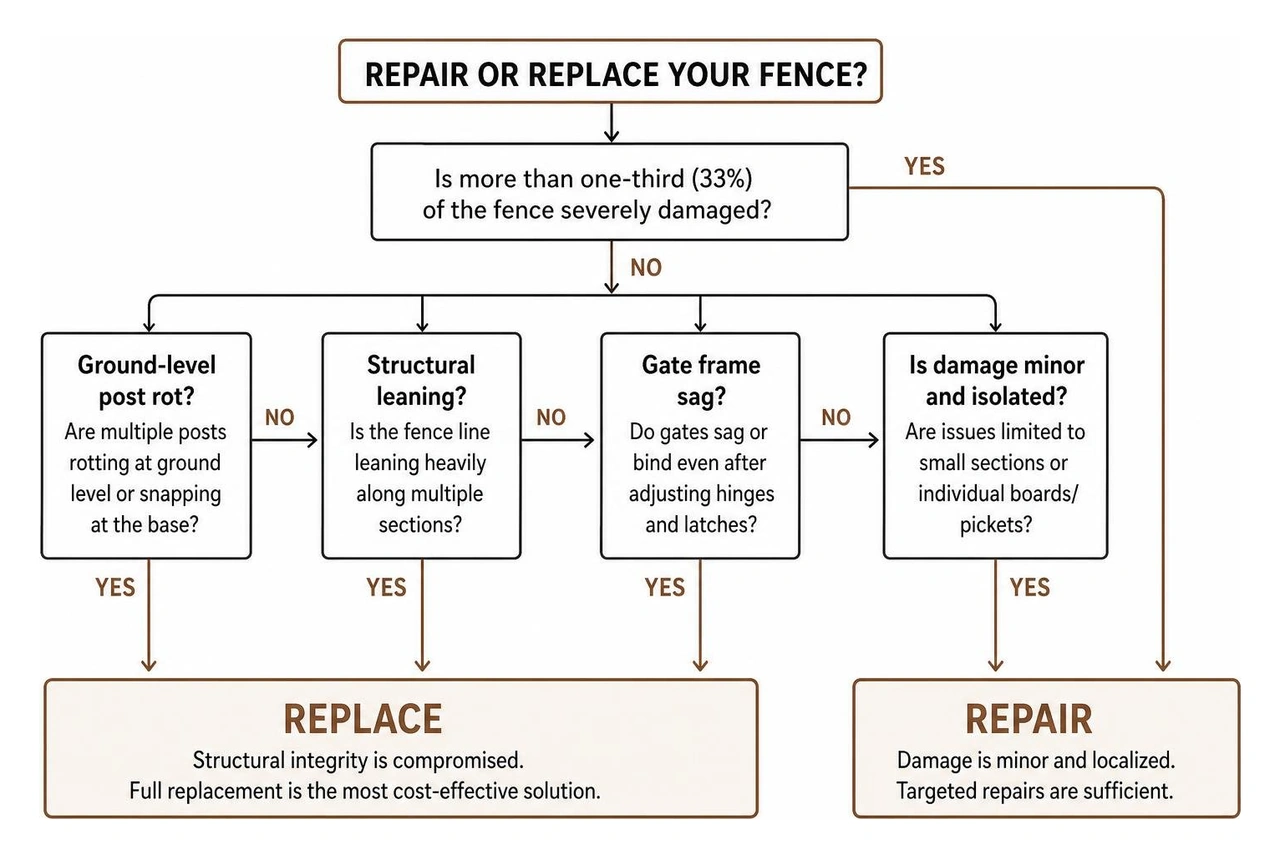
Determining whether to perform targeted repairs or complete a full replacement comes down to structural integrity.
Working with a qualified professional gives you confidence that your investment is fully protected.
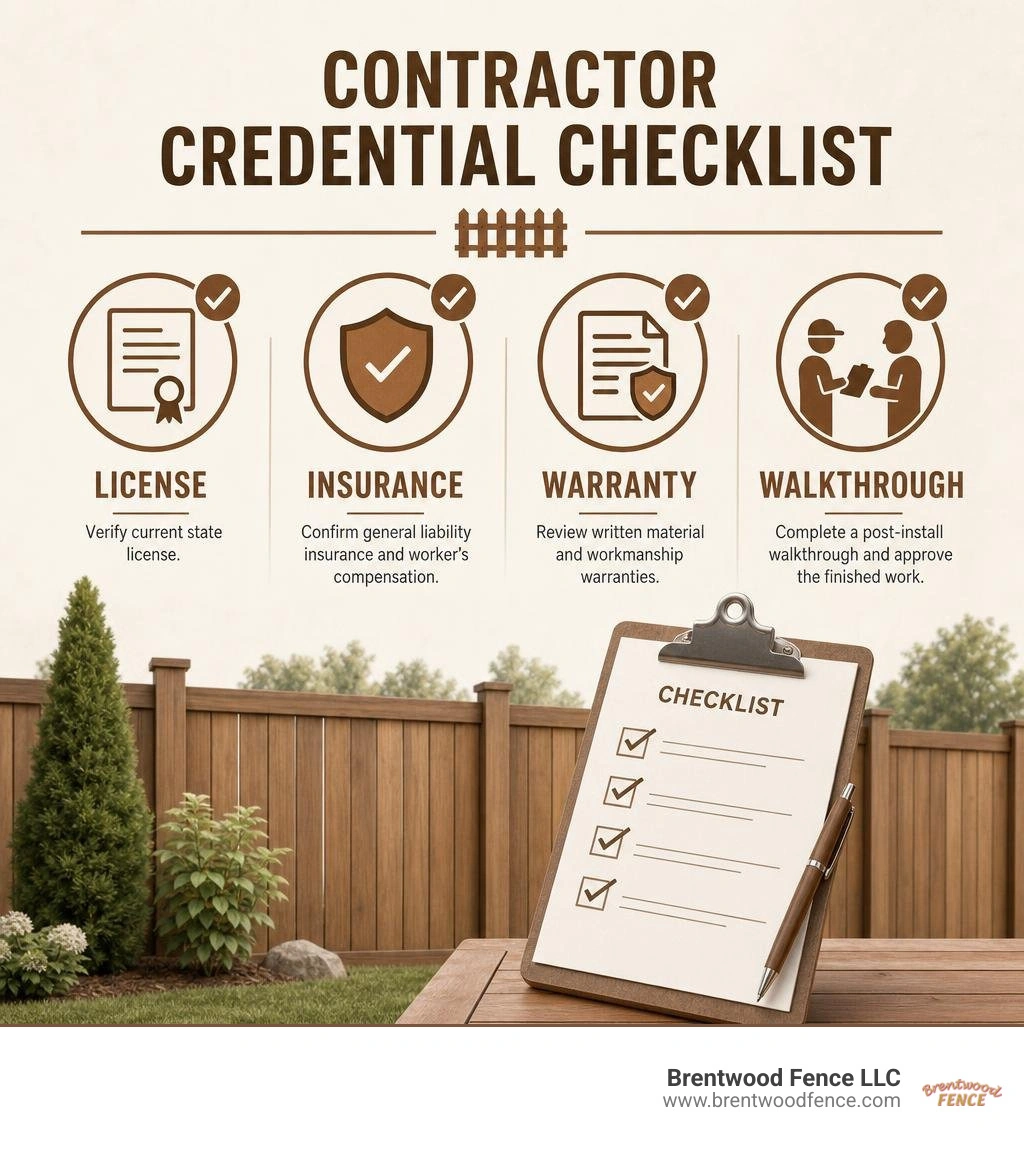
Before signing contracts, verify state licensing and confirm the contractor holds active general liability insurance along with full worker's compensation coverage. Review written warranty documentation carefully to ensure it clearly outlines both manufacturer material coverage and installation labor terms. Finally, insist on a post-installation walkthrough to inspect post alignment, test gate latches, and approve site cleanup before issuing final payment.
Permit requirements depend on your municipality and fence height. Backyard fences over 6 feet typically require a municipal permit, while front yard fences face stricter height limits (often 3 to 4 feet). Professional installers will guide you through local guidelines or pull the necessary permits on your behalf. If you are planning a project in Essex County, check out our localized guide for fence installation haverhill mass.
On-site installation for standard residential properties typically takes 1 to 3 active workdays. The exact timeline depends on total linear footage, ground slope, post-setting depth, and concrete cure times.
Fences placed directly on a shared property line are generally considered shared legal responsibilities between neighboring owners. It is best practice to review line placement, design, and shared material expenses with your neighbor before construction starts. For detailed regional advice, read our find fence installer nh me ma guide.
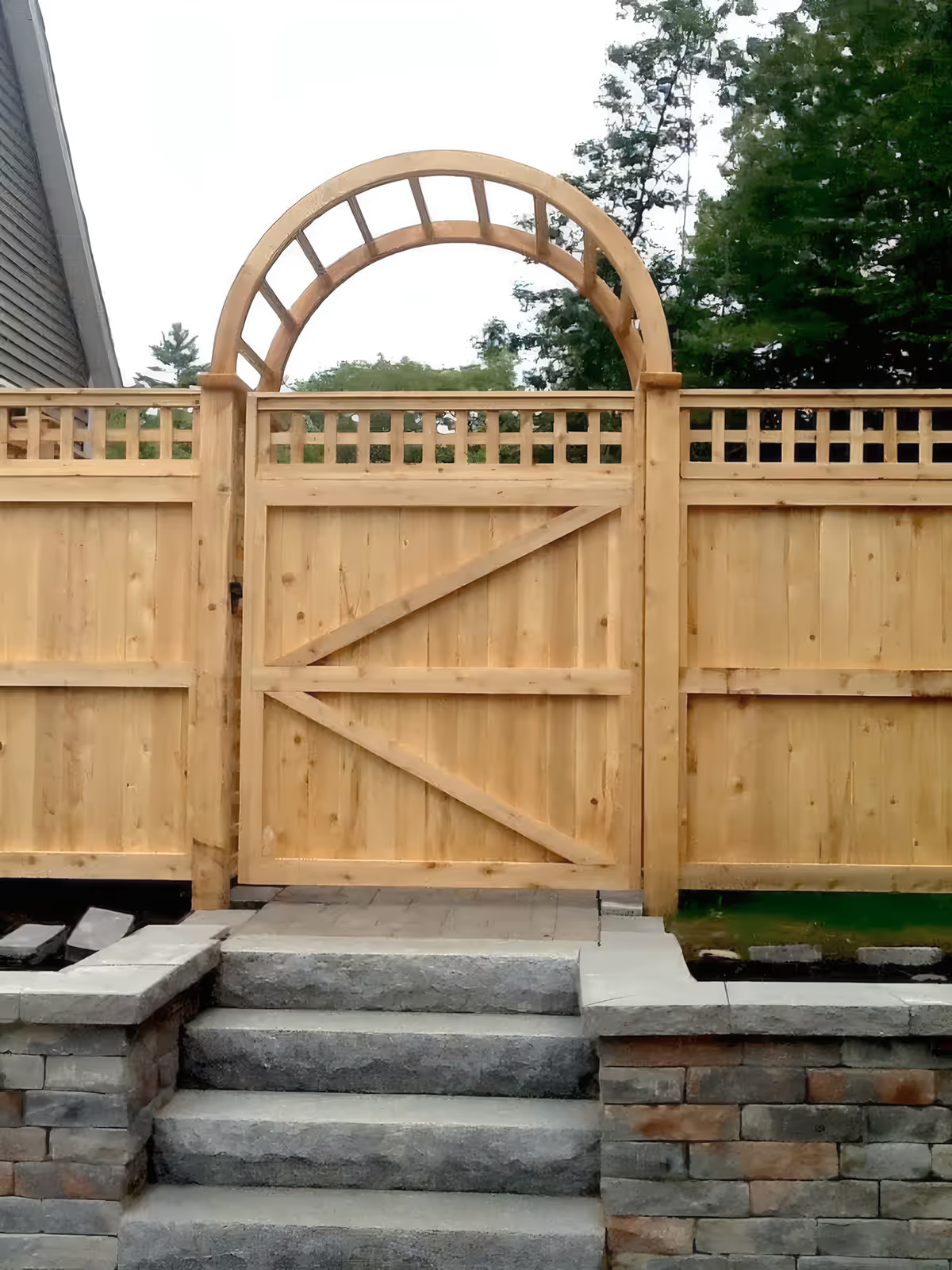
Investing in a new fence enhances your home's privacy, safety, curb appeal, and overall property value. Choosing the right material for your lifestyle—and hiring a trusted installer who understands frost depths, soil dynamics, and local regulations—ensures your new fence will stand strong for decades.
At Brentwood Fence LLC, our experienced team delivers superior craftsmanship, transparent estimates, and reliable warranties for homeowners across Exeter NH, Portsmouth NH, Manchester NH, Concord NH, Derry NH, Dover NH, Haverhill MA, and surrounding regions in New Hampshire, Massachusetts, and Maine.
Ready to transform your property boundaries? Find Professional Fence Installation Services with our team today, or visit our comprehensive guide to find fence installer nh me ma options across your area!

Copyright 2022 Brentwood Fence | All Rights Reserved | Sitemap | Website by Plumb Development a Digital Marketing Agency