Blog Content

28
Sep
2026
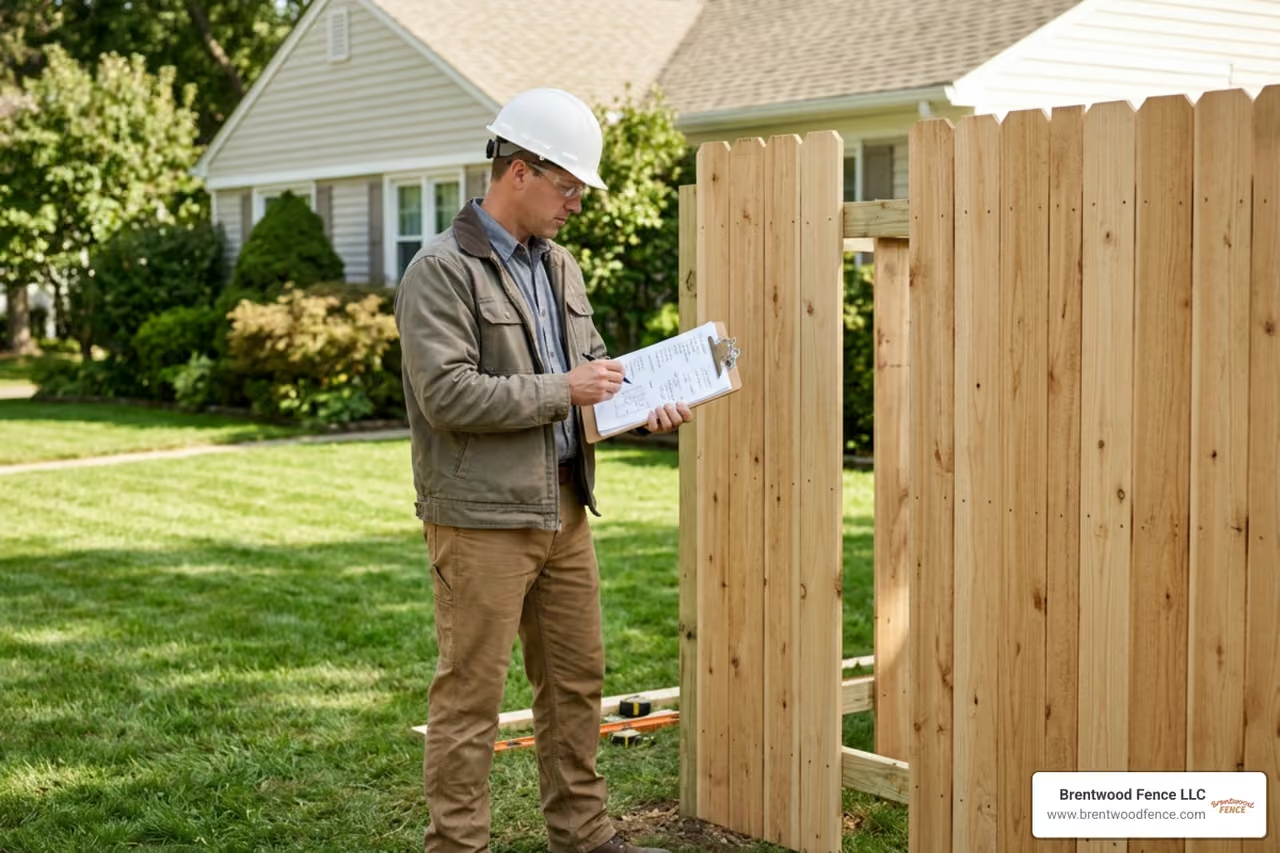
When evaluating any fence estimate, understanding where your money actually goes prevents costly surprises down the road. Several core elements dictate the bottom line of an estimate: total linear footage, height, selected materials, local labor rates, and the physical characteristics of your yard.
The overall footprint of your yard plays a primary role. A small boundary fence requires fewer materials and labor hours than a full perimeter enclosure. However, smaller jobs often carry higher per-foot rates because fixed mobilization costs—like trucking equipment, site setup, and digging gear—remain the same regardless of job length.
Site topography also shapes the final price. If your property features rocky ledge, mature tree roots, steep inclines, or poor drainage, workers must dedicate extra hours to hand-digging holes or stepping panels. You can examine regional pricing models through an online tool like the Fence Installation Cost 2026 | Portsmouth, NH — Free Calculator or check our breakdown of the cost of wood fence per linear foot to gauge how yard dynamics change the numbers.
Homeowners frequently ask why an installed fence quote in Portsmouth, NH differs so dramatically from Portsmouth, VA. The answer comes down to labor markets, cost of living, municipal fees, and structural requirements.
According to Bureau of Labor Statistics (BLS) data, New Hampshire construction trade labor rates average roughly $54 per hour, with Portsmouth coastal markets running 10% to 20% higher than broader state averages. In New England, labor typically represents 30% to 45% of total project cost.
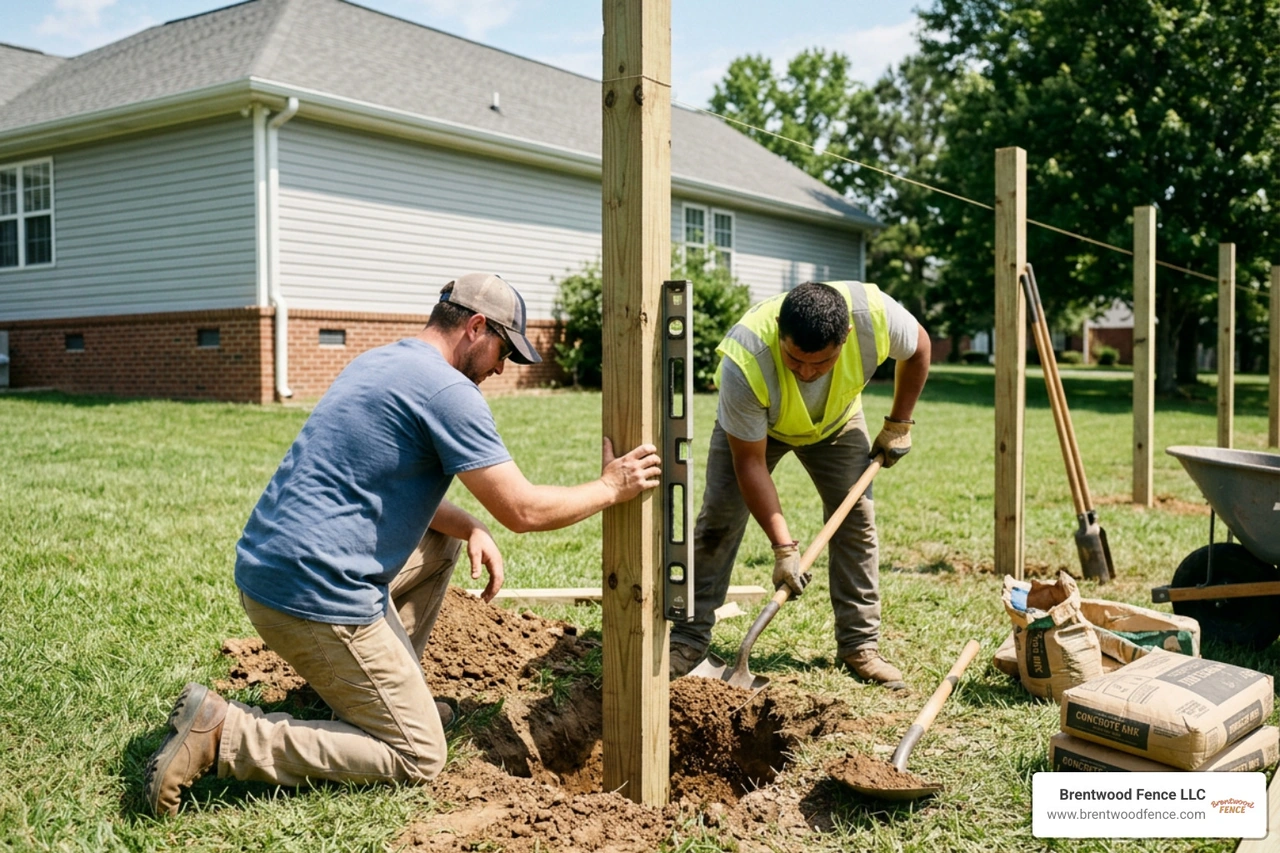
Furthermore, northern coastal installations must account for the local frost depth. Posts in New Hampshire must be set 36 to 48 inches deep to survive intense freeze-thaw cycles without heaving, which demands heavier equipment and more concrete per hole. In Virginia, shallower frost lines and lower regional wage baselines keep standard yard fence averages between $1,500 and $3,000, whereas a high-grade coastal New Hampshire build averages $4,503 to $5,834 for a similar layout.
Material choice establishes both your initial quote and your ongoing maintenance budget.
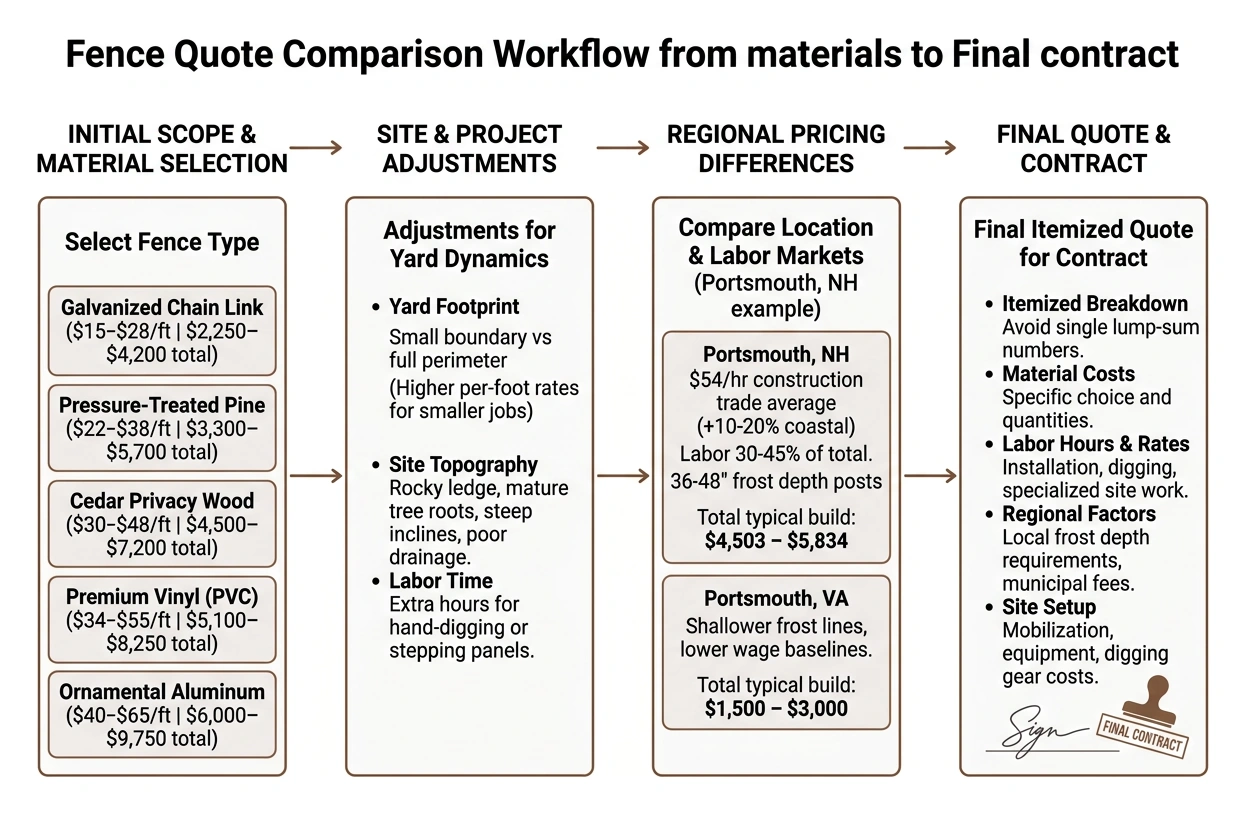
A professional fence quote is an itemized blueprint of the entire installation process. If a contractor hands you a single lump-sum number on the back of a business card, ask for a detailed breakdown.
A transparent estimate protects you by listing every component in black and white. For a complete understanding of the entire process from estimate to completion, review our fencing installation complete guide.
When reviewing your estimate, ensure these specific categories are clearly distinguished:
An estimate that comes in thousands below competitors usually indicates hidden trade-offs. Common corners cut by low-bidding operators include:
For step-by-step contractor evaluation, read our expert fence install guidelines.
Proper preparation avoids neighborhood disputes, municipal fines, and project delays.
In Portsmouth, NH, most permanent fence installations require a municipal building permit, which typically costs between $75 and $500 depending on project valuation.
Key municipal guidelines include:
A standard residential fence project of 150 to 200 linear feet typically takes 1 to 3 business days of on-site labor:
Large or complex commercial enclosures may run up to 5 days.
Seasonal timing also influences both pricing and scheduling. The peak fencing season in New Hampshire runs from late spring through early autumn, when strong demand can push project pricing up by 15% to 25%. Booking an installation during the late autumn or early spring shoulder seasons can yield significant cost savings and faster start dates.
Selecting the right professional guarantees your fence survives harsh New England blizzards and coastal windstorms. Follow our local fence builder selection guide when evaluating bids.
Before signing an agreement, present each contractor with the following checklist:
Reviewing verified fence installation testimonials offers direct insight into a company's reliability and craftsmanship.
While standard decorative fencing does not qualify for energy-efficiency rebates, holistic property improvements that combine fencing with solar arrays, automated security gates, or qualified landscaping windbreaks may qualify for financing programs. Flexible contractor financing plans, home equity lines of credit (HELOCs), and off-peak scheduling discounts help make high-durability vinyl or aluminum installations manageable within your monthly budget.
Galvanized chain link is the most affordable fencing material per linear foot, followed closely by standard pressure-treated pine. While pressure-treated wood features a low upfront price, it requires routine staining, sealing, and picket replacements over its lifetime. Premium materials like vinyl and aluminum carry a higher initial quote but offer a lower total cost of ownership over 20 to 30 years due to near-zero maintenance demands.
A typical residential installation spanning 100 to 200 linear feet requires 1 to 3 days of active field work. This allows proper time for excavating post holes below the frost line, setting posts in concrete, allowing foundations to cure, hanging panels, and mounting gate systems. Rocky terrain, steep yard grades, or bad weather can extend the timeline.
Yes, most residential fence installations in Portsmouth, NH require a building permit from the local inspection department. Permit fees generally run from $75 to $500 depending on project scale. A licensed fencing contractor will usually pull the required permits, schedule necessary inspections, and coordinate underground utility markings on your behalf.
A well-constructed fence enhances your privacy, safeguards children and pets, and elevates your property's long-term resale value. When you evaluate an installed fence quote in Portsmouth, the lowest bid rarely delivers the best value. Prioritize deep, frost-proof post settings, premium coastal-grade materials, comprehensive warranties, and proven local expertise.
Ready to transform your property with a custom, high-durability enclosure? Contact our team at Brentwood Fence LLC today to request a free fencing installation estimate and start planning your project.


Copyright 2022 Brentwood Fence | All Rights Reserved | Sitemap | Website by Plumb Development a Digital Marketing Agency