Blog Content

10
Jan
2026
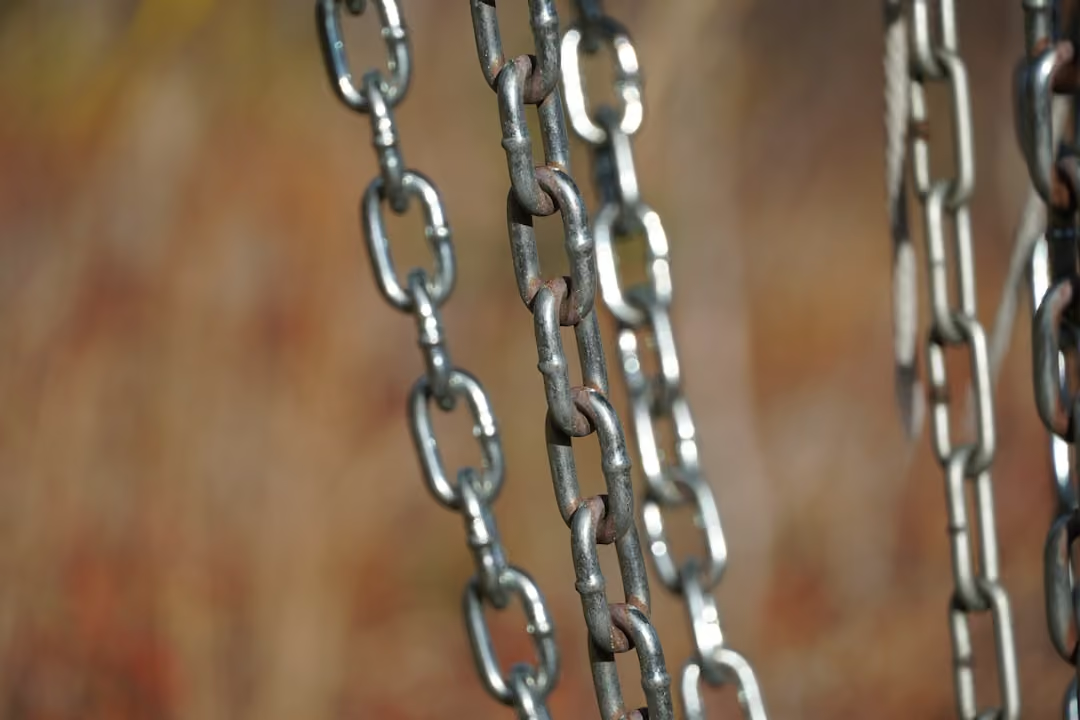
Stainless steel chain link fencing is the most durable and corrosion-resistant option for property owners who need a fence that will last for decades, even in harsh environments. Unlike galvanized or vinyl-coated chain link, stainless steel won't rust, bend, or sag over time. It is regarded as the most durable type of metal chain link fence, offering the longest service life.
Top Sources for Stainless Steel Chain Link:
Key Grades to Know:
This guide will help you understand the types of stainless steel chain link available, where it's used, and how to find a qualified installer for this long-term investment. Whether you're protecting commercial infrastructure or securing coastal property, stainless steel chain link offers the best durability with minimal maintenance.
Find more about stainless steel chain link:
When investing in a fence, you want a solution that lasts for decades. This is where stainless steel chain link excels compared to other materials.
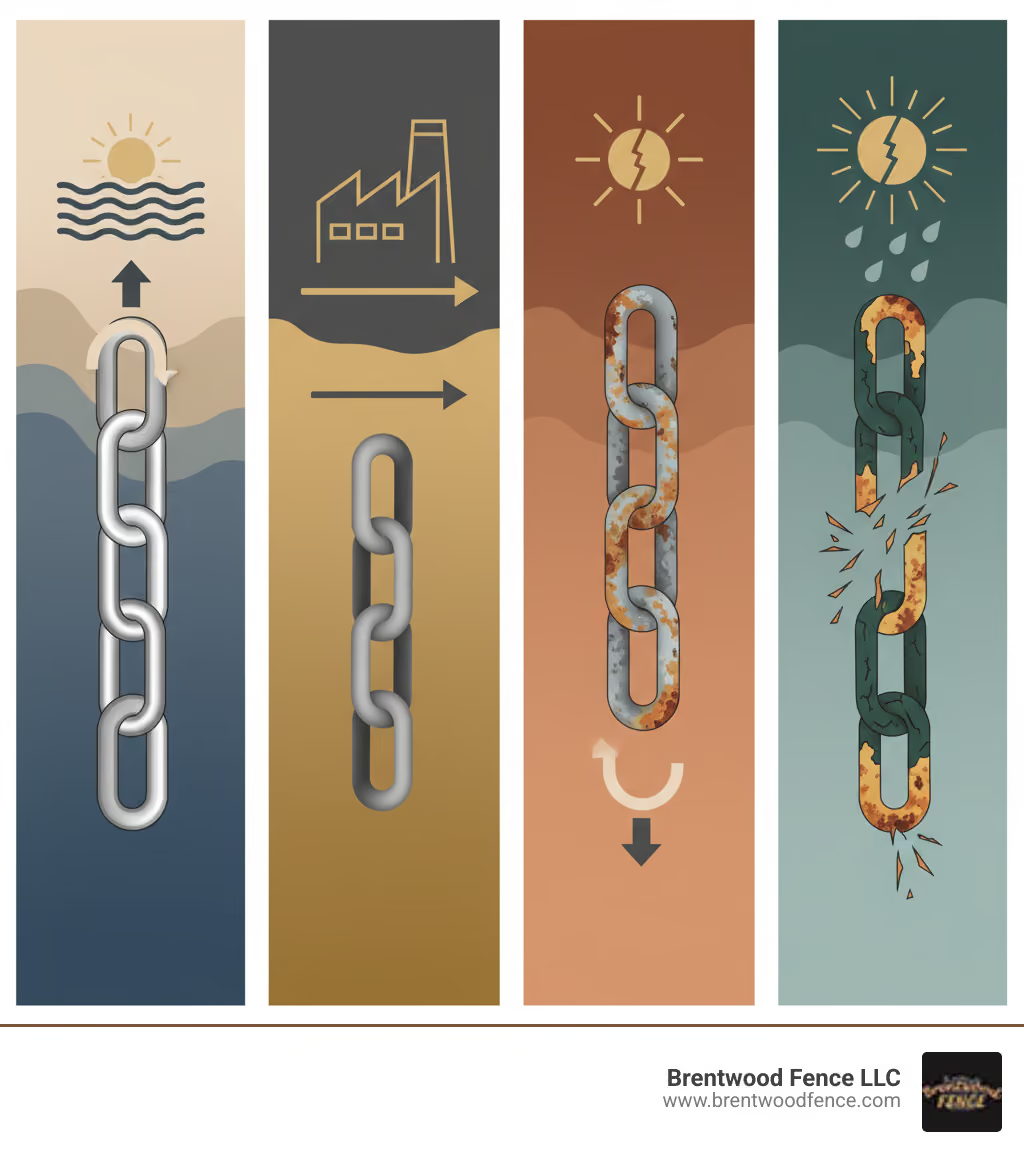
Galvanized steel relies on a zinc coating that wears away over time, especially in harsh New England weather. Once the coating is gone, rust takes over, and you're looking at a replacement in 10-20 years. Vinyl-coated chain link looks good initially, but UV rays and temperature swings cause the coating to crack, peel, and fade, exposing the vulnerable metal underneath.
Stainless steel chain link is different. The chromium in the steel creates a self-healing protective layer, meaning the material itself resists corrosion, not just a surface coating. This inherent superior strength also means your fence won't bend or sag, maintaining its shape and tension year after year, which is critical in areas with heavy snow or high winds.
While the upfront cost of stainless steel chain link is higher, its service life of 50+ years makes it more economical over time. You avoid the cost and disruption of replacing the fence two or three times. This longevity is paired with low maintenance requirements—no painting, coating repairs, or rust removal is needed.
In industrial settings, stainless steel maintains its structural integrity in extreme temperatures and handles exposure to acids and alkalis far better than standard steel. Its clean, modern appearance doesn't fade or discolor, maintaining a professional look. Finally, stainless steel is fully recyclable, making it a sustainable choice for environmentally conscious property owners.
For more information about different fencing materials, check out our guide on Chain Link Fence Materials NH, MA, ME.
Durability is a measurable quality that sets stainless steel chain link apart. Unlike standard chain link that can stretch and sag, stainless steel's rigidity means it retains its shape over time, providing a consistent barrier.
It withstands harsh environments like New England's bitter winters, humid summers, and coastal salt spray without breaking down. For coastal properties in Massachusetts and Maine, saltwater resistance is critical. Marine-grade stainless steel (Type 316) is formulated to handle saltwater exposure without pitting or rusting, making it the only viable choice for waterfront installations.
In industrial facilities, its resistance to acids and alkalis is essential for longevity. The structural integrity of stainless steel doesn't diminish with age, ensuring it maintains its strength throughout its service life. When security is non-negotiable, we often recommend our Heavy Chain Link Fencing NH, MA, ME options, which, when combined with stainless steel, create an incredibly robust barrier.
Not all stainless steel chain link is the same; the grade you choose determines its performance. The secret lies in the alloy composition—specifically its chromium, nickel, and molybdenum content.
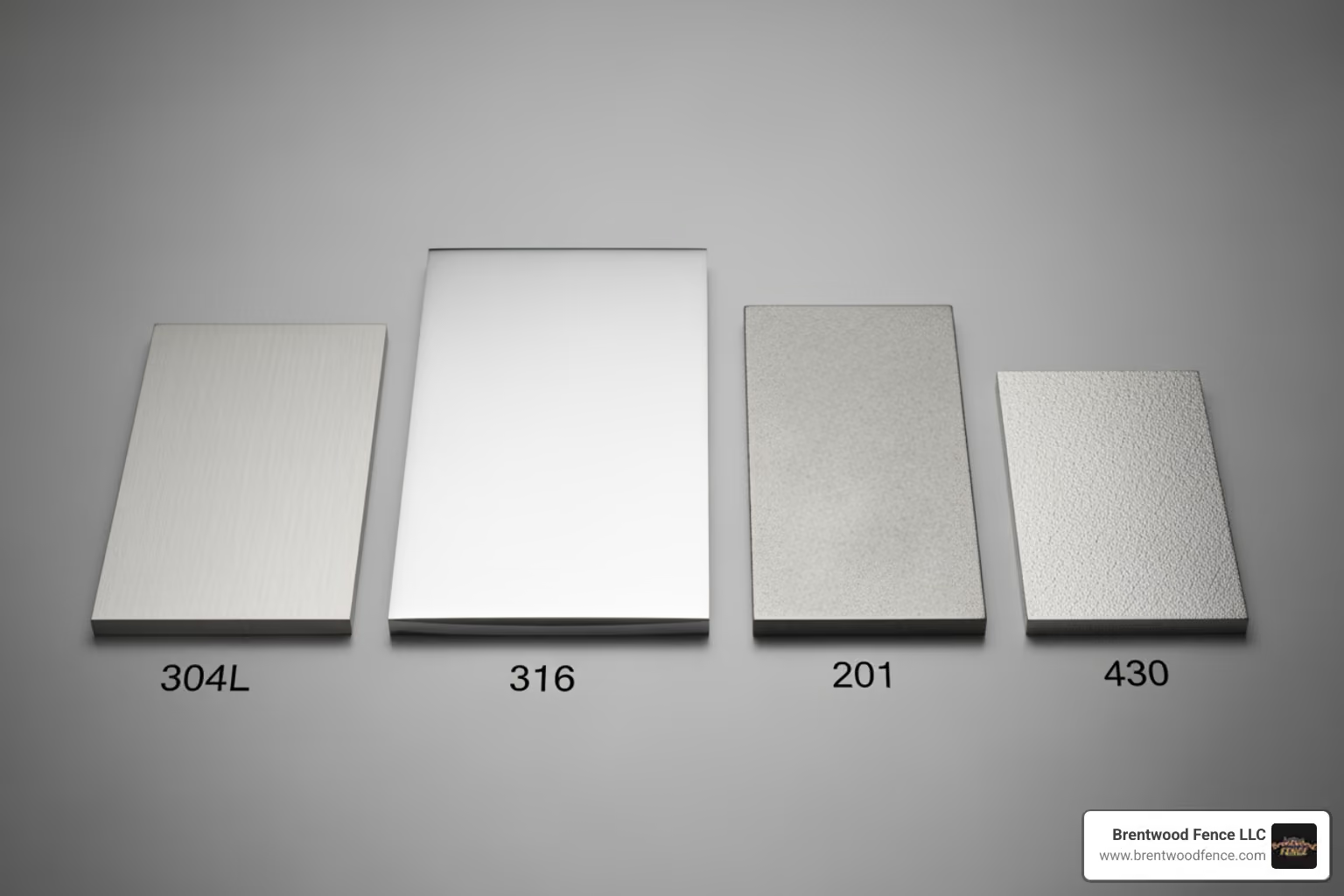
Chromium is the key to corrosion resistance, creating a self-repairing invisible layer on the steel's surface. Nickel adds strength and flexibility, while molybdenum provides an extra shield against chlorides (like salt) and acids. Choosing the right grade means matching the material to your environment.
Grade 304 is the general-purpose workhorse of stainless steel. It contains approximately 18% chromium and 8% nickel, giving it excellent corrosion resistance for typical environments across New Hampshire, Massachusetts, and Maine. It won't rust in normal atmospheric conditions and handles rain, snow, and temperature swings with ease.
We recommend Grade 304 stainless steel chain link for commercial properties, schools, parks, and residential applications where you want durability and low maintenance but aren't facing harsh coastal or industrial chemical conditions. It's the cost-effective stainless option that still delivers decades of reliable service.
When your fence must withstand ocean salt spray or harsh industrial chemicals, Grade 316 is the answer. This is marine-grade steel, engineered for the toughest environments.
Grade 316 includes 2-3% molybdenum, which dramatically improves its resistance to chloride corrosion. This is essential for coastal properties in Maine and Massachusetts and for industrial facilities with chemical exposure. For any property near the ocean, Grade 316 stainless steel chain link is our top recommendation to prevent the pitting and corrosion that would compromise lesser materials.
The "L" in Grade 316L stands for low carbon, making it preferable for welded applications as it prevents sensitization, a form of corrosion that can occur during welding. If your fence design requires custom fabrication, 316L is the better choice.
The price difference reflects the improved performance. For most inland applications, 304 is perfect. But for coastal or industrial sites, the extra investment in Grade 316 pays for itself in extended service life.
Choosing the right stainless steel chain link fence involves more than just picking a grade. Specifications like mesh size, wire gauge, and height work together to create a fence that meets your exact security and performance needs.
At Brentwood Fence LLC, we specialize in professional installations customized to your situation, guiding you through the options to ensure every component works in harmony.
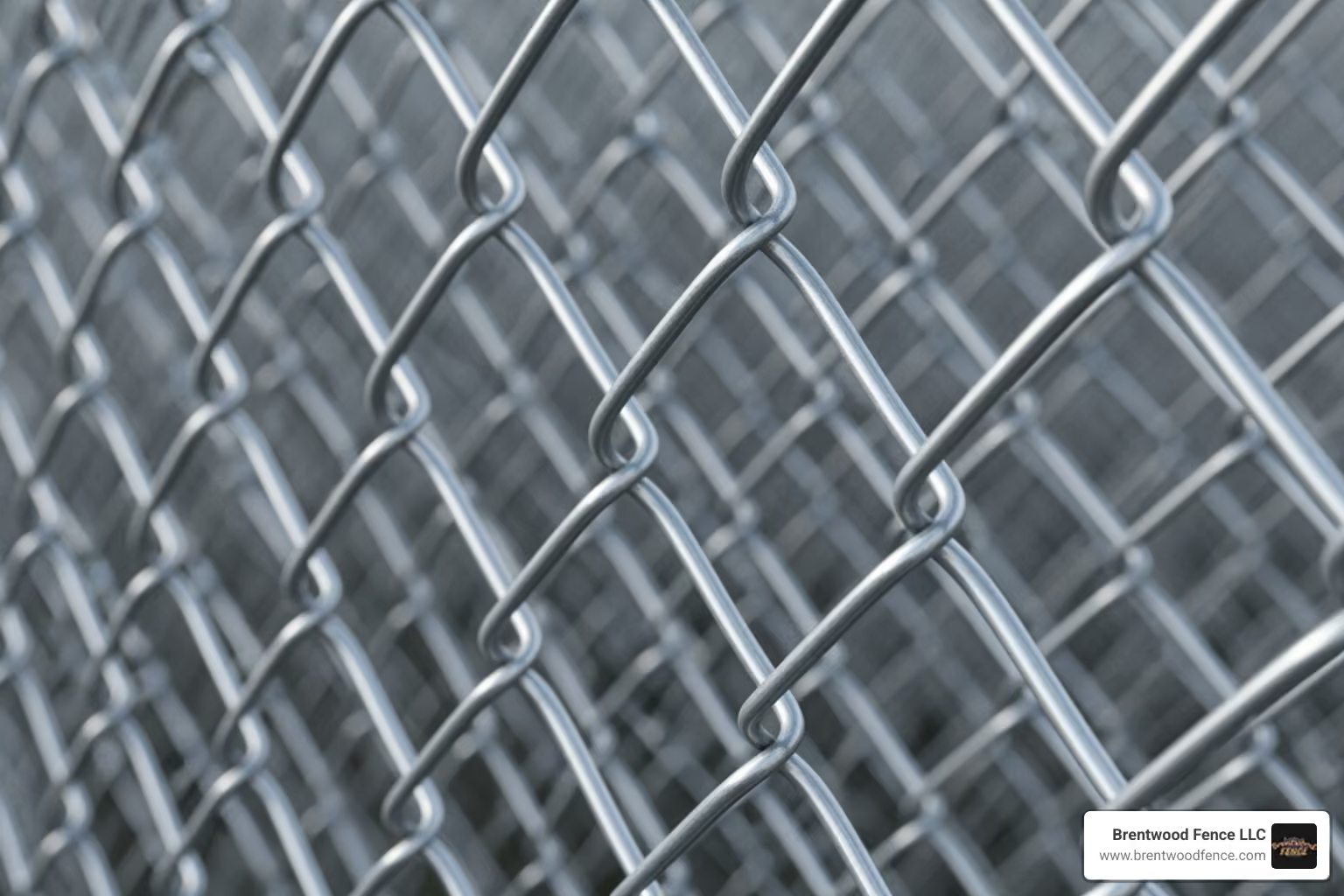
Two critical factors define your fence's performance: mesh size (the diamond opening) and wire gauge (wire thickness).
Mesh size options typically range from a tight 3/8-inch to a more open 2-inch mesh. The standard 2-inch mesh is ideal for most general applications, providing security with good visibility. Tighter meshes are used for specific purposes: 1 3/4-inch for tennis courts, 1 1/4-inch for pool enclosures to meet safety codes, and 1-inch or 3/8-inch for high-security areas to make climbing difficult.
Wire gauge numbers work in reverse: a lower number means thicker, stronger wire. Common gauges range from 6 (very thick) to 11 (lighter duty). For high-security needs, a thicker 6 or 9 gauge wire is best. For less demanding applications, 10 or 11 gauge provides adequate strength at a lower cost. Combining a small mesh with a thick wire gauge creates an incredibly robust, cut-resistant barrier.
Fence height is another key specification, with standard options from 36 inches (3 feet) to 144 inches (12 feet). The height you choose depends on your goal, whether it's simple property demarcation or serious security. For detailed guidance, see our resource on Chain Link Fence Heights NH, MA, ME. You can also explore additional specifications at resources like Fastener Warehouse.
The selvage is the finish on the top and bottom edges of the chain link fabric, affecting both safety and security.
Knuckled selvage creates a smooth, safe edge by bending the wire ends into closed loops. This is the standard choice for residential properties, schools, and parks where public safety is a priority, as it eliminates sharp points.
Twisted selvage (or barbed selvage) leaves the wire ends twisted into sharp points. This finish is not for aesthetics; its purpose is to make the fence much harder to climb. For high-security installations, especially fences over 72 inches, we often recommend a knuckled bottom edge for safety and a twisted top edge for security.
When you need a fence that won't fail, stainless steel chain link is the solution. Its strength and corrosion resistance make it the natural choice for protecting critical assets, especially in the demanding environments across New England. This is a long-term security solution that can handle nearly any challenge.
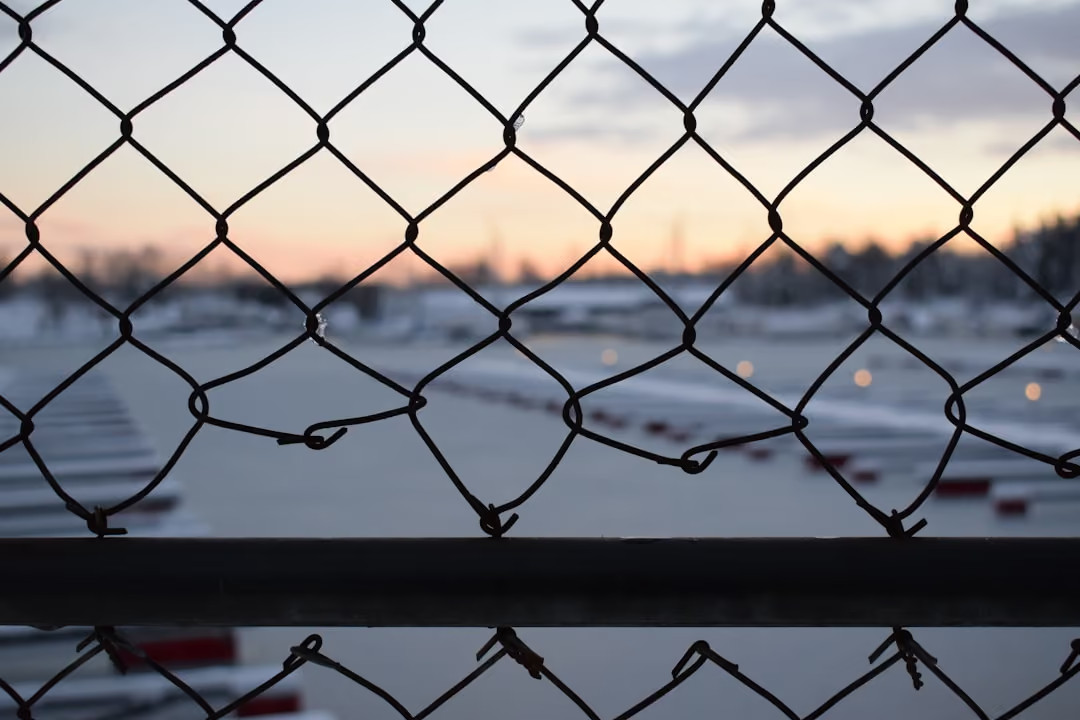
High-value assets and critical infrastructure demand fencing that stands strong for decades. Stainless steel chain link delivers this reliability where security breaches are not an option.
Critical facilities like airports, power plants, and utility stations across New England rely on stainless steel for dependable perimeter security that withstands harsh conditions. Along major highways, it provides safety and control, resisting deterioration from road salt. For chemical facilities, Grade 316 stainless steel's chemical resistance ensures the fence remains effective. Data centers also use it to provide physical security that matches their digital defenses.
For complete access control, pair your perimeter with Commercial Chain Link Gates made from matching stainless steel.
Anyone who has seen salt air destroy ordinary metal knows why marine-grade stainless steel chain link is essential for coastal areas. The relentless salt spray, humidity, and moisture create a perfect storm for corrosion.
Ports and docks along the Maine and Massachusetts coasts require materials that handle constant saltwater exposure. Grade 316 stainless steel, with its molybdenum content, is specifically designed to resist this chloride corrosion, preventing the rapid deterioration that destroys other fences. For coastal homeowners and businesses, it maintains its strength and clean appearance without constant maintenance or turning into a rusty eyesore.
This resistance is about structural integrity, not just looks. Marine-grade stainless steel prevents the pitting and corrosion that can weaken a fence to the point of failure. For more information, see this resource: More on stainless steel for marine use.
Sometimes, stainless steel chain link is chosen for its aesthetic appeal and durability. Architects and property owners recognize that it offers both form and function.
Zoos and animal enclosures use stainless steel because it is humane, secure, and withstands weather and animal activity. It is non-toxic and maintains its integrity for decades. Modern residential designs are also embracing its sleek, contemporary look. A stainless steel chain link fence complements minimalist designs and requires virtually no maintenance to keep looking sharp.
For parks and public venues, it provides the durability and appearance needed to handle high foot traffic and varied weather conditions. We can also incorporate it into comprehensive solutions using Metal Fence Panels NH, MA, ME for a cohesive, high-quality look.
Investing in a premium solution like stainless steel chain link is a big decision. Here are answers to the most common questions we hear from property owners across New Hampshire, Massachusetts, and Maine.
A properly installed stainless steel chain link fence is a long-term investment that can last for 50 years or more. This far outlives galvanized chain link (15-20 years) or vinyl-coated options (10-15 years), which deteriorate in New England's climate.
Longevity depends on a few factors. The grade of stainless steel is significant—Grade 316 will outlast Grade 304 in aggressive coastal or industrial settings. Professional fence installation is also critical to ensure proper tensioning and structural integrity. The extended service life means you avoid the cost and disruption of future replacements, making stainless steel an economical choice over time.
A fence is only as strong as its weakest component. Using substandard hardware with premium stainless steel chain link fabric undermines the entire investment. That's why we recommend using stainless steel for all components.
Stainless steel posts, tension bars, tie wires, and gate hardware ensure uniform resistance to corrosion throughout the entire system. Using the same material also prevents galvanic corrosion, an electrochemical process that can occur when dissimilar metals touch in the presence of moisture, causing them to corrode faster.
For a comprehensive look at all the components that make up a secure fence, check out our guide on Chain Link Fence Hardware.
Yes, you can easily add privacy slats to a stainless steel chain link fence. This is a great way to add privacy or block an unsightly view without compromising the fence's structural integrity.
Privacy slats are typically made from high-density polyethylene (HDPE) or PVC, materials engineered to resist UV radiation and weather damage. They are woven vertically through the mesh and come in a wide range of colors and styles to match your aesthetic. Professional installation ensures the slats are evenly spaced and properly secured to withstand New England's weather for years to come.
If you're considering adding privacy, our article on the Best Privacy Slats for Chain Link Fence walks you through all your options.
An investment in a stainless steel chain link fence is a commitment to decades of durability, and its performance hinges on expert installation. A premium material can fail prematurely if not installed correctly.
Sourcing materials is the first critical step. As professional installers serving New Hampshire, Massachusetts, and Maine, we have relationships with reputable suppliers of commercial-grade stainless steel chain link. We source authentic, high-quality materials that meet your project's exact specifications, whether it's Grade 304 for general use or marine-grade 316 for coastal properties.
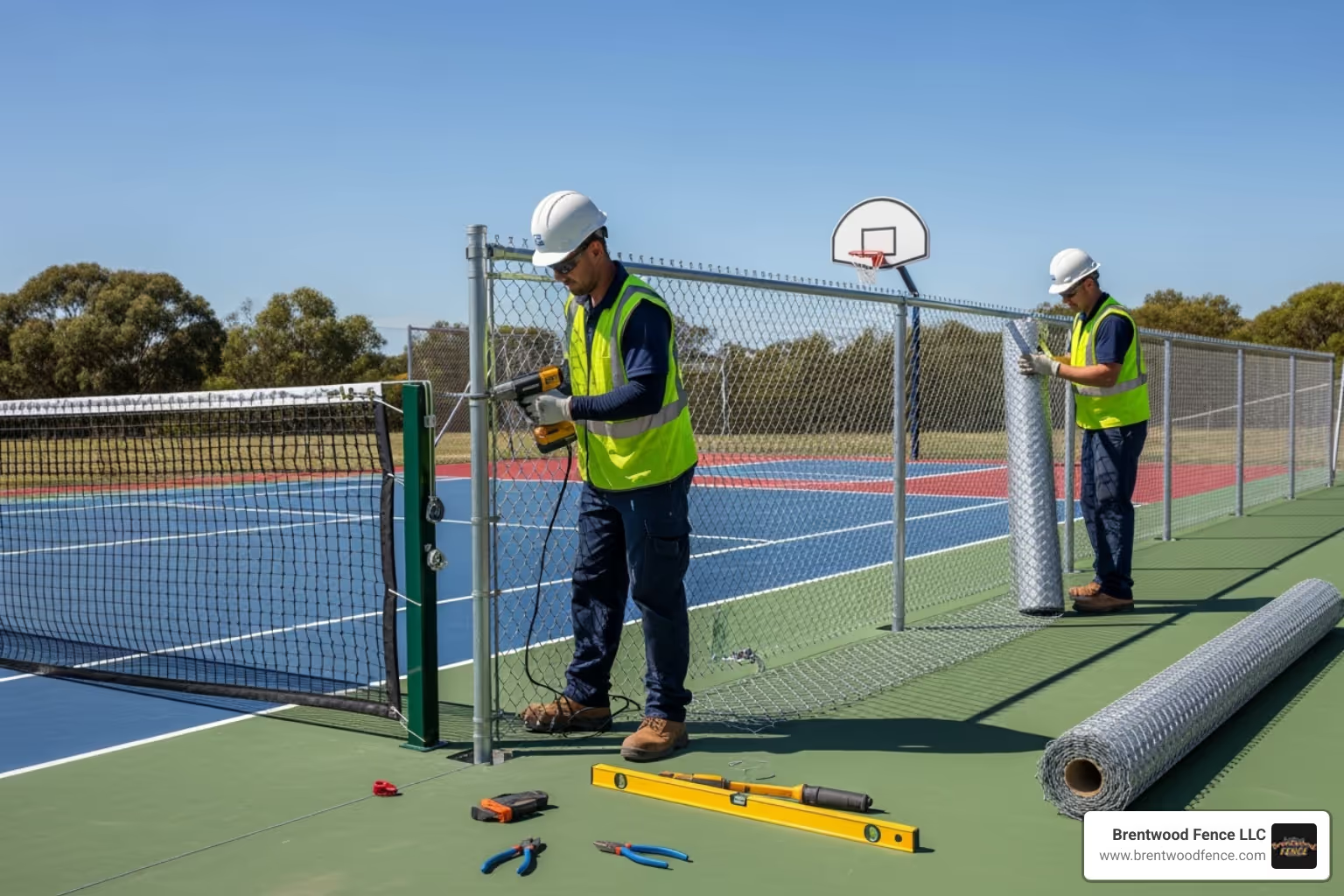
The importance of expert installation cannot be overstated. Proper installation requires accurate post setting for our region's varied soil, correct fabric tensioning to prevent sagging, and precise hardware attachment to ensure all components work together seamlessly. We also handle compliance with local codes, so you don't have to worry about permit issues.
When evaluating contractors, look for a company with a strong local reputation and specific experience with stainless steel. Brentwood Fence LLC brings decades of expertise to every project. We understand the unique challenges of the New England environment and combine superior materials with meticulous installation to deliver a fence that is a robust, beautiful, and long-lasting asset. We ensure your fence is a quality, long-lasting system that lives up to the promise of stainless steel.
Ready to invest in the best? Get a quote for your fence installation with Brentwood Fence LLC today.

Copyright 2022 Brentwood Fence | All Rights Reserved | Sitemap | Website by Plumb Development a Digital Marketing Agency