Blog Content

8
Jun
2026

Steel fence post brackets are the metal connectors that lock your fence panels securely to your posts — and choosing the wrong ones is one of the most common reasons fences fail early.
Quick answer — what to look for in steel fence post brackets:
With over 2,000 fence bracket options available to consumers and contractors in 2026, the choices can feel overwhelming. But the stakes are real — a bracket that corrodes, bends, or loosens under load puts your entire fence at risk.
Whether you're replacing a sagging section or building a full perimeter fence from scratch, the bracket connecting your panel to your post is doing quiet, critical work every single day — resisting wind load, holding alignment, and keeping wood away from ground moisture.
This guide covers the bracket types, sizes, finishes, and professional installation practices that give you a fence built to last.
Steel fence post brackets terms at a glance:

When we design a fence that is meant to survive New England’s punishing winter storms, shifting frost lines, and humid summers, we have to look closely at the connection points. A fence is only as strong as its weakest link, and more often than not, that link is the bracket holding the rail to the post.
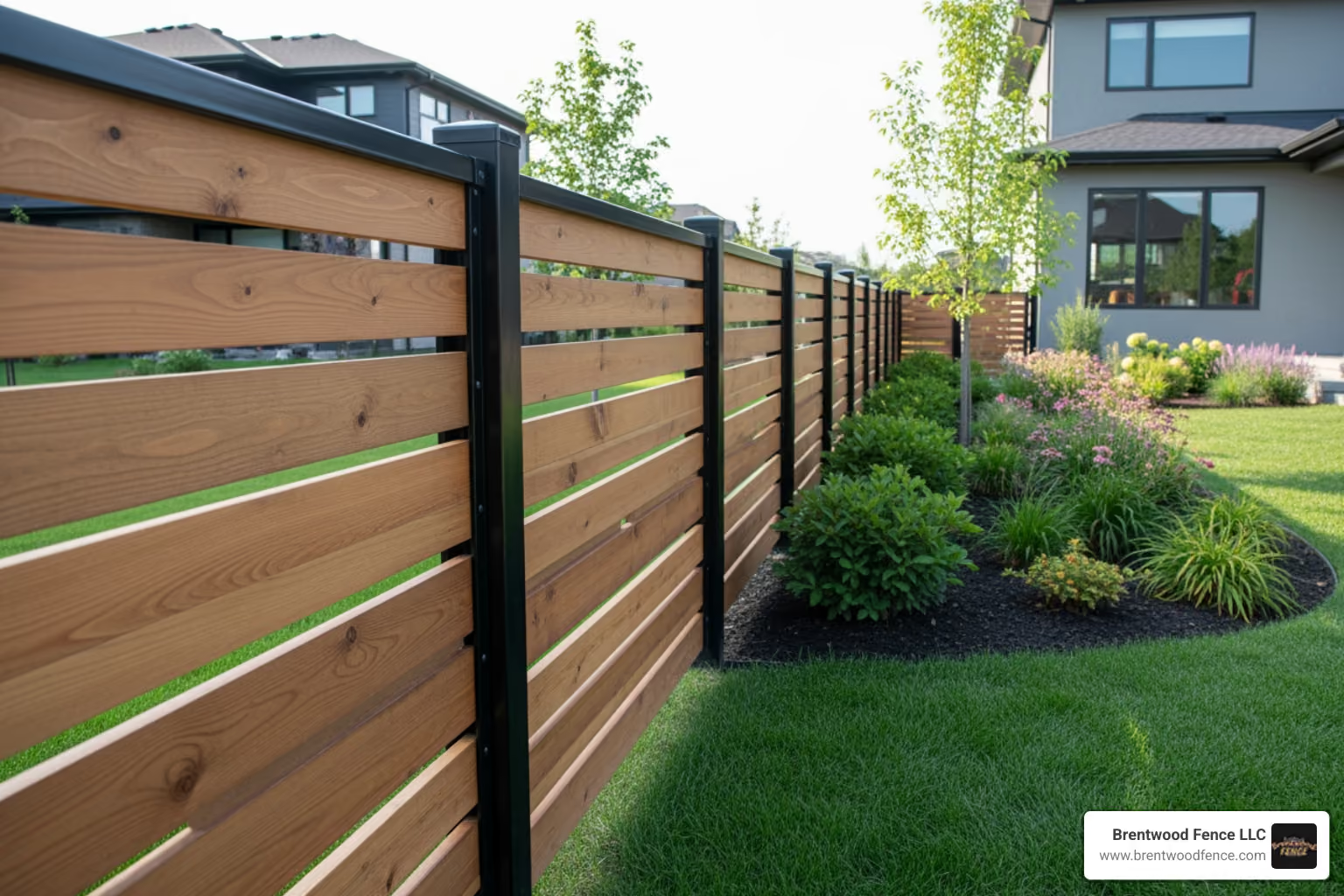
By definition, steel fence post brackets are heavy-duty metal sleeves, collars, or plates designed to join horizontal fence rails (often wood, composite, or ornamental steel) to vertical steel posts. They solve a classic construction dilemma: how to combine the unmatched structural longevity of steel posts with the classic, warm aesthetic of wood or composite panels.
This wood-to-steel transition is incredibly popular throughout New Hampshire, Massachusetts, and Maine. Homeowners love the classic look of wood slats but dread the inevitable rotting of wooden posts at ground level. By utilizing steel posts paired with high-quality brackets, we get the best of both worlds.
To explore how these structural systems work in detail, check out our comprehensive Guide Metal Fence Posts for Wood Fence. If you are considering a highly modern, sleek privacy layout, you will also want to read our guide on using Metal Fence Posts for Wood Slats to see how clean these metal-to-wood transitions look when fully executed.
Choosing the right bracket requires matching the hardware to your specific layout. If your yard has elevation changes, tight corners, or runs along a property line with odd angles, a standard flat bracket won't cut it. You must understand the structural purpose of each bracket style to ensure your fence doesn't lean, buckle, or rattle.
Each bracket style serves a distinct mechanical purpose in your fence line. Using the wrong bracket in the wrong position can cause structural failure or leave unsightly gaps.
In the fencing industry, precision is everything. A bracket that is even a fraction of an inch too large will rattle, slip, and allow wind to slowly work the fasteners loose. Conversely, a bracket that is too small simply won't fit over the post without damaging the protective zinc or powder-coated finish.
When selecting steel fence post brackets, you must match the bracket to both the shape (square vs. round) and the precise Outside Diameter (OD) of your posts.
For round post installations, specialized hardware like the WAP-OZ 2-3/8 in. Galvanized Steel to Wood Fence Bracket with Inside 90° for Full Wrap is highly recommended. This style of bracket wraps fully around the round metal post, providing a secure, inside 90-degree attachment point that hides the steel post entirely behind the wood pickets if you prefer a seamless, all-wood look from the street.
To understand why we heavily favor steel for our structural connections in New England, it helps to compare it directly to other common bracket materials on the market:
While plastic brackets might look tempting at a big-box store budget-wise, they are a recipe for disaster in cold climates. When the temperature drops below freezing in New Hampshire or Maine, plastic loses its elasticity. A sudden gust of wind against a solid wood privacy panel can easily snap frozen plastic brackets, sending your fence toppling over.
Aluminum is a fantastic material for lightweight ornamental fences, but it lacks the sheer tensile and shear strength required to hold heavy pressure-treated wood panels over a 20-year span.
For the ultimate in structural performance, stainless steel is the gold standard. Utilizing specialized options such as the Simpson Strong-Tie FB24SS 2x4 Fence Bracket - Stainless Steel ensures that even when subjected to coastal salt air or harsh road-salting spray, the bracket will never rust, stain your wood, or lose its structural integrity. If you are comparing options for round posts, you might also look at alternatives like the Peak Products 2-3/8 in. Aluminum Wood-to-Steel Fence Bracket, though heavy-duty galvanized steel remains our preferred choice for heavy wood privacy systems due to its superior rigidity.
Raw, untreated steel is incredibly strong, but it has a fatal flaw: oxygen and moisture will quickly turn it to rust. Because fence brackets are constantly exposed to rain, snow, dew, and damp soil, the surface finish of your bracket is just as important as the steel thickness.
While it is possible to purchase brackets online, professional installation is what guarantees your fence won't budge. In our New England service areas — stretching from Haverhill, MA, up through Portsmouth, Concord, and Manchester, NH, and into Maine — proper installation requires accounting for intense weather.
First and foremost is frost depth. In New Hampshire and Maine, the frost line can easily reach 36 to 48 inches deep. If your steel posts are not set deep enough in concrete, the freezing and thawing of the soil will push the posts upward (a phenomenon known as frost heaving). When the posts move, the brackets are subjected to immense twisting forces.
During professional installation, we ensure that:
To learn more about the mechanics of setting up these systems correctly, read our step-by-step guide on How to Install Metal Posts Wood Fence or explore our detailed breakdown on Installing Wood Fence Panel Metal Posts.
A bracket is only as secure as the screws or bolts holding it in place. Using standard drywall screws or cheap zinc-plated fasteners is a critical mistake — they will shear off under moderate wind loads or rust away within a few seasons.
When mounting steel fence post brackets, we utilize highly specific, structural-grade fasteners:
One of the most cost-effective uses of steel fence post brackets is rescuing an older wood fence that has started to lean or sag.
In many cases, the wooden fence panels and rails are still in perfectly good shape, but the wooden posts have rotted out at the ground level. Instead of tearing down the entire fence and spending thousands on a complete replacement, we can perform a structural stabilization.
By driving heavy-duty round steel posts directly adjacent to the failed wood posts, we can use adapter brackets from specialized selections like Post Brackets - The Home Depot to securely clamp the existing wood rails to the new steel posts. This transfers the wind load from the rotted wood to the indestructible steel, instantly straightening the fence and extending its service life by another 10 to 15 years.
When you are sourcing structural hardware, it is vital to partner with reputable suppliers and manufacturers. Cheap, unbranded import brackets found on discount online marketplaces often use thin, low-grade recycled steel that lacks the tensile strength required for structural applications. Furthermore, their galvanization layers are often micro-thin, leading to rust spots within just a few months of exposure to rain and snow.
We recommend sourcing commercial-grade hardware from industry leaders like Simpson Strong-Tie Fencing Connectors, known for rigorous load-testing and precise engineering standards.
When evaluating a bracket supplier, always look for:
If you are planning a fencing project in New Hampshire, Massachusetts, or Maine, and want to ensure you get the absolute best commercial-grade materials installed by seasoned professionals, reach out to us directly through the Brentwood Fence LLC Contact Us page.
The strongest brackets for high-wind areas are full-wrap, heavy-duty galvanized steel brackets (12-gauge or thicker) that encircle the entire post. Brackets that utilize a double-bolt clamping mechanism or through-bolts offer significantly higher shear resistance than simple face-mount brackets that rely entirely on self-tapping screws. Combining these with thicker 2.5-inch or 3-inch square steel posts ensures your fence can handle extreme wind loads without bending or buckling.
Yes! Round steel posts (specifically 2-3/8 inch OD, which is the standard size for heavy-duty chain link terminal posts) are incredibly popular for wood-to-steel fence transitions. Specialized adapter brackets feature a curved collar that wraps around the round post and clamps down tight, providing a flat face or slot to attach standard 2x4 wooden fence rails.
When a wooden fence post is buried directly in the ground, it acts like a straw, absorbing moisture from the surrounding soil. Over time, this leads to fungal growth and wood rot at the ground line. By using steel posts set in concrete, and connecting your wooden panels with steel brackets, the wood is kept completely elevated above the ground. This eliminates direct soil contact, allows the wood to dry quickly after rain, and virtually eliminates the risk of rot.
A fence is a major investment in your property's security, privacy, and curb appeal. While it is easy to focus on the color of the wood or the style of the pickets, the quiet strength of your fence lies in the hardware holding it together. Utilizing premium steel fence post brackets ensures that your fence remains perfectly straight, plumb, and stable through decades of harsh New England weather.
At Brentwood Fence LLC, our team of professional NH fence installers has spent years perfecting the art of building beautiful, durable fences in communities like Exeter, Portsmouth, Concord, Manchester, Dover, and Haverhill, MA. We know exactly which brackets, posts, and fasteners are required to withstand our regional climate.
To learn more about what makes a professional installation stand out, check out our Professional NH Fence Installers Guide. If you are ready to elevate your property with a stunning, durable wood fence built on an indestructible steel foundation, visit our service page to Get Professional Wood Fencing Installation Services and request a professional consultation today!


Copyright 2022 Brentwood Fence | All Rights Reserved | Sitemap | Website by Plumb Development a Digital Marketing Agency