No Digging Required: A Guide to Above Ground Fence Post Installation
5
Mar
2026
Author:
Rob Thibeault
Why Above Ground Fence Posts Are Gaining Popularity
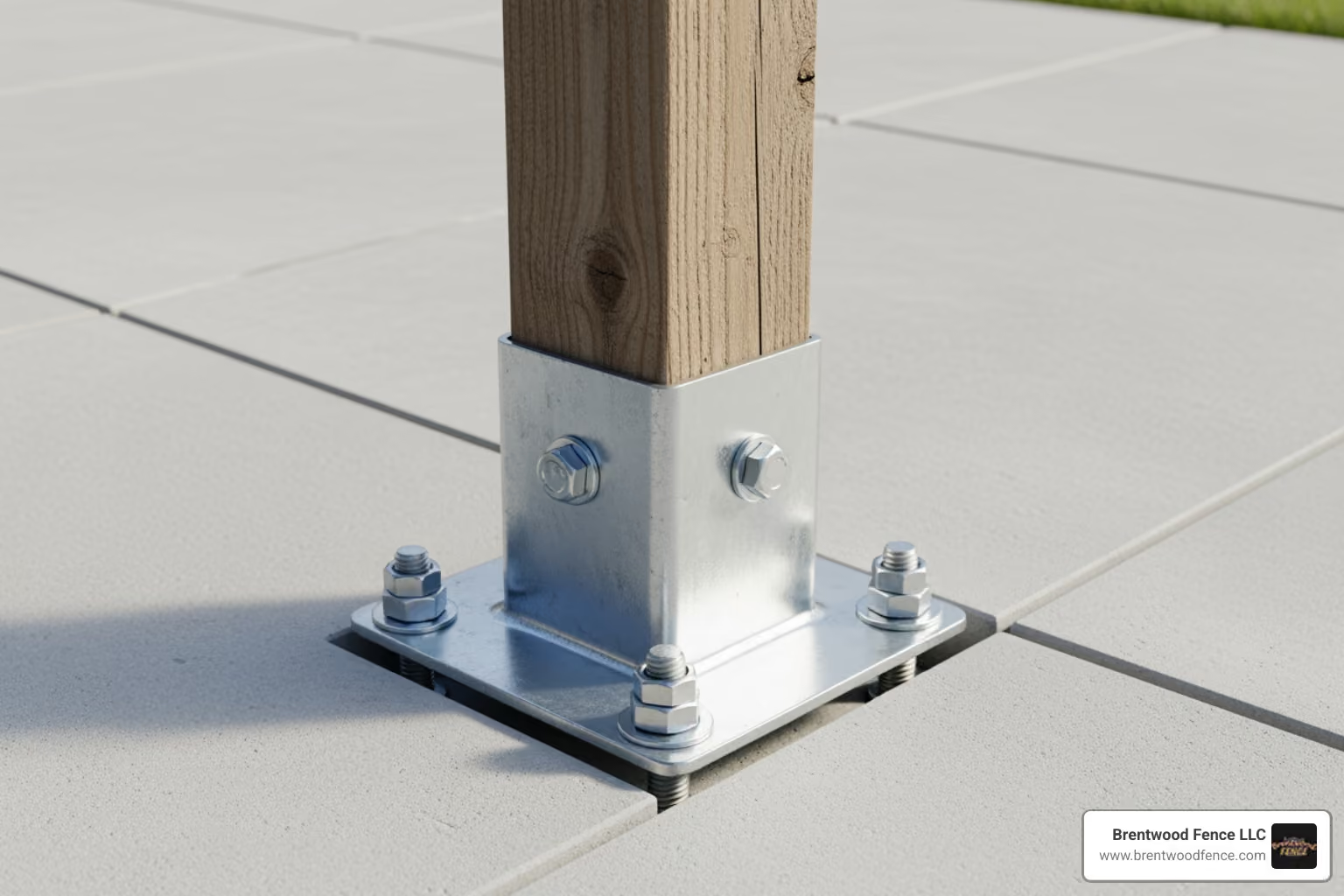
Above ground fence posts offer a no-dig solution for homeowners who need fencing on concrete patios, decks, or areas where traditional excavation isn't possible. Instead of burying posts in the ground, these systems use surface-mounted brackets and anchors to secure fence posts directly to hard surfaces.
Quick Answer: What are above ground fence posts?
Definition: Fence posts mounted to existing surfaces using brackets and anchors rather than being buried in the ground.
Best for: Decks, patios, concrete surfaces, rooftops, and areas where digging is prohibited.
Key limitation: Less stability than in-ground posts; not suitable for tall privacy fences or high-wind areas.
Typical cost: Higher hardware costs but lower labor costs compared to traditional installation.
Installing fence posts correctly is the foundation of any successful fencing project. But what happens when you can't dig? Whether you're dealing with a concrete patio, a rooftop garden, or bedrock just below the surface, traditional post installation simply isn't an option.
Surface-mounted fence posts solve this problem by anchoring directly to existing hard surfaces using specialized brackets. This approach eliminates excavation, making it possible to install fencing in locations that would otherwise be impossible or prohibitively expensive.
However, this convenience comes with trade-offs. Surface-mounted posts don't provide the same angular support as buried posts, making wind load a critical concern. Not all fence types are suitable for this method.
This guide will help you understand when above ground posts are a good choice, the best materials and methods to use, and the limitations to consider before installation.
When to Choose Above-Ground vs. In-Ground Posts
When planning a fence project, one of the first decisions is whether to opt for traditional in-ground posts or the increasingly popular above ground fence posts. While the convenience of a no-dig solution is tempting, it's crucial to understand the fundamental differences in stability, application, and long-term performance.
Our professional assessment considers various factors, from soil conditions to local building codes, to ensure your fence is not only beautiful but also durable and compliant. For a deeper dive into professional installation, you can learn more about professional fence installation 101.
Here’s a comparison to help illustrate the core differences:
Feature
In-Ground Posts
Above Ground Fence Posts
Stability
Maximum stability. Set deep in the ground with concrete for superior resistance to wind and impact.
Lower stability. Relies on the strength of the surface, bracket, and anchors. Less resistant to lateral forces.
Best Use-Case
All fence types, especially tall privacy fences, security fences, and fences in high-wind areas.
Decorative or low-height fences on existing hardscapes like concrete patios, decks, and rooftops.
Installation
Requires excavation, concrete mixing, and setting time. More labor-intensive.
No digging required. Faster installation on suitable surfaces, but requires precise anchoring.
Cost
Lower material cost per post (concrete is cheap) but higher labor costs for digging.
Higher material cost per post (specialized brackets and anchors) but lower labor costs.
Wind Resistance
Excellent. The deep footing provides robust defense against wind load.
Limited. Not recommended for solid panels in windy areas due to the "sail effect."
Above ground fence posts present a compelling alternative, but understanding their advantages and disadvantages is essential.
Pros of Surface Mounting:
No Excavation Required: The primary benefit is avoiding digging, which is ideal for rocky soil, clay, or existing concrete surfaces. It bypasses issues with the frost line common in New Hampshire and Maine.
Installation on Hardscapes: Uniquely suited for patios, decks, concrete pads, and rooftops where digging is impossible.
Less Ground Disturbance: Minimal disruption to landscaping, irrigation, or underground utilities.
Faster Installation: Attaching a surface-mounted post is generally quicker than digging and setting a traditional post in concrete.
Flexibility for Temporary Fencing: A convenient solution for temporary barriers that can be installed and removed without permanent ground alteration.
Cons of Surface Mounting:
Reduced Stability and Wind Load Capacity: This is the main drawback. A post anchored only at its base lacks the deep support of an in-ground post, making it vulnerable to wind load, especially with solid fence panels.
Not Suitable for All Fence Types: Generally not recommended for tall, solid privacy fences or heavy-duty security fences that require robust anchoring.
Potential Failure Points: The anchors, bracket, and post-to-bracket connection are critical failure points under stress. Corrosion can also compromise integrity over time.
Aesthetic Considerations: Visible brackets may not align with certain aesthetic preferences.
Surface Integrity Requirements: The existing surface must be structurally sound to hold the anchors and withstand the forces exerted by the fence.
In what situations are surface-mounted posts a suitable option?
Above ground fence posts shine in specific scenarios where traditional digging is impractical or impossible. Our team assesses each project to determine if surface mounting is the right fit for your needs in New Hampshire, Massachusetts, or Maine.
Here are the situations where we often recommend surface-mounted posts:
Decorative Fences: For aesthetic fences where wind load is minimal, such as a picket fence outlining a garden bed on a patio.
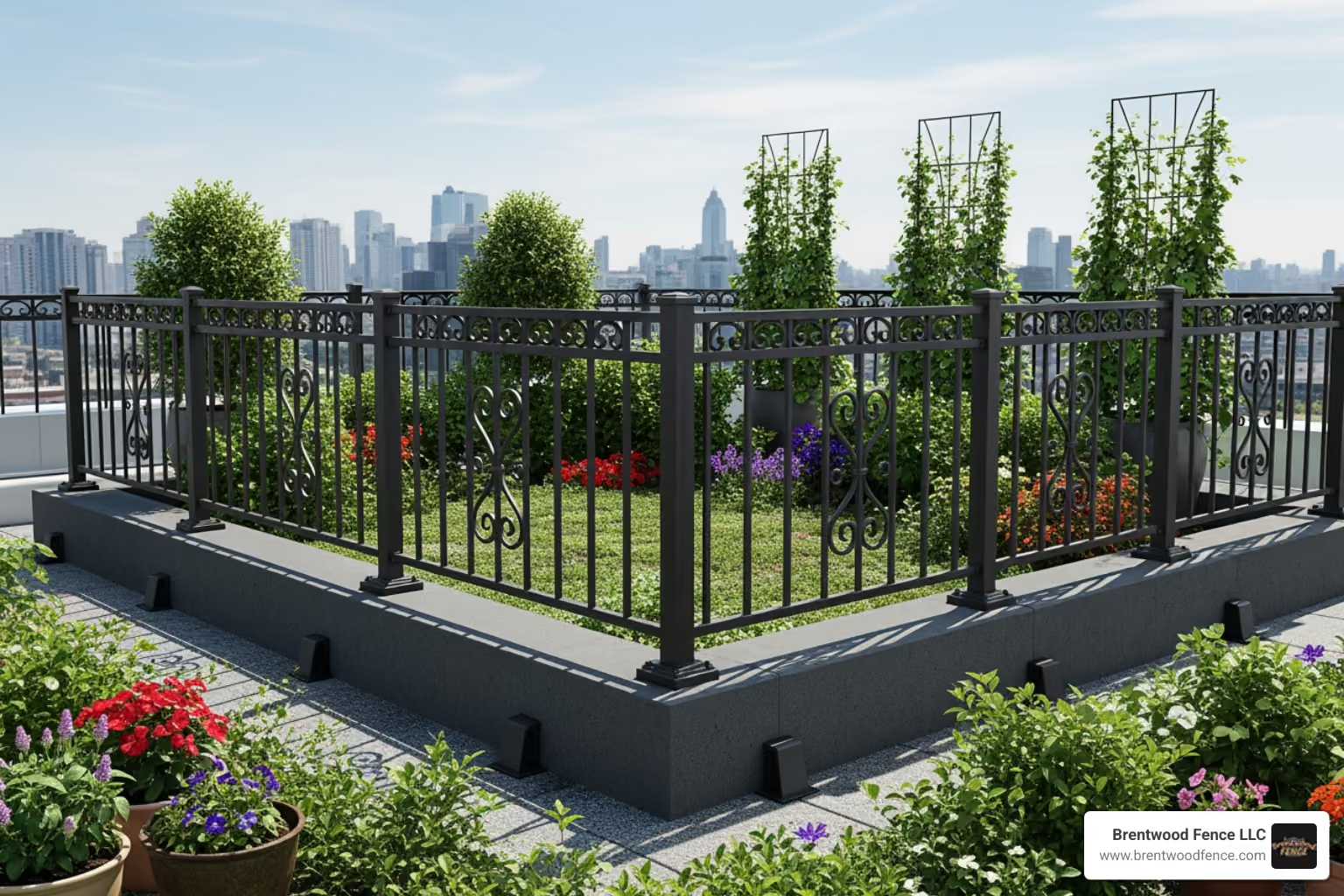
Low-Height Fences and Railing Systems: The lower the fence, the less leverage wind can exert, making surface mounting more viable for short decorative panels or deck railings.
Areas Where Digging is Prohibited or Impossible: The classic use case for properties with solid rock, existing concrete slabs, paved patios, or rooftops.
Temporary Event Fencing: Allows for quick setup and removal without leaving permanent marks.
Defining Spaces on Hardscapes: An effective way to delineate an outdoor dining area or a pool deck without breaking up the existing surface.
Best Practices for Installing Above Ground Fence Posts
When we install above ground fence posts, our focus is on maximum stability and longevity. This involves careful hardware selection, choosing the right post material, and employing professional anchoring techniques. While "no-dig" sounds simple, the precision required for surface mounting is paramount.
For projects involving wood fence panels and metal posts, we ensure every component is perfectly matched and securely installed. You can read more about installing wood fence panels with metal posts.
What are the best materials and methods for attaching fence posts above ground?
The success of an above-ground fence installation hinges on the quality of materials and the precision of the attachment method. We use only high-grade components designed to withstand the elements and the forces exerted on the fence.
Here are the key materials and methods we employ:
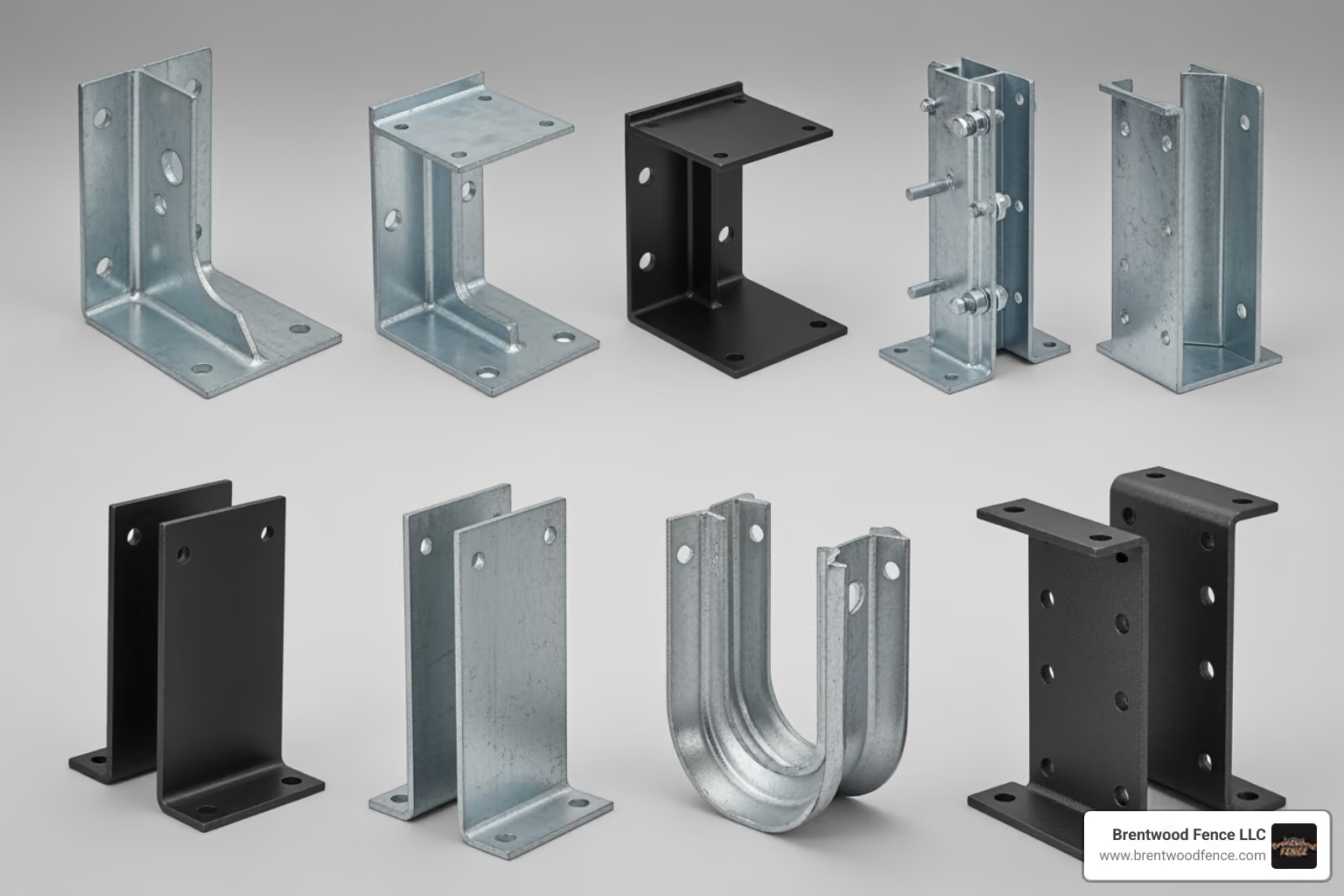
Steel Post Base Brackets/Surface Mount Flanges: These heavy-duty steel brackets secure the post to the surface. They come in various designs, with thicker gauge steel providing a stronger connection.
Anchors for Concrete:
Wedge Anchors: Heavy-duty mechanical anchors ideal for solid concrete. Tightening the nut expands a wedge at the bottom for a strong, permanent hold.
Sleeve Anchors: Versatile anchors that work well in concrete, brick, or block by expanding to grip the material.
Lag Shields (with Lag Screws): Shields are inserted into a pre-drilled hole, and a lag screw is driven in, expanding the shield for a secure grip.We always ensure anchors are sized for the bracket and anticipated load, penetrating deep enough for an optimal hold.
Post Materials:
Aluminum Posts: Lightweight, strong, and corrosion-resistant, aluminum is an excellent choice for surface mounting. It's often powder-coated for extra durability.
Vinyl Posts: A good, low-maintenance option for decorative or low-height fences. They are typically hollow and require a snug-fitting bracket and often internal reinforcement.
Lighter Wood Posts: For decorative applications, lighter wood posts can be used, but they must be properly treated and fit precisely into robust steel brackets.
Lighter Fence Panels: To minimize wind load, we pair above ground fence posts with lighter, more open fence panels. This reduces stress on the brackets and anchors.
When selecting an anchor, we consider the thickness and condition of the concrete. The cost of each post base, including the bracket and anchors, can be around $15 or more, making quality a priority.
Which fence types are best for above ground fence posts?
Given the stability limitations, we carefully select fence types that are best suited for above ground fence posts. The key is to minimize wind resistance and overall weight.
Here are the fence types that work best with surface mounting:
Picket Fencing: The open design allows wind to pass through, significantly reducing the "sail effect." This makes them an excellent choice for decorative borders on patios and decks.
Post and Rail Fencing: The open nature of post and rail designs offers minimal wind resistance and is great for decorative purposes on hard surfaces.
Short Decorative Panels: Any fence panel under 4 feet high with an open design (e.g., lattice, decorative metalwork) is a good candidate, as the reduced height lessens wind leverage.
Aluminum Fences: These fences are lightweight and often feature an open, ornamental design, making them an ideal choice for surface mounting.
Vinyl Fences (with open designs): When used in picket or semi-private styles, lightweight vinyl fences can be successfully surface-mounted. Solid vinyl privacy panels should be avoided.
What to Avoid:
We strongly advise against using above ground fence posts for:
Tall, Solid Privacy Panels: These act like large sails, creating immense stress on the brackets and anchors. The leverage from a tall, solid panel can easily cause failure, especially in the strong winds we experience in New Hampshire, Massachusetts, and Maine.
Heavy-Duty Security Fences: These require the maximum stability that only in-ground post installation can provide.
Fences in High-Wind Areas: Even open-style fences may require in-ground posts for long-term stability if the property is exposed to frequent strong winds.
Choosing the right post material and style is crucial for a successful and durable installation.
Ensuring Stability: Wind, Weather, and Structural Integrity
When installing above ground fence posts, our primary concern is the integrity of the surface connection. A fence is only as strong as its weakest link, and for surface-mounted systems, that link is the bracket-to-surface attachment. This is where leverage, wind load, and material science come into play.
Regular maintenance and timely repairs are also critical for the longevity of any fence. For reliable assistance, consider our fence repair services in NH, MA, ME.
How does weather affect the stability of above-ground fence posts?
Weather is a formidable opponent for any fence, but its impact is particularly critical for above ground fence posts. Without the deep, stabilizing effect of the earth, these posts are more vulnerable to the elements.
Wind Load Stress: This is the biggest concern. A solid fence panel acts like a sail, creating immense lateral force on the post, bracket, and anchors. This is a significant factor in New Hampshire, Massachusetts, and Maine, where high winds can cause surface-mounted systems to fail if not properly designed for open-style fences.
Uplift Forces: Strong winds don't just push sideways; they can also create uplift, trying to pull the posts off the mounting surface. Anchors must be properly sized and installed to withstand these pulling forces.
Storm Damage Risk: The combination of wind load and uplift makes above ground fence posts more susceptible to storm damage if not professionally specified and installed.
Solid Panels vs. Open-Picket Styles: This distinction is vital. Solid panels are wind magnets. Open-picket, rail, or aluminum fences allow wind to pass through, drastically reducing the force on the posts. We almost always recommend open designs for above-ground applications.
Freeze-Thaw Cycles on Anchors: In our New England climate, water can penetrate micro-cracks around anchors, freeze, and expand. This can slowly degrade the concrete's grip, leading to anchor loosening over time.
To counteract these weather challenges, we carefully calculate potential wind loads, select robust hardware, and ensure the surface material can handle the stress.
What are the potential failure points of a surface-mounted fence?
Understanding where an above ground fence post system can fail is crucial for a professional installation. Unlike in-ground posts, surface-mounted posts concentrate all stress at specific points.
Here are the critical potential failure points we address:
Anchor Failure: This is a common and catastrophic failure. If anchors are improperly installed, undersized, or the surface material is weak, they can pull out, compromising the entire post.
Bracket Bending or Breaking: The steel post base bracket can fail if it's too thin or made of inferior material. Under extreme wind, the bracket can bend or snap.
Post-to-Bracket Connection Weakness: The connection between the post and the bracket must be robust. If fasteners are too small or improperly installed, the post can wobble or detach from the bracket.
Surface Material Cracking: The underlying surface must be strong enough to withstand the concentrated forces from the anchors. If the concrete is old or thin, it can crack, leading to a loss of holding power.
Corrosion of Hardware: Exposed steel brackets and anchors can rust, weakening the metal and leading to failure. We use corrosion-resistant hardware to mitigate this risk.
Our professional approach involves a thorough assessment of these potential vulnerabilities to ensure a resilient installation. For comprehensive guidance on post issues, you can consult a complete guide to replacing fence posts.
Navigating Costs, Codes, and Decorative Uses
When considering above ground fence posts, cost, local regulations, and the fence's intended purpose are all vital. While the "no-dig" aspect offers convenience, it introduces a different set of financial and legal factors that we help our clients steer in New Hampshire, Massachusetts, and Maine.
What are the cost implications versus in-ground posts?
The cost comparison between above ground fence posts and traditional in-ground posts involves a shift in where the expenses lie.
Bracket and Anchor Costs: Above-ground installations have higher upfront material costs. Each post needs a specialized steel bracket and robust anchors, which are more expensive than the concrete used for in-ground posts.
Reduced Labor for Digging: This is the primary cost-saving aspect. Eliminating excavation, especially in rocky terrain like parts of New Hampshire, can significantly reduce labor hours and equipment costs.
Overall Project Cost Comparison: For a simple, low-height decorative fence on an existing concrete pad, the overall cost might be comparable to or less than in-ground due to labor savings. For more robust fences, the higher material cost can sometimes make it more expensive.
Long-Term Repair Costs: Replacing a damaged surface-mounted post avoids excavation but may require specialized tools for anchor removal and replacement. Understanding potential long-term repair costs is also part of a professional assessment.
We weigh the initial investment against the site conditions and desired outcome to provide the most effective and economical solution.
What are the legal or code considerations for using above-ground posts?
Navigating local building codes is a critical step for any fence installation, and regulations for above ground fence posts can vary significantly across New Hampshire, Massachusetts, and Maine.
Local Building Codes: Municipal codes regulate fence height, materials, and anchoring methods. Surface mounting may require special permits or engineering approval to ensure it meets safety and structural standards. Always check with your local building department.
Municipal By-laws: Beyond structural codes, by-laws often dictate aesthetic requirements and property line setbacks. It's important to check your specific town's by-laws or call the municipality directly.
Height Restrictions: Fences almost always have height restrictions, which are typically measured from the ground level to the highest point of the fence.
Property Line Setbacks: Regulations usually require fences to be set back a certain distance from property lines and sidewalks.
Pool Safety Regulations: A fence enclosing a pool must comply with stringent safety barrier codes, which may be more challenging to meet with some surface-mounted systems.
Consulting Local Authorities: Our team always handles or recommends consulting with local authorities in your town (e.g., Exeter NH, Manchester NH, Concord NH) before beginning any project. This ensures your fence is fully compliant.
For an example of how a city might regulate fences, you can see the fence by-laws in Ottawa. This is an example, and your local regulations in New England will have their own specific details.
Conclusion: Making the Right Choice for Your Property
Choosing the right installation method is critical for your fence's stability and longevity. While in-ground posts are the standard for strength, above ground fence posts offer an invaluable solution for specific challenges.
Surface mounting eliminates excavation, which is ideal for hardscapes or rocky terrain. However, it offers less stability against wind, especially with solid fence panels. This requires careful consideration of fence type, height, and local weather conditions in your New Hampshire, Massachusetts, or Maine property.
When to use Above Ground Fence Posts:
On existing concrete patios, decks, or rooftops where digging is impossible.
For decorative, low-height, picket, or post-and-rail systems that allow wind to pass through.
For temporary fencing needs.
When a professional assessment confirms the surface is adequate and the design minimizes wind resistance.
When to insist on In-Ground Posts:
For tall, solid privacy fences or heavy-duty security fences that require maximum stability.
In areas prone to high winds or severe weather.
When the ground allows for proper deep post installation, which provides superior support.
For any fence where long-term, unyielding stability is the top priority.
The decision between in-ground and above ground fence posts should be made with a clear understanding of your property's conditions, your goals, and local building codes. Our expertise at Brentwood Fence LLC lies in providing professional assessments and installations customized to these considerations. We're here to ensure your fence is not only beautiful but also built to last.
For expert guidance on your fencing project and professional installation services in New Hampshire, Massachusetts, and Maine, don't hesitate to Contact us for professional wood fencing installation services. We're here to help you make the right choice for your property.