Blog Content

31
Jul
2026

A chain link fence base plate is the hardware that connects a fence post directly to a concrete surface — no digging required.
Quick answer for mounting a chain link fence to concrete:
If you have an existing concrete pad, driveway, or slab, a base plate lets you skip the excavation entirely. That makes it a popular choice for driveways, commercial lots, rooftop enclosures, and any surface where digging simply isn't practical.
Over 65% of chain link fence failures are linked to inadequate base support. The right base plate — properly anchored — is what keeps your fence standing through wind, load, and time.
This guide walks you through everything a property owner needs to know: how base plates work, which type to choose, and what professional installation actually looks like.
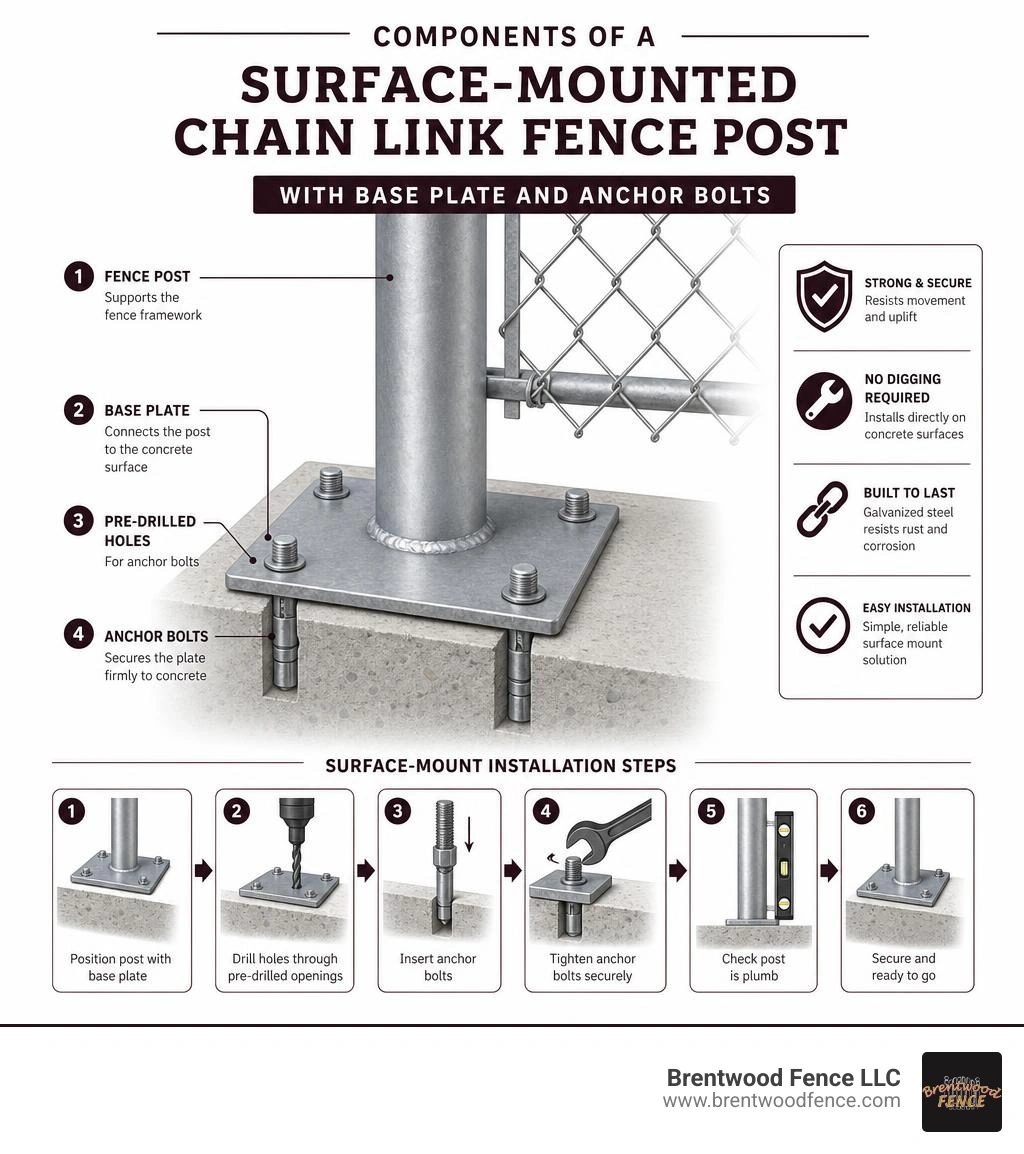
When we design a perimeter security system, we are often faced with surfaces where digging post holes is impossible. Whether we are working on a commercial parking lot in Manchester, NH, a rooftop in Boston, or a concrete driveway in Haverhill, MA, we cannot simply excavate three feet into the ground to set a post in wet concrete. This is where the chain link fence base plate (also commonly referred to as a floor flange or surface mount) becomes the unsung hero of the installation.
The primary function of a base plate is to transfer the lateral and vertical loads of the fence post directly into a solid concrete slab or structural steel beam. In the United States, chain link fence installations account for approximately 30% of all commercial fencing projects. A significant portion of these projects require surface mounting on concrete slabs, retaining walls, or structural decks.
Without a high-quality post-to-slab connection, a fence is highly vulnerable to wind loads, physical impacts, and structural sagging. When we select the right Chain Link Fence Materials, matching the strength of the base plate to the structural demands of the fence is our top priority. The base plate distributes the leverage exerted on the top of the fence post across a wider surface area on the concrete, preventing the post from shearing or pulling out under pressure.
Choosing the right base plate requires understanding the structural demands of your site and the local climate. Here in New England, our coastal winds and brutal winter freeze-thaw cycles mean we must prioritize corrosion resistance and heavy-duty materials.
Below is a comparison of the primary types of base plates used in professional installations:
Regardless of the design, we always recommend hot-dip galvanized finishes. Galvanization coats the steel in a protective layer of zinc, which prevents the moisture and road salts common in New Hampshire, Massachusetts, and Maine from causing premature rust and structural failure. For temporary layouts, heavy-duty options like the Chain Link Fence Panel Base (Galvanized) - Sandbaggy provide excellent stability without needing to drill into the underlying surface.
Pressed steel base plates are the go-to choice for most residential and light industrial projects. These components are stamped from high-quality steel sheets and galvanized to resist the elements.
A standard option for residential backyards and light commercial boundaries is the 4" x 4" x 1/4" Galvanized Plate For Chain Link Fences. These plates are lightweight yet sturdy, typically featuring pre-drilled corner holes for anchor bolts. They are designed to fit standard post sizes (such as 1-7/8" or 2-3/8" outer diameter) and offer a clean, low-profile look once bolted to a concrete patio or pool deck.
For heavy industrial applications, bridge fencing, or high-security commercial installations, we turn to heavy-duty weldable plates. These plates are typically thicker—ranging from 1/4 inch to 1/2 inch—and are manufactured from structural-grade steel.
Products like the Chain Link Post Floor Flange Plate - Weldable, Galvanized are designed to be welded directly to the bottom of a heavy-gauge steel post before the assembly is anchored to the concrete. By welding the post to the plate, we eliminate any play or movement between the two components, creating a highly rigid, single-piece structural element. This level of strength is essential for Heavy Chain Link Fencing NH MA ME installations that must withstand high winds, heavy gates, or potential vehicle impacts.
Malleable cast iron flanges offer a highly durable alternative to pressed steel. These bases often utilize integrated set screws, allowing us to slide the fence post into the collar of the flange and tighten it down without welding. For homeowners looking to mount a post to a wood deck or concrete porch, options like the 2-3/8" Chain Link Post Deck Mount at Menards® provide an accessible, reliable solution.
For commercial construction sites, public events, or seasonal enclosures in Portsmouth, NH, or Portland, ME, temporary bases are highly practical. These heavy, wide steel stands—such as the Chain Link Fence Base Plate - Fence Feeding | SONCO or the Chain Link Fence Base - Sturdy Foundation for Secure Perimeters - Walmart.com—allow us to set up stable runs of chain link panels quickly. They sit flat on the ground and can be weighted with sandbags, keeping the perimeter secure without damaging the underlying pavement.

Installing a chain link fence base plate requires precision. Because concrete does not yield like soil, there is very little room for error. A single misplaced anchor bolt or an out-of-plumb post can compromise the integrity of the entire fence line.
When we perform a Metal Chain Link Fence Install NH MA ME, our installation teams follow a strict, professional protocol to ensure structural integrity:

To ensure your surface-mounted fence stands strong for its full 15-to-20-year expected lifespan, several critical factors must be evaluated during the planning phase:
For more tips on choosing the right materials for our regional climate, explore our comprehensive guide on Chain Link Fencing NH MA ME.
Yes, absolutely. By using a chain link fence base plate, we can mount fence posts directly to the surface of concrete slabs, driveways, or retaining walls. This surface-mounting technique relies on heavy-duty concrete anchor bolts to secure the plate, completely eliminating the need to excavate and pour wet concrete footings.
The recommended bolt size depends on the thickness of the base plate and the height of the fence. For standard residential and light commercial fences (up to 6 feet tall), we typically use 3/8-inch or 1/2-inch diameter concrete wedge anchors. The anchors should penetrate the concrete to a minimum depth of 3 to 4 inches to ensure maximum shear and pull-out strength.
When a galvanized post is welded to a base plate, the extreme heat burns away the protective zinc coating around the weld zone. To prevent rust, the welded area must be cleaned of slag with a wire brush and immediately coated with a high-quality, zinc-rich cold-galvanizing spray. This spray provides sacrificial anode protection, preventing moisture from attacking the raw steel.
Securing a chain link fence to concrete is a highly effective way to protect your property without the mess of excavation. However, because surface-mounted fences rely entirely on the strength of a few anchor bolts and a steel flange, there is zero margin for error. Over 65% of chain link fence failures are directly attributed to inadequate base plate support or improper anchoring.
To ensure your fence remains stable, safe, and legally compliant with local New England building codes, we highly recommend working with experienced professionals. At Brentwood Fence LLC, we bring years of local expertise to every project across New Hampshire, Massachusetts, and Maine.
Ready to build a secure, long-lasting perimeter? Contact us today to learn more about our professional Chain Link Fencing Installation Services and get a custom quote for your property.



Copyright 2022 Brentwood Fence | All Rights Reserved | Sitemap | Website by Plumb Development a Digital Marketing Agency