Breaking Down the Cost of Fence and Installation for Smart Homeowners

16

Sep

2026

Author:

Rob Thibeault

Plan the Cost of Fence and Installation Before You Buy

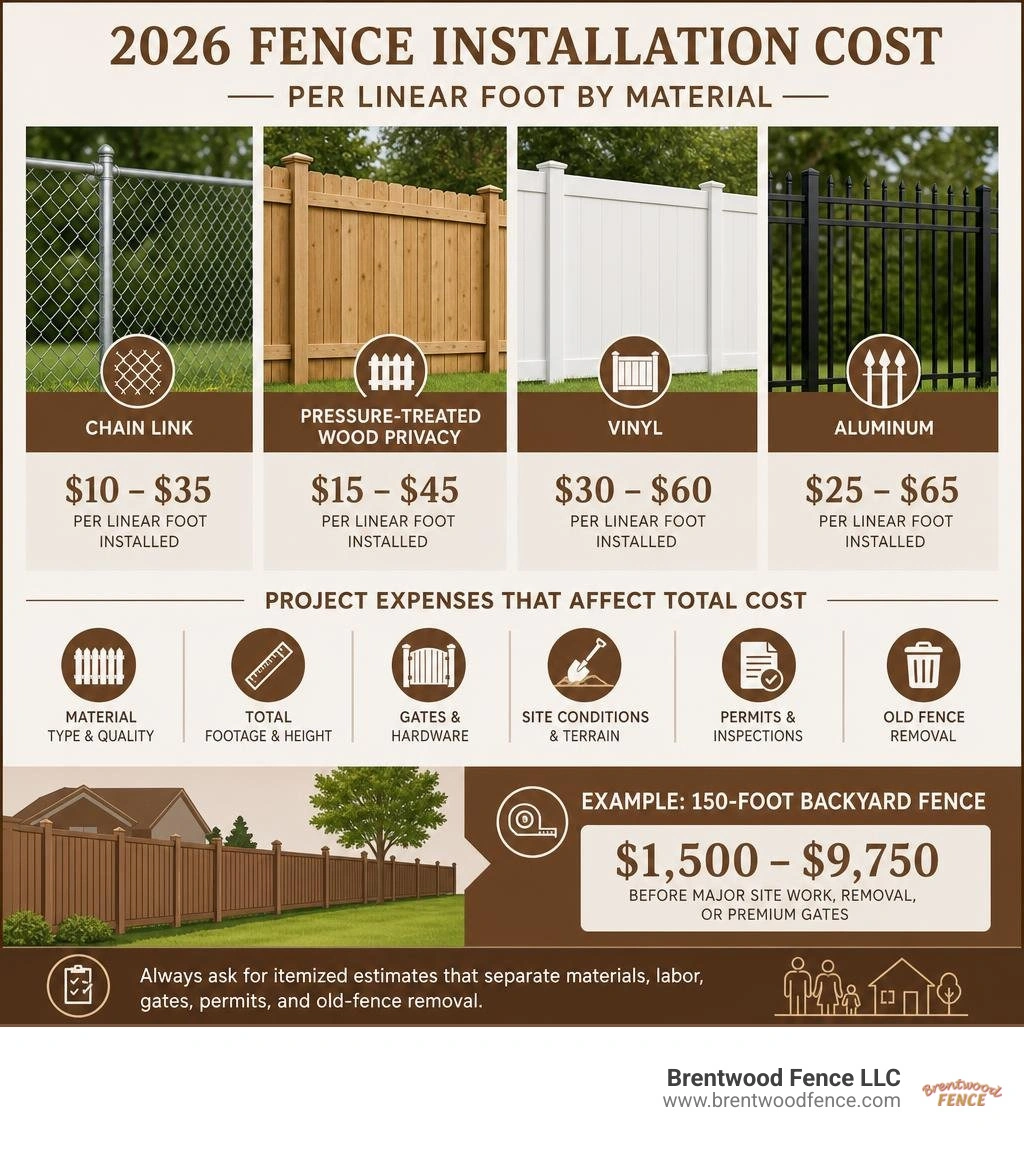
In 2026, most professionally installed residential fences cost about $12 to $60 per linear foot, with many projects falling near $20 to $45 per foot. The final cost of fence and installation depends most on material, height, total footage, gates, and site conditions.

For a quick starting budget:

  • Chain link: $10-$35 per linear foot installed
  • Pressure-treated wood privacy: $15-$45 per linear foot installed
  • Vinyl: $30-$60 per linear foot installed
  • Aluminum: $25-$65 per linear foot installed

A 150-foot backyard fence can range from roughly $1,500 to $9,750, before major site work, removal, or premium gates. Ask for itemized estimates that separate materials, labor, gates, permits, and old-fence removal. That makes it far easier to compare contractors fairly.

A new fence is more than a line around the yard. It can improve privacy, security, curb appeal, and, when it is well maintained, may add 1% to 5% to home value. I am Rob Thibeault, and this guide will help you understand the numbers behind a durable, professionally installed fence.
‍

2026 fence installation cost per linear foot by material and project expenses infographic

Related content about cost of fence and installation:

Average Cost of Fence and Installation Per Linear Foot in 2026

When planning an outdoor project across New England communities like Portsmouth NH, Manchester NH, or Haverhill MA, understanding the base pricing per linear foot is the foundation of an accurate budget. Across the country, the typical homeowner pays between $20 and $45 per linear foot for professional installation, though the broader market spans $10 to $65 per foot depending on structural specifications and material availability.

To establish an initial baseline for your property, you can reference an online Fence Cost Calculator (2026) or consult our detailed average fence cost per linear foot guide.

Fence Material Type Installed Cost Per Linear Foot (2026) Typical 150-Foot Project Cost Primary Strengths & Characteristics
Galvanized Chain Link $10 – $25 $1,500 – $3,750 Most affordable, excellent pet containment
Black Vinyl-Coated Chain Link $15 – $35 $2,250 – $5,250 Clean appearance, corrosion resistance
Pressure-Treated Wood Pine $15 – $35 $2,250 – $5,250 Classic charm, economical privacy
Western Red Cedar $25 – $48 $3,750 – $7,200 Natural rot resistance, minimal warping
Virgin Vinyl (PVC) $30 – $60 $4,500 – $9,000 Zero painting/staining, long lifespan
Ornamental Aluminum $25 – $65 $3,750 – $9,750 Elegant aesthetics, zero rust, pool safety
Wrought Iron / Steel $30 – $100 $4,500 – $15,000 Maximum perimeter security, historic style
Composite Pickets $35 – $65 $5,250 – $9,750 Dense, ultra-durable, premium appearance

The average American residential fencing job runs approximately 150 to 165 linear feet, landing most homeowners between $3,200 and $6,800 for standard perimeter enclosures. However, regional factors play a notable role. In coastal and northern climates throughout Maine, New Hampshire, and Massachusetts, labor rates and building codes for frost-depth footings generally put projects 10% to 20% above southern national averages. Exploring a dedicated Fence Installation Cost Guide 2026 will help you budget for these climate-driven adjustments.

Fencing Material Breakdown: Comparing Upfront and Long-Term Expenses

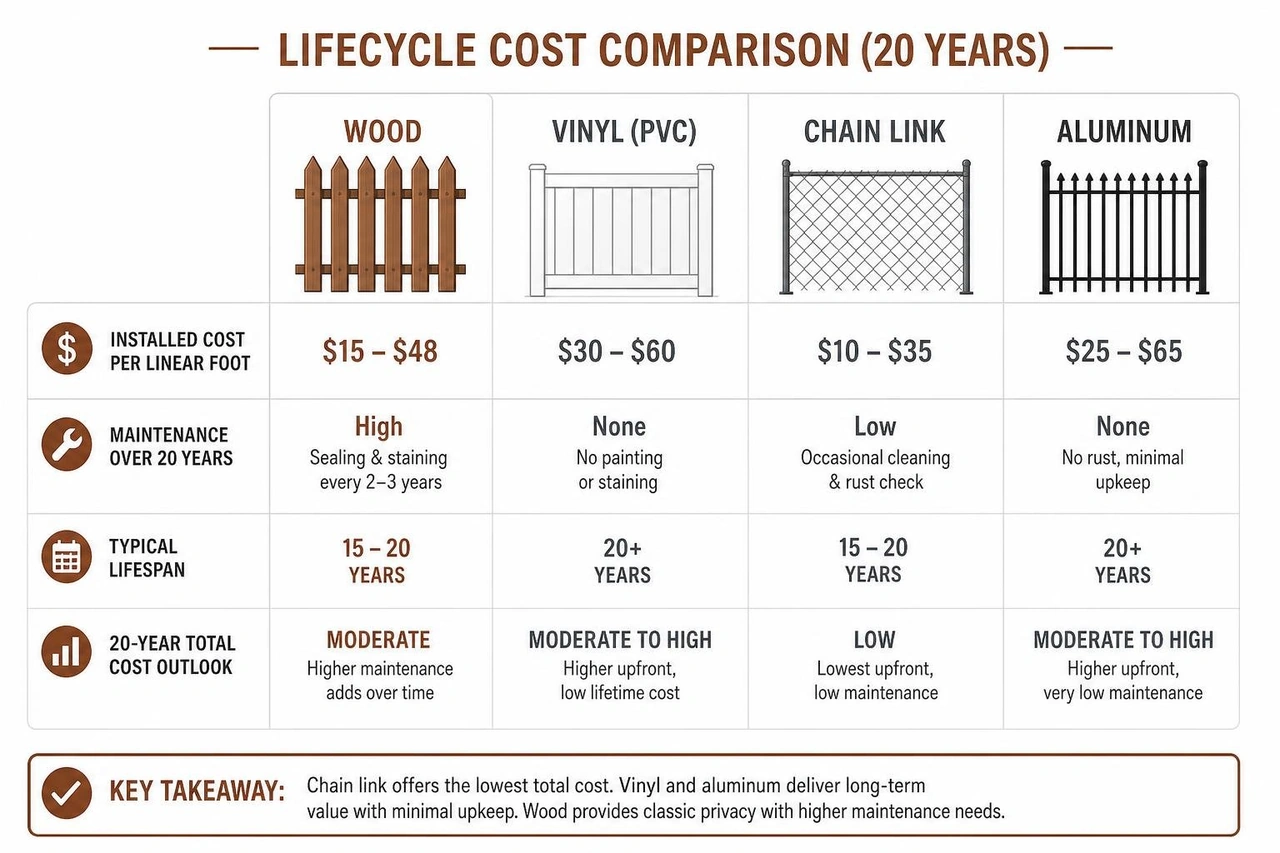
The material you select determines not just your initial invoice, but your total cost of ownership over the next twenty years. Some materials cost less on day one but demand recurring upkeep, while premium alternatives require zero maintenance after the professional crew leaves the job site.
‍

lifecycle cost comparison across wood vinyl chain link and aluminum fencing

Wood and Cedar Fencing: Balancing Privacy, Charm, and Maintenance

Wood remains one of the most beloved choices for residential boundaries, representing roughly 45% of the residential market.

  • Pressure-Treated Pine: This is the most cost-effective entry point for solid privacy panels, typically running $15 to $35 per linear foot installed. Pine boards are chemically infused to resist insect damage and moisture decay. However, pressure-treated lumber requires routine sealing and staining every two to three years to prevent warping and cracking under harsh New England sun and snow. Review our comprehensive wood fence cost guide 2026 for material specifications.
  • Cedar Fencing: Western Red Cedar naturally resists rot, insect infestation, and moisture without heavy chemical treatments, pricing between $25 and $48 per foot installed. Cedar features tight grain structures that resist splitting and weathering. You can read more about New England regional material rates in our breakdown of the cost of wooden privacy fence NH MA ME.

When budgeting for a natural timber perimeter, factor in maintenance: professional staining averages $1.50 to $3.00 per linear foot every few seasons. Over a 15-year period, regular upkeep can add $1,500 to $3,000 to the lifecycle cost of a 150-foot wood fence.

Vinyl and Composite Fencing: Low-Maintenance Upfront Investments

Vinyl (PVC) and composite fences represent high-performance, low-maintenance alternatives to traditional lumber. Quality vinyl panels run between $30 and $60 per linear foot installed.

While vinyl carries an upfront premium of 40% to 70% over standard pressure-treated pine, it eliminates staining, repainting, and board replacement. Over a 10-to-15-year horizon, vinyl often becomes the more economical choice.

To ensure durability against freezing temperatures in towns like Concord NH and Dover NH, professional installers use heavy-duty virgin vinyl (0.150-gauge or thicker) with UV inhibitors. For expanded numbers on modern synthetic options, check our vinyl fence cost complete guide and the dedicated cost to have vinyl fence installed resource.

Metal options cover the full spectrum from utilitarian budget enclosures to architectural perimeter designs:

  • Galvanized Chain Link: At $10 to $25 per linear foot installed, galvanized chain link is the most economical way to enclose a yard for pets or children. Adding an extruded black vinyl coating raises the rate to $15–$35 per foot, providing rust resistance and blending into landscaping. Review our chain link fence cost guide 2026 for layout options.
  • Ornamental Aluminum: Aluminum fencing averages $25 to $65 per linear foot installed, delivering the classic look of wrought iron without corrosion risks. Powder-coated aluminum does not rust, making it ideal around swimming pools and coastal properties. Learn more in our guide on the cost of aluminum fence installed 2026.
  • Wrought Iron and Steel: Solid steel and iron structures offer unmatched strength and security, ranging from $30 to $100 per linear foot. They require specialized welders, heavy footings, and periodic rust touch-ups over their 50-plus-year lifespan.

Key Project Variables That Impact Overall Pricing

Every backyard is unique. Even two identical 150-foot fences can vary substantially in total price based on physical dimensions, terrain, and custom gate requirements.
‍

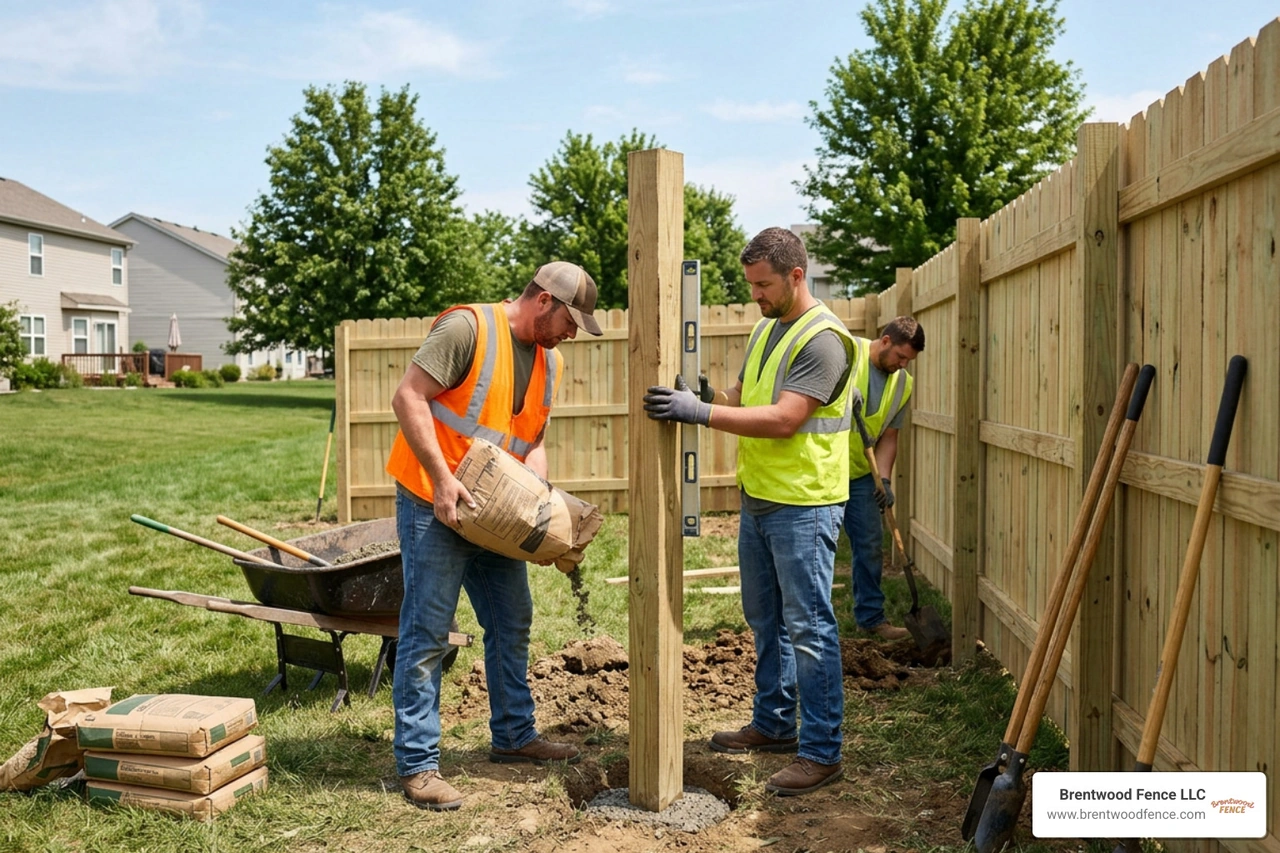
professional fence crew installing heavy duty fence posts with concrete footings

Total Footage, Height, and Gate Configuration Expenses

Linear footage is the starting point for calculating materials, but structural dimensions and access points quickly adjust the estimate:

  1. Panel Height: Standard residential heights are 4 feet for decorative/open boundaries and 6 feet for privacy screens. A 6-foot fence costs 25% to 35% more in materials and post anchoring than a 4-foot fence. Moving up to an 8-foot fence adds an extra 15% to 33% material premium and requires deeper post holes to resist wind shear.
  2. Standard Walk Gates: Entry gates represent dedicated fabrication and hardware installation. A standard 3-to-4-foot single walk gate adds $150 to $600 installed, depending on whether it matches wood, vinyl, or ornamental metal.
  3. Double-Drive Gates: Wider access points for mowers, trailers, or vehicles require reinforced heavy-duty posts set in enlarged concrete footings to prevent sagging. A double-drive gate adds $400 to $1,200 (or $800 to $2,500 for custom estate widths).

To evaluate these variables on smaller lots, read our breakdown of 100 ft privacy fence cost alongside our 6 ft privacy fence install cost guide.

Site Conditions, Slope, Soil, and Demo Requirements

The condition of your yard plays a major role in labor time and installation complexity. A flat, clear yard with sandy-loam soil is straightforward, while challenging ground conditions add specific line items:

  • Sloped Ground ($3 to $10 extra per linear foot): Fencing on hillsides requires racking (angling panels along the slope) or stepping (installing stepped sections with custom post heights). Stepping panels requires longer structural posts and custom hardware.
  • Rocky Soil and Tree Roots: Digging in heavy granite ledge, glacial till, or dense root systems requires powered hydraulic augers or manual pneumatic breakers. Contractors account for this via site inspection clauses.
  • Old Fence Removal and Disposal ($3 to $8 per linear foot): Tearing out an existing wooden or chain-link structure, extracting concrete plugs, and hauling debris to regional disposal facilities adds roughly $450 to $1,200 to a standard 150-foot project. For additional national metrics on site prep adjustments, consult the Fence Installation Cost 2026 industry report.

Labor Factors and Hidden Project Expenses

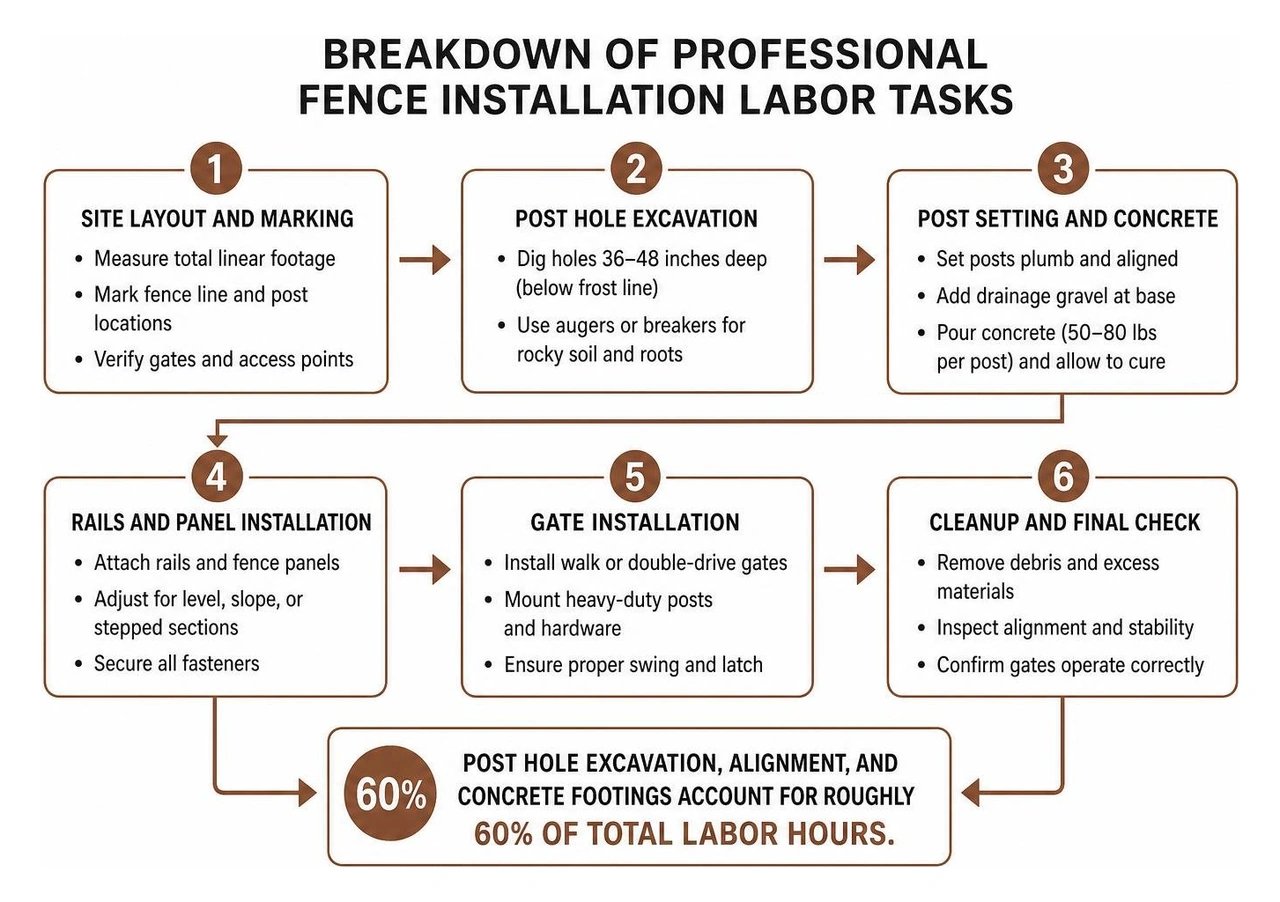
Understanding the balance between materials and labor helps homeowners review bids with confidence. On most professional fencing installations, labor accounts for roughly 50% of the total project investment.
‍

breakdown of professional fence installation labor tasks

How Professional Labor Rates Drive the Cost of Fence and Installation

A reliable fence depends on the integrity of its structural posts. Post hole excavation, alignment, and concrete footing installation account for roughly 60% of total labor hours.

In New England markets like Exeter NH and Derry NH, professional fence posts must be set between 36 and 48 inches deep—well below the regional frost line—to prevent frost heave from pushing posts out of alignment during winter freeze-thaw cycles. Each post requires 50 to 80 pounds of concrete mixed with proper drainage gravel at the base.

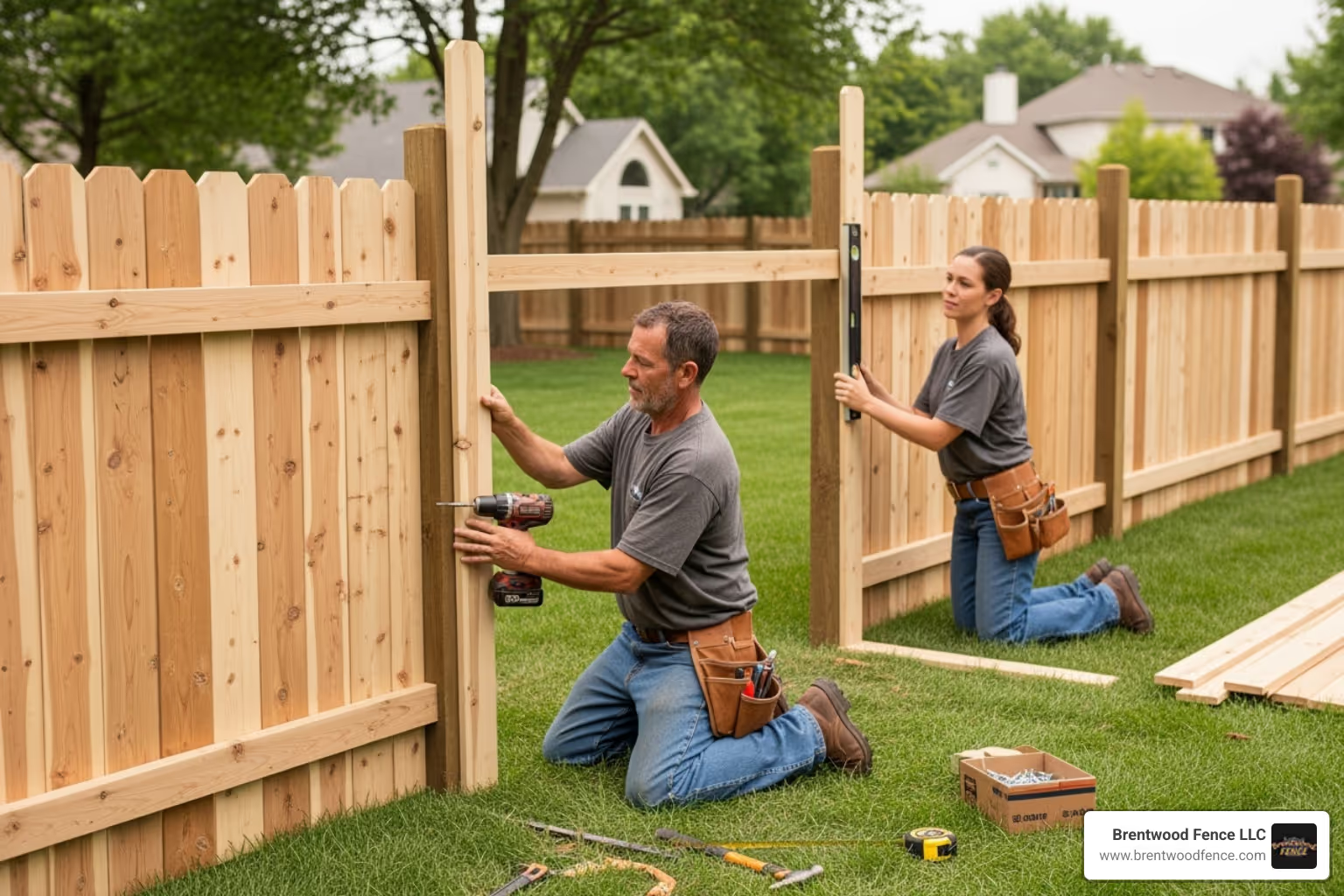
Skilled installation crews ensure every post is plumb, laser-aligned, and structurally sound against heavy regional wind and snow loads. To review localized crew rates, check our overview of the labor rate for fence install Manchester.

Permits, Utility Locates, and Hidden Expenses in the Cost of Fence and Installation

Before construction begins, several administrative and property factors must be addressed:

  • Municipal Building Permits ($50 to $250): Most cities and towns require a permit for fences over 6 feet tall, corner lot installations, or pool safety enclosures. Local municipal zoning codes enforce maximum front-yard heights (often 3 to 4 feet) and boundary setbacks.
  • Property Boundary Surveys ($300 to $700): Installing a fence even a few inches over a property boundary can lead to costly neighbor disputes and court-ordered relocation. If your boundary pins are not clearly marked, investing in a professional land survey protects your investment.
  • Utility Clearance (Call 811): Reputable fencing contractors always initiate an official Dig Safe (811) ticket before breaking ground. Striking underground electrical, gas, water, or fiber lines creates dangerous hazards and severe repair fines.
  • HOA Architectural Reviews: Homeowner associations frequently regulate fence material, color, height, and outward-facing panel orientation (the "good side" must face outward toward neighbors and public ways).

For an itemized regional analysis of these project variables, explore our guide on fence cost per linear foot NH MA ME.

Professional Installation vs. DIY: Value and Longevity Realities

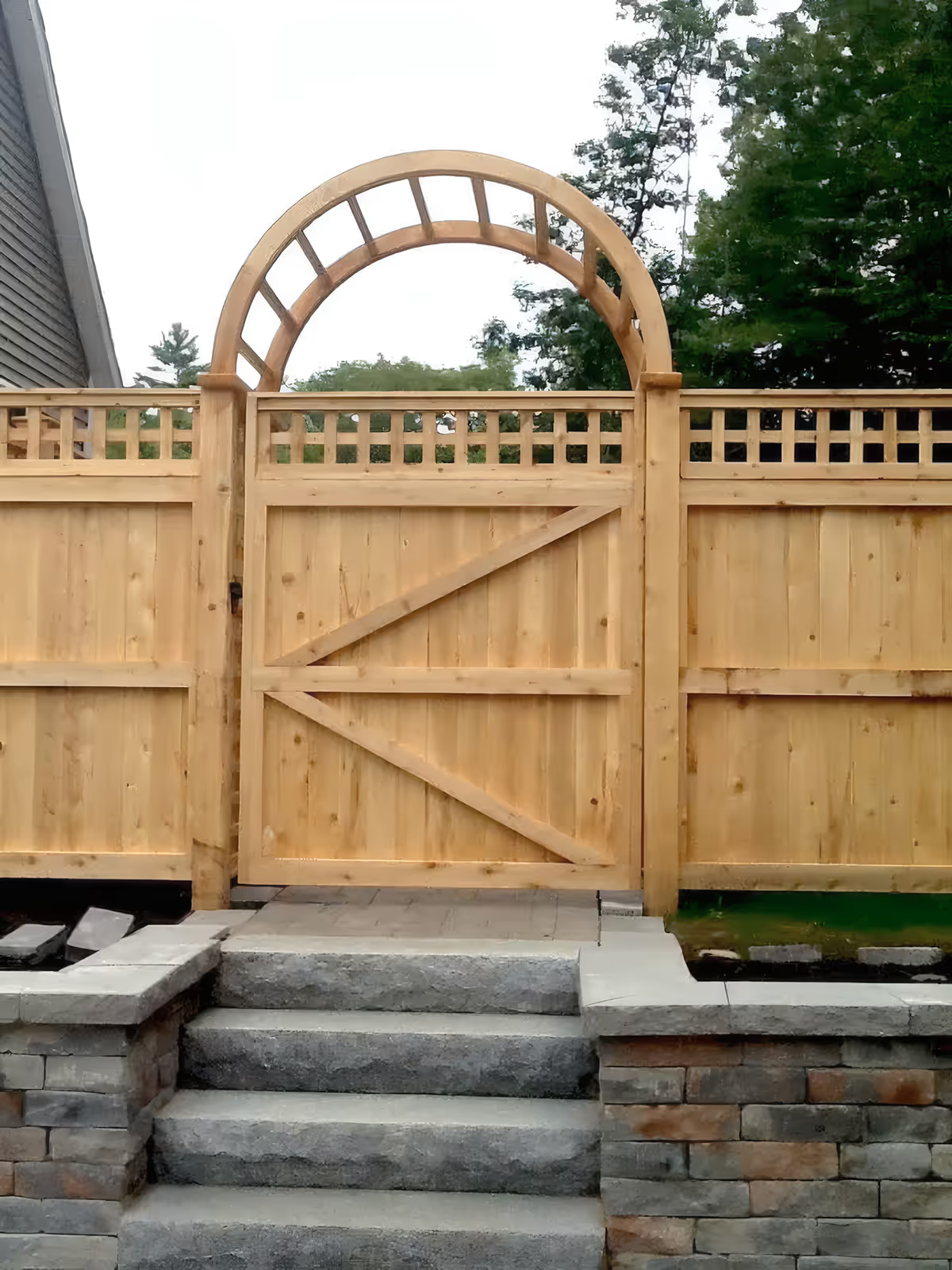
Homeowners often wonder whether tackling a fence project themselves makes financial sense. While handling the project yourself can reduce upfront labor costs by 40% to 50%, setting dozens of deep post holes by hand requires specialized heavy machinery, physical endurance, and precise alignment techniques.
‍

professionally installed high quality wooden privacy fence

When weighing professional installation against a self-build, consider the structural factors:

  • Frost Heave Protection: In cold climates, posts set too shallow (above the 36-to-48-inch frost line) will shift and lean within one or two winters. Professional crews have hydraulic augers to hit proper depths quickly and reliably.
  • Precision Laser Layouts: Aligning 150 to 200 feet of fencing across uneven grade requires transit lasers and string lines. Minor alignment errors at post one become glaring, crooked runs by post twenty.
  • Equipment and Tool Expenses: Installing a fence correctly requires renting hydraulic post hole diggers, concrete mixers, plate compactors, and pneumatic framing nailers—costs that quickly eat into potential labor savings.
  • Manufacturer Warranties: Many premium vinyl and aluminum manufacturers only honor their 20-to-30-year structural warranties when materials are installed by licensed, insured fencing contractors.
  • Project Timelines: A professional two-to-three-person crew completes a standard 150-foot residential fence in 2 to 3 days. A self-installed project often stretches across 3 to 5 weekends of heavy labor.

For homeowners who value long-term structural integrity and precise boundary lines, professional installation delivers lasting value and peace of mind.

Frequently Asked Questions about Fence Installation Costs

What is the cheapest fence material to install on a residential property?

Galvanized chain link is the most budget-friendly fence material, typically costing $10 to $25 per linear foot installed. For homeowners seeking solid visual privacy on a budget, basic pressure-treated pine stockade fencing is the most economical choice, running $15 to $35 per linear foot installed.

How long does a typical professional fence installation take to complete?

For a standard 150-linear-foot residential project on clear, relatively flat ground, a professional crew typically completes the job in 2 to 3 consecutive days:

  • Day 1: Utility verification, post hole excavation below the frost line, setting posts in concrete, and allowing footings to cure.
  • Days 2–3: Hanging horizontal structural rails, installing individual pickets or modular panels, mounting gates, and fitting heavy-duty latch hardware.

Challenging site conditions like steep slopes, ledge rock, or existing fence tear-out may add an extra half-day to the timeline.

How much value does a new privacy fence add to a home?

A well-designed, professionally installed privacy fence generally increases home resale value by 1% to 5%, while substantially boosting buyer curb appeal. Properties featuring fully enclosed backyards are highly sought after by families with young children and dog owners, often helping homes sell faster in competitive suburban real estate markets.

Conclusion

Investing in a new boundary fence enhances privacy, elevates backyard security, and defines outdoor living spaces for decades. While overall expenses vary based on material selection, footage, and terrain, planning your budget around clear cost-per-foot benchmarks ensures a smooth, predictable project from start to finish.

At Brentwood Fence LLC, we provide transparent, fully itemized estimates with no hidden surprises. Whether you are seeking classic cedar charm, maintenance-free vinyl panels, or durable ornamental aluminum, our skilled installation crews build fences designed to withstand New England's toughest seasonal elements.

Ready to plan your boundary project? Explore our dedicated privacy fencing installation services in NH or contact our team today to schedule your on-site property consultation.
Blog Content