Blog Content

7
Aug
2026
Understanding the cost for fence installation is the first step before calling a single contractor. Here's a quick answer so you can start budgeting right now:
Average Fence Installation Cost at a Glance (2026)
Most homeowners spend somewhere between $1,800 and $6,500 for a standard residential fence, with the national average sitting around $3,200.
You've probably already done what most homeowners do — asked around, got a couple of quotes, and ended up staring at numbers that seem wildly different for what looks like the same project. That gap isn't random. It comes down to material choice, yard size, terrain, gates, permits, and labor rates in your area.
This guide breaks all of it down clearly, so you know exactly what you're paying for — and what to watch out for.
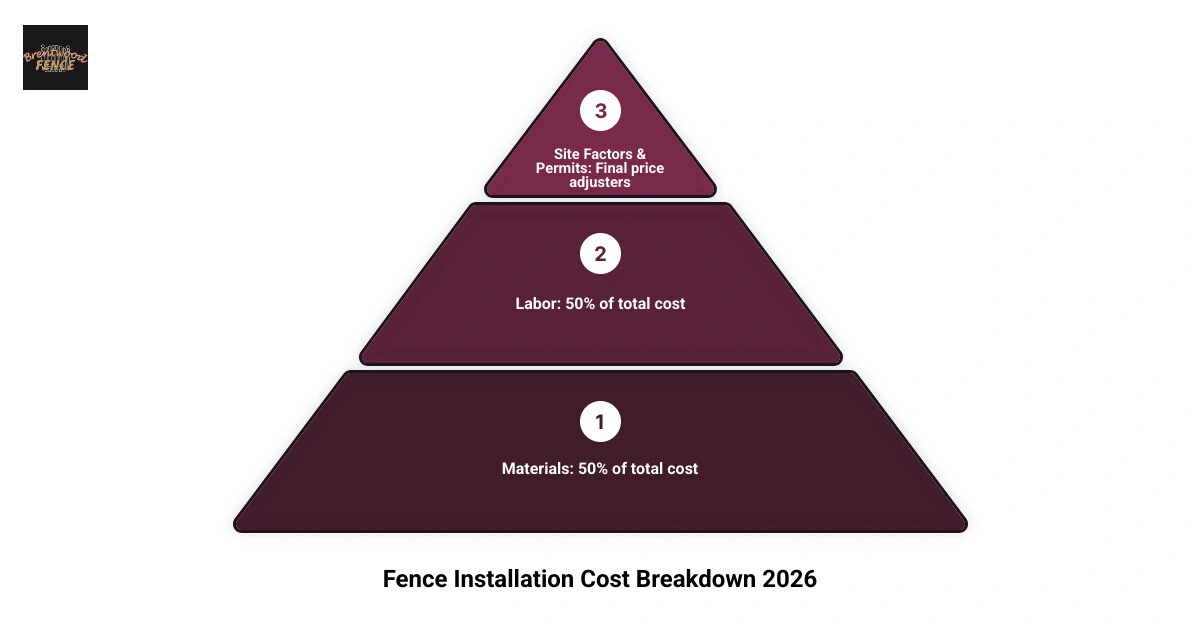
As we move through May 2026, we’ve seen some stabilization in material prices, but labor demand remains high. When you look at the national landscape, the estimated cost for fence installation typically starts between $33.48 and $53.87 per linear foot. This range includes everything from the basic post-hole digging (usually about 3 feet deep) to the final cleanup of the site.
While "national averages" are a great starting point, we know that for our neighbors in Exeter, NH, or Haverhill, MA, the numbers can shift based on local supply chains and the specific rocky soil we often deal with in New England. On a broad scale, most homeowners find that their total project costs land between $1,700 and $6,100, though high-end ornamental projects can easily crest the $10,000 mark.
To give you a clearer picture, we’ve put together a Average Fence Cost Per Linear Foot Guide that breaks down the unit costs. In 2026, the unit cost method is the most accurate way to budget. This involves looking at the price per foot, then adding on fixed costs like gates, permits, and mobilization fees.
Yard size is the most obvious driver of price. When we talk about a "standard" residential yard, we are usually looking at a perimeter of about 150 linear feet. If you have a smaller lot in a city like Portsmouth or Manchester, you might only need 100 feet. Conversely, a larger property in Concord or Dover could easily require 200 to 300 feet of fencing.
Here is a breakdown of what those totals look like in today's market:
If you are planning a smaller project, you can find more specific details in our guide on 100 Ft Privacy Fence Cost. It’s worth noting that smaller jobs sometimes carry a slightly higher price per foot because the contractor still has the same "mobilization" costs—getting the truck, tools, and crew to your site—regardless of whether they are installing 50 feet or 150 feet.
Where you live matters just as much as what you buy. Across the United States, labor rates can vary by as much as 40% to 60%. For example, in 2026, West Virginia remains one of the most affordable states for fencing, with average projects costing around $3,188. On the other end of the spectrum, Hawaii takes the top spot at $5,250 for the same amount of work.
In our neck of the woods—New Hampshire, Massachusetts, and Maine—we tend to see prices that align with or slightly exceed the national average due to our shorter installation season and higher cost of living. Massachusetts, in particular, often sees project averages around $4,688, which is about 25% higher than the national baseline. New Hampshire and Maine typically sit closer to the $3,750 mark for a standard 150-foot wood privacy fence.
For a deeper dive into how our local geography affects your wallet, check out our resource on Fence Cost Per Linear Foot NH MA ME. Factors like the "frost line" (the depth to which the ground freezes) mean we have to dig deeper and use more concrete than installers in the South, which adds to the labor and material total.
If linear footage is the "how much," then material is the "what." This is the biggest lever you can pull to adjust your cost for fence installation.
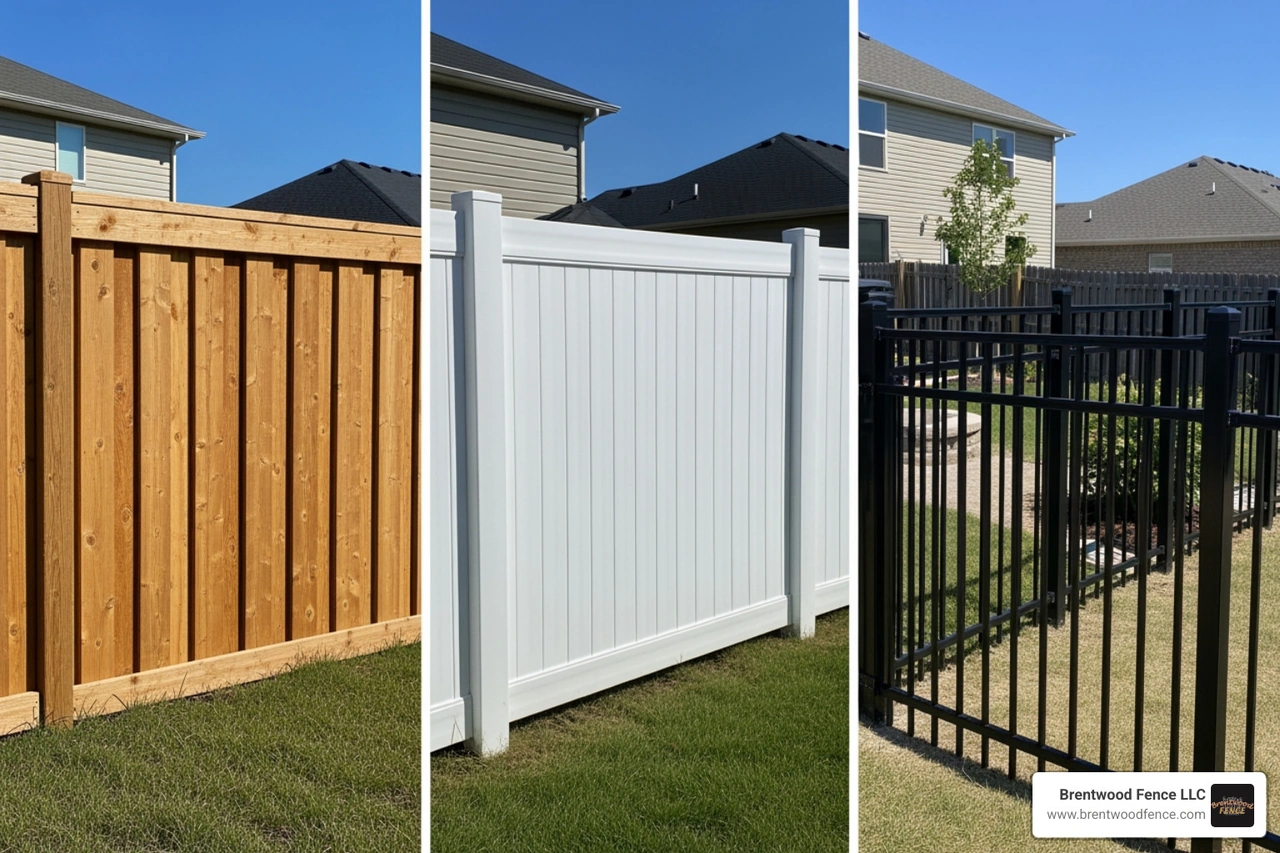
Wood remains a favorite for its natural beauty and initial affordability. In the Northeast, we often recommend Northern white cedar because it is naturally resistant to rot and insects.
For more specific regional pricing, see our Cost of Wood Fence Per Linear Foot NH.
Vinyl has exploded in popularity because it basically requires zero maintenance. No staining, no painting, and no rotting. In 2026, the Vinyl Fencing Price Per Foot typically ranges from $20 to $58 depending on the style and thickness of the panels. While the upfront cost is higher than wood, the "lifetime cost" is often lower.
If you just need to keep the dog in or the kids safe and don't care about privacy, chain link is the winner. It is the cheapest professional option, often starting as low as $12 to $33 per linear foot.
When budgeting, don't just look at the check you write today. Look at the checks you’ll have to write five, ten, and fifteen years from now. This is where the wood vs. vinyl debate gets interesting.
A wood fence might cost $4,000 today, but it will need staining every 2–3 years. At $300–$600 per treatment, you could spend an additional $3,000 over 15 years. A vinyl fence might cost $6,500 today, but your maintenance cost over those same 15 years is essentially $0 (maybe a quick spray with a garden hose once a year).
We’ve broken down these long-term numbers in our article on the Cost to Have Vinyl Fence Installed. Generally, if you plan on staying in your home for more than 10 years, vinyl or aluminum are the more "profitable" choices.
For those looking for high-end curb appeal or "ornamental" styles, aluminum and wrought iron are the go-to materials.
If you're considering these high-end materials, the best way to get an accurate number is to request a Free Fencing Installation Estimate.
Beyond just the length and the material, several "hidden" variables can swing your estimate by hundreds or even thousands of dollars.
It sounds simple, but measuring your yard correctly is vital. We always recommend walking the perimeter with a measuring wheel rather than relying on property tax maps, which can be inaccurate. Remember to account for "corner posts"—every time the fence turns, you need a sturdier post and more concrete.
The standard residential privacy fence is 6 feet tall. If you decide to jump up to an 8-foot fence for extra privacy or to block a noisy neighbor, expect a 25% to 35% surcharge on materials and labor. More height means more wind resistance, which requires deeper post holes and more concrete to ensure the fence doesn't blow over in a New England gale.
Different styles also carry different price tags. A simple "dog-ear" picket fence is much cheaper than a "board-on-board" or "shadowbox" design, which uses nearly double the number of pickets to ensure complete privacy. You can compare these styles in our 6 Ft Privacy Fence Install Cost Guide and our specific guide on the Cost of Wooden Privacy Fence NH MA ME.
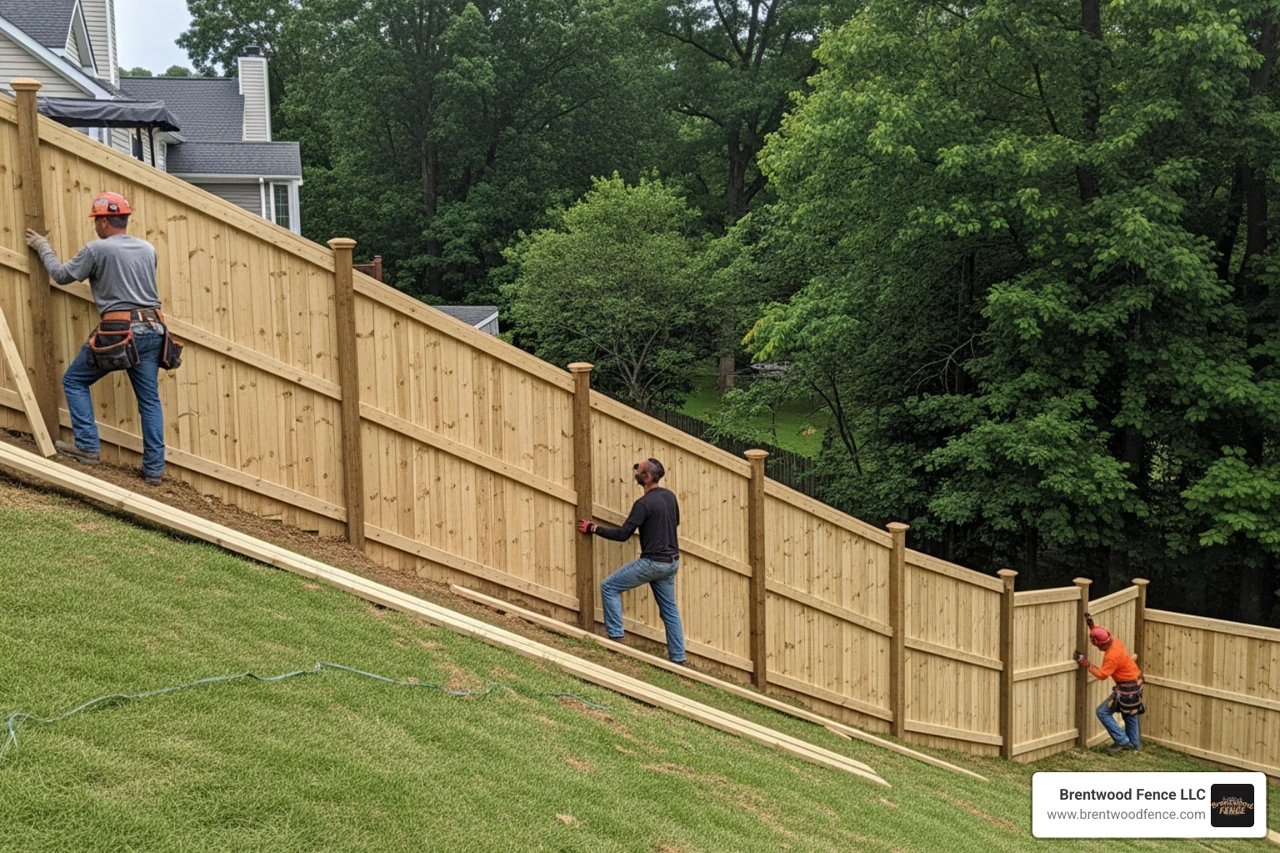
This is where many DIY-ers get into trouble. If your yard isn't perfectly flat (and let's be honest, whose yard in New Hampshire is?), you have to choose between "racking" the fence (following the ground's slope) or "stepping" it (making it look like stairs). Stepping often requires custom cuts and more labor.
Furthermore, if our crew hits solid New England granite 12 inches down, we have to use specialized rock drills. This "rocky soil" factor can add 20% to 40% to your labor costs. Similarly, if we have to clear heavy brush or old vines before we can even start digging, that will be reflected in the Professional Fence Installation Factors section of your quote.
When you see a "price per foot" online, it almost never includes the "soft costs" that come with a legal and professional installation.
We discuss these labor-related nuances in our post on the Labor Cost Installing Chain Link Fence.
Don't forget the gates! A fence without a gate is just a wall. In 2026, a standard walk gate (4 feet wide) typically costs between $200 and $600 including hardware. If you need a double-drive gate for a vehicle or a riding mower, you could be looking at $800 to $1,500.
Gates are the most common point of failure for a fence. They require heavier posts (usually 6x6 instead of 4x4) and extra-deep concrete footings to prevent sagging over time. You can see how these add up in our breakdown of 6ft Chain Link Fence Cost.
If you are replacing an old, rotting fence, someone has to get rid of it. Most professionals charge between $3 and $8 per linear foot to tear out and haul away an old fence. For a 150-foot yard, that’s an extra $450 to $1,200. This includes the labor of pulling up old concrete "plugs" and the fees charged by the local landfill to take the debris. For more on this, visit Fence Cost Per Linear Foot NH MA ME.
The absolute cheapest professional option remains galvanized chain link, which can be installed for as little as $12–$20 per foot in some areas. If you want a privacy fence, pressure-treated pine in a basic dog-ear style is your most economical bet, starting around $15–$25 per foot.
The "shoulder seasons" are your best friend. While everyone wants a fence in June, you can often find 5% to 15% discounts if you schedule your installation for the late fall (October/November) or very early spring. Some companies even offer winter "no-dig" installation using specialized equipment, which can keep costs stable even when the ground is frozen.
Yes! A professionally installed fence provides a high Return on Investment (ROI). It increases "curb appeal" and is a major selling point for the 70% of homebuyers who own pets. Privacy fences, in particular, add measurable value in crowded suburban markets like Manchester or Derry.
Calculating the cost for fence installation doesn't have to be a guessing game. By understanding the relationship between your linear footage, your material choice, and the specific quirks of your New England yard, you can go into the bidding process with confidence.
At Brentwood Fence LLC, we pride ourselves on transparent, itemized quotes that leave no stone unturned (or un-drilled!). Whether you’re looking for the timeless look of Northern white cedar or the set-it-and-forget-it convenience of vinyl, we are here to help our neighbors in NH, MA, and ME build something that lasts.
Ready to see what your specific project will cost? Skip the "ballpark" guesses and get a real number today with our Free Fencing Installation Estimate.
Final Budget Checklist:


Copyright 2022 Brentwood Fence | All Rights Reserved | Sitemap | Website by Plumb Development a Digital Marketing Agency