Blog Content

5
Aug
2026

Choosing the right material for your property is the most critical decision in any fencing project. The ideal material must balance visual appeal, structural durability, long-term maintenance preferences, and budget constraints.
Every material brings distinct strengths and trade-offs to your property boundary:
Your choice must stand up to local weather demands. In regions like New Hampshire, Massachusetts, and Maine, winter conditions feature severe freeze-thaw cycles, lake-effect snow, and heavy frost heave. High-grade PVC vinyl and powder-coated aluminum handle freeze-thaw expansion seamlessly without cracking or rusting.
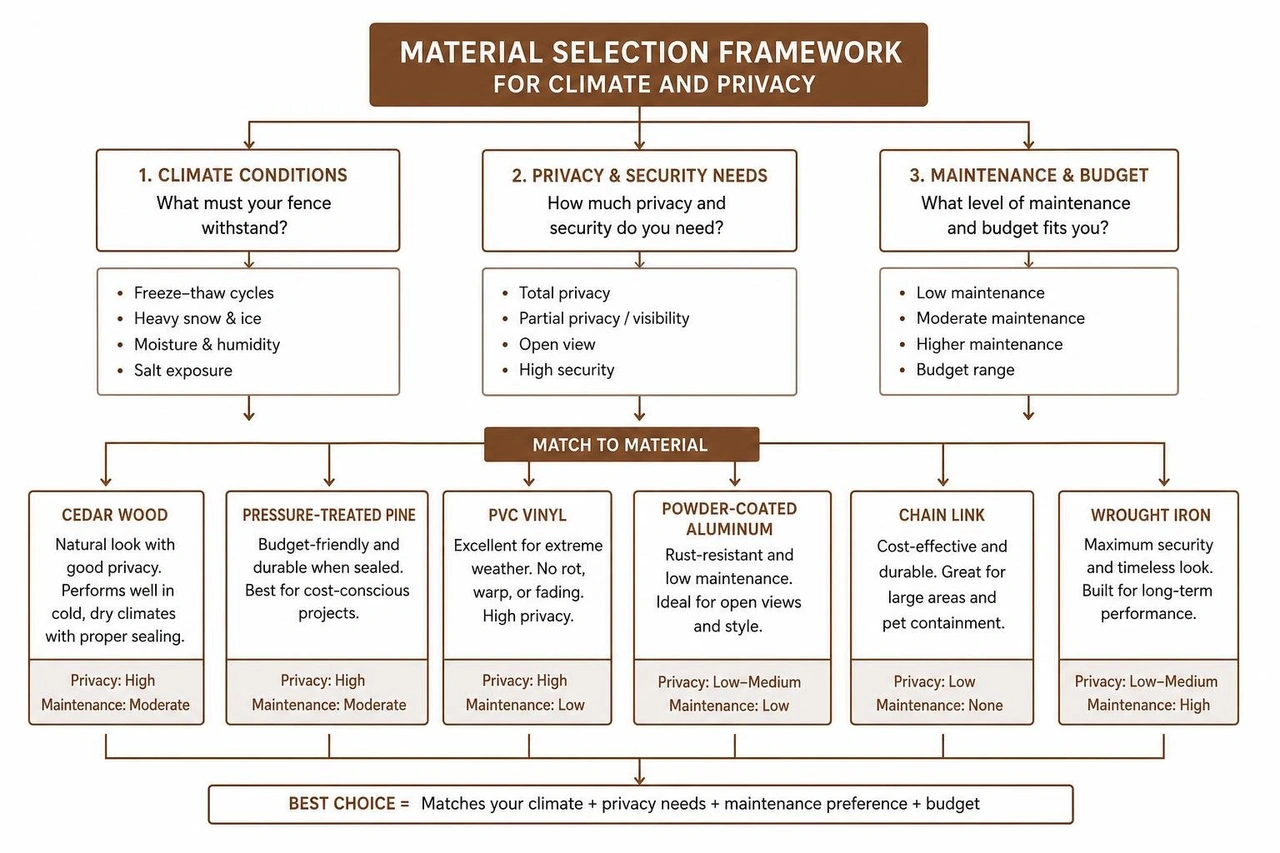
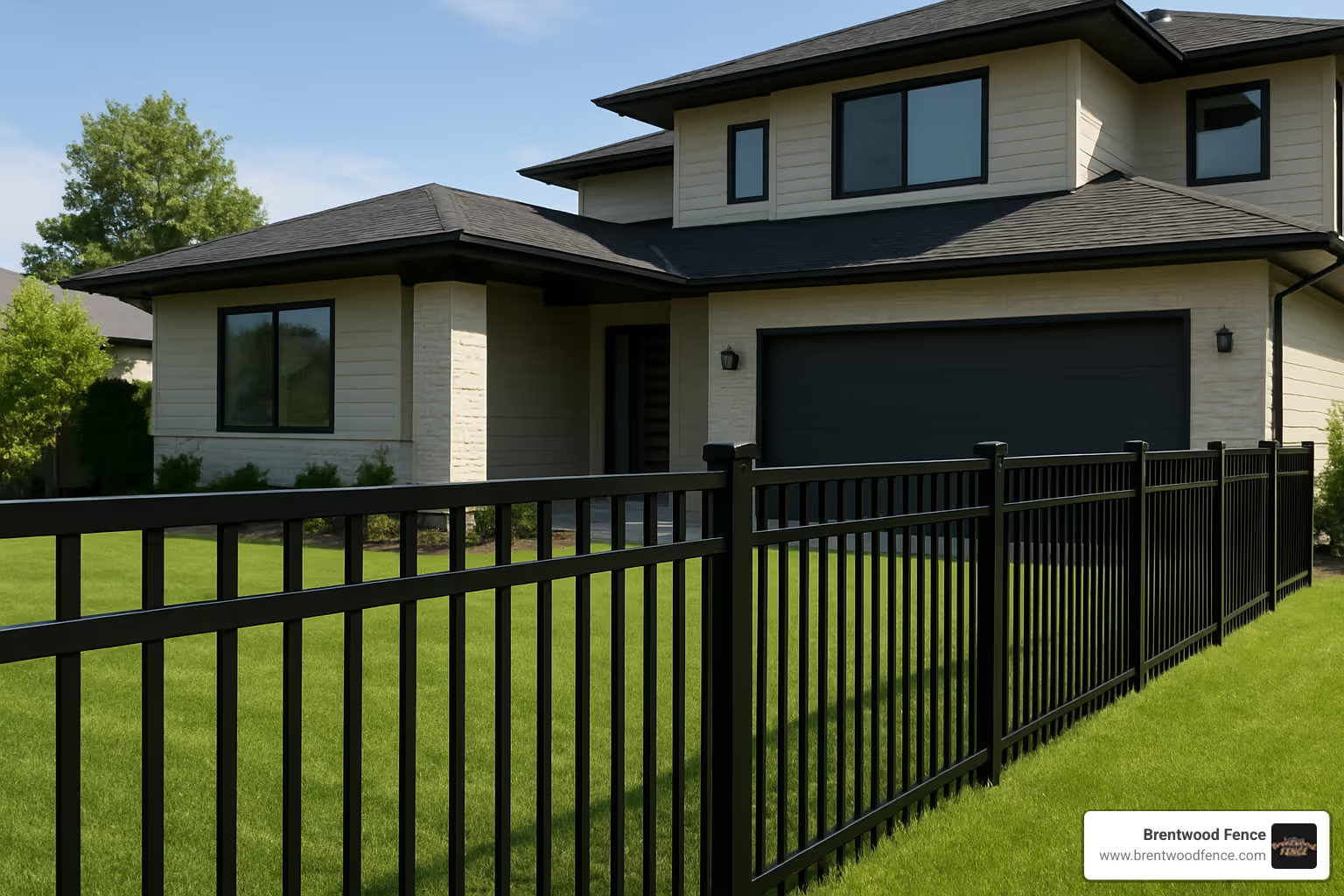
Privacy needs also dictate your selection. Total visual obstruction requires tongue-and-groove wood or vinyl privacy panels. For keeping pets secure while preserving natural views, split rail wood, aluminum pickets, or vinyl-coated chain link work best. If privacy is needed on an existing chain link fence, adding privacy slats or heavy-duty windscreen mesh provides an instant visual barrier.
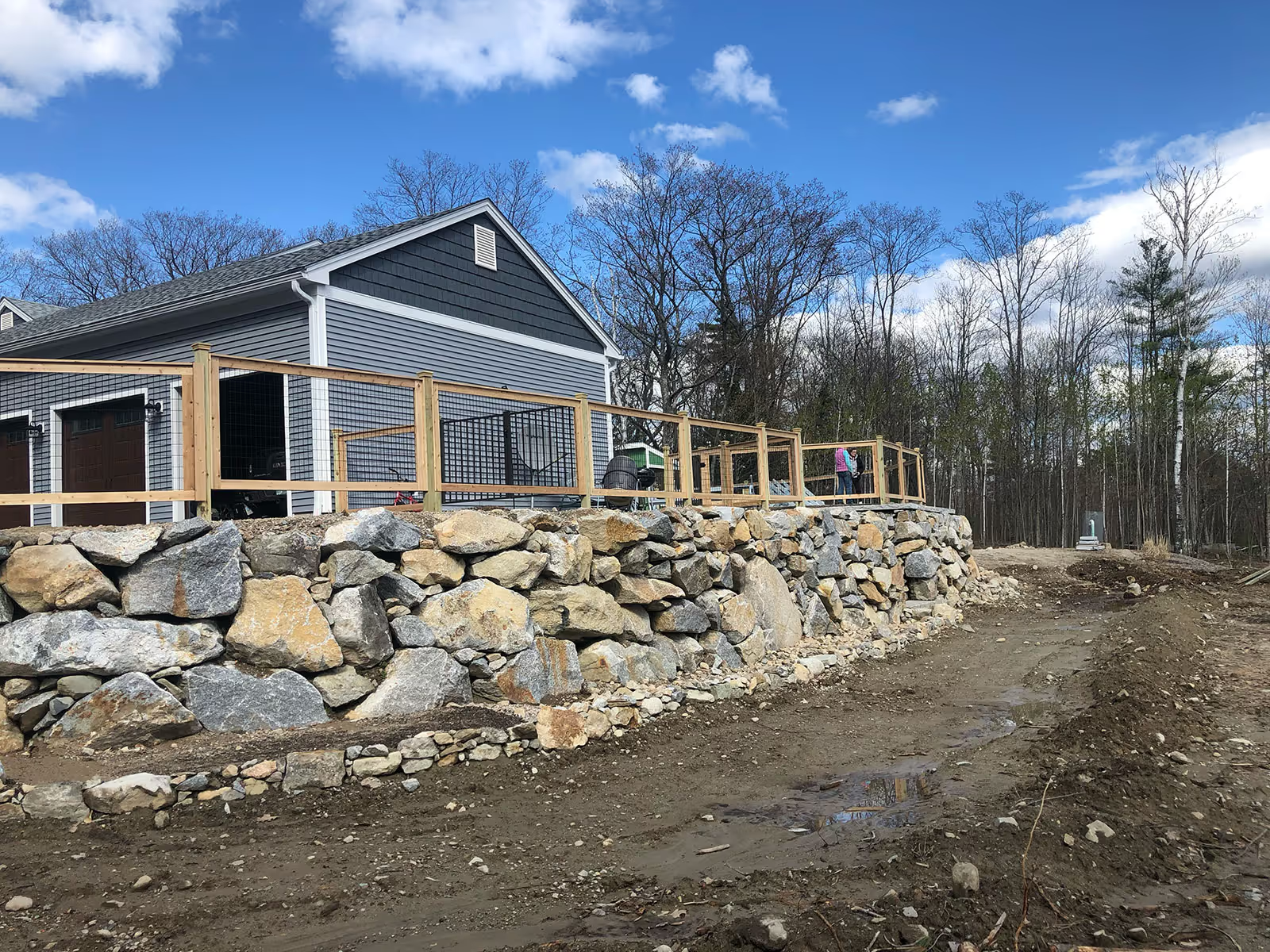
When you hire a professional fencing installation service, the job follows a structured process designed to maximize structural stability and adhere to local building guidelines.
The process starts with an on-site property evaluation. Installers measure land contours, assess elevation changes, check for ground obstacles like mature trees, and verify boundary lines. Understanding boundaries requires more than checking property plats—which explicitly state they are not intended to establish exact legal property lines. A physical survey using boundary rebar pins ensures your new fence doesn't accidentally cross onto your neighbor's yard. Installers typically set fence lines back about 4 inches from surveyed boundaries to ensure concrete post footings remain entirely within your property line.
Contractors standardly obtain required building permits and submit plans adhering to zoning setbacks, corner lot visibility rules (which often mandate a 25-foot setback from street intersections), and HOA guidelines. Reviewing Professional Fence Installation 101 can give you extra insight into these essential early steps.
A fence is only as strong as its foundation. Standard post footings are dug to a depth equal to at least 50% of the fence's above-ground height—for example, a 4-foot fence requires post holes set at least 24 inches into the ground, extending beneath the frost line to prevent winter heave. Posts are anchored in high-strength concrete for permanent stability.
Once footings cure, horizontal rails, vertical panels, and pickets are assembled. Specialized welded U-frame construction and upgraded gate hinges are applied to prevent gate sagging or sticking over time. Finally, the contractor conducts a complete job site cleanup and leads you through a final walkthrough to confirm quality craftsmanship.
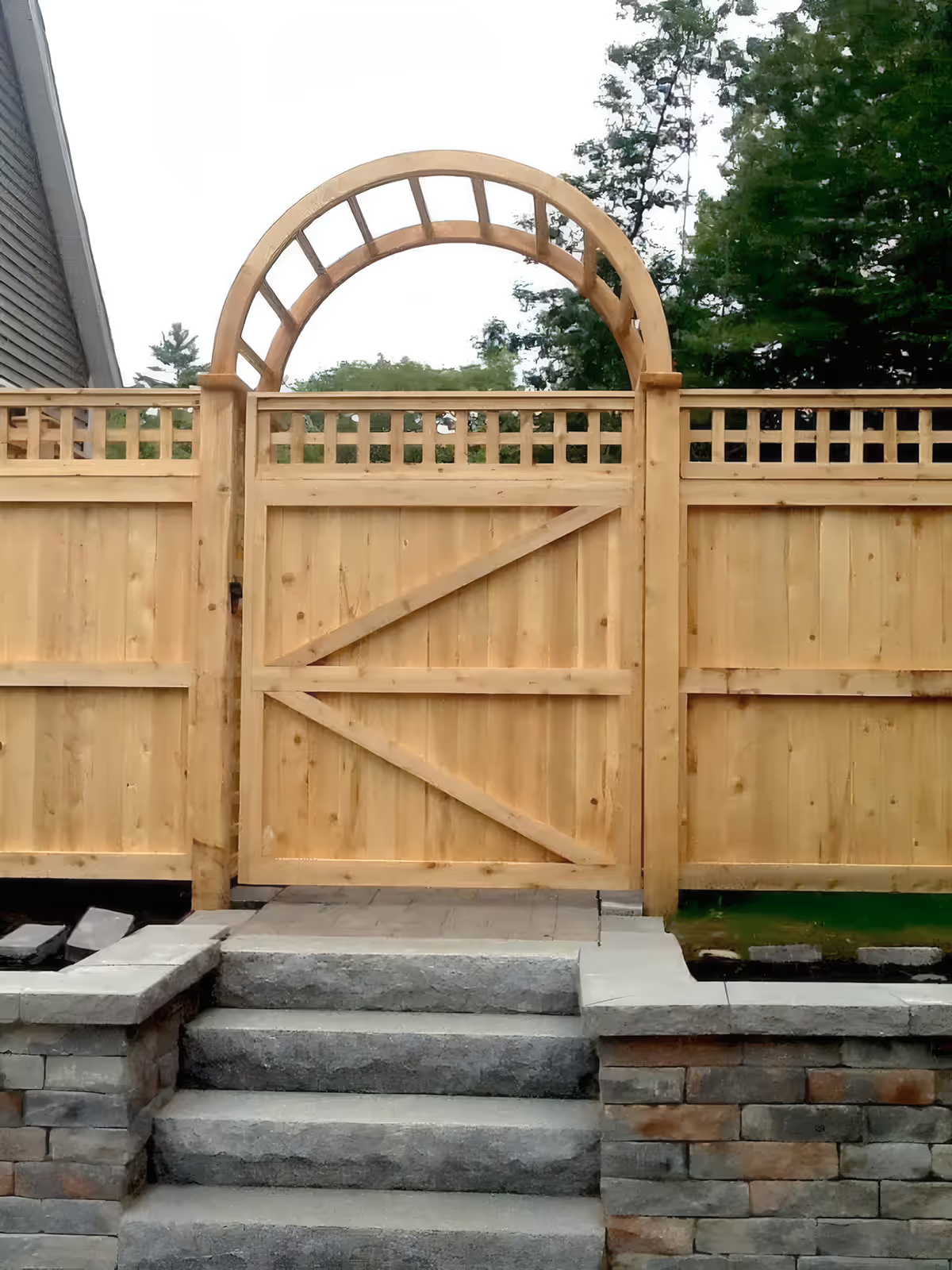
While DIY home improvement can be rewarding, building a structural fence requires heavy specialized equipment, precise leveling over uneven terrain, and strict adherence to municipal construction codes.
Working with top Fence Installation Companies gives you peace of mind through structural guarantees. Professional installers back their labor with dedicated workmanship warranties, while materials like powder-coated aluminum or virgin PVC vinyl often carry lifetime manufacturer coverage. Expert teams utilize heavy-duty gate hardware, commercial-grade post setters, and hidden steel posts to extend fence lifespan and resist severe wind damage.
DIY attempts frequently encounter unexpected pitfalls:
To navigate these challenges seamlessly, consult our comprehensive Local Fence Company Guide NH MA ME.
A well-installed fence is built to last, but standard care preserves its structural strength and appearance over the years.
If your existing fence exhibits wear, use this rule of thumb: if more than 20% to 25% of the total fence structure is heavily damaged, full replacement is generally more cost-effective than continuous spot repairs.
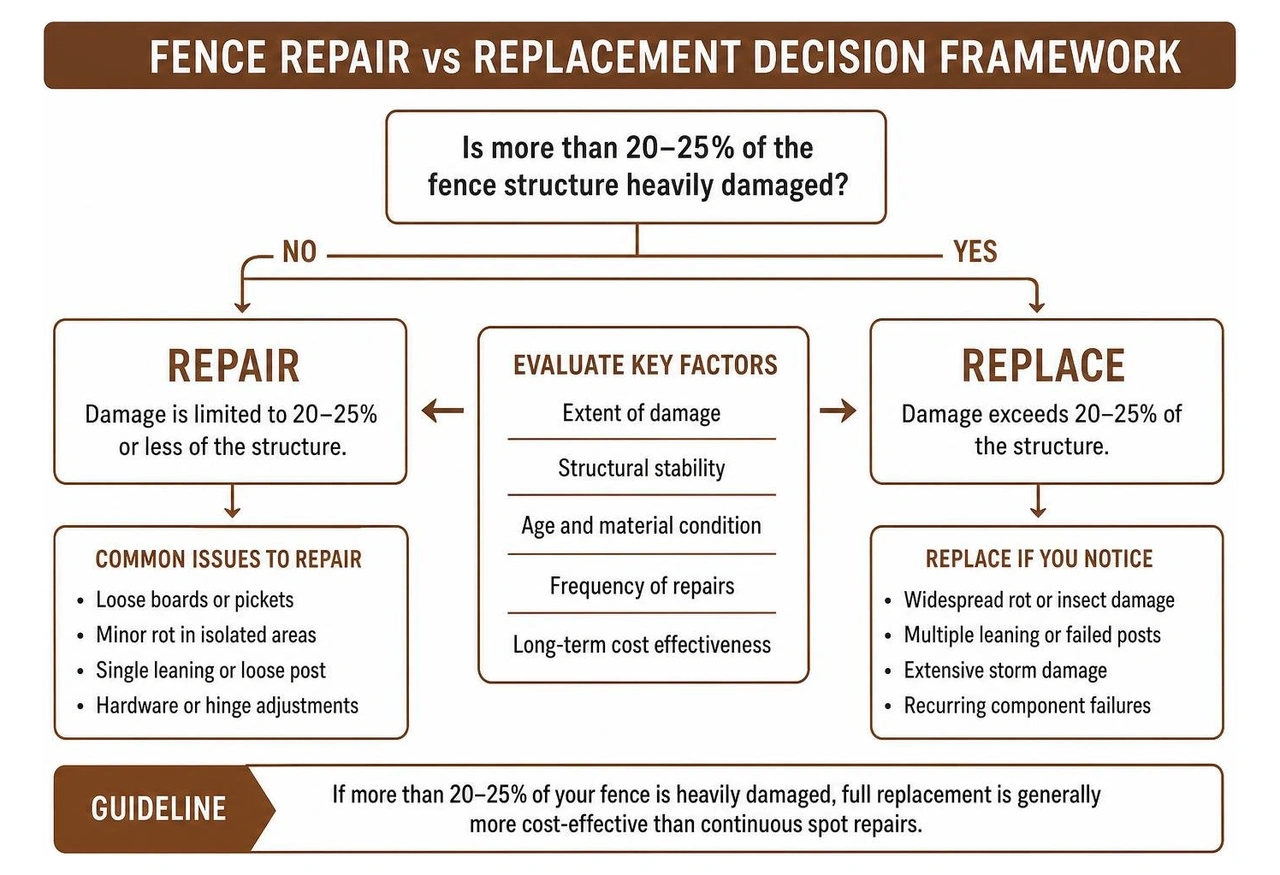
Replace your fence if you notice:
For a clearer picture of budgeting for a full upgrade, read our detailed guide on the Cost of Installed Fence NH MA ME.
Q: How long does a typical residential fence installation take?
A: Most standard residential installations take between 1 to 3 days to complete once ground work begins. A experienced three-person installation team can complete over 200 linear feet of fence replacement in a single working day. Larger agricultural boundaries, custom commercial projects, or properties with challenging rock ledges may require a week or longer.
Q: What main factors dictate the final cost of an installed fence?
A: Overall costs depend primarily on total linear footage, panel height, material selection, gate additions, and terrain conditions. Steeper slopes and rocky ground require specialized labor and extra concrete. Requesting a Free Fencing Installation Estimate delivers an accurate site-specific calculation.
Q: Do I have to apply for building permits myself?
A: Your professional fence contractor typically handles pulling all standard municipal building permits as part of their service workflow. However, securing private property variances or resolving specific HOA design approvals remain the property owner's responsibility.
A custom fence is a valuable addition to your property, delivering boundary security, outdoor privacy, and improved curb appeal. By choosing the right materials, leveraging professional installer expertise, and maintaining your fence over time, you protect your long-term investment.
At Brentwood Fence LLC, we deliver high-quality craftsmanship, reliable customer communication, and durable fence installations tailored to properties across Exeter, Portsmouth, Manchester, Concord, Dover, and Derry, NH, as well as Haverhill, MA, and surrounding areas in Maine.
Ready to transform your yard? Explore our premium Privacy Fencing Installation Services and schedule your site consultation today!

Copyright 2022 Brentwood Fence | All Rights Reserved | Sitemap | Website by Plumb Development a Digital Marketing Agency