Blog Content

23
Mar
2026

Do you need a permit for a fence in Massachusetts? The short answer is: it depends on your town and fence height. State law generally requires a permit only for fences over seven feet tall, but many Massachusetts municipalities have stricter rules that require permits for fences as low as six feet—or even for any fence installation, regardless of height.
Quick Answer:
Imagine coming home one afternoon to find your neighbors have completely enclosed their property with a barbed-wire fence. Not only does it make you feel like you're living next to a prison, the unsightly fence hurts your property value. Or worse—imagine installing your dream fence only to receive a notice from your town demanding you tear it down because you didn't get the proper permits.
These scenarios happen more often than you'd think in Massachusetts. The Commonwealth operates under a "layer cake" system of regulations, where state laws provide a foundation but local ordinances add their own specific requirements. What's perfectly legal in Andover might require a permit in Marlborough. A fence built without the right permits or on the wrong property line can damage your property value, lead to daily fines, and create serious neighborly conflicts.
The good news? Understanding the rules isn't complicated once you know where to look. This guide will walk you through exactly what you need to know to build a compliant fence that improves your property without legal headaches.
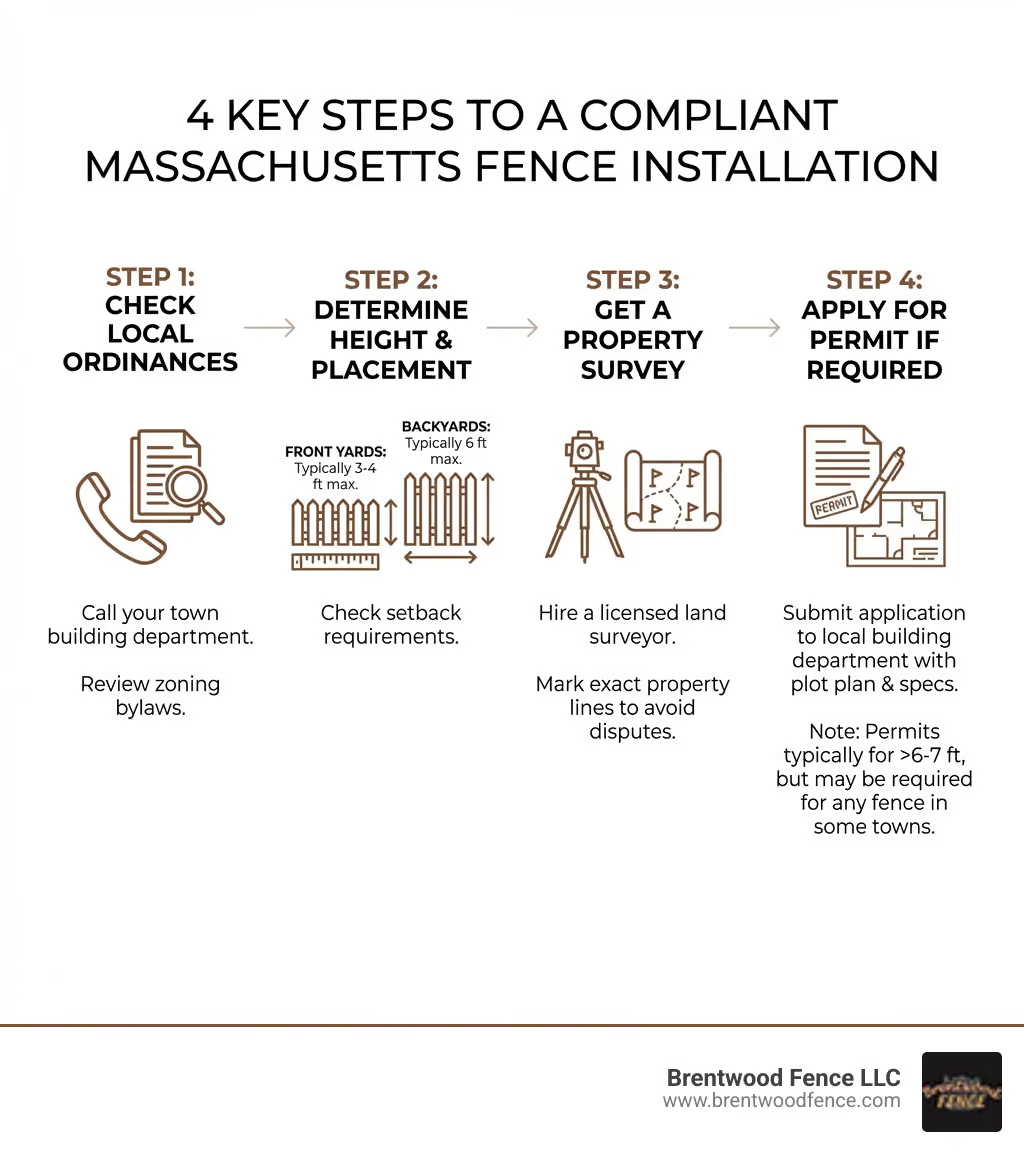
Navigating fence regulations in Massachusetts can feel a bit like trying to solve a puzzle with multiple layers. That's because Massachusetts is a "Home Rule" state, meaning local municipalities have significant authority to create their own laws and ordinances, often stricter than state-level guidelines. While there's a statewide foundation, the specific answer to do you need a permit for a fence in massachusetts ultimately hinges on where you live.
This "layer cake" approach means we can't just look at one set of rules. We must consider both the Massachusetts General Laws (MGL) and your local town's specific zoning bylaws and building codes. What's acceptable in Andover might not fly in Hingham, and Lowell could have entirely different requirements. It's crucial to consult your local building department and zoning board early in your fence project planning.
The starting point for all fence laws in Massachusetts is the Massachusetts General Laws (MGL), specifically Chapter 49. This chapter lays out the fundamental principles for what constitutes a "legal and sufficient" fence and provides a framework for how neighbors should manage shared fences. It even includes historical provisions for "fence viewers" to settle disputes, a fascinating aspect we'll explore later.
MGL Chapter 49 provides the baseline, covering aspects like boundary fence obligations and the process for resolving disagreements between neighbors. This statewide framework offers basic rules that apply everywhere unless your town has stricter requirements. While this chapter sets a general tone, local ordinances frequently add more specific details and conditions.

While MGL Chapter 49 provides the groundwork, your local town or city ordinances are where the rubber truly meets the road. These local by-laws often impose stricter rules regarding fence height, placement, materials, and whether a permit is required. Many municipalities use their "Home Rule" authority to tailor regulations to their specific community needs and aesthetics.
For example, while state law might generally require a permit for fences over seven feet, many towns in Massachusetts lower that threshold to six feet, or even less. Some towns, like Marlborough, might require a permit for almost any fence installation or repair, regardless of height. Others, like Andover, focus on fences over seven feet for permits. These local ordinances dictate the specific permit triggers and zoning requirements that will apply to your property.
We often see variations in how local rules are applied. For instance, the City of Boston has its own fence regulations, the City of Springfield has detailed zoning and ordinances that affect fences, and the City of Worcester publishes its zoning ordinances as well. These examples highlight the diversity of local requirements across Massachusetts. Before we dig a single post hole, we always recommend consulting your local building department or zoning office. They are the ultimate authority on what's permissible in your specific neighborhood.
This is the big question, isn't it? The most direct answer is: almost certainly, if your fence is above a certain height, or if you live in a municipality with very strict rules. The requirements for a building permit for a fence in Massachusetts are primarily driven by two factors: fence height and your specific local ordinance.
The Massachusetts State Building Code (780 CMR) generally requires a building permit for fences over seven feet in height. However, as we've discussed, many local towns and cities have adopted stricter regulations. This means a fence that doesn't need a permit under state law might still need one under your town's bylaws. If your proposed fence exceeds local height limits or violates other zoning requirements, you might need to seek a variance from the Zoning Board of Appeals, which can be a time-consuming and costly process.
The height of your proposed fence is the most common permit trigger. Here's a breakdown of the general rules we encounter:
This municipal variation underscores why contacting your local building inspector is the crucial first step. They can provide the definitive answer for your property, ensuring you comply with the exact height regulations and permit requirements in your area. For fences six feet or less in height, many towns will not require a permit, but this is not universal.
Just when you thought fence height was straightforward, we need to consider where on your property the fence will be located. Most Massachusetts towns have different maximum height limits for fences depending on whether they are in the front yard, backyard, or along the side property lines.
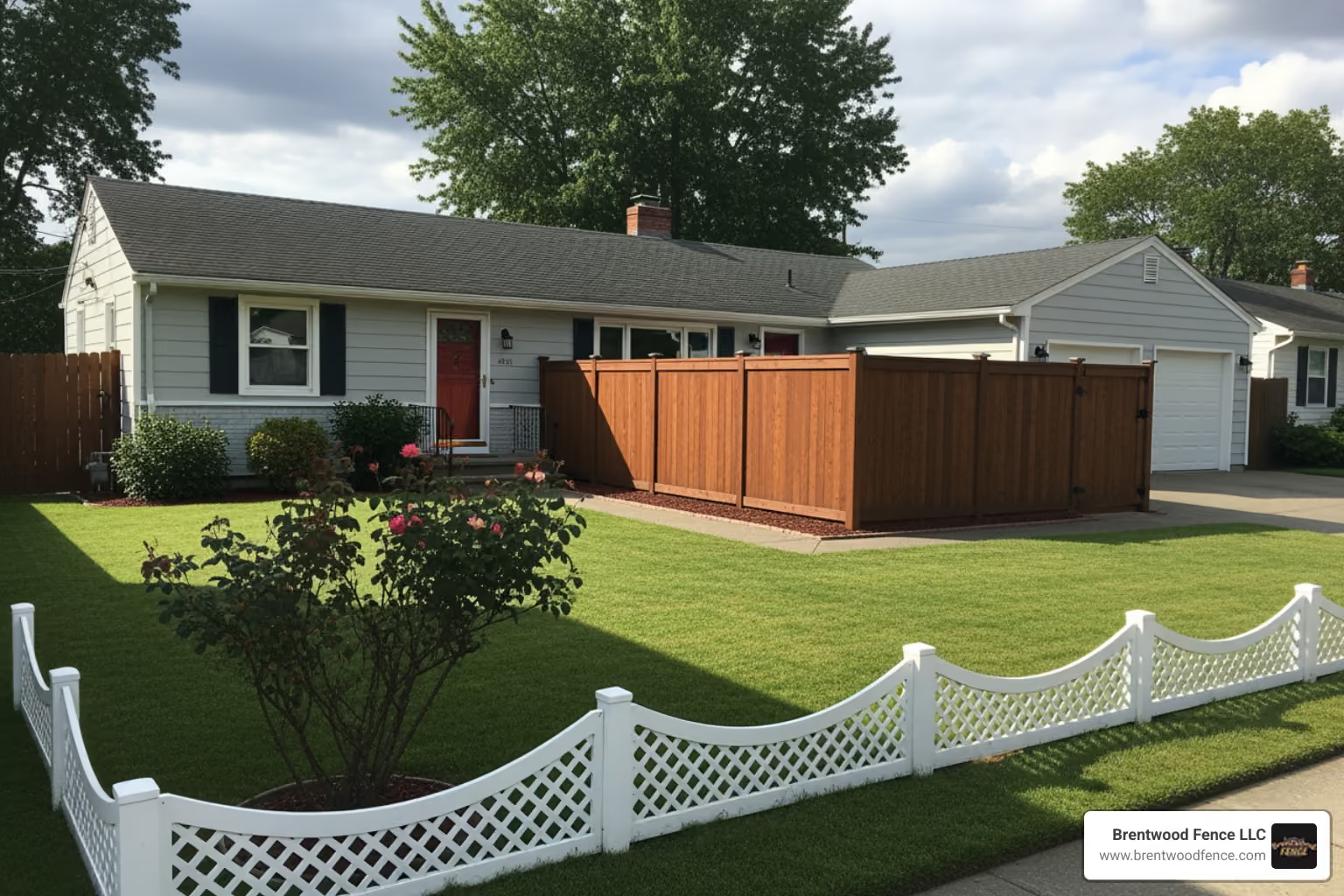
Typically, residential zoning districts will have:
Always remember that these are general guidelines. Your local building department will have the specific dimensional requirements for your property's zoning district.
Some fence projects come with their own unique set of regulations, and be aware of them from the start.
Understanding property lines and setbacks is paramount to a successful and dispute-free fence installation. A fence built even slightly on your neighbor's property can lead to costly legal battles and sour relations. Good fences truly do make good neighbors, but only if they're placed correctly!
We cannot emphasize this enough: always know your property lines. The only way to definitively know where your property ends and your neighbor's begins is to have a professional, licensed land surveyor mark your property boundaries. Relying on old fences, rows of shrubs, or even existing plot plans (which can be outdated or inaccurate for precise measurements) is a recipe for disaster.
A professional survey will clearly stake your property lines, giving us a precise guide for installation. This is especially important when considering setback requirements, which dictate how far a fence must be placed from your property line, depending on its height and location. While some towns allow fences under a certain height to be placed directly on the property line, others recommend setting them back a few inches (e.g., 12-18 inches in Hingham) for maintenance purposes. Avoiding encroachment is key to preventing legal nightmares.
In Massachusetts, a fence built exactly on the boundary line between two properties is known as a "partition fence." These fences are considered jointly owned by both neighbors, and under Massachusetts General Laws Chapter 49, Section 3, both parties are generally responsible for the costs of construction and maintenance. This is a unique aspect of Massachusetts fence law.
Specifically, boundary fence obligations under MGL c.49 § 3 stipulate that if one neighbor builds or repairs a partition fence, and the other refuses to pay their share, the first neighbor can legally seek reimbursement for double the amount owed, plus interest. This provision is a strong incentive for neighbors to agree on shared fence projects.
While the law typically mandates shared responsibility, it's always best to have a clear, written agreement with your neighbor if you plan a partition fence. This agreement can outline cost-sharing, maintenance duties, and even specify who owns which side of the fence. Without such an agreement, or if a neighbor refuses to cooperate, the "fence viewers" (who we'll discuss shortly) can get involved. For more on navigating neighborly fence situations, explore our article on can I remove neighbors fence in mass.
Legally, Massachusetts law does not explicitly require you to notify your neighbors before installing a fence entirely on your property and within all local regulations. However, we strongly recommend it as a matter of good etiquette. A brief conversation can prevent misunderstandings and demonstrate your neighborly intentions.
Even if you're not building a partition fence, informing your neighbors about your plans can help foster positive relationships and avoid potential conflicts down the road. They might have questions about the fence's appearance, placement, or construction timeline. Open communication can often preempt disputes and ensure a smoother project. Imagine the surprise of a neighbor coming home to a new fence they knew nothing about—it's rarely a pleasant one!
Building a fence should improve your property, not create legal headaches. Being aware of Massachusetts-specific laws regarding "spite fences," understanding prohibited materials, and knowing the consequences of not obtaining required permits are crucial steps for legal compliance.
Massachusetts has a unique law against "spite fences," which are considered a private nuisance. According to Massachusetts General Laws Chapter 49, Section 21, a fence is deemed a spite fence if it "unnecessarily exceeds six feet in height and is maliciously erected or maintained for the purpose of annoying the owners or occupants of adjoining property."
This means that if you build a fence taller than six feet with the primary intent to annoy your neighbor (e.g., by blocking their sunlight or view, without a legitimate purpose for the height), your neighbor could take legal action against you. The key elements here are the "unnecessary" height and the "malicious" intent. While landowners typically don't have a legal right to a view or sunlight, the spite fence law offers protection against structures built solely to cause annoyance. We always aim to build fences for legitimate purposes like privacy, security, and aesthetics, ensuring we steer clear of any perception of malicious intent.
While Massachusetts generally doesn't have specific state-level prohibitions on common fence materials like wood, vinyl, or aluminum, local ordinances and common law can restrict certain types of materials, especially in residential areas.
Materials often prohibited or heavily restricted for fences, particularly those facing public areas or adjacent to residential properties, include:
Beyond these, some Homeowner Association (HOA) rules might dictate approved fence materials, colors, and styles within their communities. Always check your HOA bylaws in addition to local ordinances. For a general overview of material considerations, our guide on fence building rules Massachusetts can be helpful.
Ignoring permit requirements can lead to a host of unpleasant and costly consequences. We've seen homeowners face significant issues for not obtaining a required fence permit in Massachusetts, including:
It's always better, and ultimately cheaper, to go through the proper channels and obtain any necessary permits upfront.
Even with the best intentions, disputes between neighbors over fences can sometimes arise. This is where Massachusetts offers a unique, historically rich solution: the fence viewer.
A fascinating aspect of Massachusetts law is the "fence viewer," a position dating back to 1693. Think of fence viewers as official neighborhood mediators for fence-related conflicts. Each town is legally required to annually appoint two or more fence viewers to settle these disputes.
Their role is to arbitrate disagreements regarding boundary fences, including issues such as:
These historical figures still play a practical role today, working to resolve differences between neighbors and prevent disputes from escalating into costly legal battles.
If you find yourself in a fence dispute with a neighbor that you can't resolve amicably, you can typically initiate the fence viewer process by contacting your town hall or building department. They will guide you on how to formally request a fence viewer to inspect the situation.
The fence viewers will then conduct an on-site visit, hear from both parties, and issue a determination. Their decisions are often binding and can be enforced by the town. This process provides a structured and often less adversarial way to resolve fence conflicts compared to direct legal action, allowing neighbors to find a resolution with the help of impartial, officially appointed mediators.
We often get asked specific questions about fence permits and regulations in Massachusetts. Here are some of the most common ones:
Generally, for minor repairs that do not change the height, length, or footprint of an existing fence, a permit is not required. This would include replacing a few pickets, fixing a loose post, or repainting. However, if the repair involves replacing a substantial portion of the fence, changing its height, or altering its location, it might be considered a new installation or a significant alteration, which could trigger permit requirements. Always check with your local building department if you're unsure, especially if the repair is extensive.
This is highly dependent on your specific municipality. While the state building code often sets a permit threshold at seven feet, many towns in Massachusetts require a permit for any fence over six feet in height. Front yard fences typically have lower maximums (e.g., three or four feet) regardless of permit needs. To get the definitive answer for your property, you must contact your local building department before starting any project.
If a fence is built exactly on the property line, it is considered a "partition fence" and is jointly owned by both adjoining property owners under Massachusetts law (MGL Chapter 49). This means both neighbors are equally responsible for the costs of building and maintaining it, unless a different written agreement is in place. If a fence is built entirely on one person's property, then that property owner is solely responsible for its construction and maintenance, even if it benefits the neighbor.
Navigating the rules and regulations for fence installation in Massachusetts can seem daunting, but with the right information and a proactive approach, it's entirely manageable. The key takeaways are simple:
At Brentwood Fence LLC, we understand these complexities and specialize in professional fence installation that adheres to all local and state regulations across Massachusetts, New Hampshire, and Maine. Our expertise ensures your project is compliant, beautiful, and built to last. By partnering with us, you can avoid common pitfalls and enjoy a seamless fence installation experience.
Ready to improve your property with a beautiful, compliant fence? Learn more about where we install fences in NH, MA, and ME.



Copyright 2022 Brentwood Fence | All Rights Reserved | Sitemap | Website by Plumb Development a Digital Marketing Agency