Blog Content

13
Sep
2026
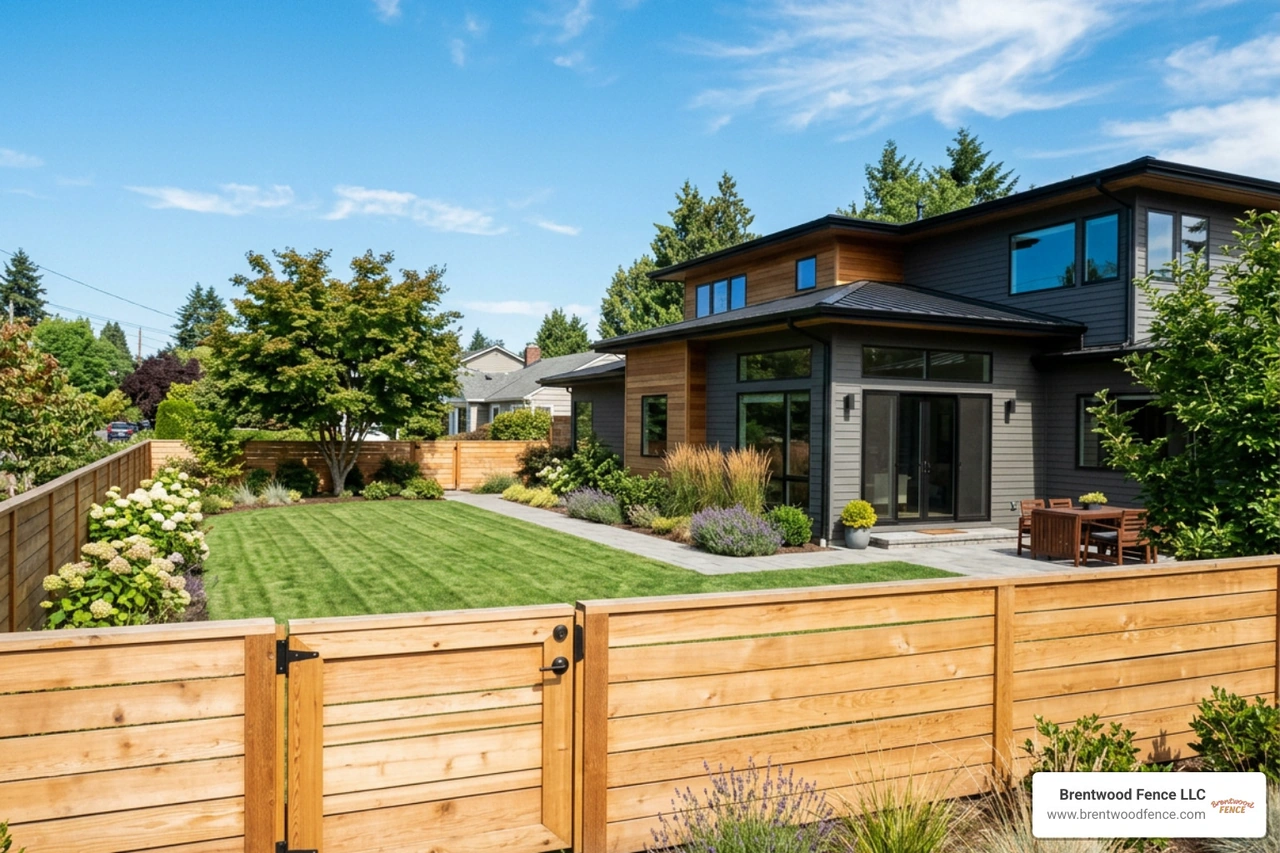
The best fence with gate pairing matches how you use the property: choose a tall wood or composite privacy fence with a side gate for a secluded backyard, a horizontal wood fence for a modern front or side yard, chain link with a secure steel gate for affordable perimeter protection, or ornamental metal with a decorative gate for visible curb appeal. The gate should match the fence material, swing clear of paths and slopes, and use posts and hardware sized for its weight.
A good pairing does more than mark a boundary. It controls access, supports security, and makes the entrance look intentional. Your yard size, terrain, local requirements, privacy needs, and preferred maintenance level should guide the decision before installation begins.
I'm Rob Thibeault, and I'll walk through practical fence-and-gate combinations that balance durability, access, and the look of your home.
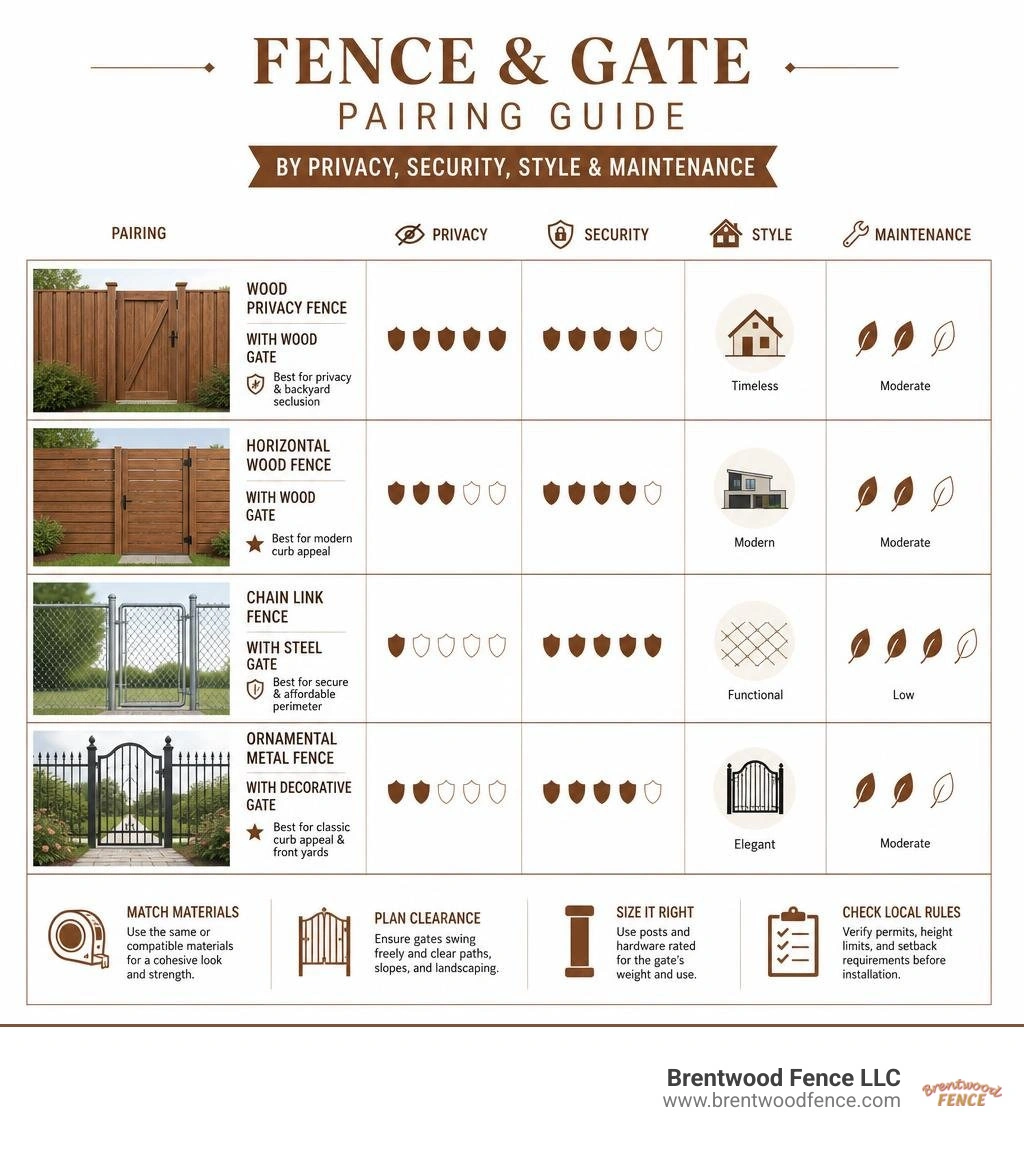
Finding the right balance between security, visual appeal, and long-term durability starts with matching the fence structure to an appropriately engineered gate. A mismatch often leads to sagging entry points, latch misalignments, or an awkward visual break in your landscape.
Here is how the top fence and gate pairings compare across essential ownership factors:
A traditional vertical wood privacy fence remains a top choice for residential backyards throughout New England. Utilizing a board-on-board or shadowbox design provides complete visual seclusion by overlapping pickets, which prevents gaps when the wood naturally expands and contracts through seasonal humidity shifts.
When pairing this fence style with a swinging entry, the gate demands dedicated structural reinforcement. Because solid wood pickets catch wind and add significant weight, we build our gates using heavy-duty, corrosion-resistant hardware and robust internal diagonal bracing. Proper hinge alignment ensures the gate will swing smoothly without dragging across lawn turf or patio pavers. If you want a dependable backyard sanctuary in Southern New Hampshire, Northeastern Massachusetts, or Southern Maine, our team handles custom wooden gate installation NH MA ME to guarantee lasting operation and privacy.
Horizontal fence designs have surged in popularity for modern architectural homes. By running boards horizontally between steel or heavy timber posts, this pairing creates clean, continuous lines that visually elongate a property line and make smaller outdoor living spaces appear wider.
Horizontal gates require specialized construction. Without vertical pickets to disperse load downward, horizontal gate panels must rely on an internal structural sub-frame—often fabricated from rigid aluminum or powder-coated steel—to prevent the boards from warping or racking over time. Tongue-and-groove or narrow-spaced cedar boards integrate directly with contemporary locksets and architectural latches, establishing an unbroken, polished facade along your front or side walkway.
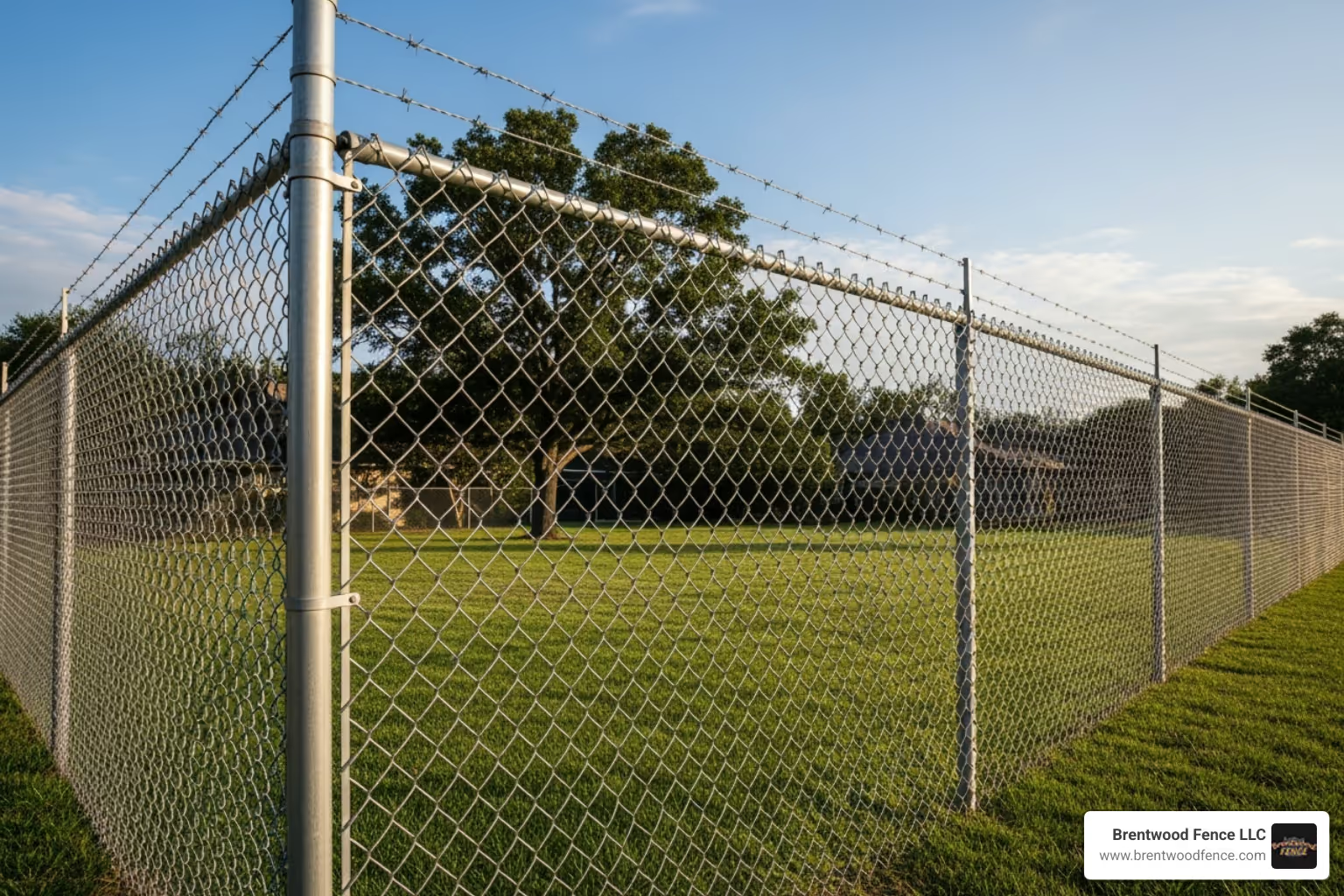
When boundary definition, pet containment, and cost efficiency are your top priorities across large boundary lines, galvanized chain link fencing provides unmatched performance. Woven from high-tensile steel wire and secured to tubular steel framework, this system delivers uncompromising security without blocking sightlines or natural sunlight.
The accompanying gate features a welded tubular frame fitted with industrial hinges and drop rods or pad-lockable latches. For residential or light commercial acreage where daily vehicle or equipment access is required, you can review our chain link fencing gates complete guide to understand standard single-swing widths, double-drive farm gate sizing, and long-lasting post-anchoring methods.
For homeowners who desire classic estate styling with minimal upkeep, ornamental aluminum or steel fencing provides a sophisticated aesthetic. Replicating the timeless look of historic wrought iron, modern ornamental metal panels feature weather-resistant powder coatings that resist rust, chipping, and fading caused by harsh coastal air and road salts.
A decorative metal garden gate often incorporates distinctive design elements such as arched top rails, finials, or decorative scrollwork. Beyond elevated curb appeal, ornamental gates excel in safety applications, serving as the industry standard for swimming pool barriers when fitted with self-closing hinges and magnetic self-latching hardware. Homeowners seeking decorative entryways, integrated arbors, and poolside fencing can explore our custom gates arbors fencing installation services to match structural safety with architectural charm.
Composite fencing delivers the dense privacy and warm appearance of finished wood without the need for periodic painting, staining, or sealing. Manufactured from recycled wood fibers and durable polymers, these tongue-and-groove boards slot into reinforced structural posts to withstand intense wind loads and high-traffic side yards.
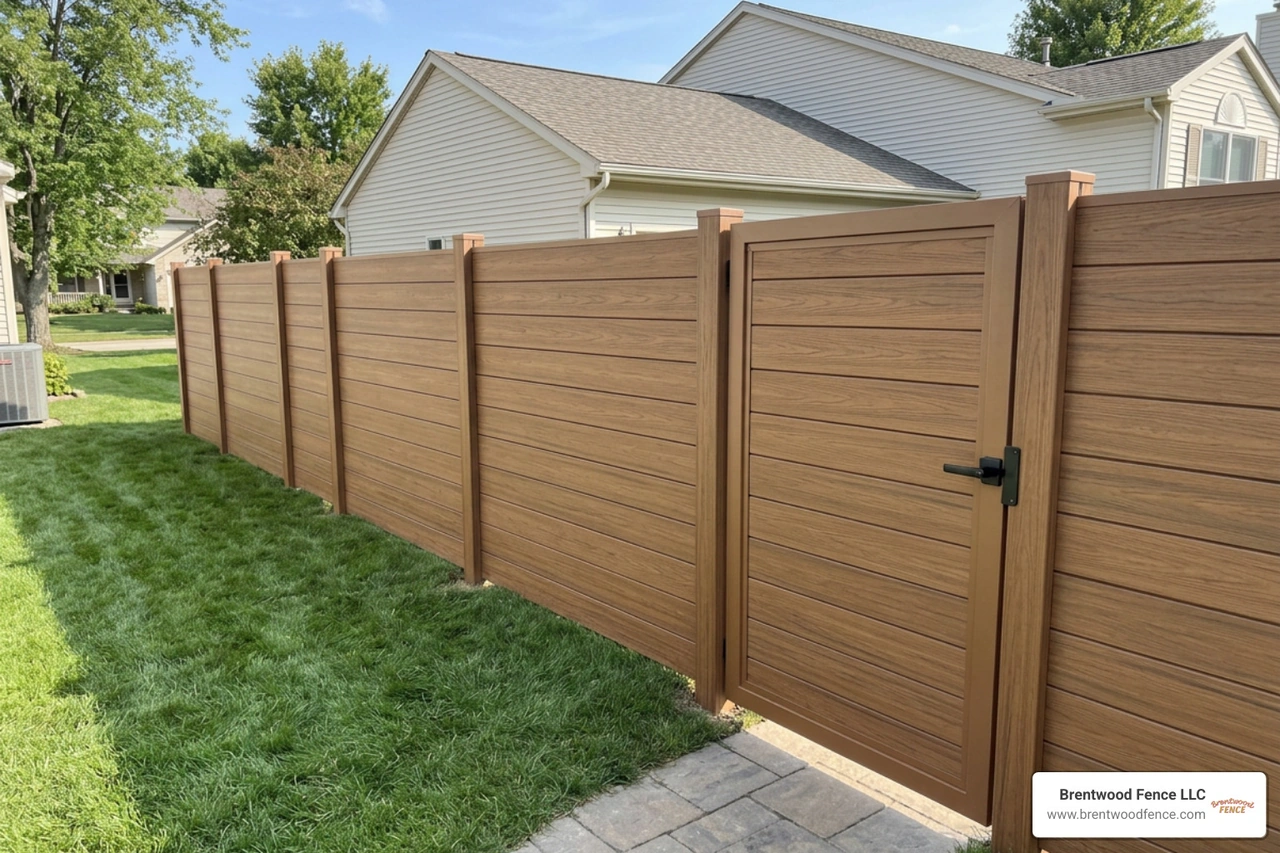
A matching composite side gate utilizes color-matched framing and heavy-gauge post inserts to support the panel's weight. Because composite materials are denser than natural wood, professional installation ensures post footings are engineered deep enough to eliminate leaning or sagging over decades of use.
A fence system is only as dependable as the engineering beneath the surface. Gate posts endure dynamic rotational loads every time an access door swings open or catches a strong gust of wind. In regions like Manchester, Dover, and Haverhill, outdoor installations must also contend with challenging soil conditions, seasonal freeze-thaw cycles, and heavy winter precipitation.
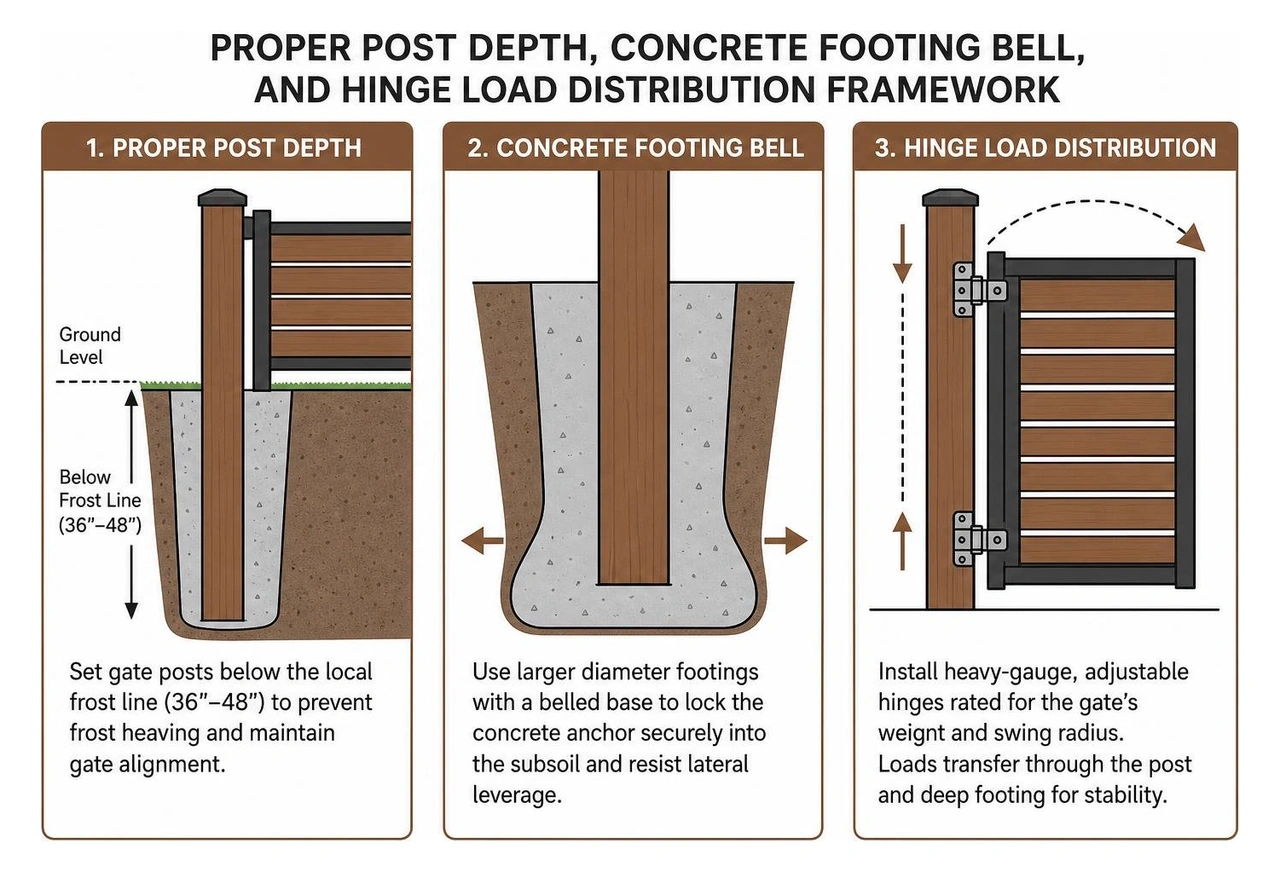
Several structural principles govern a reliable installation:
Ensuring your posts, footings, and structural clearances are correctly measured protects your property investment. For homeowners throughout New Hampshire and Massachusetts looking for experienced technicians, choosing professional fence and gate installation near me ensures your system is built to local code and site-specific topography.
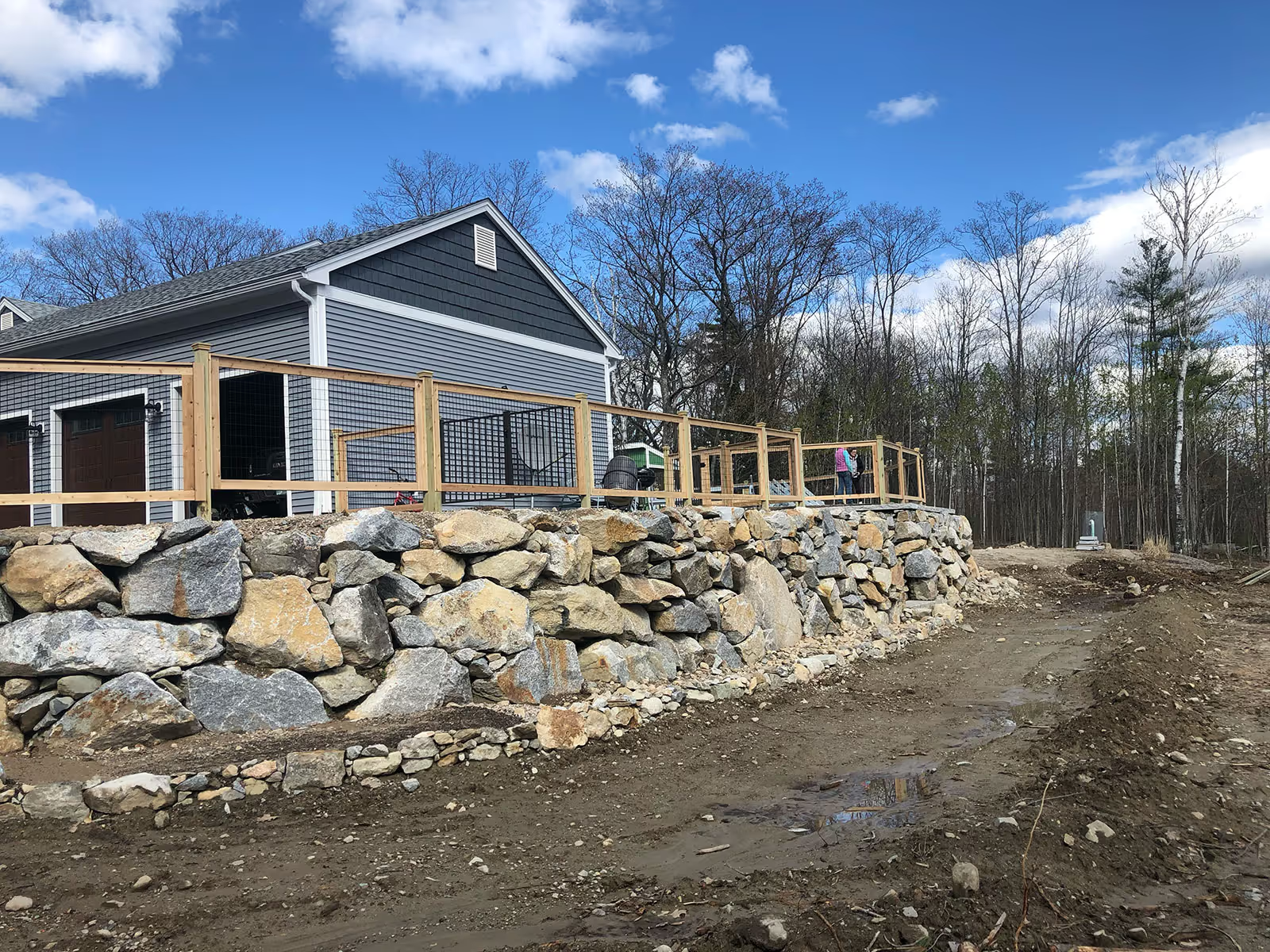
A well-planned fence and gate should complement your overall property design, blending naturally with garden beds, turf, walkways, and retaining walls.
Consider these best practices when combining fencing with landscaping:
Vertical fencing is the traditional standard and offers superior natural drainage, as rainwater runs quickly off the pickets. It adapts easily to rolling or sloping terrain through stepped paneling. Horizontal fencing provides a sleek, modern look that emphasizes property width, but it requires exceptionally rigid framing, careful post spacing, and flat terrain to keep lines visually true.
Yes, using steel-to-wood bracket conversion systems, sound galvanized chain link posts can often be repurposed to mount horizontal wood stringers and vertical privacy pickets. However, the existing metal posts must be structurally sound and anchored below the frost line to handle the substantial increase in wind load and weight. If the original gate opening is narrow or the corner posts are compromised, a dedicated wooden gate replacement and post reset is necessary to prevent premature sagging.
To maximize service life, apply a high-quality UV-blocking stain or protective sealant every two to three years to minimize moisture absorption and sun-bleaching. Inspect hardware seasonally, lubricating hinge pivot points and latches with silicone spray or lithium grease. If a wooden gate ever shows signs of corner drop, installing an adjustable steel anti-sag turnbuckle kit will quickly restore square alignment and keep the latch catching smoothly.
Choosing the right gate and fence combination transforms how you access, protect, and enjoy your property. Whether you need a secure chain link perimeter for open land, an elegant ornamental metal entryway for a landscaped courtyard, or a private wood enclosure for your patio, Brentwood Fence LLC provides the craftsmanship, local building expertise, and premium materials your property deserves.
Ready to upgrade your property boundaries with custom-built fencing and gate systems? Contact our team today to schedule professional fence installation services in NH, Massachusetts, or Southern Maine, and let our experts build a secure entrance tailored to your landscape.

Copyright 2022 Brentwood Fence | All Rights Reserved | Sitemap | Website by Plumb Development a Digital Marketing Agency