Blog Content

29
Apr
2026
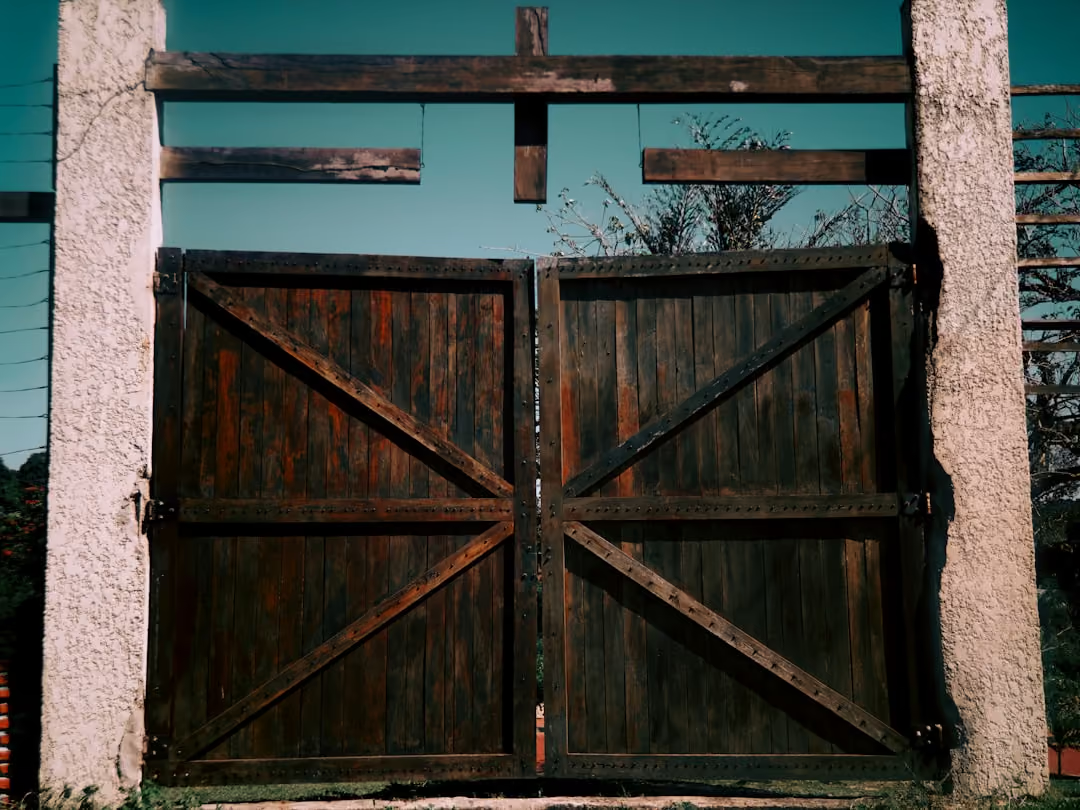
Wooden gate replacement is one of the most common fencing projects homeowners tackle — and one of the most misunderstood when it comes to cost.
Here's a quick cost overview so you can plan your budget right away:
Costs vary based on wood species, gate dimensions, hardware grade, and local labor rates.
Your old wooden gate has done its job. But now it's sagging, rotting at the base, or just looks tired — and it's dragging down the look of your entire property.
The good news? Replacing a wooden gate doesn't have to be overwhelming or overpriced. With the right materials, hardware, and a professional installation team, you can get a gate that looks great, functions smoothly, and lasts for years.
In this guide, Brentwood Fence LLC walks you through everything — from spotting the warning signs that your gate needs replacing, to choosing the right wood and hardware, to understanding what professional installation really costs in New England.
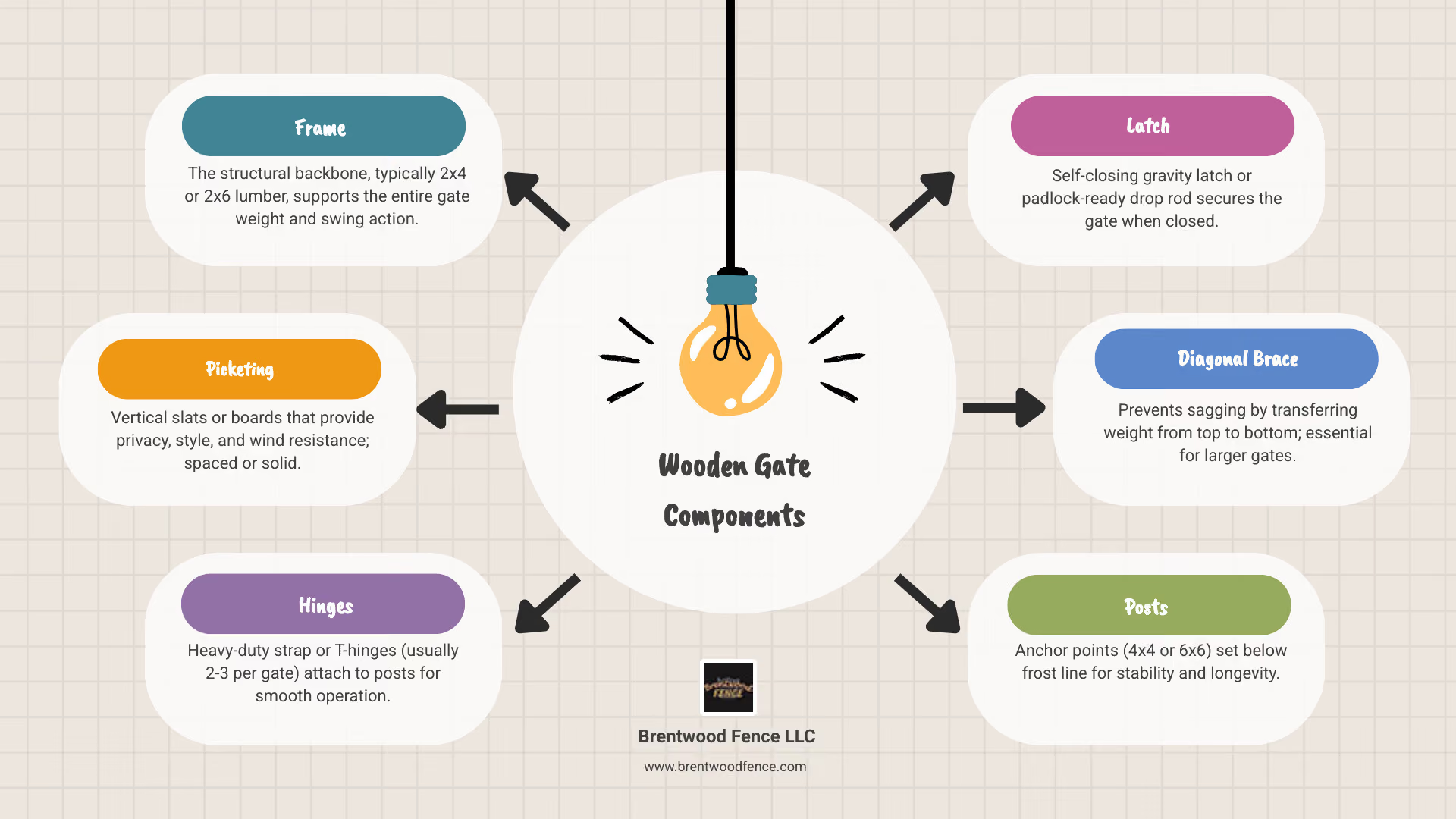
Knowing when to fix a gate and when to say goodbye is the first step in saving money. While a loose screw or a squeaky hinge is an easy fix, wood is an organic material that eventually succumbs to the elements—especially in the volatile climates of New Hampshire and Massachusetts.
If you have to lift your gate every time you want to latch it, you’re dealing with structural sagging. While some sag can be corrected with a turnbuckle kit, extensive warping of the wood itself usually means the internal fibers have broken down. When the frame is no longer "square," the gate puts undue stress on the hinges and the fence posts, often leading to more expensive repairs down the line.
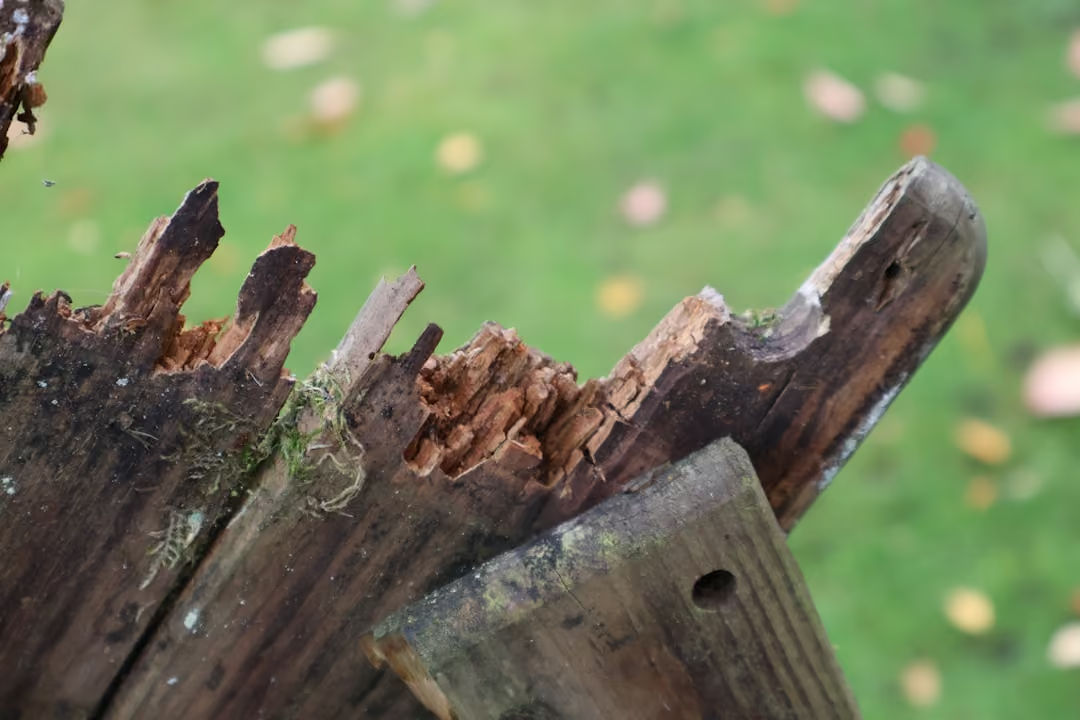
Take a close look at the bottom of your gate pickets and the lower rail. Because gates are often the lowest point of a fence line, they frequently sit in moisture or tall grass. If the wood feels soft, spongy, or is crumbling away, you have rot. Once rot enters the main frame of the gate, a wooden gate replacement is the only safe and aesthetic solution. You can learn more about managing similar issues in our guide on Replacing Wood Fence Panels.
In our region, wood-boring insects can turn a sturdy gate into Swiss cheese before you even notice. Look for small holes, sawdust-like "frass," or a hollow sound when you tap the wood. If the integrity of the wood is compromised, the gate can become a safety hazard, potentially falling on children or pets.
A gate is only as strong as its corners. If the joints where the rails meet the stiles are pulling apart, the gate has lost its structural integrity. While Wooden Fence Repair Companies can sometimes reinforce these, a full replacement ensures a fresh start with modern, weather-resistant adhesives and fasteners.
When we sit down with homeowners in Exeter, NH, or Portsmouth, we look at several factors that dictate the final invoice.
Choosing the right wood is about more than just looks; it's about matching the gate to the specific job it needs to do. Whether you are looking for a Wooden Gate Installation NH MA ME for a garden or a massive entryway, the material choice is paramount.
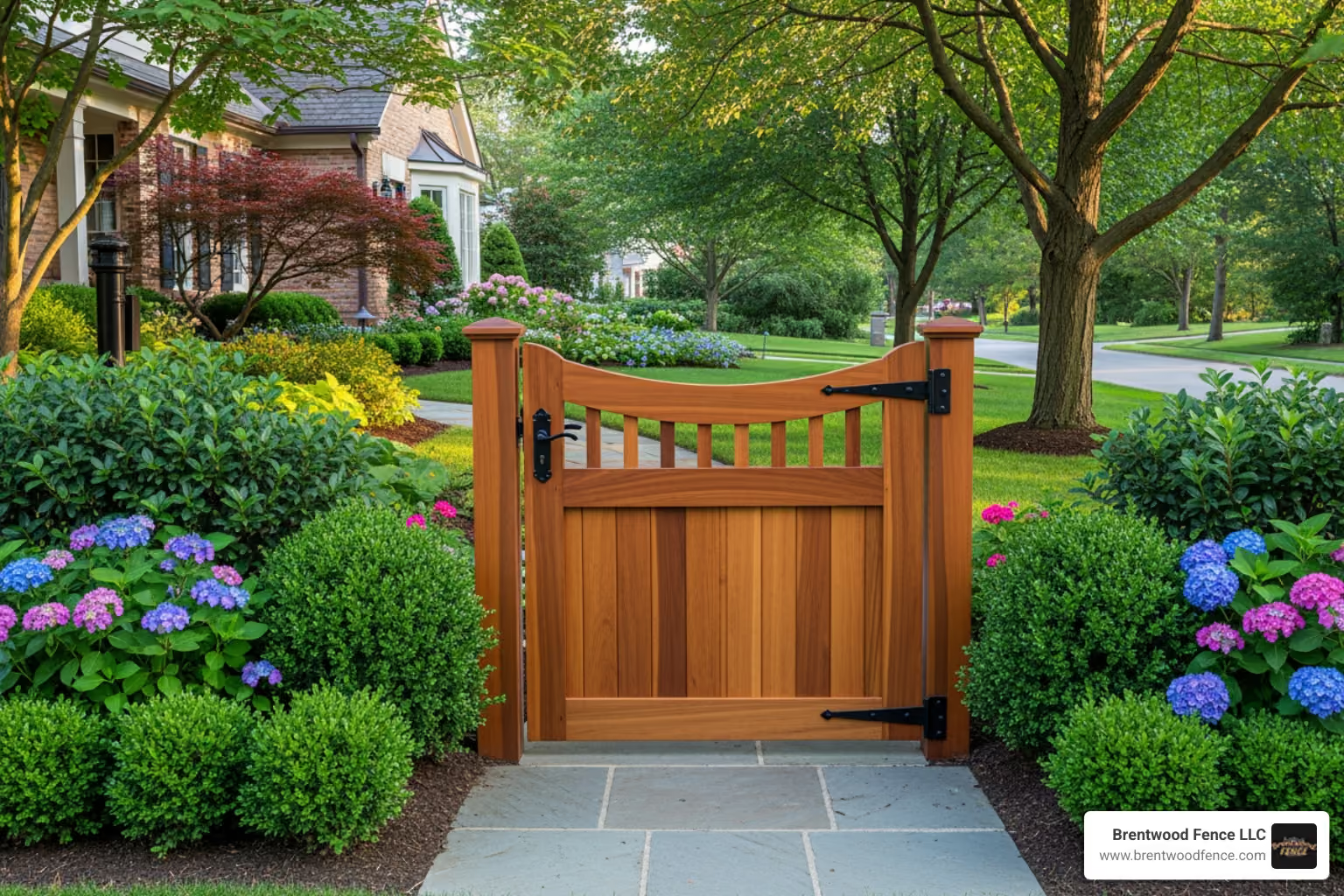
Cedar is the "gold standard" for New England gates. It has a high strength-to-weight ratio, which means it’s less likely to sag than heavier woods. It contains natural tannins that repel insects and prevent rot. Most importantly for our local aesthetics, it takes stain beautifully, allowing you to match your gate perfectly to your Wooden Fencing NH MA ME.
If durability is your primary concern and you plan on painting the gate, pressure-treated pine is an excellent choice. It is chemically treated to withstand ground contact, making it ideal for gates that might be exposed to snow piles during our New Hampshire winters.
A gate is only as good as the hardware that holds it up. When we perform a wooden gate replacement, we don't just reuse the old, rusty hinges.
While many homeowners enjoy a weekend DIY project, gates are notoriously finicky. A gate that is off by even a quarter of an inch can bind, scrape the ground, or fail to latch properly.
In Manchester, NH, and Concord, the "frost heave" is a real enemy of fences. If your gate posts aren't set deep enough (typically 36 to 48 inches in our region), the winter freeze will push the posts out of alignment. When the posts move, the gate won't close. Professional Wooden Gate Installers Near Me Nh Ma have the equipment to ensure posts are set in deep concrete footings that bypass the frost line.
A professional installer calculates the "swing arc" to ensure the gate doesn't hit rising ground or landscaping. We also ensure there is a proper gap (usually about 3 inches for driveway gates) to account for the natural expansion and contraction of the wood during humid summers and dry winters.
If you are planning your replacement, accuracy is everything.
Once your wooden gate replacement is complete, a little bit of love goes a long way in protecting your investment.
Wood's biggest enemies are the sun and the rain. UV rays break down the lignin in wood, turning it grey and brittle. A high-quality UV-inhibiting sealer or a semi-transparent stain should be applied shortly after installation. This keeps the wood fibers flexible and prevents water from soaking in. For more on this, see our Replacing Wooden Fence Guide.
At least twice a year (we suggest spring and fall), spray your hinges and latches with a silicone-based lubricant. Avoid heavy greases that can attract dirt and grit, which act like sandpaper on your hardware.
Because wood is a natural product, it will expand in the humid New England summers and shrink in the winter. You may need to slightly adjust your latch strike plate or tighten your anti-sag cable once or twice a year to keep things clicking perfectly. Our guide on Wooden Fence Nh Me Ma offers more tips on handling regional weather shifts.
Keep the bottom of the gate clear of leaves, mulch, and snow. Trapped debris holds moisture against the wood, which is the fastest way to trigger rot.
A well-maintained Western Red Cedar gate can last 15 to 20 years. Pressure-treated pine gates usually last 10 to 15 years. The lifespan depends heavily on whether the gate was professionally installed and how often it is sealed.
Absolutely! However, you cannot use a standard garage door opener. You need a specialized gate operator designed for outdoor use. We also highly recommend that any wooden gate intended for automation be built with an internal steel frame to handle the mechanical force of the opener without twisting the wood.
We almost always recommend Western Red Cedar for our clients in Haverhill, MA, and Derry, NH. Its ability to handle the "freeze-thaw" cycle without excessive cracking (checking) makes it the most reliable choice for our local weather.
A wooden gate replacement is more than just a home repair; it’s an upgrade to your property’s security, privacy, and curb appeal. By choosing high-quality materials like Western Red Cedar and ensuring the structural integrity of your posts, you can turn a sagging eyesore into a beautiful, functional entrance that lasts for decades.
At Brentwood Fence LLC, we pride ourselves on professional craftsmanship that stands up to the rugged New England elements. Whether you're in Exeter, Portsmouth, or anywhere in between, we're here to help you design a gate that fits your home and your budget.
Ready to upgrade your home's entrance? Request a consultation for wood fencing installation services today and let us help you find the perfect gate solution.

Copyright 2022 Brentwood Fence | All Rights Reserved | Sitemap | Website by Plumb Development a Digital Marketing Agency