Blog Content

14
Apr
2026

How high can a fence be in massachusetts depends on your location and yard area, but here's the quick answer:
Standard Height Limits in Massachusetts:
Planning a new fence for your Massachusetts property? You're not alone in feeling confused about what's allowed. The rules aren't as simple as you'd hope.
Here's the reality: Massachusetts has a "layer cake" system of fence regulations. State law sets the baseline, but your local town or city almost always adds its own specific requirements on top. That means the answer to "how high can my fence be?" depends heavily on where you live.
Why this matters for you:
Your fence impacts your property value, your relationship with neighbors, and your wallet. Build too high without a permit, and you could face daily fines, forced removal, or even lawsuits. Build on the wrong property line, and you might end up in a costly legal dispute.
The good news? Understanding these rules isn't as complicated as it seems once you know where to look. Whether you're replacing an old fence or installing a new one, knowing the regulations helps you avoid expensive mistakes and keeps your project moving smoothly.
Let's break down exactly what you need to know about Massachusetts fence height laws, from state statutes to local ordinances, so you can plan your fence with confidence.
How high can a fence be in massachusetts terms to learn:
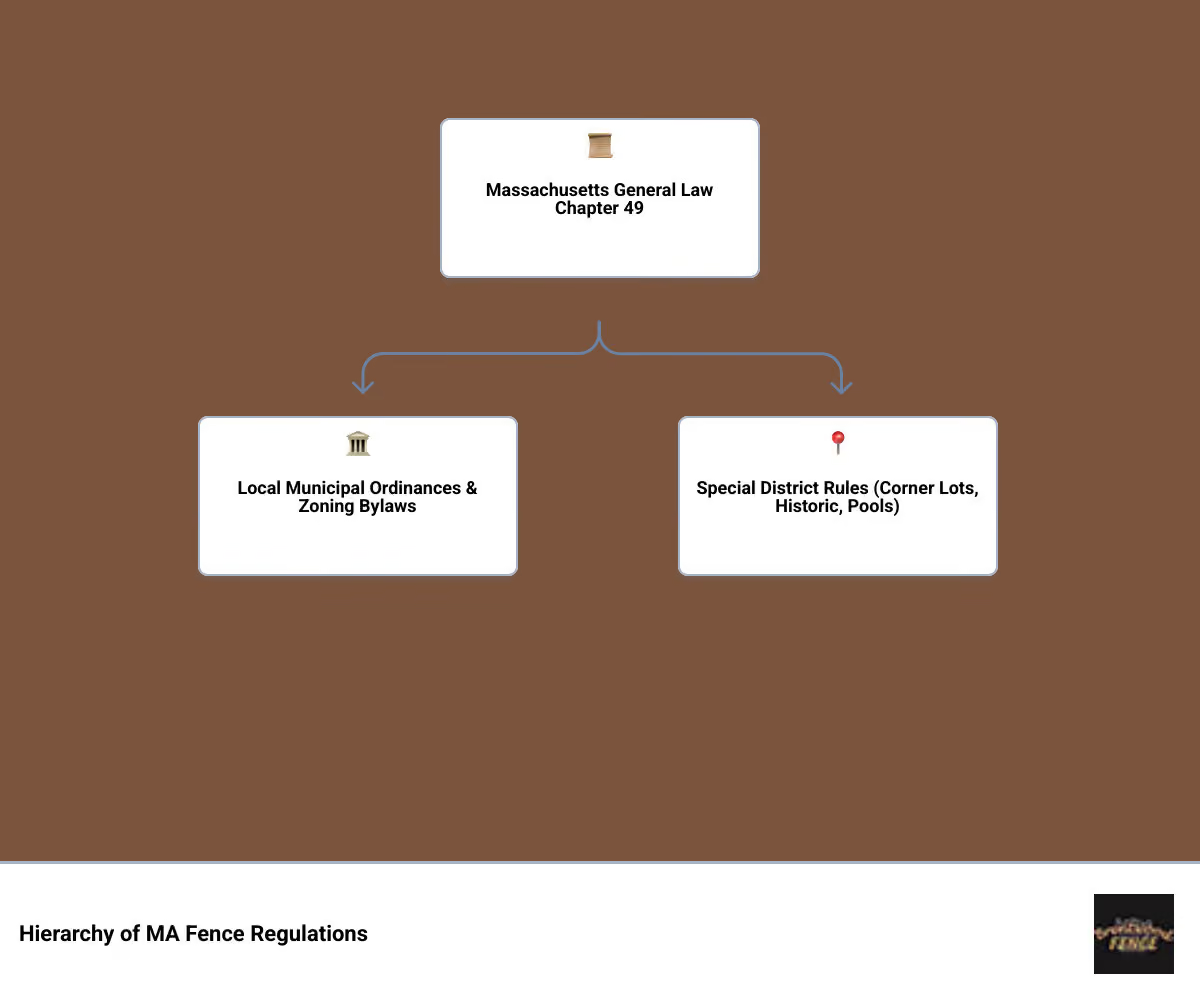
When we talk about fence regulations in Massachusetts, it's crucial to understand that we're dealing with a multi-layered system. Think of it like a delicious, albeit legally complex, layer cake. At the very bottom, providing the foundational base, are the Massachusetts General Laws (MGL). These are the statewide rules that apply everywhere. However, each individual town and city in Massachusetts has what's called "home rule authority," which allows them to add their own unique municipal ordinances and zoning bylaws on top of the state laws.
This means that while state law might give us a general guideline, your local town or city's building department is where you'll find the most specific and often stricter requirements for your fence project. It's not uncommon for local rules to impose tighter restrictions on fence height, materials, and placement than the state laws do. Therefore, always start your fence planning journey with a call or visit to your local building or zoning department. They are the ultimate authority on what's permissible in your specific neighborhood.
For a broader understanding of the legal framework, you can always consult resources like the Handbook on fence viewers and laws on fences in the Commonwealth of Massachusetts.

The primary statewide framework for fences in Massachusetts is found in MGL c. 49. This chapter lays out the basic rules for how fences should be constructed, maintained, and how disputes between neighbors should be handled. It's where we find the legal definition of what constitutes a "legal and sufficient fence" in the Commonwealth.
According to MGL Chapter 49, Section 2, a fence is considered "legal and sufficient" if it is four feet high, in good repair, and constructed of materials like rails, timber, boards, iron, or stone. Interestingly, it also recognizes natural barriers such as brooks, rivers, ponds, creeks, ditches, and hedges as equivalent, provided they are deemed so by the local fence viewers. This legal definition is more about the functionality and basic standard of a barrier than a maximum height restriction.
This chapter also introduces the fascinating concept of "fence viewers," a role that dates back to 1693. These local officials act as mediators and arbitrators for fence-related disputes, ensuring that neighbors adhere to the legal requirements for shared fences. We'll dive deeper into their role shortly.
While MGL Chapter 49 provides a baseline, it's truly just the starting point. Thanks to "home rule authority," cities and towns in Massachusetts have the power to enact their own bylaws that can be much more restrictive than state law. This means that the answer to how high can a fence be in massachusetts is highly localized.
For instance, state law generally requires a permit only for fences over seven feet tall. However, many municipalities have much stricter requirements. In Lowell, MA, for example, a building permit is required for any fence over six feet in height. Gloucester, MA, has a similar rule: if the fence does not exceed six feet, a building permit is not required. Marlborough takes it even further, often requiring permits for nearly all fence installations, and specifically limiting fences within 15 feet of the street to just three feet high. Andover, on the other hand, focuses its permit requirements on fences over seven feet, similar to the state guideline. And towns like Needham are particularly stringent about ensuring fences are built entirely on your property, not even slightly encroaching on a neighbor's land.
These local ordinances cover a range of details, including:
Ignoring these local rules can lead to significant headaches, including fines and the forced removal of your fence. That's why we always recommend making your first call to your local building or zoning department. For more insights into these varying regulations, check out our guide on Fence Building Rules in Massachusetts.
Understanding the specific height limits for your fence project is paramount, and these limits often depend on where on your property the fence will be located. Generally, fence height is measured from the finished grade level of the ground, which means any changes in elevation can impact the permissible height. Different zoning districts (residential, commercial, industrial) will also have their own sets of rules, but for most homeowners, the focus is on residential areas.

For most residential properties in Massachusetts, there's a clear distinction between front yard and backyard fences:
These are general guidelines. Your town's specific ordinances might allow for slightly taller or shorter fences in either area. Always confirm with your local building department.
Beyond the general front and backyard distinctions, certain areas or types of fences come with their own unique set of regulations:
Beyond just height, there are other crucial details that can make or break your fence project in Massachusetts. Understanding when a permit is required, which materials are off-limits, and the implications of the "spite fence" law can save you a lot of trouble down the road.
This is one of the most frequently asked questions, and the answer, as we've learned, varies.
It's not just height, though. Some towns may require permits based on:
What happens if you skip the permit?The consequences of non-compliance can be severe. If you build a fence that requires a permit but don't obtain one, or if your fence violates local ordinances:
Always, always contact your town's building department before starting any fence project. It's a quick call or visit that can save you significant time, money, and stress.
While most common fencing materials like wood, vinyl, aluminum, and chain link are generally allowed, there are some materials that are either outright prohibited in residential areas or come with strict regulations:
Beyond specific materials, Massachusetts has a unique and important law known as the Massachusetts' spite fence law. This law addresses fences built not for legitimate purposes, but primarily to annoy a neighbor.
According to Massachusetts General Laws Chapter 49, Section 21, a fence is considered a "spite fence" if it:
The key here is "malicious intent." If your fence is over six feet and its primary purpose is to block a neighbor's view, sunlight, or otherwise cause grief, it can be deemed a private nuisance. An owner or occupant injured by such a fence has the right to take legal action for damages. This law acts as a safeguard against neighbors using their property rights to intentionally harm others, reminding us that even within the bounds of your property, your actions can have legal consequences if driven by malice.
Building a fence often involves more than just your property lines; it frequently involves your neighbors. This is where communication, property surveys, and understanding the concept of "partition fences" become critical. A smoothly executed fence project often starts with a friendly conversation and a clear understanding of boundaries.
In Massachusetts, a "partition fence" is a fence that sits directly on the property line, separating two adjoining properties. Under Massachusetts General Laws Chapter 49, these fences are considered to be jointly owned by both neighbors. This joint ownership comes with joint responsibilities:
What happens if a neighbor refuses to contribute?Massachusetts law provides clear recourse. If a neighbor refuses or neglects to pay their share for the construction or maintenance of a partition fence, the other owner can take legal action to collect. The law states that you can collect double the amount owed, plus a one percent monthly interest penalty if payment is not made after 30 days. This provides a strong incentive for neighbors to honor their obligations.
To avoid disputes, it's always best to discuss your plans with your neighbors beforehand and, if possible, get a written agreement regarding cost-sharing and maintenance for any shared fence. Our team at Brentwood Fence LLC can also help guide you through these considerations as we have extensive experience working with Fence Companies in Massachusetts.
Massachusetts has a unique and historical solution for resolving fence disputes: the "fence viewer." This position, dating back to 1693, is a testament to how important fences have always been in the Commonwealth.
Contacting your town hall or building department is the first step if you need to initiate the fence viewer process. It's often a more cost-effective and less adversarial approach than immediate legal action.
One of the most common and potentially costly fence disputes arises when a fence is built, even by accident, on a neighbor's property. This is known as encroachment.
We understand that navigating fence regulations can feel like a maze. Here are some of the most common questions we hear, along with straightforward answers to help you plan your project.
For most residential backyards across Massachusetts, the standard maximum height for a fence is six feet. This height is generally permitted without needing a special variance or permit, assuming it complies with other local zoning requirements. However, it's crucial to remember that local ordinances can vary. Some towns might have a slightly lower limit, or they might allow for taller fences with a special permit. Always check with your local building department, as they are the definitive source for your specific property. If you're dreaming of a fence taller than six feet, professional consultation is a must to explore the possibility of obtaining a variance.
A fence built precisely on the property line between two adjoining properties is legally defined as a "partition fence" in Massachusetts. Under state law (MGL Chapter 49), such a fence is considered to be jointly owned by both neighbors. This means that both property owners are equally responsible for the cost of its construction, maintenance, and repair, unless there's a written agreement stating otherwise.
If one neighbor refuses to contribute their fair share, Massachusetts law provides a clear path for recourse. The aggrieved party can take legal action to collect not just the amount owed, but double the amount, plus a one percent monthly interest penalty if the payment is not made within 30 days of demand. This strong legal framework encourages cooperation and ensures that the burden of a shared fence is indeed shared.
Building a fence that exceeds height limits or violates other local ordinances can lead to a host of problems and costly consequences:
The best practice is always to do your due diligence upfront. A little research and communication can prevent significant headaches and expenses down the line.
Navigating the rules for how high can a fence be in massachusetts might seem daunting at first, but with a clear understanding of the state and local regulations, you can approach your project with confidence. We've seen that while Massachusetts General Laws provide a foundational framework, local municipal ordinances and zoning bylaws often impose stricter, more specific requirements. From the standard six-foot backyard limit to the crucial 2.5-foot restriction on corner lots for traffic safety, every detail matters.
Remember these key takeaways:
Building a fence is an investment in your property and your lifestyle. By doing your homework and adhering to all applicable regulations, you ensure that your fence is not only beautiful and functional but also legally sound.
At Brentwood Fence LLC, we handle these regulations daily across Massachusetts, New Hampshire, and Maine. Our professional installation services ensure your fence is fully compliant with all local ordinances, saving you the guesswork and potential headaches. Ready to build your fence the right way? View our service areas in MA, NH, and ME and let us help you achieve your fencing goals with peace of mind.


Copyright 2022 Brentwood Fence | All Rights Reserved | Sitemap | Website by Plumb Development a Digital Marketing Agency