Blog Content

22
Sep
2026
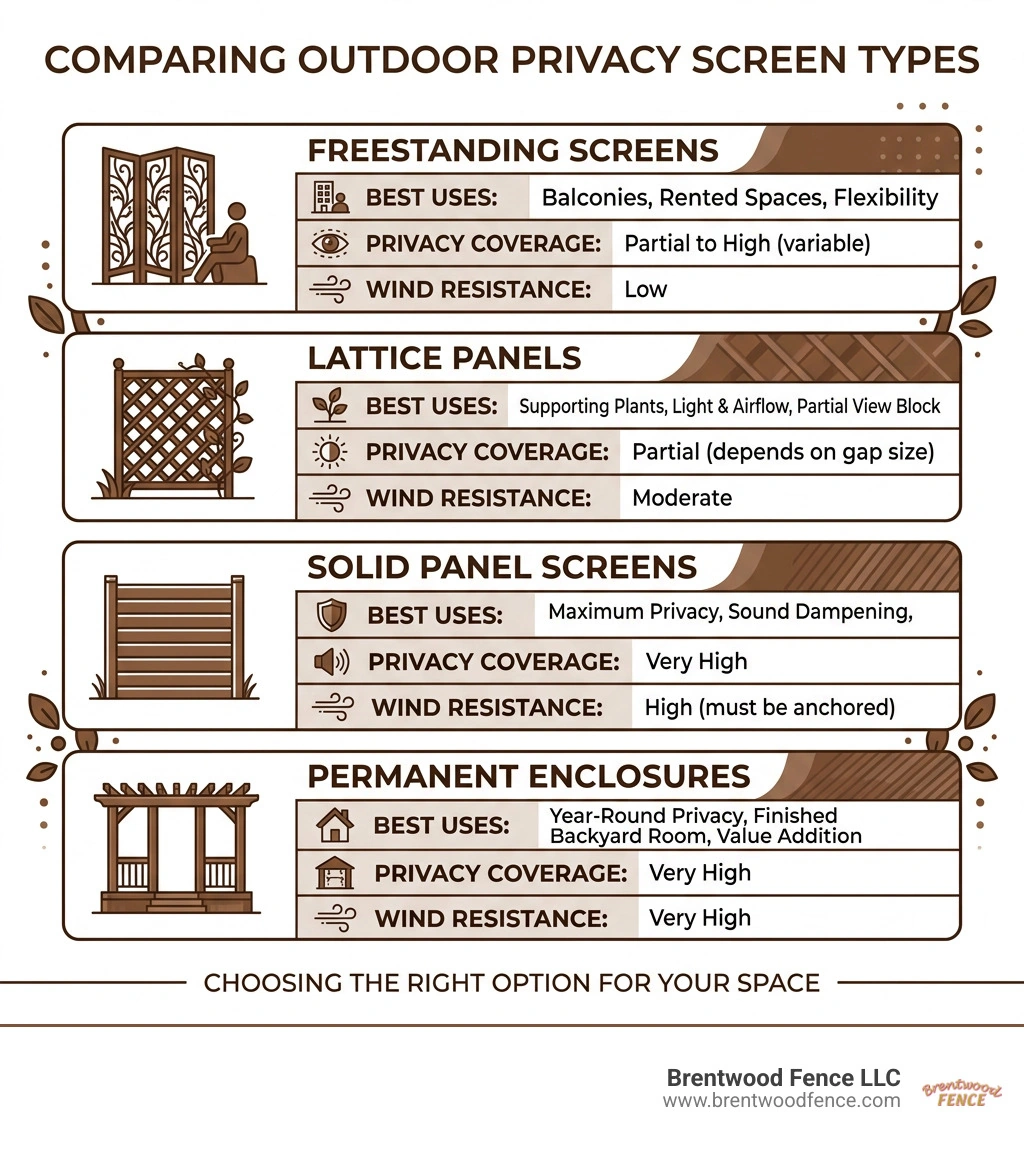
The best privacy screen outdoor option depends on how long you need it to last, how much wind your deck gets, and how fully you want to block neighbor sightlines. For a quick, flexible solution, use a freestanding wood or metal screen. For stronger privacy, better wind resistance, and a finished look that adds value, choose professionally installed lattice panels or a permanent wood enclosure.
A simple way to narrow the choice:
The right screen can do more than block a view. It can create shade, divide dining and lounge areas, frame plants, and make an open deck feel like a true backyard room.
I'm Rob Thibeault, and I'll walk through the privacy screen options that balance comfort, durability, curb appeal, and practical installation.
Privacy screen outdoor terms to know:
When deciding how to enclose an outdoor living area, material selection dictates longevity, maintenance requirements, and overall aesthetic harmony. Homeowners across Exeter NH, Manchester NH, and Haverhill MA often wrestle with balancing open-air comfort against unwanted neighbor sightlines. Exploring curated deck privacy ideas helps pinpoint the visual balance suitable for your architecture.
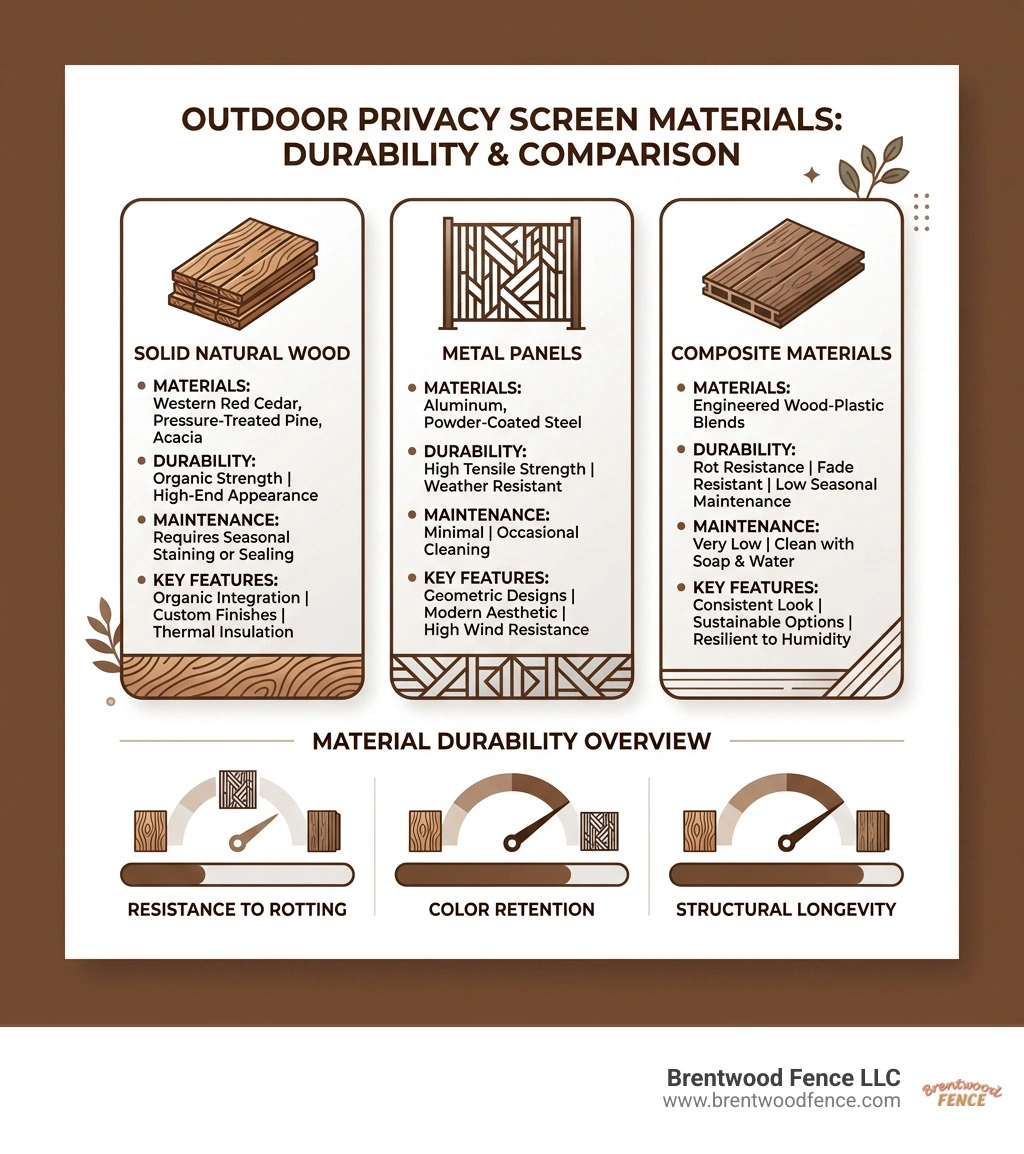
Different materials address distinct structural and environmental priorities:
Freestanding units are self-supporting structures designed for mobility and light-duty visual separation. Popular consumer models, such as the IKEA NÄMMARÖ privacy screen (measuring 140 cm high, 80 cm wide, and 50 cm deep; roughly 55 1/8" x 31 1/2" x 19 5/8"), feature solid acacia wood treated with an acrylic stain. These lightweight dividers weigh approximately 10.5 kg (23 lbs), making them easy to rearrange on a small balcony or terrace.
While freestanding models earn positive remarks for flat-pack convenience and modular flexibility, they carry inherent design limitations. Customers frequently report that their 55-inch height is too short to block standing sightlines on raised decks, and unweighted bases can tip in gusty weather. For ground-level garden seating or renters wanting temporary screening, reviewing diverse garden screening options can help determine if a portable divider meets your specific needs.
Built-in deck screens provide a permanent, structurally anchored solution that withstands the elements while enhancing deck architecture. By securing framework directly to rim joists, support posts, or structural deck framing, built-in panels eliminate the tipping hazards common with freestanding furniture pieces.
Understanding the structural types of privacy fences clarifies how various infills behave under daily exposure:
Choosing between a store-bought freestanding screen and a custom-built, permanently anchored enclosure comes down to wind tolerance, longevity, and overall privacy coverage.
For long-term peace of mind and enduring property value, investing in permanent wooden privacy fence installation ensures the enclosure is securely anchored against heavy weather. Selecting the best fencing for privacy depends on whether you need targeted deck seclusion or full-perimeter yard protection.
Freestanding screens appeal to homeowners seeking an entry-level, quick-fix solution. With retail prices running roughly $80 to $120 in North American and European markets, buying two or three modular units appears budget-friendly. They offer temporary flexibility: you can adjust them around patio loungers or fold them away for seasonal indoor storage.
However, true privacy effectiveness requires adequate height and structural span. Because modular panels typically peak around 55 inches tall, a standing neighbor can easily see over them into your dining or seating area. When evaluating the total cost of privacy fences installed in 2026, permanent enclosures provide a far lower cost per year of usable service life by eliminating frequent replacements, hardware failures, and weather-related blowouts.

New England weather brings unique structural challenges. In coastal hubs like Portsmouth NH and Dover NH, as well as inland areas like Concord NH and Derry NH, winter storms, freezing rain, and heavy wind gusts test outdoor installations.
Freestanding modular screens act like sails during unexpected wind gusts. Because consumer units carry minimal mass, strong drafts can flip them over railings or snap assembly joints. In contrast, heavy-duty wood privacy fence construction relies on deeply anchored 4x4 or 6x6 posts fastened with corrosion-resistant exterior hardware. Choosing rot-resistant lumber—such as northern white cedar, western red cedar, or pressure-treated southern yellow pine—ensures structural stability through deep freezes, spring rains, and humid summers.
Modern privacy barriers can deliver multifunctional utility beyond simply blocking sightlines. By pairing structural screening with creative backyard features, you can transform an ordinary patio into a multi-dimensional retreat:
Exploring comprehensive backyard screen solutions allows you to blend multiple styles, combining solid privacy panels with open decorative accents to fit your yard's layout.
Achieving effective deck privacy requires accurate sizing and proactive seasonal care.
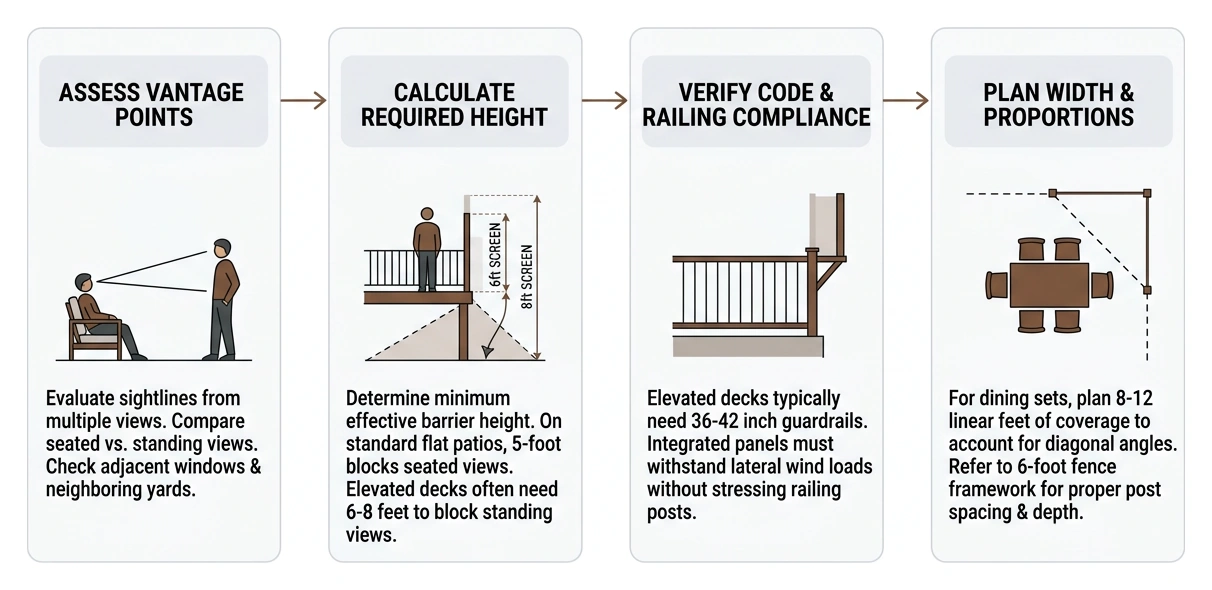
Before building or purchasing panels, assess your deck's sightlines from multiple vantage points:
Wood screening requires periodic maintenance to preserve its structural integrity and finish:
Following our privacy fencing installation guide ensures every post, fastener, and board is positioned for optimal airflow, structural stability, and drainage.
On an elevated deck, an effective privacy screen typically needs to reach 6 feet to 8 feet above the deck surface to block sightlines from neighboring yards and upper-story windows. Because elevated platforms lift you above standard property-line fences, shorter 4-foot or 5-foot screens only protect seated occupants directly next to the wall. Always check municipal building codes and HOA bylaws, as many New England communities enforce specific height restrictions for deck attachments to safeguard wind stability.
To secure freestanding screens against tipping in high winds:
Western Red Cedar and Northern White Cedar are widely regarded as top choices for long-term outdoor screening due to their natural tannins, which resist insect infestation, rot, and decay without chemical treatments. Pressure-treated Southern Yellow Pine offers exceptional structural strength and rot resistance at an economical price point when properly sealed. Dense tropical hardwoods and solid acacia also offer good durability, provided their acrylic stains and protective finishes are reapplied annually to avoid sun-induced cracking.
Transforming an exposed deck into a quiet, secluded backyard sanctuary elevates your home's outdoor comfort, daily usability, and overall property value. While modular, freestanding screens offer short-term utility for small balconies and temporary spaces, high-wind exposures and elevated decks demand the structural stability of a permanent enclosure.
Investing in custom wood privacy screening ensures your barrier can handle harsh New England winters, heavy coastal winds, and years of seasonal wear. At Brentwood Fence LLC, our team delivers custom-crafted, durable screening solutions tailored to the architecture of your home across New Hampshire, Maine, and Massachusetts.
Ready to enjoy your outdoor living space in complete privacy? Explore our expert wood fencing installation services and schedule your consultation today.
Copyright 2022 Brentwood Fence | All Rights Reserved | Sitemap | Website by Plumb Development a Digital Marketing Agency