Blog Content

26
Jun
2026
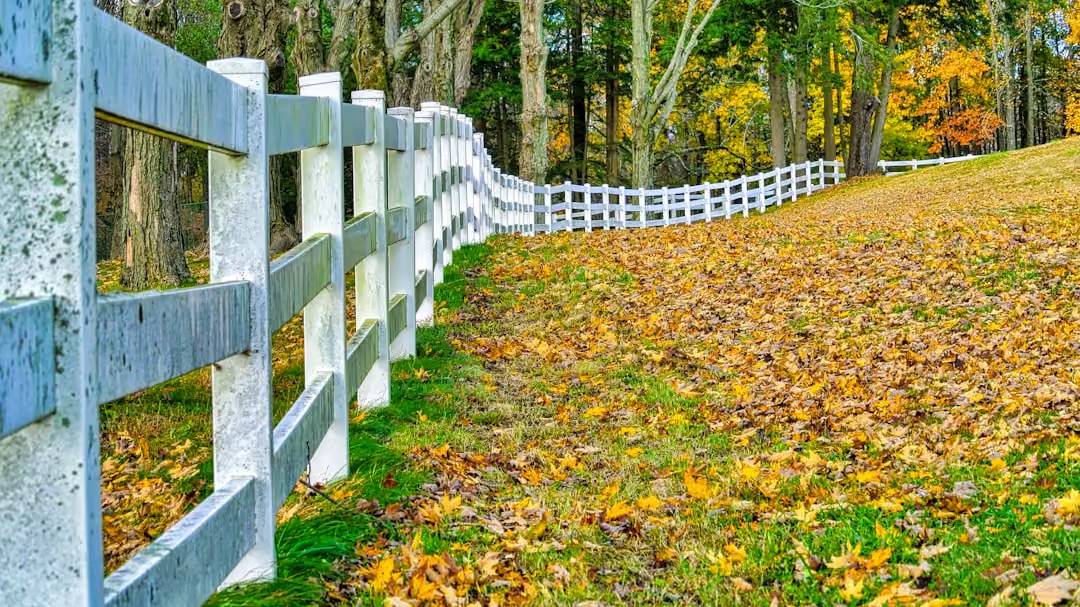
The cost of installed vinyl fence varies more than most homeowners expect — but here's a fast answer before we dig into the details:
Quick Cost Summary (2026 National Averages)
You finally found a contractor who shows up on time. You've picked out the fence style. Then the quote arrives — and it's nothing like what you expected.
That gap between the number in your head and the number on paper is one of the most common frustrations homeowners face with fencing projects. Vinyl fence pricing has a lot of moving parts: height, style, soil conditions, your region, and whether you need an old fence torn out first.
The good news? Vinyl fence material costs have actually dropped 15 – 25% since 2020, making this one of the better times in recent years to move forward on a project.
This guide breaks down exactly what you'll pay, why costs vary, and what to watch out for so you don't get caught off guard.

Cost of installed vinyl fence terms simplified:
When you look at the big picture, the national average cost to install a vinyl fence in 2026 is sitting at $4,149, with a typical overall range of $2,500 to $6,000 for standard residential properties. However, because fences are priced and built by the foot, looking at the cost per linear foot is the most accurate way to sketch out your initial budget.
Depending on your local labor market, soil conditions, and the specific style of vinyl you choose, the all-in cost of installed vinyl fence ranges from $25 to $58 per linear foot. For highly customized projects, premium wood-grain textures, or heavy-duty commercial grades, that price can climb up to $78 to $82 per linear foot or more.
To help you get a clearer picture of how different choices impact the bottom line, we've broken down the average cost per linear foot by height and style in the table below. For more granular details, you can also check out the Forbes Home Vinyl Fence Cost Guide or dive deeper into our analysis of vinyl fencing price per foot.
A 100-foot fence run is a very common project size for small suburban backyards, side yards, or partition lines. If you are planning a 100-foot project, you can generally expect to spend between $2,500 and $5,000 for a standard professional installation.
Let's look at the math behind a typical 100-foot project. First, we have to calculate the materials. At an average material cost of $10 to $30 per linear foot, you will spend about $1,000 to $3,000 on the vinyl panels, posts, caps, and concrete. Labor, which averages $5 to $15 per linear foot (and can go up to $25 depending on site conditions), will add another $500 to $1,500 to the bill.
If you add a single walk-through gate (which typically costs $200 to $600 installed including heavy-duty hardware) and account for basic site preparation, your final invoice will land squarely in that mid-range. For an interactive way to play with these numbers based on your exact yard dimensions, try our online Vinyl Fence Price Estimator.
The design you choose doesn't just change the look of your backyard; it drastically alters the amount of raw PVC material required to manufacture the panels.
For a deeper dive into how color, texture, and height impact your wallet, check out our White Vinyl Fence Pricing Guide 2025.
When a professional estimator walks your property, they aren't just measuring the length of the line. They are looking at several hidden variables that can make two identical 100-foot fences cost completely different amounts.

Here are the primary factors that will shape your final quote:
To learn more about what to expect during the quoting process, read our guide on the Cost to Have Vinyl Fence Installed.
Where you live has a massive impact on the cost of installed vinyl fence. Because labor, permitting, and shipping costs vary wildly across the United States, a project in one state can easily cost 40% more than the exact same project in another.

While national averages are helpful for early planning, local realities dictate your actual budget. For example, a homeowner in a low-cost-of-living state might pay on the lower end of the national average. However, if you are building a fence in major metropolitan hubs or regions with challenging weather, prices shift upward:
To read more about how New England's climate and geography affect your project, see our article on Putting in a Vinyl Fence NH MA ME. For a broader look at national pricing models, you can review the U.S. News Vinyl Fence Cost Breakdown.
It is easy to experience a bit of sticker shock when comparing the upfront cost of vinyl to traditional pressure-treated wood. However, looking at a 20-year cost comparison paints a completely different picture.
Let's look at the lifetime cost of ownership for a 150-foot privacy fence:
This incredible durability is why vinyl consistently offers a strong return on investment (ROI), recovering 50% to 70% of its installation cost in added home curb appeal and resale value. Discover our full suite of low-maintenance options on our Vinyl Fencing Installation Services page.
To help you plan your project with confidence, we've compiled the answers to the most common questions homeowners ask us during estimates.
In terms of the initial check you write, no. Pressure-treated wood remains the cheapest privacy fence material upfront. However, if you plan to stay in your home for more than 7 to 10 years, vinyl is significantly cheaper. Because wood requires continuous staining, sealing, and board replacements, the total cost of a wood fence will surpass a vinyl fence within the first decade.
In most municipalities throughout New Hampshire and Massachusetts, yes, you will need a local building permit. Permit fees generally range from $25 to $150. Additionally, if you live in an HOA-governed community, you will need written approval of the height, color, and style before work begins.
As a professional installer, we highly recommend setting your fence 6 to 12 inches inside your property line so you can easily maintain both sides without trespassing on your neighbor's land. If you are unsure where your boundary lines are, getting a professional property survey ($300 to $700) is a smart insurance policy against future legal disputes.
For a standard residential yard (around 150 linear feet) on relatively flat ground, a professional 2-person crew will typically complete the job in 2 to 3 days.
If your yard has severe slopes, rocky soil, or heavy tree roots, it may add an extra day or two to the schedule.
Installing a new fence is a significant investment in your home's security, privacy, and curb appeal. While the upfront cost of installed vinyl fence is higher than some alternative materials, its zero-maintenance lifestyle, lifetime durability, and excellent long-term value make it one of the smartest choices you can make for your property.
To get a precise, itemized quote tailored to your yard's unique layout, soil, and dimensions, let our experienced team help. We serve homeowners across Exeter NH, Portsmouth NH, Manchester NH, Concord NH, Derry NH, Dover NH, and Haverhill MA.
Ready to take the next step? Get a Free Fencing Installation Estimate from Brentwood Fence LLC today, and let’s build a fence you'll love for decades!
Copyright 2022 Brentwood Fence | All Rights Reserved | Sitemap | Website by Plumb Development a Digital Marketing Agency