Investing in a privacy fence is one of the most effective ways to upgrade your residential or commercial property. Beyond marking physical property lines, a professionally constructed fence serves as a protective barrier that transforms your outdoor space into an intimate retreat. When homeowners seek a backyard privacy fence nh me ma, they quickly realize that proper installation requires much more than just digging holes and nailing boards together.
Partnering with experienced local privacy fence installers ensures your investment stands tall through severe seasonal weather, deep winter freeze-thaw cycles, and heavy wind loads. Professional installation maximizes visual screening, protects your family's safety, enhances curb appeal, and directly increases overall property value.
Key Benefits of Privacy Fencing for Homeowners
A well-designed privacy fence provides immediate, multi-layered benefits:
Complete Visual Isolation: Solid privacy panels block direct sightlines from nearby roads and neighboring properties, allowing you to enjoy your swimming pool, patio, or backyard dining space without feeling exposed.
Enhanced Safety and Containment: Keep children and pets safely inside the boundaries of your yard while preventing stray animals from wandering onto your turf.
Acoustic and Noise Dampening: While no fence completely silences traffic or neighborhood clamor, thick wood, vinyl, or composite panels act as sound barriers, noticeably dampening ambient noise levels.
Wind Break Protection: Continuous privacy panels break up cold seasonal gusts, shielding delicate landscaping, outdoor patio furniture, and garden beds.
Comparing Privacy Fencing to Chain Link and Wrought Iron Fences
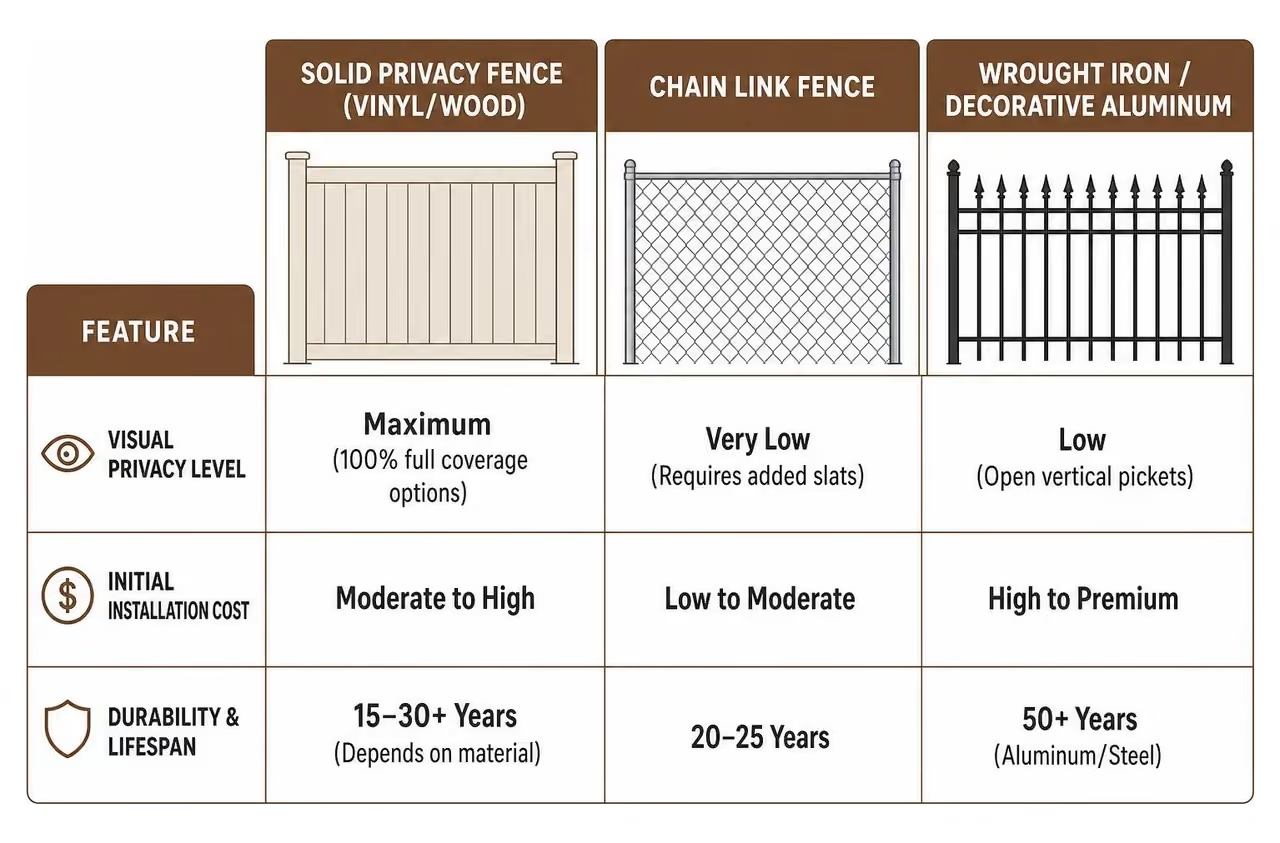
Choosing the right perimeter barrier involves balancing budget, maintenance expectations, and visual isolation needs. Chain link and wrought iron are excellent structural barriers, but they serve fundamentally different purposes than true privacy fencing.
Feature
Solid Privacy Fence (Vinyl/Wood)
Chain Link Fence
Wrought Iron / Decorative Aluminum
Visual Privacy Level
Maximum (100% full coverage options)
Very Low (Requires added slats)
Low (Open vertical pickets)
Initial Installation Cost
Moderate to High
Low to Moderate
High to Premium
Durability & Lifespan
15–30+ Years (Depends on material)
20–25 Years
50+ Years (Aluminum/Steel)
Maintenance Requirements
Low (Vinyl) to Moderate (Wood sealing)
Very Low
Minimal to Low
Wind Resistance
Solid face acts as a sail (Needs deep footings)
Excellent (Wind passes through)
Excellent (Wind passes through)
While chain link can be modified with slats for moderate screening—as detailed in our privacy options chain link fence guide—it rarely delivers the total visual blockage and architectural elegance of traditional wood, composite, or vinyl privacy panels.
Selecting the Ideal Fence Materials and Styles for Any Climate
Selecting the correct material is vital when planning a project built to withstand strict regional climate demands across New England. High humidity, severe snow accumulation, heavy ice loads, and extreme temperature drops place immense stress on fence structures. Choosing high-grade materials tailored to your specific microclimate guarantees lasting performance.
Material Performance Across Diverse Regional Climates
Each fencing material exhibits distinct performance characteristics under harsh weather conditions. Reviewing the various types of privacy fences nh ma me helps narrow down the best selection for your landscape.
Western Red Cedar: Natural oils make cedar highly resistant to decay and insects. It handles moisture shifts exceptionally well, though it requires periodic staining or sealing to prevent graying and cracking over its typical 15-to-20-year lifespan. For detailed lumber options, check our guide on wooden privacy fence installation nh ma.
Vinyl (PVC) Panels: Engineered vinyl offers zero-maintenance privacy that never requires painting or staining. Premium modern vinyl privacy fences are specifically formulated to remain flexible even down to -30°F, preventing winter brittleness while resisting severe UV degradation.
Powder-Coated Aluminum: Highly durable and 100% rust-proof, aluminum offers a lifetime of service. While standard aluminum fencing features open pickets, specialized privacy slat attachments or hybrid designs offer maximum longevity with minimal upkeep.
Composite Lumber: Combining recycled wood fibers and dense plastics, composite materials offer the authentic appearance of natural timber without the rot, splintering, or high maintenance overhead.
Beyond material choice, the architectural style of your fence influences both function and aesthetics:
Full Privacy (Tongue-and-Groove): Interlocking vertical boards eliminate all sightlines, creating an impenetrable visual barrier perfect for hot tubs, backyards, and swimming pool enclosures.
Semi-Privacy: Spaced pickets, lattice tops, or shadowbox layouts allow slight natural light and wind to pass through while still obstructing direct visual lines. Semi-privacy layouts relieve overall wind pressure against long runs of fencing.
Horizontal Slats: A modern, contemporary design utilizing wide horizontal boards to create sleek, clean architectural lines that make yards feel longer and wider.
Shadowbox (Board-on-Board): Alternating vertical boards on either side of the structural rails ensure the fence looks identical from both sides while allowing air movement through the fence plane.
Material Lifespan and Essential Maintenance
To ensure your fence lasts for decades, basic routine maintenance is required based on your selected material:
Wood Maintenance: Inspect wood fences annually for soil accumulation against the bottom pickets. Apply a clear water repellent or penetrating oil-based stain every 2 to 3 years to stop moisture absorption.
Vinyl and Composite Care: Wash panels once or twice a year using a mild household detergent and garden hose to prevent surface algae, mold, and mildew accumulation. Avoid using harsh chemical cleaners.
Post-Storm Checks: After severe winter nor'easters or high-wind events, inspect post ground connections and gate latches to clear fallen debris and catch alignment issues early.
Structural Engineering and Professional Installation Techniques
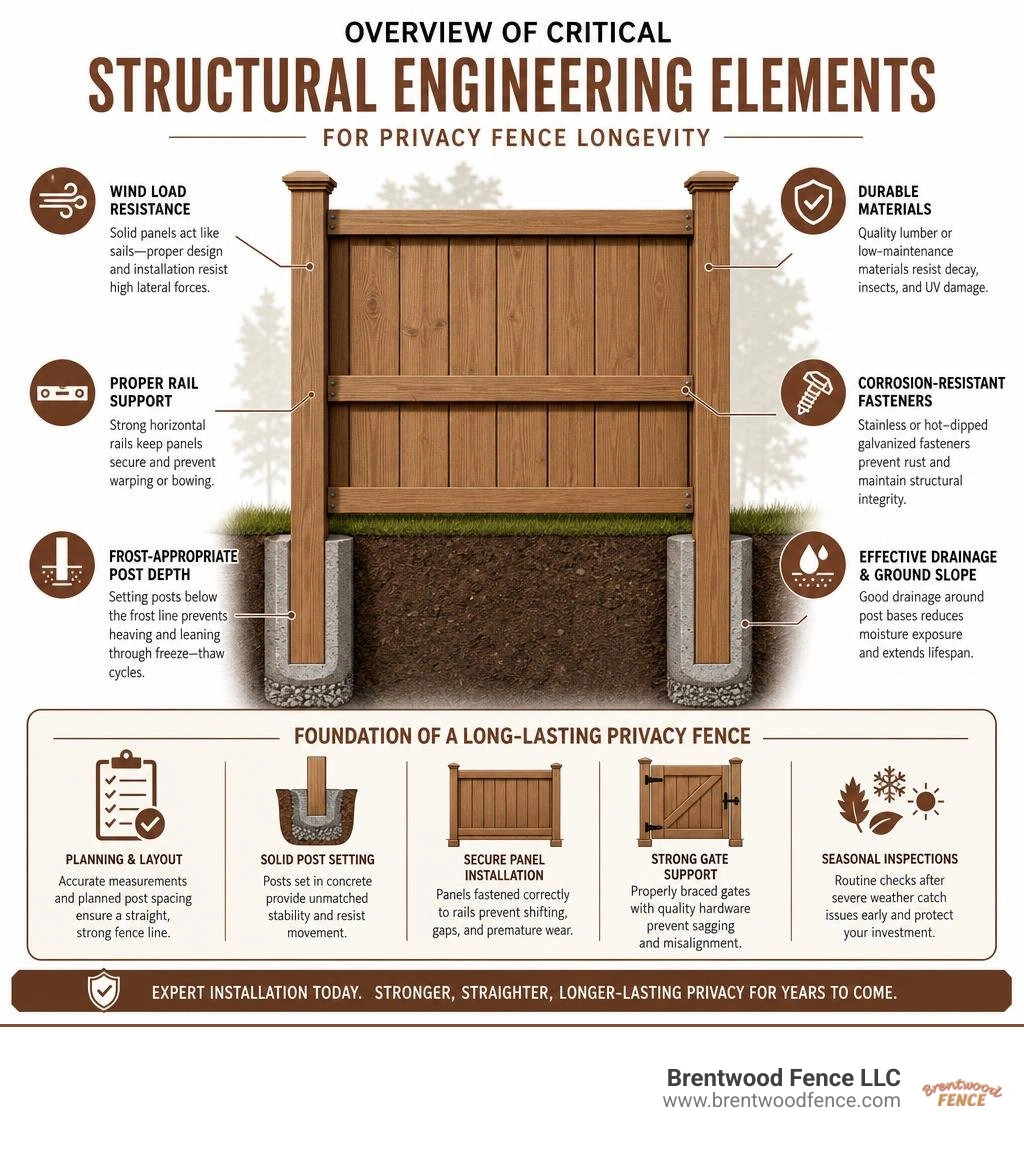
A privacy fence is essentially an exterior wall exposed to continuous environmental forces. Solid panels act like giant wind sails, converting moderate breezes into hundreds of pounds of lateral force pushing directly against structural posts. Without expert installation, ground moisture and seasonal soil movement will quickly cause fence lines to lean and gates to sag.
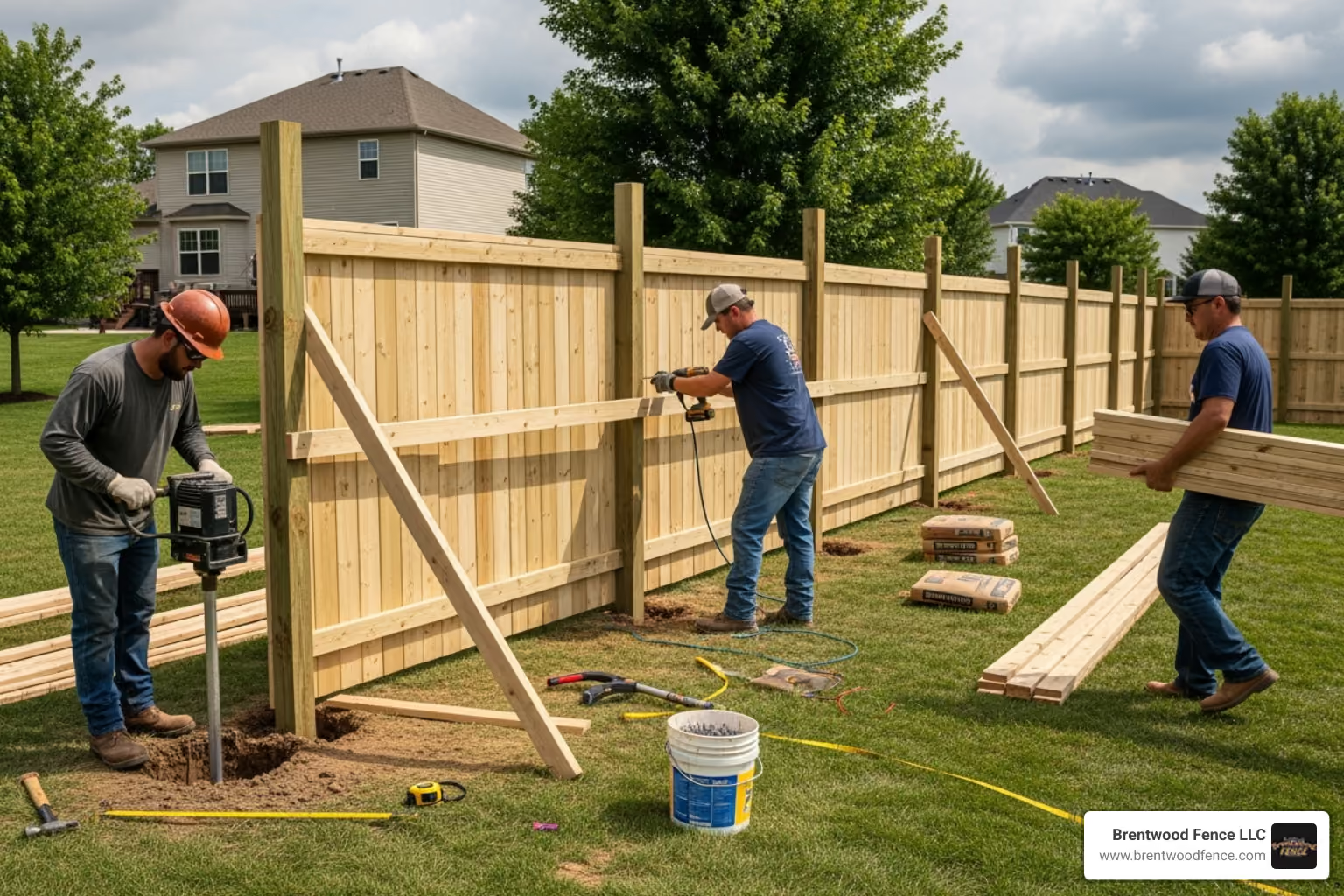
Executing a precise, durable fence build requires a disciplined step-by-step workflow:
Site Survey & Boundary Verification: Locating exact property pins, reviewing recorded plot plans, and establishing straight string line borders inside your legal property limits.
Utility Marking (Calling 811): Coordinating with public utility locators via Call 811 prior to any digging to identify underground power, gas, communications, and water lines.
Post Hole Excavation: Digging precise vertical post holes that extend down below the local frost depth line.
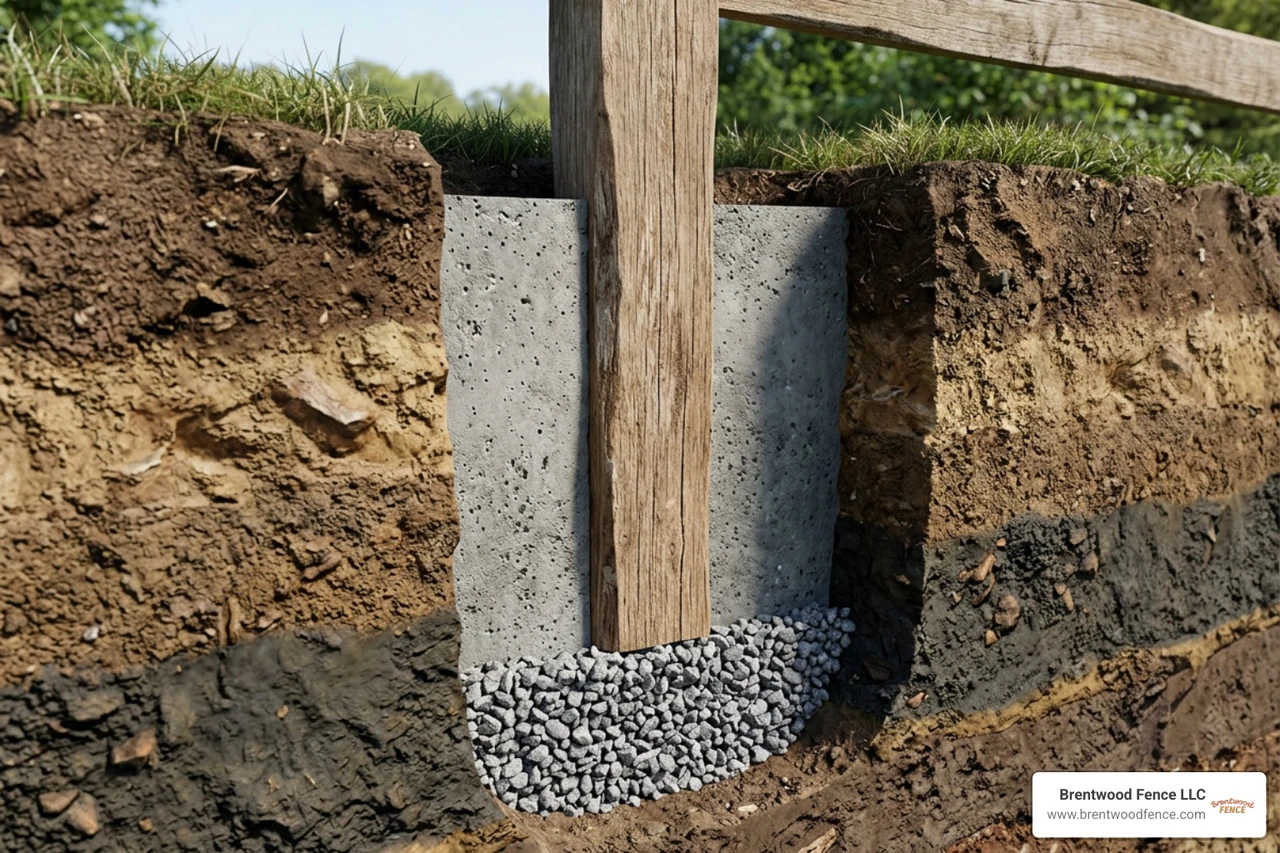
Setting Posts & Concrete Footings: Placing structural pressure-treated wood, aluminum-reinforced vinyl, or steel posts in concrete with proper aggregate drainage bases.
Plumb, Level & String Alignment: Verifying that every post is perfectly vertical (plumb) and strictly aligned with overall height markers before concrete cures.
Rail & Panel Construction: Securing horizontal structural support rails and mounting privacy pickets or pre-assembled tongue-and-groove sections.
Gate Construction & Hardware Fitting: Hanging custom gates using reinforced internal framing, heavy-duty self-closing hinges, and secure post bracing.
Final Quality Walkthrough: Inspecting all pickets, clearing job site debris, testing gate action, and providing clear care instructions.
Engineering Post Footings for Wet Soil, Freeze-Thaw, and High Winds
In Northern climates, frost heave is the primary cause of fence failure. When water in the ground freezes, it expands with tremendous upward pressure. If post footings are set too shallow, frozen ground locks onto the post base and slowly jack-screws it upward out of the ground year after year.
Frost Line Depth: Post footings must extend below the regional frost depth line—typically set between 36 and 42 inches deep.
Gravel Drainage Sandwich: Placing 4 to 6 inches of compacted crushed stone or gravel at the base of the excavated hole before pouring concrete. This allows trapped groundwater to drain away from the post bottom rather than saturating wood or standing around footings.
Bell-Bottom Footings: Digging footings slightly wider at the bottom than at the top creates a bell shape. This mechanical anchor prevents frozen surface soil from lifting the concrete footings upward during deep winter freezes.
Wind Pressure Load Resistance: Setting posts every 6 to 8 feet apart depending on panel density and regional wind exposure ratings to ensure long structural runs withstand 70+ mph winds.
Managing Sloped Terrain and Uneven Ground
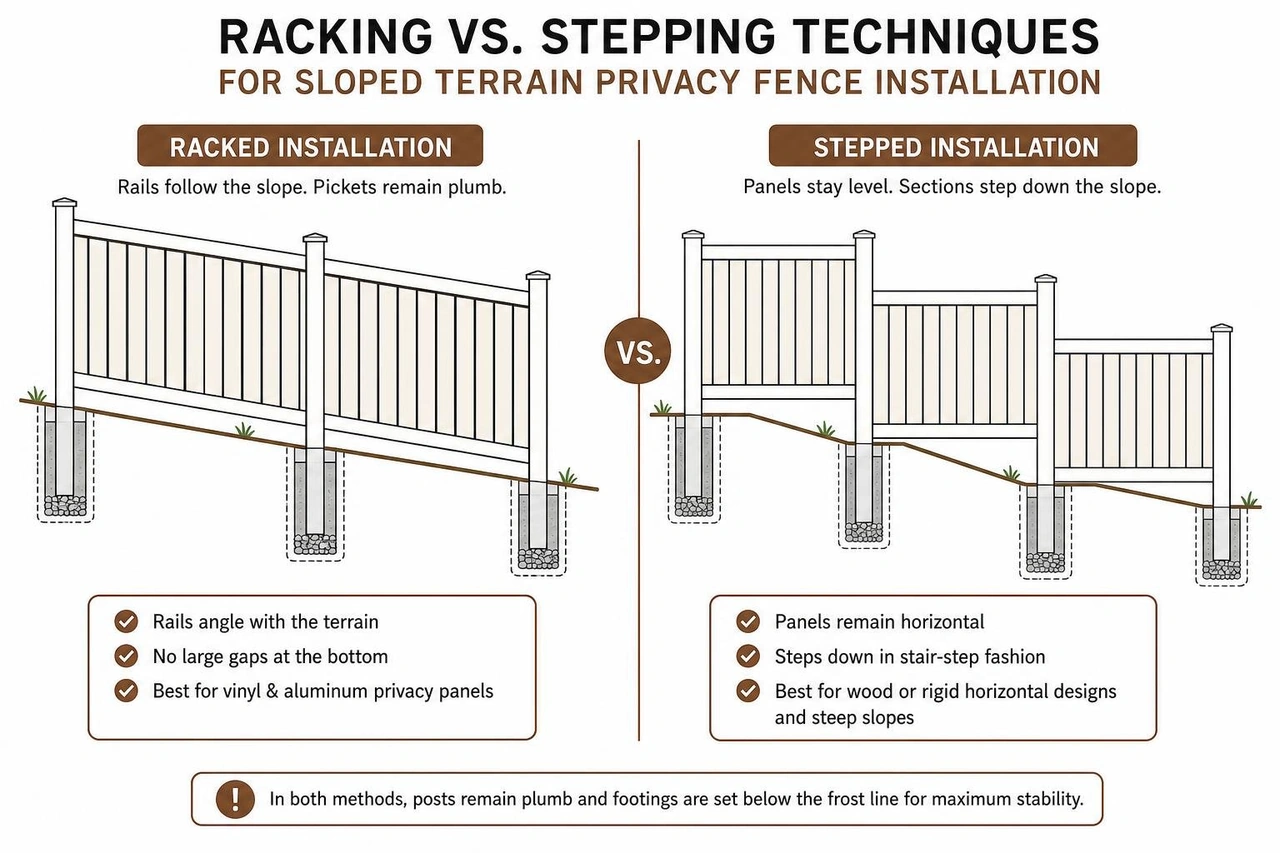
Rarely is a residential property completely flat. When installing continuous privacy fencing over rolling hills or steep slopes, expert installers employ two primary engineering methods:
Racked Installation: The horizontal rails follow the natural angle of the sloped ground while the vertical pickets remain perfectly plumb. Modern vinyl and aluminum privacy panels can often be racked up to 7 degrees per 8-foot section, keeping the bottom edge of the fence consistently close to the soil line without visible bottom gaps.
Stepped Installation: Individual fence sections remain completely horizontal, stepping down the slope in stair-step fashion across grade changes. Stepping is commonly used with pre-constructed wood panels or rigid horizontal designs, requiring longer structural end posts to accommodate varying drop heights on steep hillsides.
Navigating Building Codes, Permits, and Contractor Selection
Installing a new privacy fence involves navigating municipal code rules, zoning requirements, and neighborhood covenants. Failing to follow local regulations can lead to costly fines or mandatory structural relocation.
Understanding Heights, Regulations, and HOA Guidelines
Municipal building ordinances set clear restrictions on fence dimensions and placement:
Standard Height Restrictions: Most towns permit a maximum height of 6 feet for privacy fences along rear and side property yards. Front yard setbacks, corner lots, and street-facing boundaries are typically restricted to 4 feet or require open semi-privacy pickets to maintain driver sightlines.
Setback and Boundary Rules: Fences must remain within your legal boundary limits, usually offset a few inches inside property pins to allow room for post footings and future maintenance access without trespassing.
HOA Architectural Review Committees (ARC): Homeowners associations frequently enforce strict aesthetic standards governing fence materials, colors, height, and orientation (such as requiring the "finished side" of the fence to face outward toward neighboring properties). ARC submission windows typically require 15 to 30 days for formal review before starting construction.
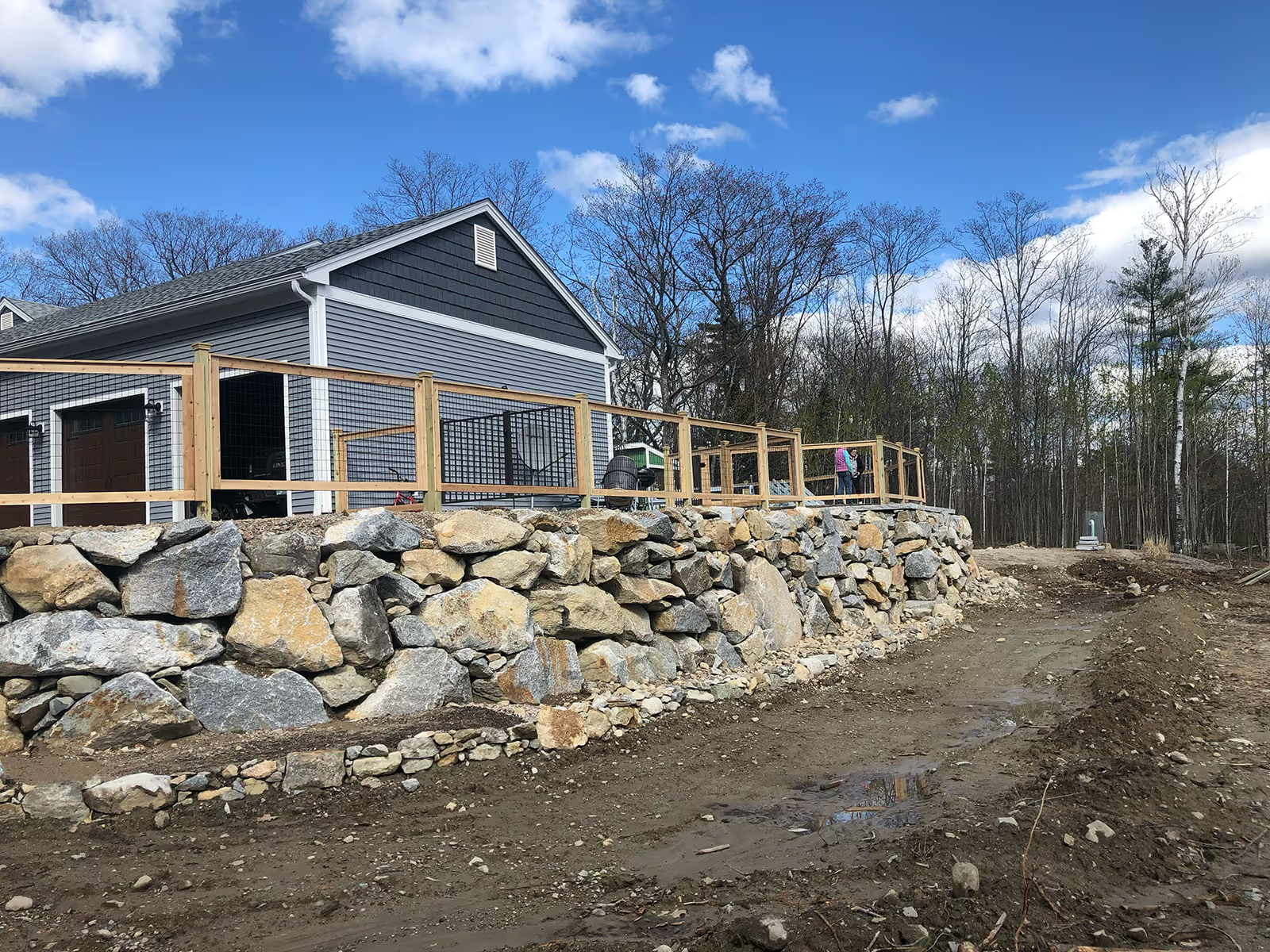
Permit Requirements: While standard 6-foot fences often fall under general residential exemptions, over-height fences, retaining wall attachments, or specialized gate enclosures usually require formal municipal building permit approvals.
Selecting the right professional contractor ensures your fence project is completed smoothly on time and on budget. Working with a dedicated privacy fence contractor nh ma me gives you peace of mind that every structural detail is handled with precision.
When interviewing fence contractors, look for these vital credentials:
Licensing and Comprehensive Insurance: Verify that the company holds current general liability insurance and worker's compensation coverage to protect your property and workers during installation.
Workmanship Warranties: Reputable installers stand behind their labor. Look for clear written craftsmanship warranties (typically 2 to 5 years minimum) covering gate alignment, post setting, and hardware assembly in addition to material manufacturer warranties.
Clear Local Track Record: Look for proven local experience and positive verified reviews across your local communities.
Transparent Written Proposals: Detailed quotes should clearly break down material grades, post setting depths, cleanup standards, permit responsibilities, and line item costs.
Dedicated Client Service: Partnering with installers who maintain a clear fence installation client commitment guarantees transparent communication throughout the entire site survey, post setting, and inspection process.
Frequently Asked Questions
How tall can a residential privacy fence legally be?
In most residential zones, maximum allowable height is 6 feet along rear and side property lines. Front yard setbacks within 15 to 20 feet of the street curb are usually restricted to 4 feet in height to maintain unobstructed road visibility. Always double-check local municipal code and neighborhood HOA guidelines before placing your order.
How long does standard privacy fence installation take?
A standard residential privacy fence project typically takes 1 to 3 days on site once materials are delivered and underground utilities are marked. Day one consists of hole excavation and setting posts in concrete. After allowing footings to cure, installers return on day two or three to construct structural rails, install privacy panels, and build custom gates.
How deep should privacy fence posts be installed?
Privacy fence posts should always be set to a depth of at least 36 to 42 inches in Northern regions. Setting posts below the local frost depth prevents seasonal frost heaving while providing the leverage needed to resist strong lateral wind pressures against solid privacy panels.
Conclusion
Securing your home with a professionally built privacy fence provides long-lasting peace of mind, improved safety, quiet relaxation, and enhanced property value. Investing in expert privacy fencing installation services guarantees your project is engineered from the bottom up—with deep frost footings, resilient structural materials, and precise alignment built to handle tough regional weather year after year.
At Brentwood Fence LLC, our experienced team handles every stage of your fence build with meticulous attention to detail, from initial boundary planning and material selection to concrete setting and gate tuning. Ready to transform your yard? Explore our primary privacy fencing installation services nh page to request your personalized on-site consultation and design estimate today!