Neighbor-Proof Your Yard: The Ultimate Guide to Privacy Fences

22

Jul

2026

Author:

Rob Thibeault

Why Privacy Fences Are One of the Best Investments for Your Yard

Privacy fences give you something most homeowners deeply want: a backyard that feels like yours.

Whether you're tired of neighbors looking in, want to keep kids and pets safe, or just need a quieter outdoor space — the right fence solves all of it at once.

Here's a quick look at your main options:

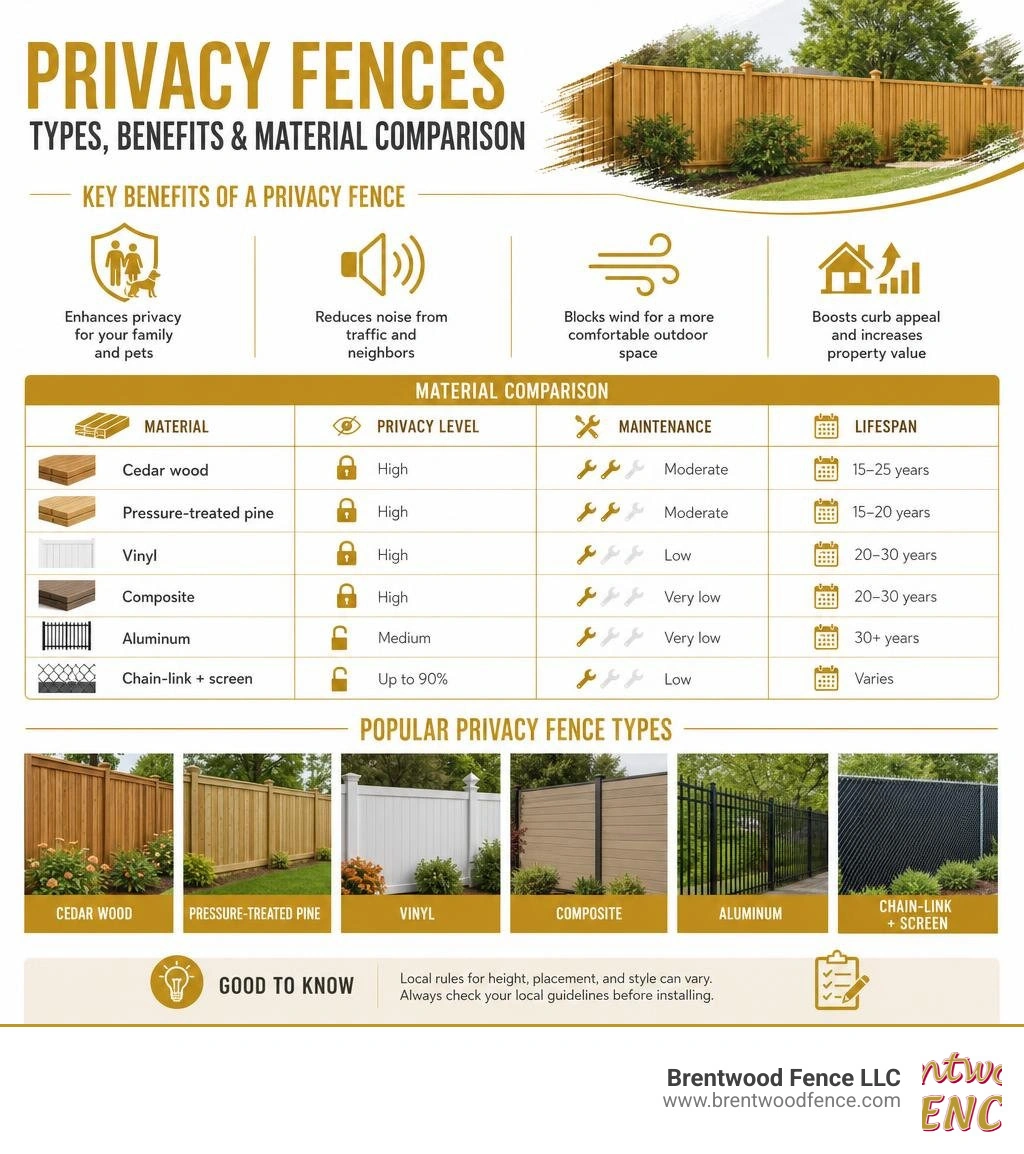
Material Privacy Level Maintenance Lifespan
Cedar wood High Moderate 15–25 years
Pressure-treated pine High Moderate 15–20 years
Vinyl High Low 20–30 years
Composite High Very low 20–30 years
Aluminum Medium Very low 30+ years
Chain-link + screen Up to 90% Low Varies

Beyond just blocking the view, a well-built privacy fence can:

  • Reduce noise from traffic and neighbors
  • Block wind and create a more comfortable outdoor space
  • Contain kids and pets safely
  • Boost your home's curb appeal and resale value

But with so many materials, styles, heights, and local rules to navigate, choosing the right fence can feel overwhelming — especially if you've dealt with unreliable contractors before.

This guide breaks it all down simply, so you can make a confident decision.
privacy fence types benefits and material comparison infographic infographic

Easy privacy fences glossary:

Comparing the Main Types of Privacy Fences

Choosing the right material for your privacy fence is the most important decision you will make. The material you select dictates not just the upfront cost, but also how much time you will spend scraping, painting, or washing it over the next twenty years. In New England—where our yards face blistering summers and freezing, snowy winters—making the wrong choice can lead to warped boards, cracked posts, and a fence that looks tired long before its time.

To help you sort through the options, we have compiled a detailed comparison of how the primary fencing materials stack up against each other. For a deeper dive into these options, check out our guide on the types of privacy fences.

Material Est. Lifespan Maintenance Level Resistance to New England Weather Best For...
Cedar 15–25 Years Moderate (Stain/Seal every 2-4 years) High (Natural oils resist rot and insects) Homeowners wanting a classic, natural wood aesthetic.
Pressure-Treated Pine 15–20 Years Moderate (Stain/Seal every 2-4 years) High (Chemical treatments prevent rot) Budget-conscious projects needing durable wood.
Spruce 8–12 Years High (Prone to warping and early rot) Low to Moderate Short-term or highly budget-restricted installations.
Vinyl 20–30 Years Low (Occasional spray with a hose) Very High (Doesn't crack in freezing temps) Long-term value and zero-maintenance lifestyles.
Composite 20–30 Years Very Low (No staining or painting ever) Exceptional (Heavy-duty and rot-proof) Premium, modern yards seeking a wood-like look without the work.
Aluminum 30+ Years Very Low (Rust-proof powder coat) Exceptional Semi-private or decorative boundary lines.

Wood Privacy Fences: Natural Beauty and Classic Styles

There is a reason wood remains a beloved classic. It has a warm, organic texture that synthetic materials struggle to replicate perfectly. However, not all wood species are created equal.

  • Cedar: This is the gold standard for wood fencing. Cedar contains natural, aromatic oils that make it highly resistant to rot, decay, and wood-boring insects without requiring harsh chemical treatments. A cedar privacy fence typically boasts a lifespan of 15–25 years with proper maintenance. It resists warping and cupping far better than cheaper woods, making it ideal for the extreme temperature swings we experience in New Hampshire and Massachusetts.
  • Pressure-Treated Pine: This wood is chemically treated to withstand moisture and soil contact. PT pine is highly durable, offering a typical lifespan of 15–20 years with care. It is a fantastic, budget-friendly alternative to cedar, though it is more prone to minor warping and shrinking as it seasons in the sun.
  • Spruce: Often used for pre-assembled stockade panels at big-box stores, spruce is the budget option. However, it has a much shorter typical lifespan of 8–12 years depending on local soil and weather conditions. It lacks the natural oils of cedar and the heavy chemical protection of PT pine, meaning it requires vigilant painting or sealing to stay intact.
  • Redwood: Where available, redwood is an incredibly durable premium option with a lifespan of 20+ years with maintenance. However, because it is native to the West Coast, it is rarely used in New England due to high shipping costs.

To keep any wood fence looking its best and prevent premature graying or rotting, you will need to clean it annually and apply a high-quality, breathable, UV-protective stain or sealer every 2 to 4 years. For more details on choosing the right wood species, read our article on types of wood privacy fences.

Vinyl and Composite Privacy Fences: Low-Maintenance Longevity

If the idea of spending your weekends staining wood makes you want to stay indoors, vinyl or composite might be your perfect match. These modern materials are engineered to deliver maximum privacy with almost zero ongoing maintenance.

Vinyl privacy fencing has evolved tremendously over the last decade. High-quality vinyl, such as Weatherables, is engineered to be 20-50% stronger than standard big-box store alternatives. It will not rot, warp, split, or fade, and it stands up beautifully to freezing New England winters without cracking.

Modern vinyl is also surprisingly eco-friendly. For example, installing just one 7' Tuscany vinyl privacy fence panel (7' tall by 8' wide) keeps approximately 6,078 credit cards' worth of plastic out of landfills. If you opt for the slightly heavier 7' Mason vinyl privacy fence panel, you are keeping approximately 6,713 credit cards' worth of plastic out of landfills!
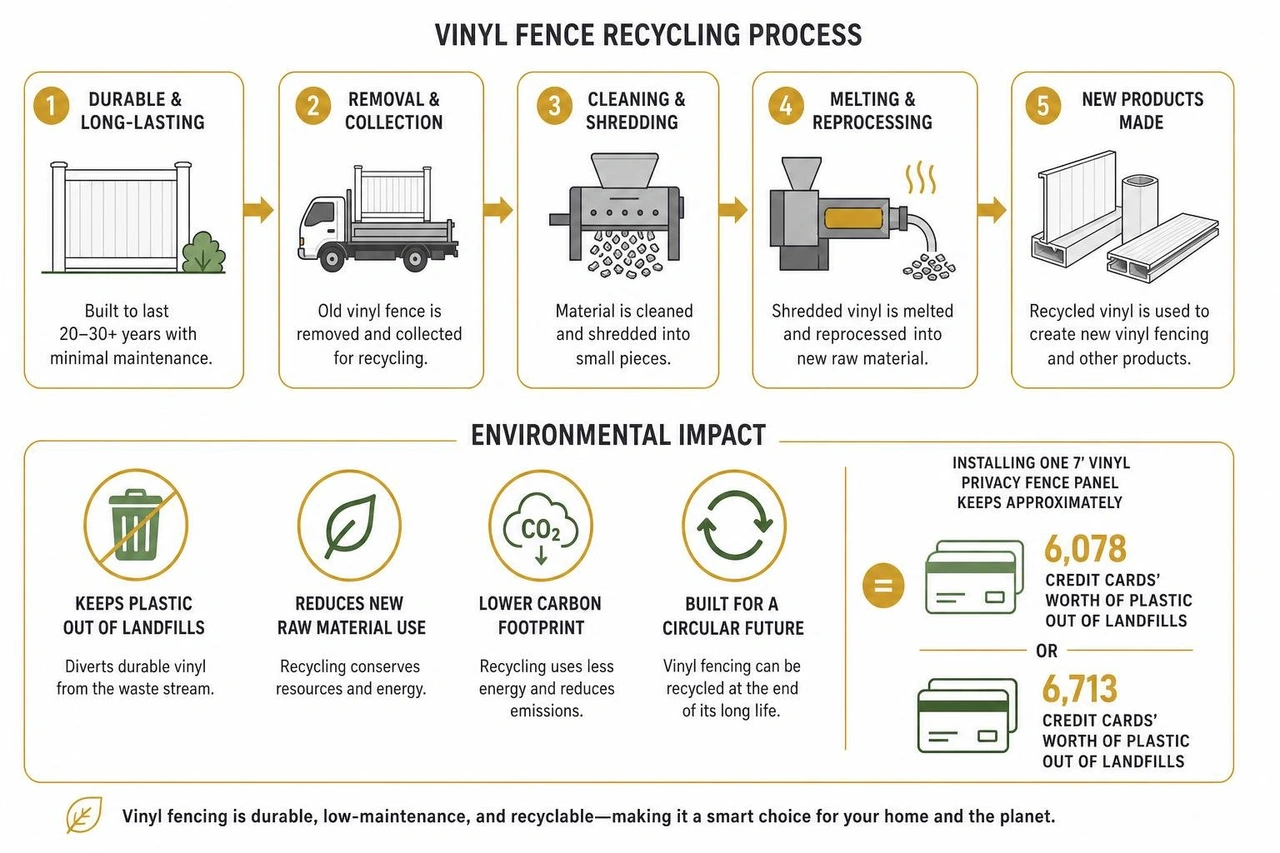
diagram of vinyl fence recycling and environmental impact

Composite fencing takes durability a step further by blending recycled wood fibers with strong plastics. Options like the Elite Privacy Composite (which features stunning cedar-look composite boards framed in sleek, heavy-duty black aluminum) offer a striking, modern aesthetic. Backed by a 20-year limited warranty, these hybrid systems are completely rot-proof, pest-proof, and highly wind-resistant. Learn more about these premium synthetics in our guide to the best privacy fence options.

If you decide to go with wood, you are not locked into a single look. Wood is highly customizable, allowing us to build a structure that matches your home’s architectural style perfectly.
shadowbox wood privacy fence showing alternating boards

Before scheduling your installation, it helps to understand the different construction styles and how they balance privacy, airflow, and aesthetics. If you are planning a wood project, you can read our guide on wooden privacy fence installation.

Choosing the Best Wood Style for Seclusion

Different wood fence styles offer varying levels of visual blockage and wind resistance. Here are the four most popular styles:

  1. Board-on-Board: If you want absolute, 100% seclusion, this is the style to choose. Board-on-board fences feature overlapping vertical pickets. When wood is exposed to the elements, it naturally shrinks and contracts. On a standard single-board fence, this shrinkage creates tiny gaps between the boards over time. With a board-on-board design, the overlapping pattern ensures that even when the wood shrinks, no visible gaps will ever open up.
  2. Stockade: This is the traditional New England look. Stockade fences feature tightly placed vertical boards with pointed tops (often called "gothic" or "spade" tops). It is a highly secure, solid style, though it lacks the gap-protection of board-on-board.
  3. Horizontal Slat: For modern and contemporary homes, horizontal slat fences are incredibly popular. They offer a clean, linear look. However, because horizontal lines draw the eye across the landscape, this style requires high-precision installation to ensure every single board is perfectly level.
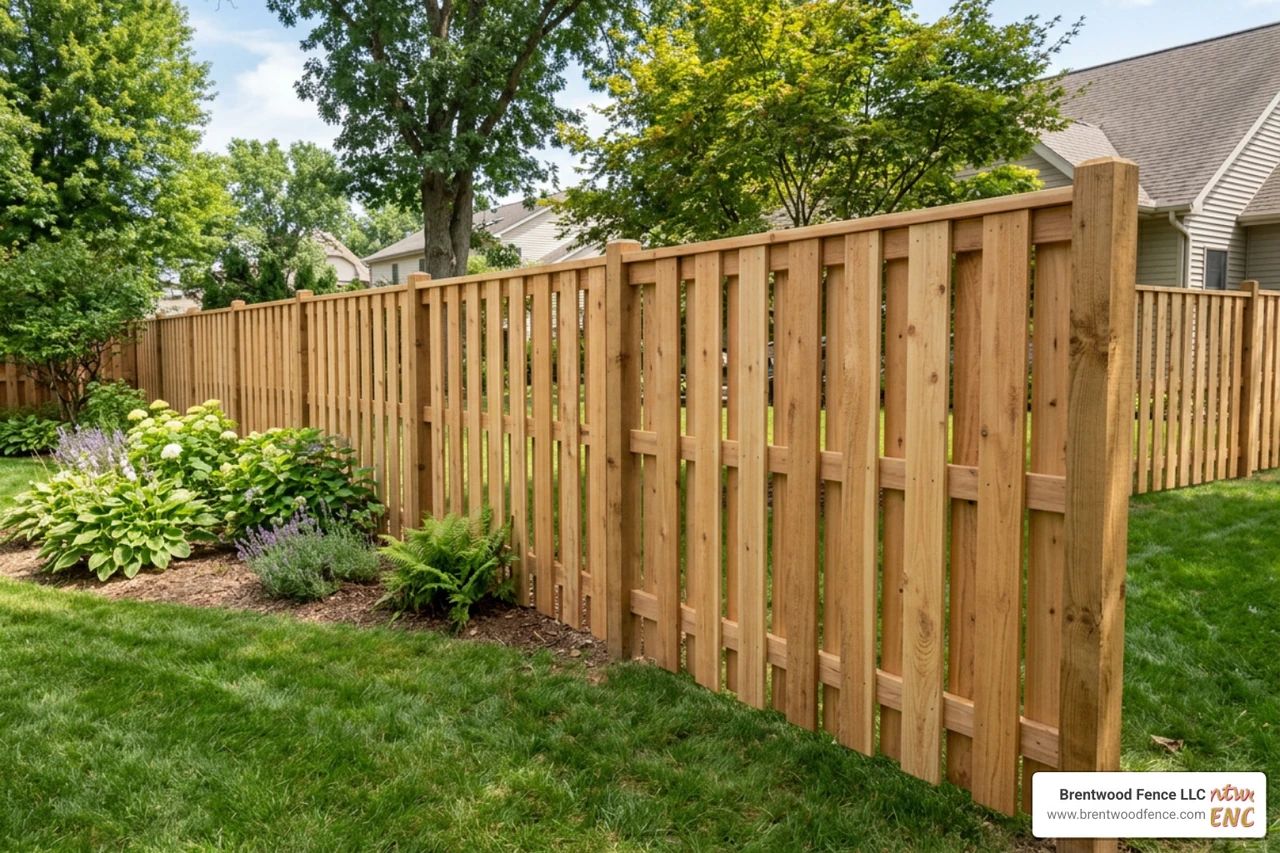
  4. Shadowbox: Often called a "good neighbor" fence, the shadowbox style features boards alternated on the front and back of the horizontal rails. This means the fence looks identical and beautifully finished from both sides—so you and your neighbor both get a great view. Because of the alternating boards, shadowbox fences allow wind to pass through easily, drastically reducing the wind load on your posts while still maintaining excellent semi-privacy. Read more about designing your yard's layout with our backyard privacy design guide.

Decorative Tops and Custom Accents

You do not have to sacrifice style to get great seclusion. Adding custom accents can soften the look of a tall solid wall and elevate your home's curb appeal.

  • Lattice and Spindle Tops: A popular way to finish a 5-foot or 6-foot solid panel is by adding a 1-foot decorative topper. A classic lattice or a series of modern black aluminum spindles allows light and airflow to pass through the top of the fence while keeping the bottom completely private.
  • Decorative Post Caps: The posts are the backbone of your fence, but they can also be decorative. You can choose from various architectural post styles, such as Gothic top posts, Chamfered posts, or Pyramid top posts. If you prefer a more finished look, you can add decorative caps like Island, Harbor, or Federal caps.
  • Hidden vs. Exposed Posts: You can choose to have your posts "hidden" behind the pickets for a continuous, unbroken wall of wood, or "exposed" between the panels to break up the flat plane and add visual depth.

For more creative inspiration, explore our collection of privacy fence ideas.

Key Factors to Consider Before Installing a Privacy Fence

Installing a fence is a significant home improvement project. To ensure you love the final result for decades, there are several practical factors to weigh before we dig the first hole.

a beautiful white 6-foot vinyl privacy fence in a backyard

From local zoning laws to the challenges of New England's climate, a little planning goes a long way. If you are budgeting for your project, take a look at our 6 ft privacy fence cost guide.

Before purchasing materials, we must verify local rules. Municipalities across New Hampshire, Massachusetts, and Maine have strict guidelines regarding residential structures:

  • Height Restrictions: In most residential zones (such as Manchester, NH or Haverhill, MA), the maximum height for a backyard privacy fence is 6 feet. If you want an 8-foot fence, you will likely need to apply for a variance or permit from your local building department.
  • Setbacks and Property Lines: Fences must be built entirely within your property boundaries. We always recommend getting a professional property survey before installation to avoid costly disputes with neighbors.
  • The "Good Face" Rule: Many local zoning laws require that the finished, structural "good side" of the fence faces outward toward your neighbors or the street, while the posts and rails face your own yard (unless you choose a shadowbox style, which looks great on both sides).

To ensure your installation is fully compliant, it is best to work with a team experienced in professional fence installation in Massachusetts and New Hampshire.

Cold Climate Installation Best Practices

In New England, the ground is constantly moving. The freeze-thaw cycles of our winters can easily ruin a poorly installed fence. When moisture in the soil freezes, it expands, pushing upward with incredible force. If your fence posts are not set correctly, this "frost heave" will push the posts out of the ground, leaving you with a sagging, crooked fence by spring.

To prevent frost heaving, we adhere to strict cold-climate building standards:

  1. Dig Below the Frost Line: In New Hampshire and Maine, the frost line can reach depths of 36 to 48 inches. Fence posts must be set deep enough to ensure the concrete footing sits entirely below this line.
  2. Use Gravel for Drainage: Placing a few inches of gravel at the bottom of the post hole before pouring concrete allows water to drain away from the base of the post, preventing ice from forming directly beneath it.
  3. Slope the Concrete: The top of the concrete footing should be poured slightly above ground level and sloped downward, away from the post, to shed rainwater and melting snow.

Working with a local team that understands these regional challenges is critical. For reliable, long-lasting results, contact our team for expert fencing services in New Hampshire.

Enhancing Outdoor Living and Alternative Privacy Solutions

While blocking the view of the street or a neighbor's window is the primary goal, a high-quality privacy fence does so much more for your outdoor living space.

A solid panel acts as an excellent acoustic barrier, helping to dampen neighborhood noises, barking dogs, and passing traffic. It also serves as a highly effective windbreaker, creating a calm microclimate in your yard so you can enjoy your patio or deck even on breezy autumn days. To explore more ways to transform your yard, check out our yard privacy fencing options.

If you already have a chain-link fence installed and are not ready to replace it entirely, you can still achieve excellent seclusion using retrofit options.

  • HDPE Privacy Screens: High-Density Polyethylene (HDPE) screens, such as the 200 Series Privacy Plus, are incredibly popular for commercial and residential chain-link fences. This commercial-grade, knitted mesh provides up to 90% privacy blockage while still allowing essential airflow so your fence doesn't blow over in high winds. It is designed to withstand extreme temperatures ranging from -15°F to 120°F, making it perfectly suited for harsh New England winters.
  • The 4-Inch Sizing Rule: When ordering a privacy screen, always remember that screens are intentionally fabricated 4 inches shorter than the actual fence height (for example, a 5'8" screen for a 6' fence). This allows you to tension the screen tightly using grommets and zip ties, ensuring a clean, wrinkle-free fit that stays off the damp ground.
  • Privacy Slats: Another durable option is inserting vertical plastic slats directly into the chain-link mesh. These slats are made of durable, UV-resistant HDPE and come in various colors to blend into your landscaping.

To find the perfect fit for your existing mesh, consult our chain link privacy options guide, or read about the best privacy slats for chain link fence.

Frequently Asked Questions About Backyard Screening

What is the longest-lasting material for backyard screening?

For absolute longevity with zero maintenance, vinyl and aluminum are the top performers, often lasting 30+ years. High-quality vinyl will not rot, rust, or warp. If you prefer the look of wood, composite fencing (like cedar composite with aluminum framing) offers a 20+ year lifespan without the need for regular staining or painting. To compare all of your options, read our guide on the best fencing for privacy top options.

How deep should fence posts be set in cold climates?

In freeze-thaw regions like New Hampshire, Massachusetts, and Maine, fence posts should be set at least 36 to 48 inches deep to ensure they sit below the local frost line. Setting posts too shallow will cause the soil to push them upward during the winter, resulting in a crooked, unstable fence.

Yes! Adding a knitted HDPE screen (like the 200 Series Privacy Plus) is an inexpensive and highly effective way to add privacy to a chain-link fence. These screens offer 90% blockage while allowing enough wind to pass through to prevent structural damage. For high-wind areas, we highly recommend adding half-moon wind vents every 10 feet to reduce wind load.

Conclusion

A high-quality privacy fence is more than just a property boundary—it is an investment in your peace of mind, your family's safety, and your home's value. Whether you love the classic, warm look of cedar, the modern convenience of vinyl, or the industrial strength of composite, choosing the right material and having it professionally installed makes all the difference.

At Brentwood Fence LLC, we have spent years helping homeowners across Exeter, Portsmouth, Manchester, Concord, Derry, Dover, and Haverhill build beautiful, durable fences that stand up to the toughest New England weather. Let us take the stress out of your project.

Ready to transform your backyard into a peaceful, private oasis? Get professional privacy fencing installation services with Brentwood Fence LLC today!
Blog Content