Blog Content

7
Sep
2026

A professionally installed 6-foot privacy fence usually costs about $15 to $60 per linear foot nationwide. For many homeowners, a more realistic planning range is $25 to $55 per foot for a standard wood or vinyl fence on a level, accessible yard.
To estimate your project, multiply the installed per-foot price by the fence length, then add gates, permit fees, old-fence removal, and any slope, rock, root, or access challenges. A 200-foot fence can range from roughly $3,000 to $12,000 or more, depending on those choices.
Wood usually has the lower upfront price. Vinyl costs more at installation but avoids the regular staining, sealing, and board repairs that wood can require. The right choice comes down to your budget, desired look, and how much maintenance you want over time.
I'm Rob Thibeault, and this guide will help you compare real privacy-fence costs before you request an installation quote.
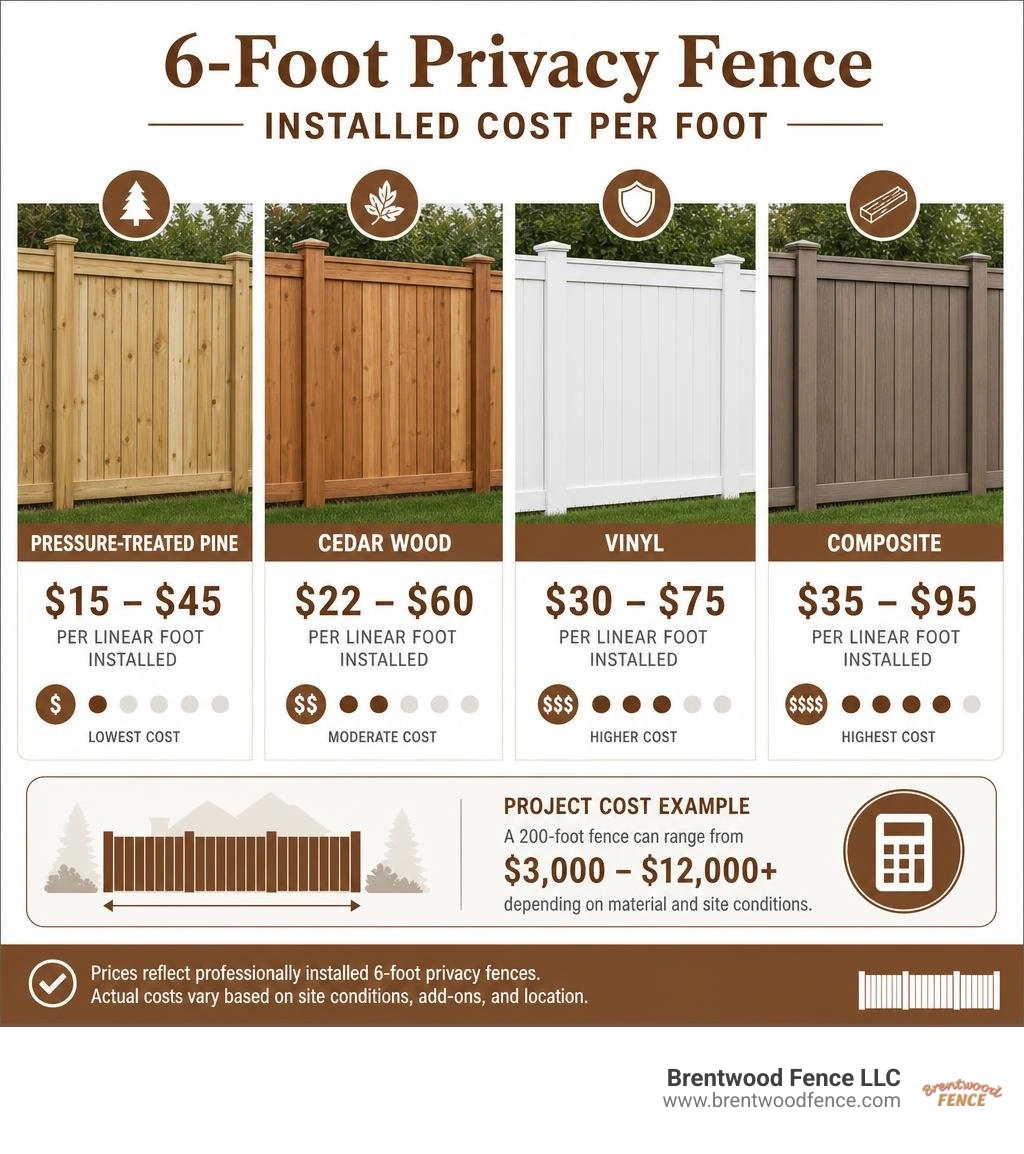
How much does a 6-foot privacy fence cost per foot terms simplified:
When budgeting for a perimeter upgrade, understanding how material grade, labor rates, and manufacturing specifications influence the bottom line is essential. Base fence runs generally range between $15 and $60 per linear foot installed, though premium selections or complex installations can push toward $85 to $95 per foot.
The installed cost includes two primary components: raw materials (posts, rails, infill pickets, concrete, and fasteners) and professional labor. Labor typically represents 40% to 60% of the overall invoice, accounting for $8 to $25 per linear foot on standard terrain.
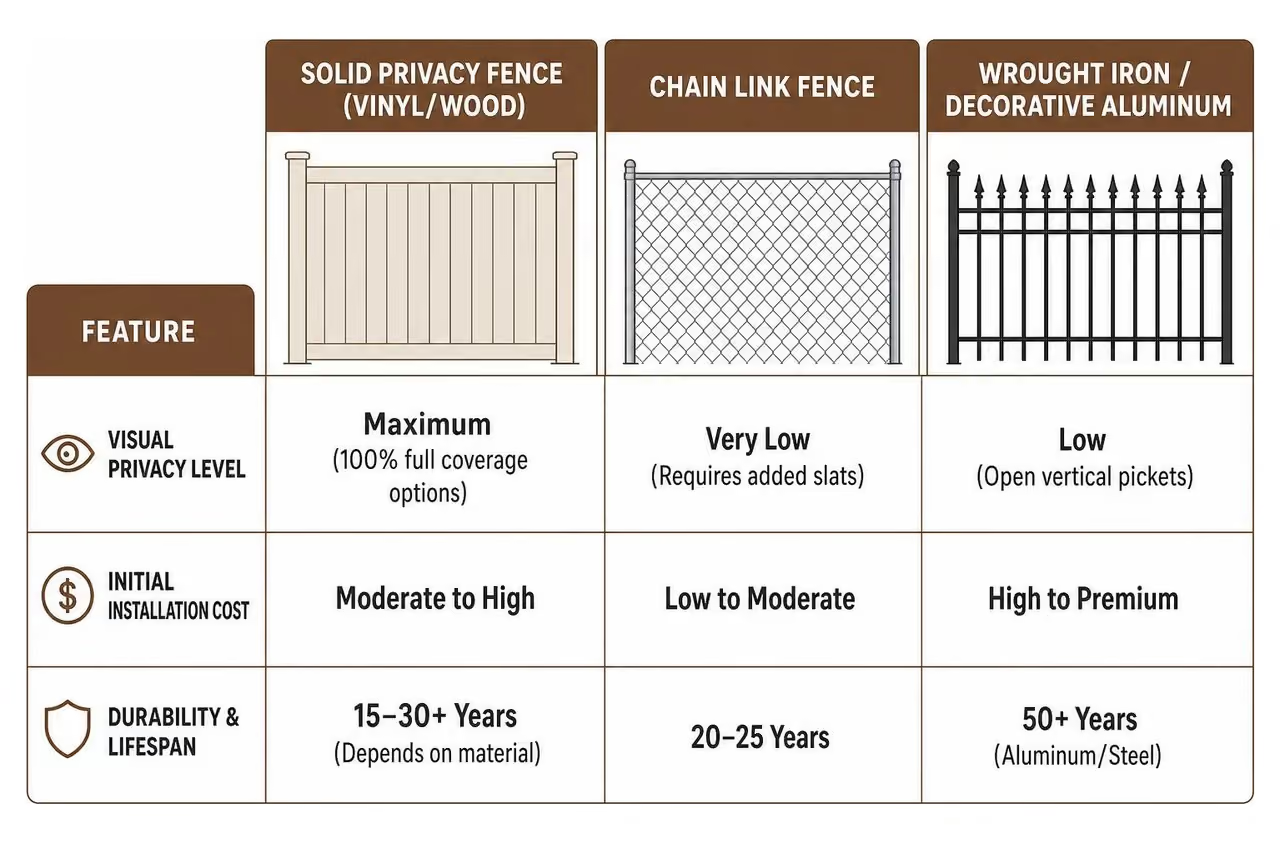
The following table summarizes the installed cost ranges, life expectancies, and ongoing upkeep requirements across standard privacy fence materials:
Basic-grade materials keep upfront expenses low, but premium-grade options with reinforced internal ribs, heavy-duty posts, or natural insect resistance yield lower total costs of ownership over decades. For a broader look at general pricing structures, see our average fence cost per linear foot guide to evaluate wider industry standards.
Wood remains a timeless, organic selection that adapts seamlessly to various yard layouts. Pressure-treated pine represents the most accessible entry point, typically installed at $15 to $35 per linear foot for standard stockade panels, or up to $45 per foot for customized builds. Pine is treated with chemical preservatives to resist rot and fungal decay, though it remains prone to warping, shrinking, and checking under intense seasonal weather.
Cedar delivers superior stability and natural resistance to decay and insect damage without heavy chemical saturation. Installing a cedar privacy fence generally costs $22 to $60 per foot installed. When evaluating pickets, traditional dog-ear profiles cost around $25 to $35 per foot, while board-on-board designs range from $30 to $45+ per foot. Board-on-board configurations overlap vertical boards to ensure complete privacy even after the natural wood shrinks in summer heat.
If you want to review specific species details and New England pricing benchmarks, check our guide on the cost 6 ft cedar fence install nh ma me alongside the cost per ft wood fence breakdown. Redwood offers top-tier stability and natural grain beauty at $25 to $65 per foot, though it carries higher material shipping costs in eastern markets.
Extruded polyvinyl chloride (PVC) privacy fences deliver clean lines and eliminate the chore of painting or staining. Basic residential vinyl privacy fencing runs $28 to $55 per linear foot installed, while heavy-duty commercial-grade panels with textured, woodgrain, or multi-tone finishes range from $50 to $75+ per linear foot according to Fence Cost Per Foot by Material: 2026 National Pricing Guide.
Quality vinyl profiles feature internal titanium dioxide (TiO2) UV stabilizers that prevent premature chalking, yellowing, and brittleness under direct sun. Most modern systems utilize interlocking tongue-and-groove boards slotted into routed posts. This design creates a solid barrier that conceals fasteners while accommodating natural thermal movement across changing seasons.
Composite privacy fencing merges recycled wood fibers with dense thermoplastic polymers, creating a heavy, durable panel with the authentic texture of seasoned timber. Installed composite systems generally command $35 to $95 per linear foot. Because composite will not splinter, rot, or succumb to wood-boring insects, it delivers exceptional longevity for high-wind residential boundaries.
Alternative barrier systems provide distinct advantages for specific property layouts:
Reviewing the full scope of types of privacy fences nh ma me helps narrow down the right structural framework for your aesthetic and functional targets.
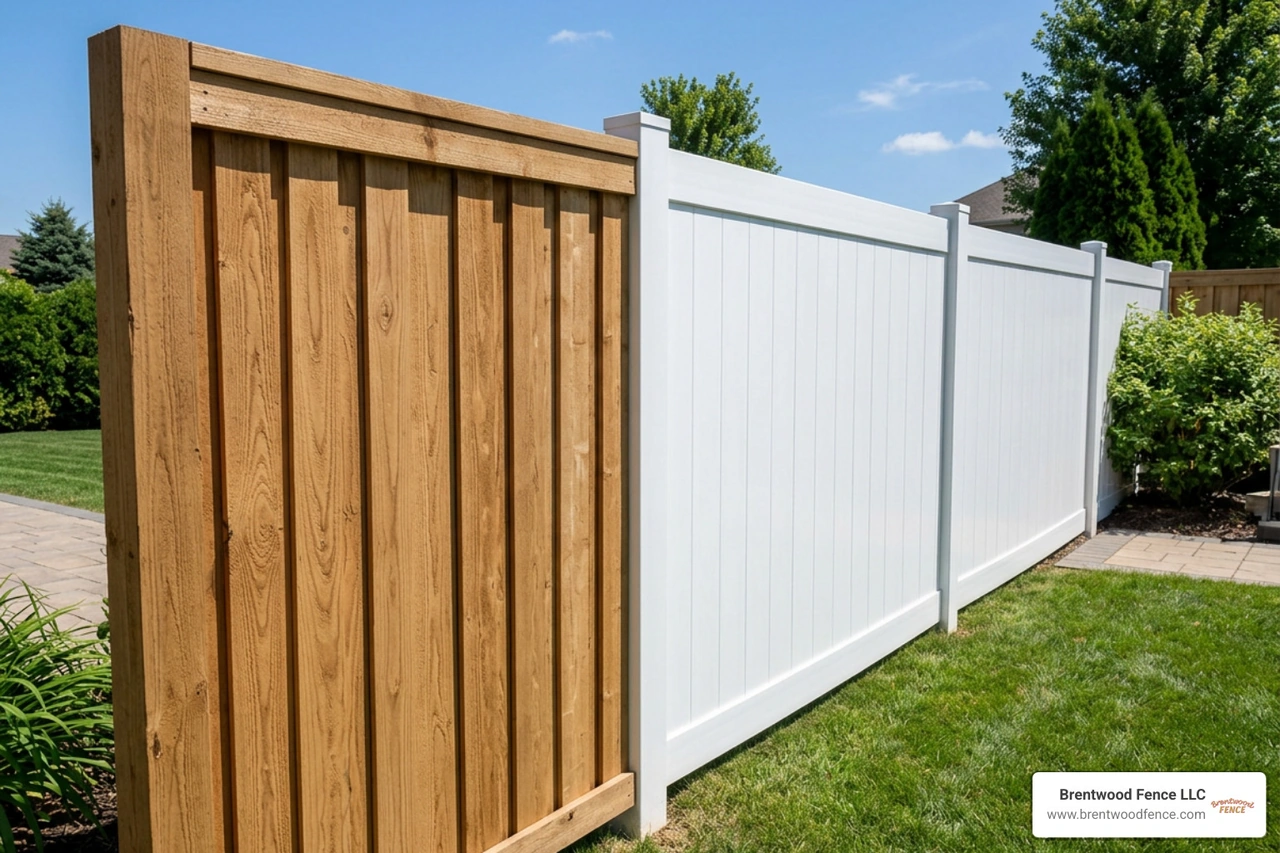
Choosing between wood and vinyl requires balancing upfront construction costs against ongoing maintenance and long-term property value. Wood fences provide lower initial barrier-to-entry costs and unmatched traditional charm. However, wood is an organic material that continuously responds to ambient humidity and temperature changes.
Vinyl fencing demands a higher initial capital outlay, but it pays dividends by removing repetitive maintenance costs. According to market data from 6 Foot Privacy Fence Cost: 2026 Installed Price Calculator, an installed 6-foot privacy fence typically recovers 35% to 60% of its initial cost upon resale (averaging roughly 47.5% ROI). Vinyl systems often maximize this return for potential homebuyers by delivering move-in-ready privacy without an immediate weekend maintenance checklist.
Evaluating true fence pricing requires calculating the annualized cost over its expected service life rather than focusing solely on the day-one invoice.
Wood privacy fences demand consistent upkeep:
Vinyl privacy fences have minimal recurring costs:
Homeowners evaluating the best privacy fence options nh ma me will find that vinyl and composite frequently offer equal or lower total ownership costs over a multi-decade timeline.
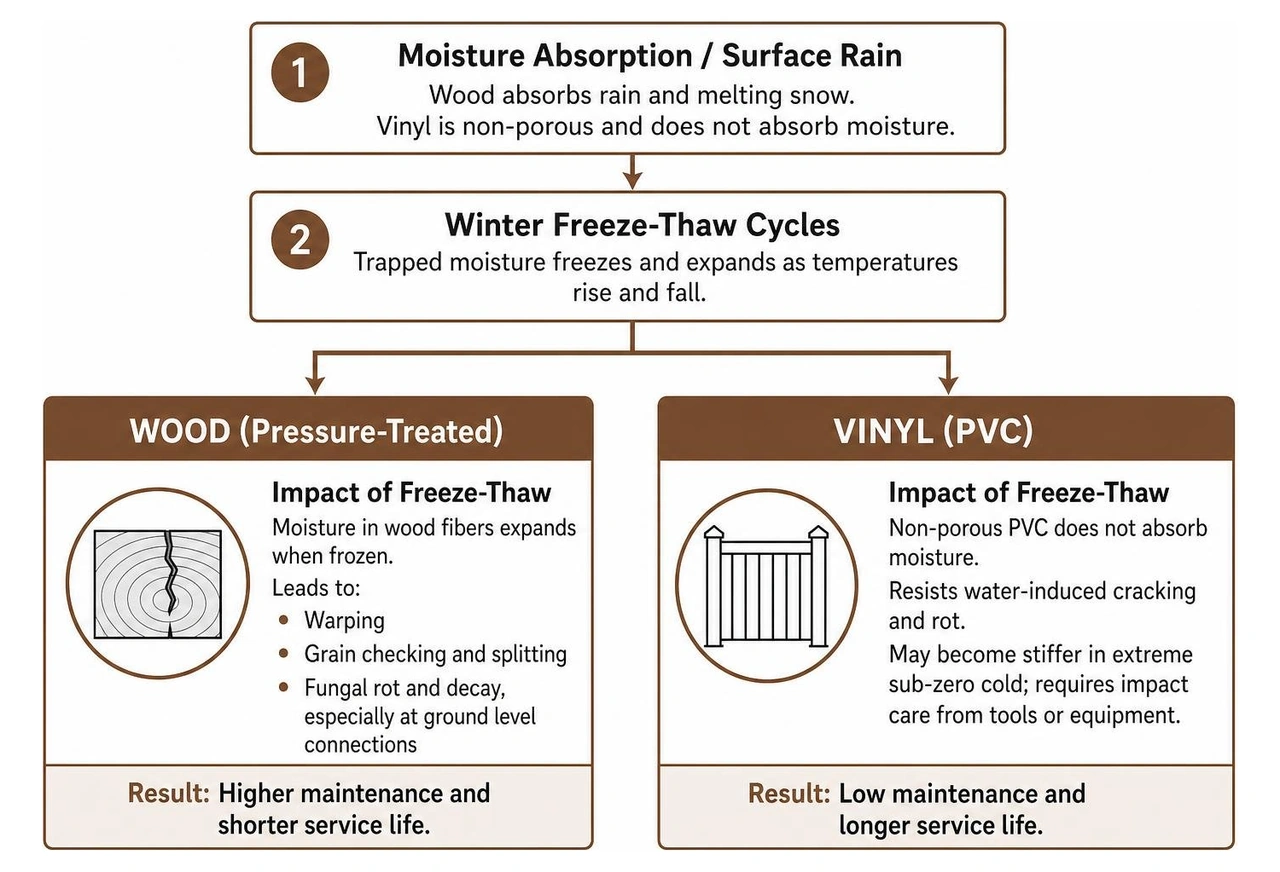
In northern climates across Dover, Concord, and Portsmouth, fencing materials encounter harsh winter conditions, deep frost depths, and frequent freeze-thaw cycles:
The overall cost of a privacy fence involves more than just selecting panel styles. Site access, underground soil structures, and municipal codes all impact total project billing.
Professional installation labor ranges from $8 to $25 per linear foot, with specialized crews charging $50 to $75 per labor hour depending on local demand and technical site factors.
In northern New England markets like Manchester NH, Derry NH, and Haverhill MA, post hole digging requires deep excavation to prevent frost heave. When ground moisture freezes in winter, it expands upward, pushing improperly set concrete footings out of alignment:
Working with an established privacy fence contractor nh ma me ensures your post foundations meet regional building codes and withstand frost action.
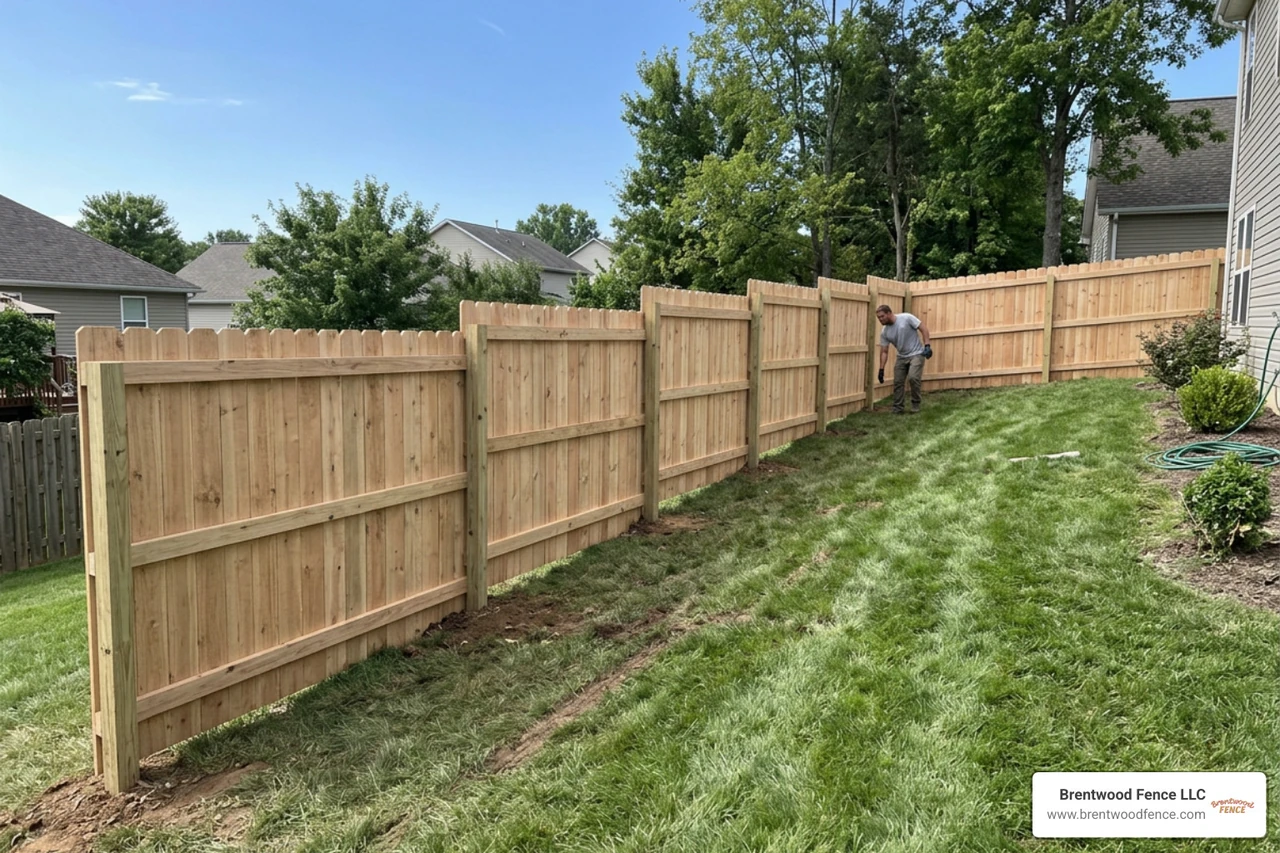
No two properties are identical. Complex topography directly increases installation labor:
Linear footage impacts your overall price per foot. Larger enclosures benefit from volume efficiencies on bulk lumber, pallets of concrete, and equipment delivery:
To review regional cost variations across New Hampshire, Maine, and Massachusetts, explore our guides on cost of installed fence nh ma me and the cost wood fence installation nh ma me.
Accurate project budgeting accounts for entry gates, property surveys, site preparation, and municipal compliance alongside standard linear footage pricing. According to national pricing research compiled by Fence Cost (2026) — Ranges by Material & Height, supplementary line items frequently account for 10% to 25% of the total project budget:
A privacy fence is only as reliable as its access points. Gate openings experience continuous mechanical strain and cycle loads:
Replacing an aging boundary requires careful site preparation and regulatory compliance:
Review our in-depth look at wood fence install cost guide 2026 and the specific regional notes in our cost of wooden privacy fence nh ma me resource.
Attempting a DIY 6-foot privacy fence may appear to cut costs by eliminating labor charges, but privacy fencing requires high precision. A 6-foot solid panel acts as a wind sail, placing substantial leverage on every post and concrete footing.
For a complete walkthrough of proper layout planning, refer to our comprehensive privacy fence installation guide or our focused 6-ft privacy fence install cost guide.
Pressure-treated pine is the most affordable 6-foot privacy fence material, costing approximately $15 to $35 per linear foot installed. Chain link fitted with polyethylene privacy slats is another budget-friendly alternative at $15 to $40 per foot. While pressure-treated wood offers the lowest day-one cost, it requires regular staining and sealing to prevent long-term rot and warping.
A standard residential privacy fence project of 150 to 200 linear feet typically takes a professional crew 1 to 3 business days. Day one focuses on layout verification, post hole excavation, and setting structural posts in concrete. After the footings cure, the crew spends days two and three hanging rails, securing privacy infill pickets, and mounting custom-hung gates.
Yes. A well-built 6-foot privacy fence typically recovers 35% to 60% of its total investment at resale. It increases buyer demand for families with young children or pets, provides a secure visual buffer against adjacent properties, and cleanly defines lot boundaries. Low-maintenance vinyl and cedar designs tend to deliver the highest return on investment.
A 6-foot privacy fence delivers security, clear property boundaries, and peaceful backyard seclusion. While pressure-treated wood provides a budget-friendly upfront price, low-maintenance vinyl and composite systems offer lower total ownership costs over decades of harsh seasonal weather.
Accurate project budgeting requires looking beyond basic per-foot material rates to account for local frost depth footings, terrain grading, gate hardware, and permits. Working with a reputable fencing partner ensures your perimeter remains sturdy, plumb, and visually striking through every season.
If you are planning a fencing project in New Hampshire, Massachusetts, or southern Maine, turn to the experienced team at Brentwood Fence LLC. We provide site inspections, customized material options, and clean professional installations. Explore our professional privacy fencing installation services today to request a quote tailored to your property.
Copyright 2022 Brentwood Fence | All Rights Reserved | Sitemap | Website by Plumb Development a Digital Marketing Agency