Blog Content

11
Aug
2026
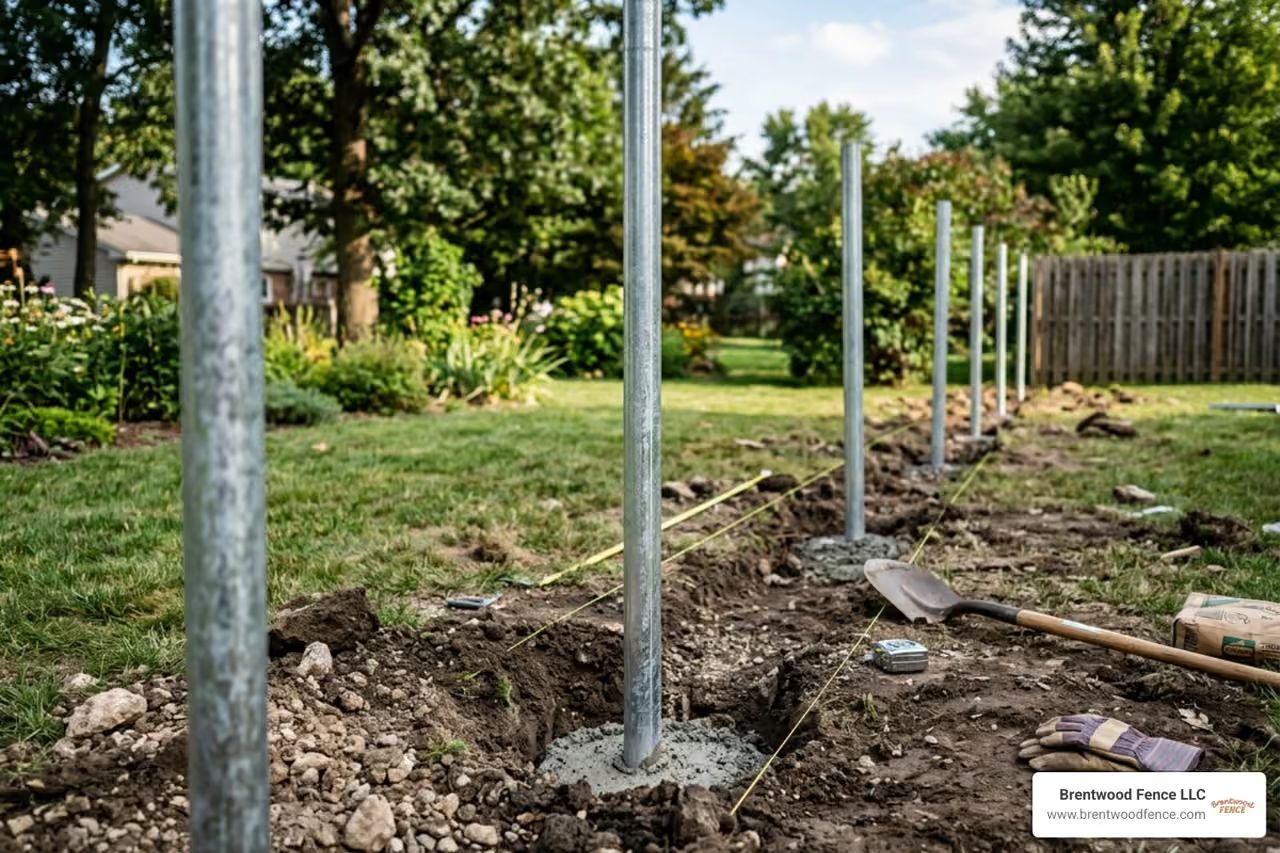
Traditional wooden fence posts look fantastic when first installed, but they carry an inherent vulnerability: ground-contact rot. Soil retains moisture, and over time, hungry microorganisms, termites, and moisture degradation weaken the base of wooden posts until the entire structure sags or blows over during a storm. In regions across New Hampshire, Massachusetts, and Maine where wet winters, freezing frost lines, and heavy spring rains put timber to the test, ground rot is the leading cause of fence failure.
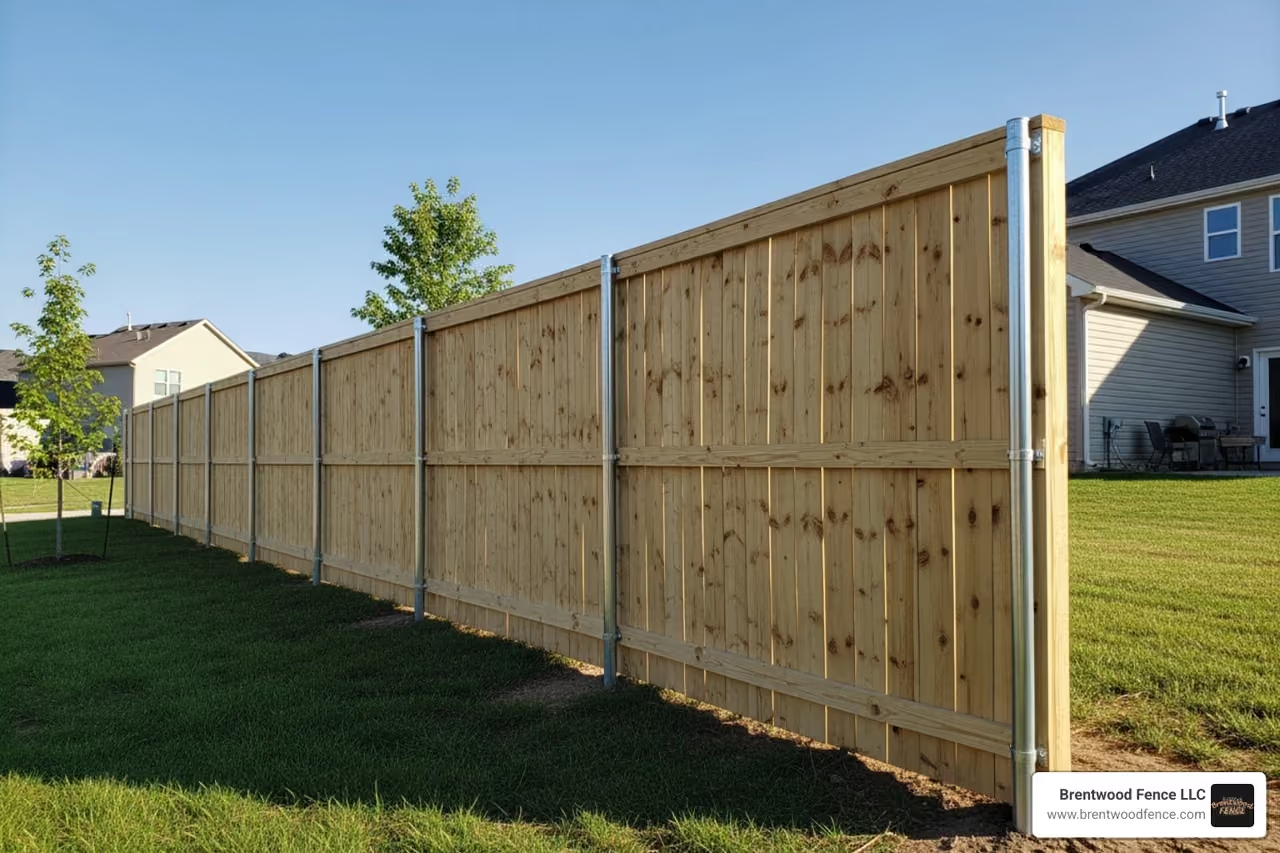
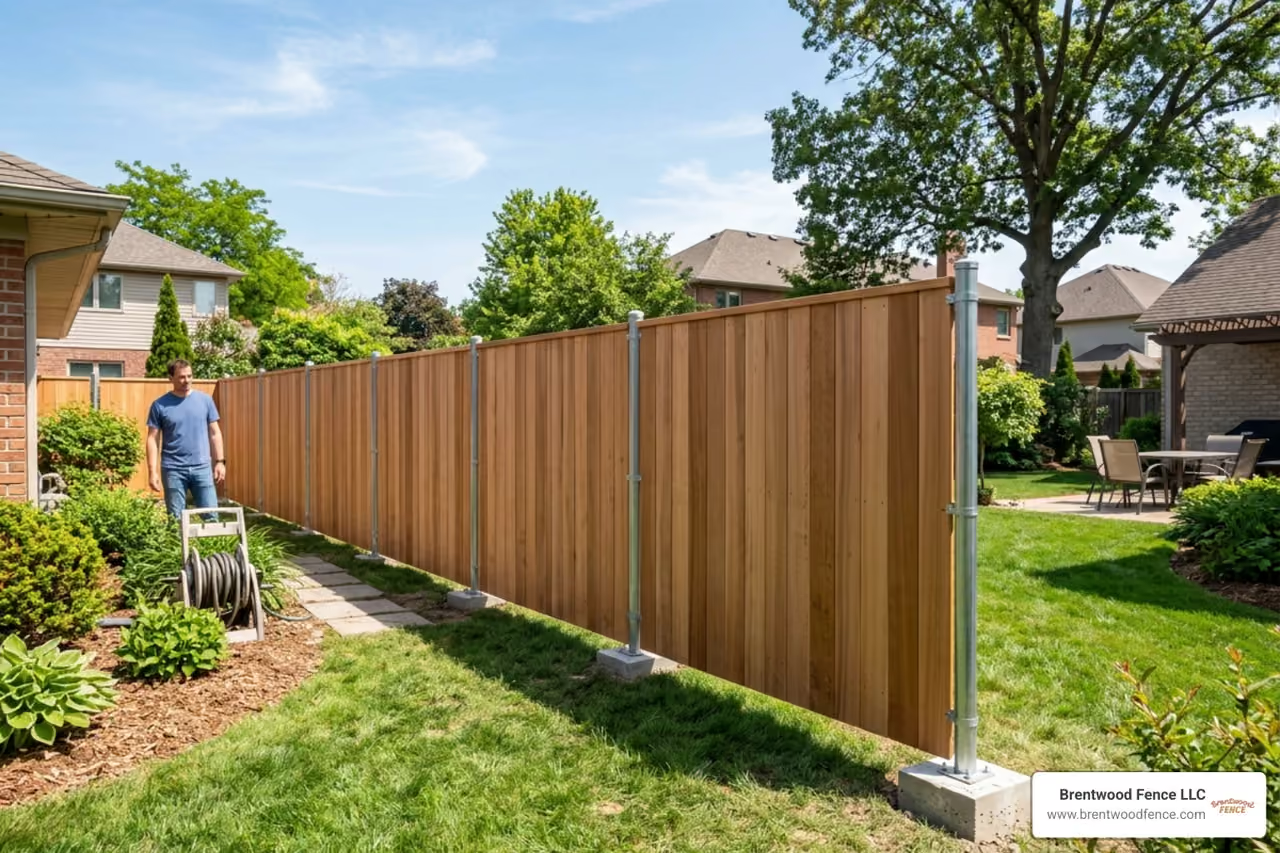
By using galvanized steel posts while retaining natural wood for the horizontal rails and vertical pickets, homeowners enjoy the warm aesthetic of classic cedar, redwood, or pressure-treated pine without worrying about structural rot below grade. Galvanized steel undergoes a dipping process that coats the metal in protective zinc, creating a barrier that resists rust, corrosion, and moisture for decades.
Key benefits of combining wood fencing with steel support posts include:
For an in-depth breakdown of steel post advantages, check out our Guide Metal Fence Posts for Wood Fence.
When planning a hybrid fence build, selecting the right post shape is an essential first step. The two primary metal post options are round steel pipe posts and square structural steel posts.
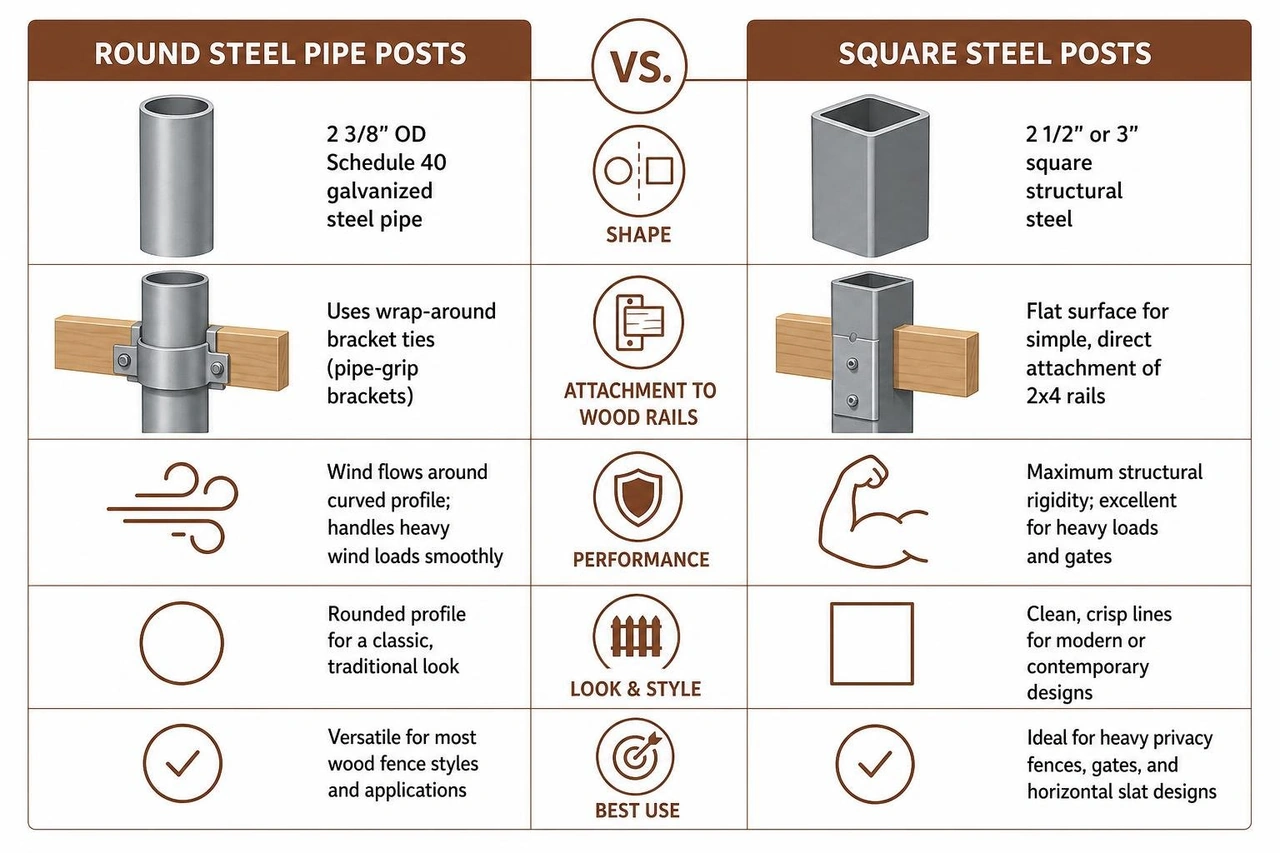
Round steel posts (typically 2 3/8-inch outer diameter schedule 40 galvanized steel pipe) are extraordinarily durable and widely available. They handle heavy wind loads smoothly because wind flows around their curved profile. Attaching wood rails to round posts relies on specialized wrap-around bracket ties, such as pipe-grip brackets, which firmly clamp onto the post circumference without compromising the structural integrity of the metal.
Square steel posts offer a flat mounting surface that makes attaching horizontal 2x4 framing rails straightforward. They deliver crisp visual lines and maximum structural rigidity, making them ideal for heavy privacy gates or modern horizontal wood slat designs.
To explore each option in detail, read our complete guides on Round Metal Fence Posts Wood Fence and Square Metal Fence Post for Wood Fence.
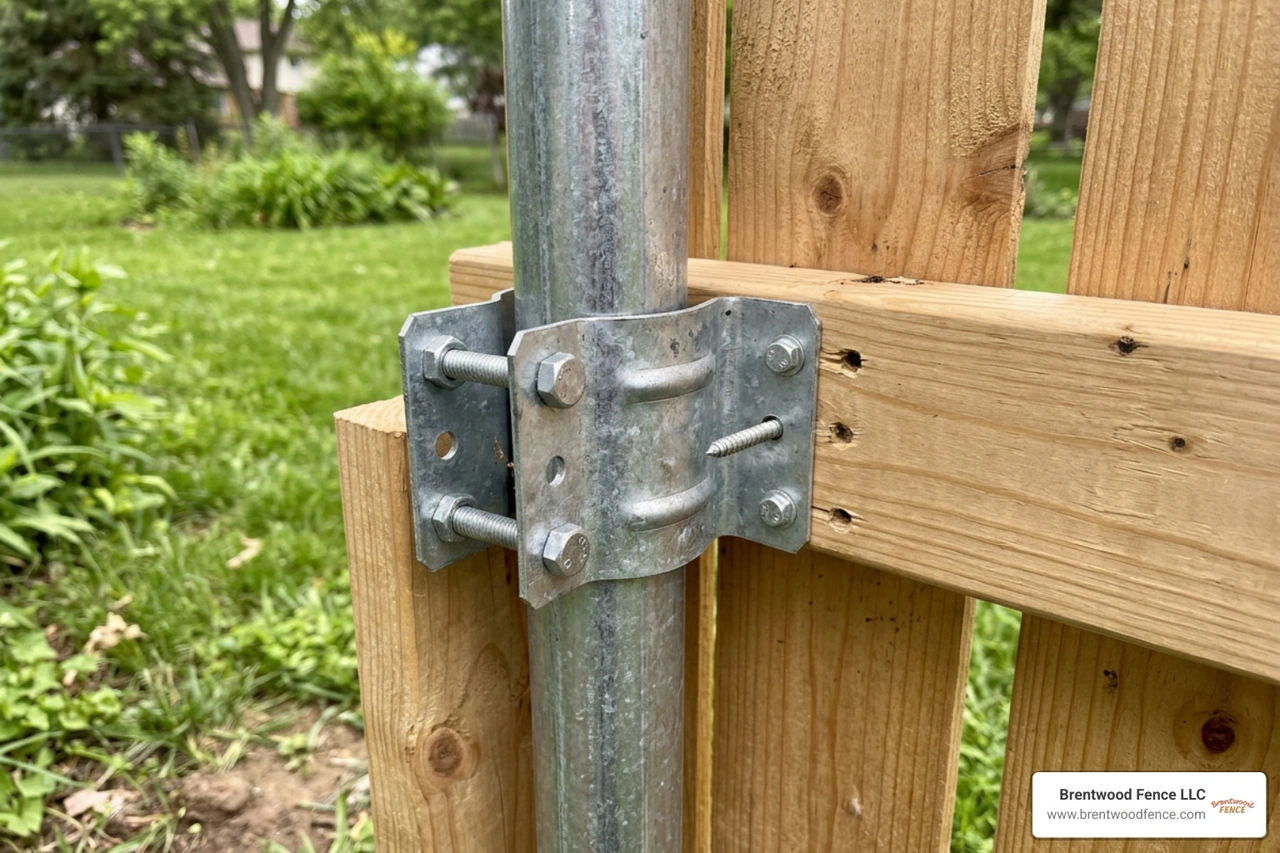
Securing heavy timber rails to immovable steel pipe requires specialized connection methods. Because wood expands and contracts with changes in seasonal temperature and atmospheric moisture, the mounting system must maintain a vice-like hold while accommodating natural material movement without splitting the wood or loosening fasteners.
At Brentwood Fence LLC, we utilize engineered bracket systems designed specifically to bridge the gap between steel posts and wooden rail frameworks.
When selecting hardware, always ensure steel components feature high-grade zinc coatings (such as ZMAX galvanized protection) to prevent reaction stains and galvanic corrosion when in contact with preservative-treated lumber. For more hardware insights, see our articles on Wood Fence Brackets for Metal Posts and Steel Fence Post Brackets. You can also consult the detailed Grit Guide on Metal Posts.
To construct a robust hybrid fence designed to withstand harsh northern climates, high-quality professional components are non-negotiable:
When installing custom hardware or attaching wood battens directly to steel posts without pre-drilled bracket holes, precision drilling techniques are necessary to penetrate heavy-gauge steel without burning out drill bits.
Our installation teams follow precise metal-penetration standards:
For manufacturers' exact hardware torque specifications and bracket installation guides, review the Fencing with Metal Posts Manual.
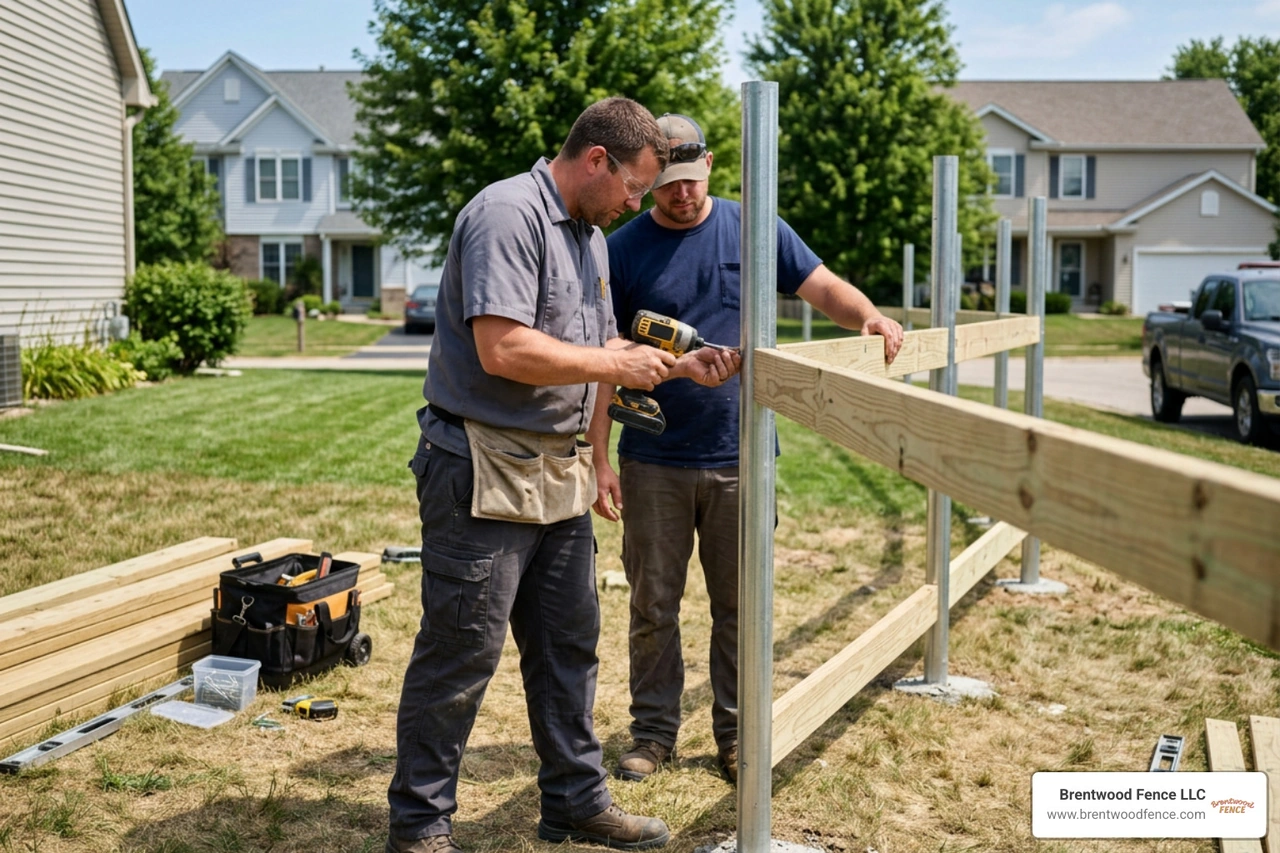
Installing a long-lasting wood fence on steel posts demands careful site preparation, exact mathematical layout work, and proper footing depth below local frost lines.
Here is how our professional installation teams set up and assemble a high-durability hybrid fence system:
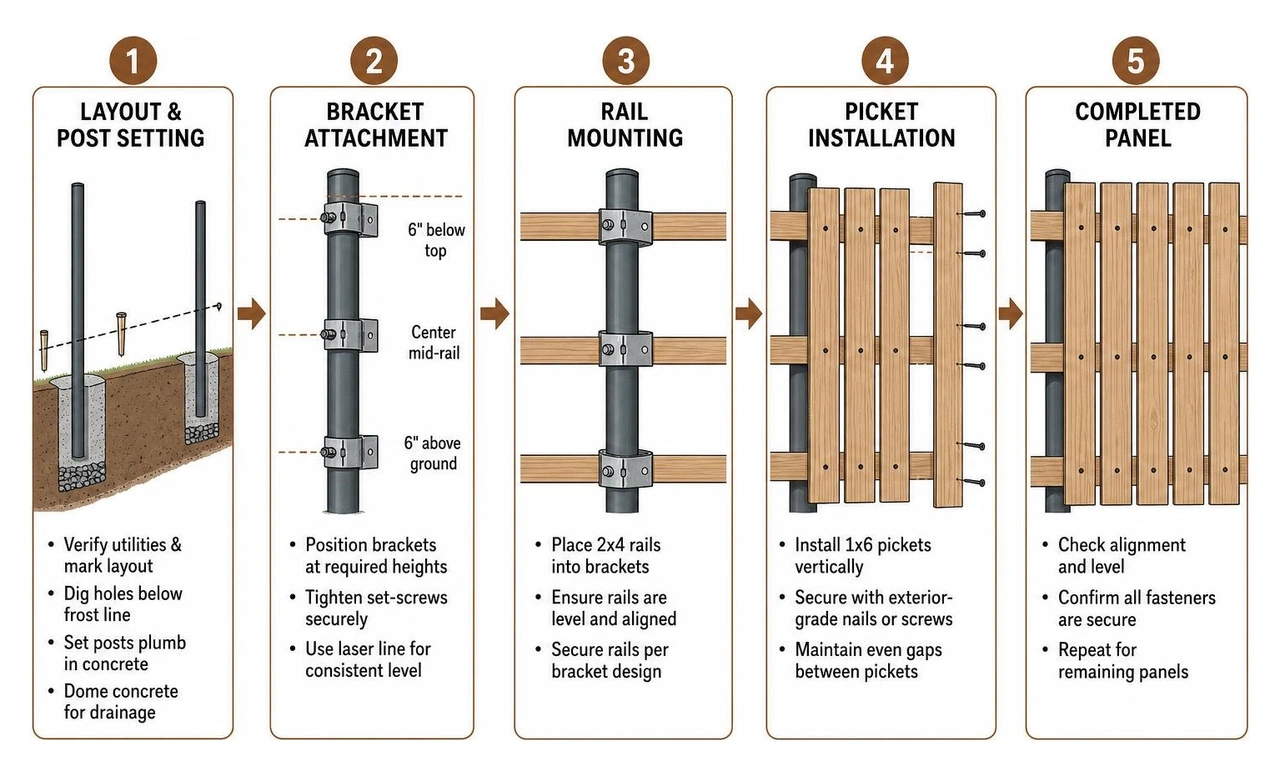
For additional technical details on layout planning, read How to Install Metal Posts Wood Fence and Installing Wood Fence Panel Metal Posts.
Gates are the highest-stress point of any fencing installation. A standard wooden gate mounted on a wooden latch post will inevitably sag over time as hinges strain timber fibres and moisture swells the wood.
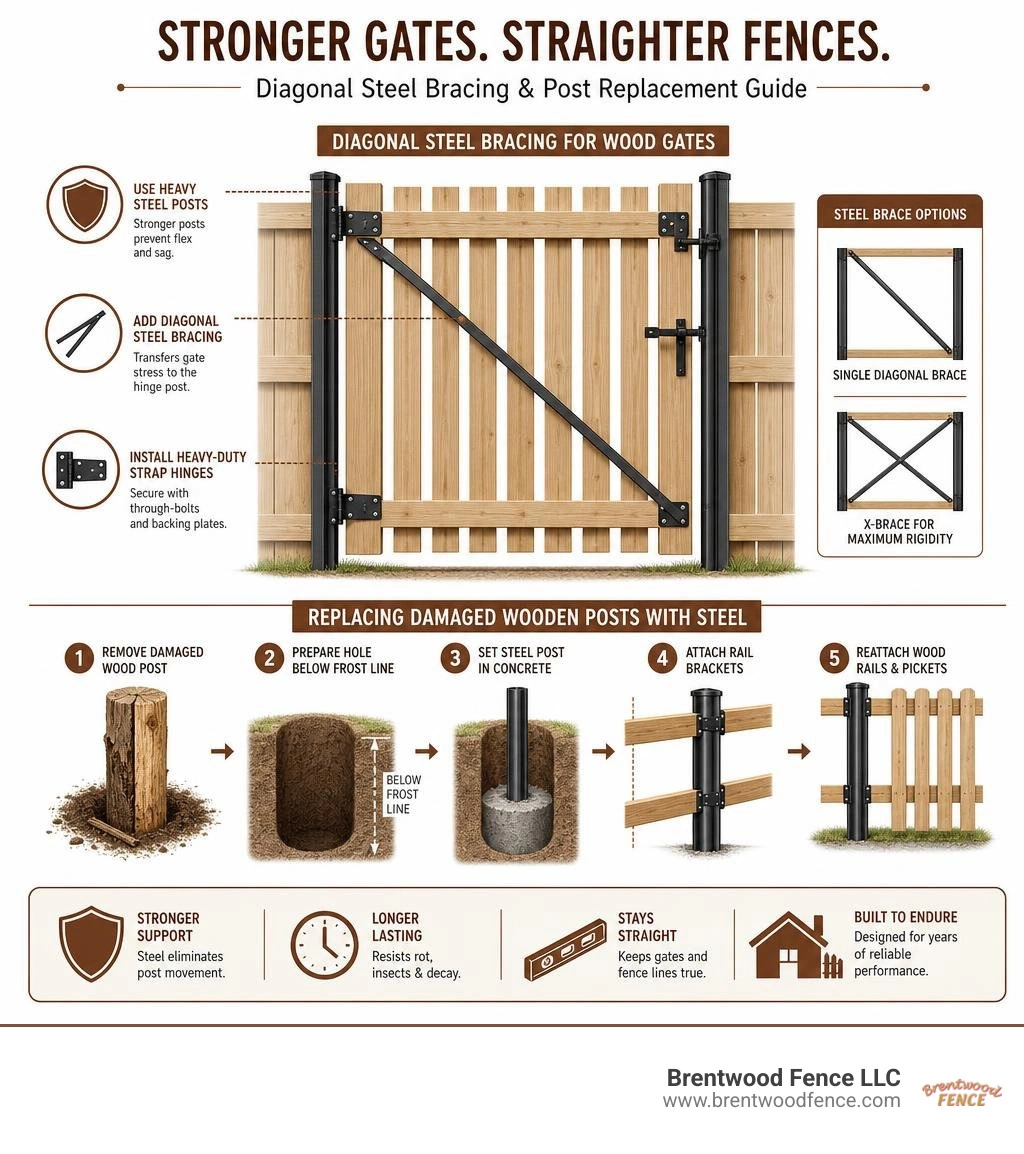
When building gates with steel support posts:
If you have an existing wooden fence where the posts have rotted out inside old concrete footings, you do not always need to tear down the entire fence. We frequently replace rotten wood posts with heavy-duty steel pipe posts while keeping existing fence rails and pickets intact:
For further reading on post replacement and hybrid support options, check out our guide on Above Ground Fence Posts.
Investing in steel posts for a wood fence carries a slightly higher upfront material cost than standard pressure-treated wood posts, but it eliminates costly post replacement cycles down the road.
Below is an itemized cost breakdown comparing a traditional all-wood 100-linear-foot privacy fence against a hybrid wood fence with galvanized steel posts:
While steel posts increase initial installation costs by roughly 15% to 20%, they eliminate structural post failure, making the hybrid fence significantly cheaper over a 20-year homeownership span.
To help you choose the best fence design for your property, we have answered the most common questions about combining wood fencing with steel posts below. For additional details on wood panel setups, explore Metal Fence Posts for Wood Slats.
Yes! Wood fence panels, pre-assembled privacy sections, and custom 2x4 rail frameworks attach cleanly to both round and square metal posts.
For round pipe posts, high-strength wrap-around pipe-grip ties (PGT brackets) wrap securely around the steel pipe and provide flat screw flanges for wood rail attachment. For square structural steel posts, flat flange brackets slide over or bolt directly to the post face. Both systems allow timber to expand and contract naturally through changing weather without putting structural stress on the post connection.
On average, a professionally installed 100-linear-foot cedar or treated wood privacy fence with galvanized steel posts ranges from $2,100 to $3,450 total, depending on local soil conditions, fence height (6 ft vs. 8 ft), gate requirements, and lumber species selection.
Materials generally account for $1,400 to $2,250 of the total, while professional excavation, post plumbing, concrete setting, and rail installation account for the remainder.
To replace a broken wooden post without pulling down the whole fence, drill out the splintered timber core inside the concrete footing using an auger or pry chisel. Soak the ground surrounding the footing with water to create a soft mud buffer, then use a heavy pry bar to rock and lift the old concrete plug out of the ground.
Once the hole is cleared, lower a heavy-gauge galvanized steel post into the hole, set it plumb, pour fresh concrete crowned at the top, and attach your existing wood fence rails to the new steel post using metal rail brackets.
Combining standard wood fence rails and pickets with galvanized steel posts provides the ultimate balance of traditional beauty and modern structural engineering. By placing rot-proof steel where wood is most vulnerable—underground and at the soil surface line—you ensure your fence remains straight, stable, and strong against heavy snow, freezing frost, and high summer wind.
Whether you are building a new residential privacy fence, installing a reinforced driveway gate, or upgrading an old wooden boundary line across New Hampshire, Massachusetts, or Maine, working with experienced fence professionals ensures your project is laid out accurately and built to last.
At Brentwood Fence LLC, our expert installation crews specialize in custom residential boundary solutions, durable post systems, and precision gate engineering tailored to your property.
Ready to build a fence that lasts for decades? Explore our wood fencing installation services or contact Brentwood Fence LLC today to request your professional consultation and project estimate!

Copyright 2022 Brentwood Fence | All Rights Reserved | Sitemap | Website by Plumb Development a Digital Marketing Agency