Which Wood Fencing Styles Actually Make Sense for Your Yard?
3
Jun
2026
Author:
Rob Thibeault
Why the Right Wood Fencing Style Changes Everything for Your Yard
Choosing between wood fencing styles is one of the most impactful decisions you'll make for your property — affecting your privacy, your curb appeal, and your long-term maintenance costs.
Here's a quick look at the most common styles and what they offer:
Style
Privacy Level
Best For
Stockade
Full
Budget-conscious privacy
Board-on-Board
Full
Premium privacy, clean look
Shadowbox
Partial
Airflow + good neighbor appeal
Tongue & Groove
Full
Maximum seclusion
Horizontal Slat
Full or partial
Modern, contemporary yards
Picket
Low
Front yards, curb appeal
Split Rail
None
Rural, open boundary marking
Lattice-Top
Partial
Decorative accent, garden areas
Wood has been the go-to fencing material in America for centuries. By the 1880s, there were an estimated 6 million miles of wooden fence across the country — and for good reason. It's natural, versatile, and works with almost any home style.
But not every wood fence is built the same. The style you pick affects how much privacy you get, how your fence looks from both sides, and how much upkeep you're signing up for.
This guide breaks it all down so you can make a confident, informed choice — and get it installed right the first time.
When selecting the perfect fence, you aren't just choosing a barrier; you're choosing a design that integrates with your daily life. Different wood fencing styles serve distinct functional purposes. Some are designed to keep the wind from blowing your patio furniture away, others are built to keep nosey neighbors from observing your weekend barbecues, and some simply exist to look pretty and mark where your property ends.
To help you understand how these designs stack up against each other, we have categorized the most common layouts. If you want to explore how these designs fit different properties, check out our guide on Wooden Fence Styles NH MA ME.
Here is an in-depth look at how the primary wood fencing styles compare in terms of physical privacy, natural airflow, and overall installation complexity:
Wood Fence Style
Privacy Level
Airflow Performance
Relative Cost
Construction Complexity
Stockade
High (No visibility)
Poor
Low to Moderate
Low (Simple vertical panels)
Board-on-Board
Extreme (Overlapping boards)
Very Poor
Moderate to High
Medium (Overlapping pattern)
Shadowbox
Medium (Angled visibility only)
Excellent (Wind passes through)
Moderate
Medium (Alternating sides)
Tongue & Groove
Extreme (Interlocking joints)
None
High
High (Tightly fitted boards)
Horizontal Slat
High to Medium (Depending on gap)
Moderate (If gapped)
High
High (Needs perfect alignment)
Picket
Low (Wide visual gaps)
Maximum
Low
Low (Classic spaced vertical slats)
Split-Rail
None (Fully open)
Unlimited
Very Low
Very Low (Rustic posts and rails)
Lattice-Top
High with decorative top
Moderate at the top
Moderate to High
Medium (Framing required)
Traditional Wood Fencing Styles for Classic Curb Appeal
If your goal is to add a touch of timeless charm to your property, traditional wood fencing styles are your best bet. These designs focus heavily on welcoming aesthetics, clear boundary definitions, and friendly neighbor relations.
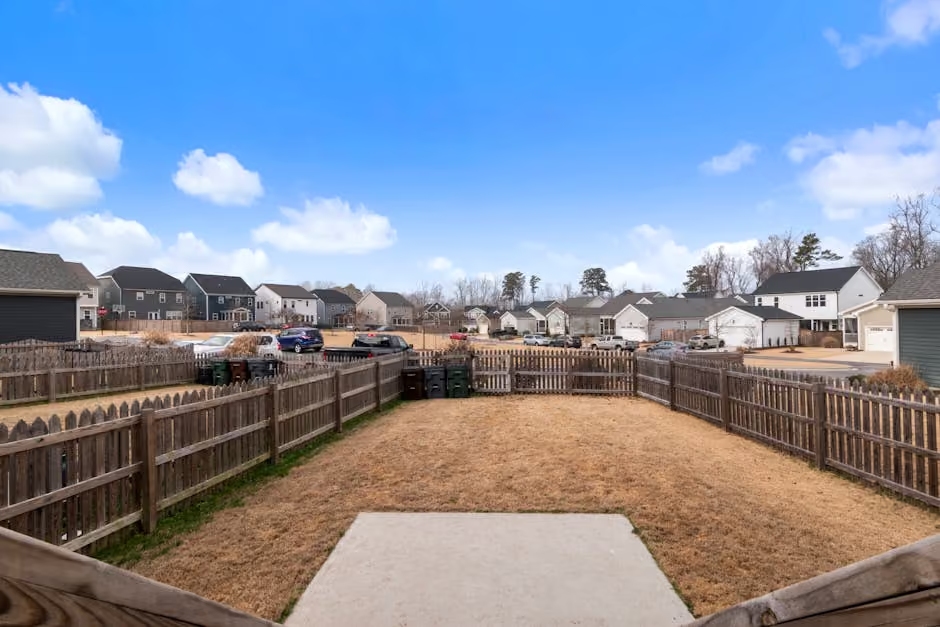
Picket Fences: The quintessential symbol of the American dream. Picket fences typically stand 3 to 4 feet tall, making them ideal for front yards. Because the vertical pickets are spaced apart (usually about 2.5 inches), they allow light and wind to pass through freely. They keep small pets and children safely in the yard without making your property look like a fortress. For a complete breakdown of how to plan one of these classic installations, dive into our Wood Picket Fence Install Guide.
Dog-Ear Fences: This is the workhorse of the residential fencing world. The tops of the vertical pickets feature clipped corners, resembling a dog's ear. This simple cut prevents the top of the wood from splitting easily while adding a clean, uniform look. It is highly affordable and widely used for side and back boundaries.
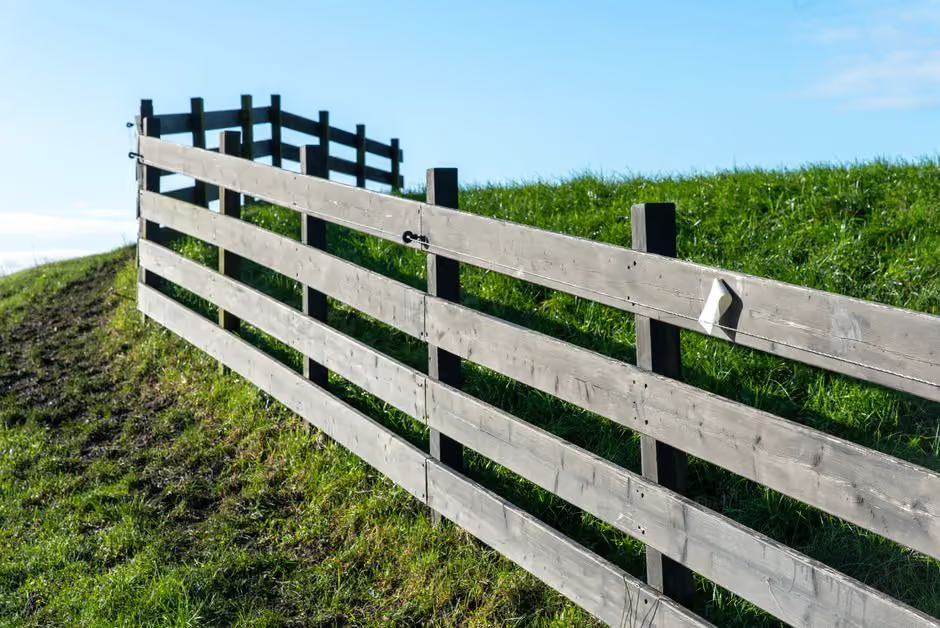
Split-Rail Fences: Dating back to colonial days, split-rail fencing relies on roughly cleared wooden logs slotted into heavy posts. It offers zero privacy but brings an unmatched rustic, country feel to larger properties. It is highly cost-effective for marking acreage.
Gothic and French Gothic Fences: For those who want more architectural flair than a standard dog-ear or flat picket, Gothic styles feature pointed decorative tops. French Gothic profiles offer an elegant, spear-like silhouette that elevates your curb appeal instantly.
Choosing a traditional style often makes neighbor negotiations much easier. Because these fences are lower or semi-open, they do not block your neighbors' views or sunlight, making them excellent "good neighbor" choices.
When your backyard needs to become a quiet sanctuary away from the hustle and bustle of New England life, modern privacy styles are the answer. These designs focus on solid barriers, minimal sightlines, and structural strength. To see how these hold up in our local climate, check out our resource on Types of Wood Privacy Fences NH MA ME.
Board-on-Board: Unlike standard flat fences where boards are placed side-by-side, board-on-board fences feature overlapping vertical pickets. As wood naturally dries and shrinks over time, standard fences can develop small gaps. Board-on-board designs completely eliminate this issue because the overlapping pattern ensures that even when the wood contracts, the privacy barrier remains solid.
Shadowbox: Often called the ultimate "good neighbor" fence, shadowbox fencing alternates pickets on the front and back of the supporting rails. This creates a beautiful three-dimensional shadow pattern. Because there are gaps between the alternating boards, wind can pass through easily, which significantly reduces the wind load on your posts during strong storms. However, it only offers partial privacy; if you stand at an angle, you can see through the gaps.
Tongue & Groove: This style uses interlocking tongue-and-groove boards that slide together to form a completely seamless, solid wood wall. It offers absolute visual seclusion and excellent sound dampening, making it perfect for hot tub enclosures or properties close to busy roads.
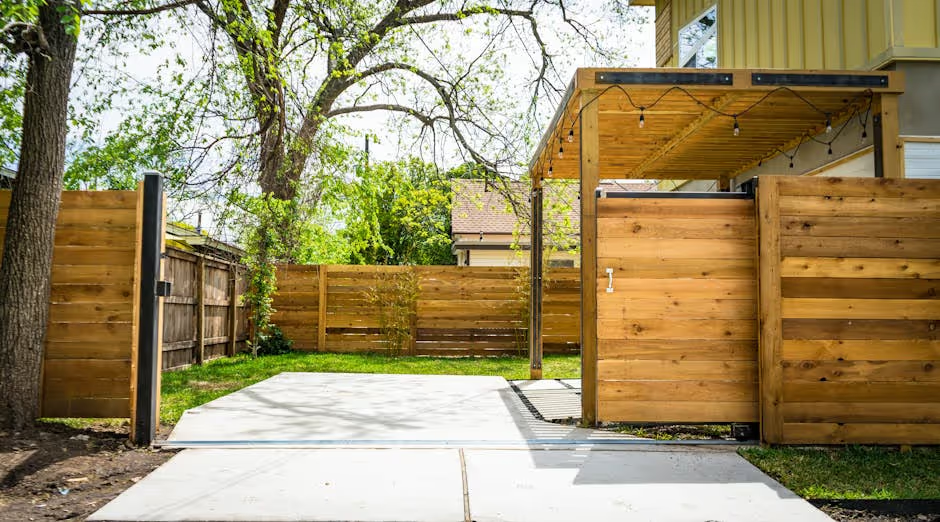
Horizontal Fences: A rapidly growing trend, horizontal fences run the planks parallel to the ground. This clean, geometric look complements modern, mid-century, and contemporary homes. However, horizontal styles require highly skilled professional installation because any slight slope or misalignment is instantly visible to the eye.
Selecting the Best Wood Species for Durability and Climate
In New England, our fences have to survive freezing winter blizzards, muddy spring thaws, humid summers, and windy autumn storms. Choosing the wrong wood species can lead to warping, rotting, or structural failure within just a few years. Let's look at the most common wood species used for fencing and how they perform:
Western Red Cedar
Western Red Cedar is widely considered the gold standard for residential wood fencing. Its natural cellular structure contains organic oils that resist rot, decay, and insect attacks without requiring heavy chemical treatments.
Lifespan: 15 to 25 years with proper care.
Pros: Highly stable (resists warping and shrinking), ages to a beautiful silver-gray if left unstained, and has a rich, premium look.
Cons: Softwood that can dent easily; costs roughly 40% more upfront than pressure-treated pine.
Pressure-Treated Pine
Pressure-treated (PT) pine is infused with chemical preservatives under high pressure to protect the wood from fungal decay and ground-contact rot.
Lifespan: 15 to 20 years with consistent sealing.
Pros: Extremely strong, highly affordable, and excellent for structural posts that sit directly in damp soil.
Cons: Prone to warping, twisting, and shrinking as it dries out in the sun; has a distinct greenish tint initially that fades over time.
Spruce
Spruce is a budget-friendly option often sold in pre-assembled panels at big-box home improvement stores.
Lifespan: 8 to 12 years.
Pros: Low initial material cost.
Cons: Low natural resistance to rot, moisture, and insects; highly prone to warping and rot in wet New England climates.
Redwood and Cypress
While Redwood is incredibly durable and beautiful, it is primarily sourced on the West Coast, making it highly expensive and rare in the Northeast. Cypress, containing natural "cypressene" oils, is highly rot-resistant but less common in our immediate region.
When planning your budget for a new wood fence, the final price tag is determined by several interconnected structural and design choices. It is rarely as simple as multiplying your property line by a flat rate. Here are the key cost drivers you should keep in mind:
Fence Height: Standard residential fences are typically 4 feet (for front yards/pickets) or 6 feet (for backyards/privacy). Stepping up to an 8-foot fence dramatically increases material costs because it requires thicker structural posts, extra horizontal rails, and heavier labor.
Wood Species: As mentioned, opting for premium Western Red Cedar will increase your upfront material costs by approximately 40% compared to pressure-treated pine, though it often saves money on long-term maintenance. To understand the financial breakdown, read our guide on the Cost of Wooden Privacy Fence NH MA ME.
Gates and Hardware: A fence is only as reliable as its entry points. Heavy-duty gates require specialized framing, robust posts, and corrosion-resistant hardware to prevent sagging over time. For professional insights on gate design, check out Wooden Gate Installation NH MA ME.
Property Terrain and Slopes: Installing a straight fence on a flat lawn is straightforward. However, if your yard has significant hills or uneven terrain, we must use specialized installation methods. We can either "step" the panels (creating a stair-step look) or "rack" the fence (following the contour of the ground). Learn more about this complex process in our guide on Installing Wood Fence on a Slope.
Structural Support Rails: The horizontal rails hold your vertical pickets in place. Skimping on rails leads to sagging and warping. To learn how many rails your chosen style requires, consult our Complete Wood Fence Rails Guide.
Wood vs. Alternative Fencing Materials
While we love the timeless, natural beauty of real wood, it is helpful to understand how it compares to alternative materials like vinyl, metal, and composite:
Aesthetics: Real wood offers a warm, organic look with unique grain patterns that synthetic materials struggle to replicate perfectly. However, modern high-end wood grain metal panels use digitally scanned prints of real wood (like Smooth Cedar or Barnwood Plank) to offer a highly convincing look with a sleek, contemporary matte black trim frame.
Maintenance: Wood requires regular washing and re-staining every few years to prevent decay. Vinyl, metal, and composite materials are virtually maintenance-free, requiring only an occasional rinse with a garden hose.
Durability and Lifespan: A well-maintained cedar fence can last up to 25 years. However, high-quality vinyl, aluminum, and steel fences can easily last 30 to 50 years without structural degradation, as they are completely immune to rot, termites, and moisture warping.
Environmental Impact: Wood is a renewable, biodegradable resource. If sourced responsibly, it has a lower manufacturing carbon footprint than vinyl (PVC) or metal, though the chemical treatments in pressure-treated wood require careful handling and disposal.
Best Practices for Installing and Maintaining Your Wood Fence
To get the absolute longest lifespan out of your investment, proper installation and seasonal maintenance are non-negotiable. This is especially true in New Hampshire, Massachusetts, and Maine, where the changing seasons put intense physical stress on outdoor structures.
Professional Installation Keys for New England Climates
Deep Post Footings: In our region, the winter frost line can reach deep into the soil. Posts must be set below the local frost line (typically 36 to 48 inches deep) to prevent "frost heaving," which occurs when freezing soil pushes shallow concrete footings upward, ruining your fence line.
Corrosion-Resistant Fasteners: Always insist on stainless steel or hot-dipped galvanized screws and nails. Cheap fasteners will react with the natural acids in cedar or the chemicals in pressure-treated wood, resulting in ugly black streaks running down your beautiful fence boards.
Ground Clearance: Pickets should never touch the soil directly. Installing them about 1.5 inches above the ground prevents them from wicking up ground moisture, which is the leading cause of premature bottom-rot.
Spring Inspection: Walk your fence line after the winter snow melts. Check for loose fasteners, sagging gates, or posts shifted by frost.
Vegetation Management: Keep bushes, vines, and tall grass trimmed back from the bottom of the fence. Plants trap moisture against the wood, accelerating decay.
Stain or Seal Every 2 to 4 Years: Apply a high-quality, UV-resistant, breathable sealer or semi-transparent stain. This blocks moisture while allowing the wood to breathe, keeping it beautiful and structurally sound.
Frequently Asked Questions About Wood Fences
What is the longest-lasting wood for a fence?
Western Red Cedar and Redwood are the longest-lasting natural woods for residential fencing due to their inherent resistance to moisture and pests. When properly maintained, stained, and paired with pressure-treated ground-contact posts, a cedar fence can easily last 20 to 25 years.
How often should a wood fence be stained or sealed?
Typically, a wood fence should be stained or sealed every 2 to 4 years. You can perform the "splash test" to see if it's time: splash a few drops of water onto the wood. If the water beads up, your sealer is still working. If the water soaks directly into the wood grain, it is time to clean and re-seal the fence.
Do horizontal wood fences cost more than vertical ones?
Yes, horizontal wood fences generally cost more than traditional vertical styles. They require premium-grade, highly straight lumber (as warping is much more obvious horizontally) and require significantly more labor and precision during installation to ensure perfectly level lines across uneven yards.
Conclusion
Your backyard is your personal retreat, and choosing the right wood fencing style is the key to making it functional, beautiful, and secure. Whether you love the classic, welcoming look of a traditional picket fence or the sleek, private sanctuary of a modern horizontal board-on-board design, we are here to bring your vision to life.
At Brentwood Fence LLC, we specialize in professional, high-quality fence installations designed to withstand the rugged New England climate. We proudly serve homeowners across New Hampshire, Massachusetts, and Maine — including Exeter NH, Portsmouth NH, Manchester NH, Concord NH, Derry NH, Dover NH, and Haverhill MA.
Ready to transform your yard with a gorgeous wood fence? Explore our Wood Fencing Installation Services and contact us today to schedule your consultation!